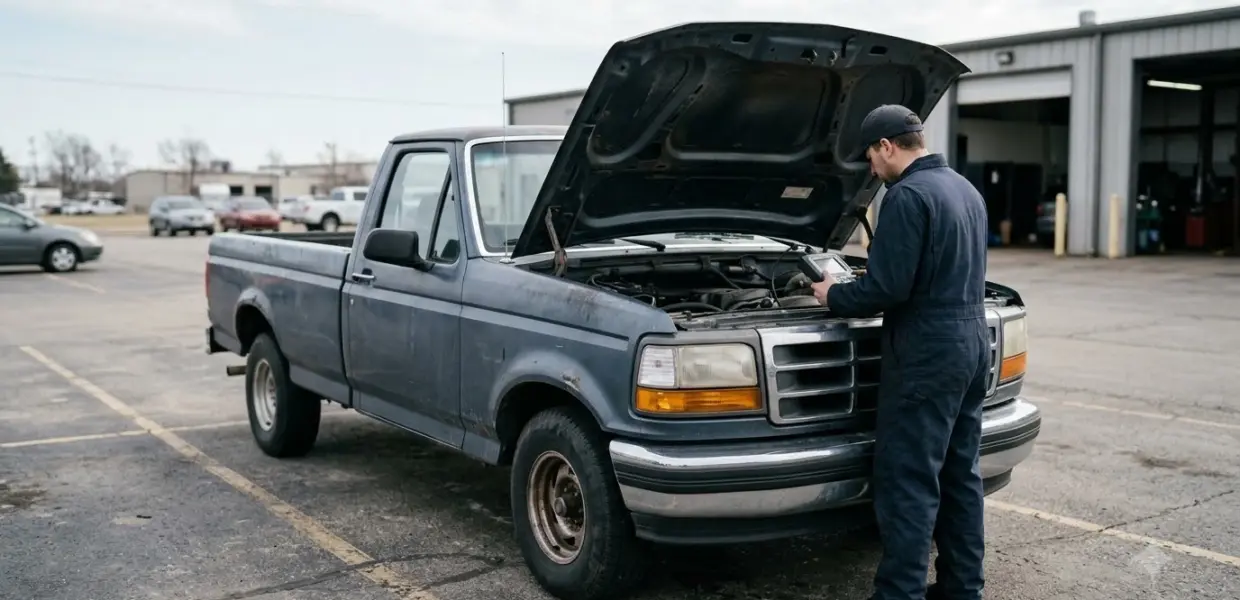

A Dodge Charger check engine light means the car’s computer has stored a fault in the engine or emissions system. A steady light is usually less urgent, while a flashing light signals a serious problem that needs prompt action.
Most steady Dodge Charger check engine light cases start with a loose gas cap or a minor sensor fault, so check the cap first. Then get the stored code read, because the code tells you which system needs attention.
This article is general information, not a diagnosis of your vehicle. If the light flashes, pull over safely and contact a qualified mechanic.
What a steady or flashing check engine light means
A steady Dodge Charger check engine light means a fault is stored and is usually less urgent, while a flashing light points to a serious problem, often an engine misfire. The two patterns are the first clue you have, so read them before you decide what to do next.
- Steady: a less urgent issue, such as a loose gas cap or a minor sensor fault. You can usually keep driving for a while, but get the code read soon.
- Flashing: a more serious problem, often engine misfires or severe emissions issues. Stop driving as described in the flashing section below.
According to the Motorist Assurance Program guidance, a steady light generally points to a less urgent issue, while a flashing light generally points to a more serious problem. The light alone does not name the exact fault, so a Dodge Charger check engine light is a signal to read the code, not a final diagnosis. Dodge’s own 2026 Charger Consumer Information Guide says the car will usually still be drivable with a steady light and does not normally need towing, but it should see an authorized dealer as soon as possible.
Common causes of a Dodge Charger check engine light
The most common cause of a Dodge Charger check engine light is a loose or faulty gas cap, and other causes range from temporary triggers to misfires and emissions faults. Start with the simple checks before you buy any parts.
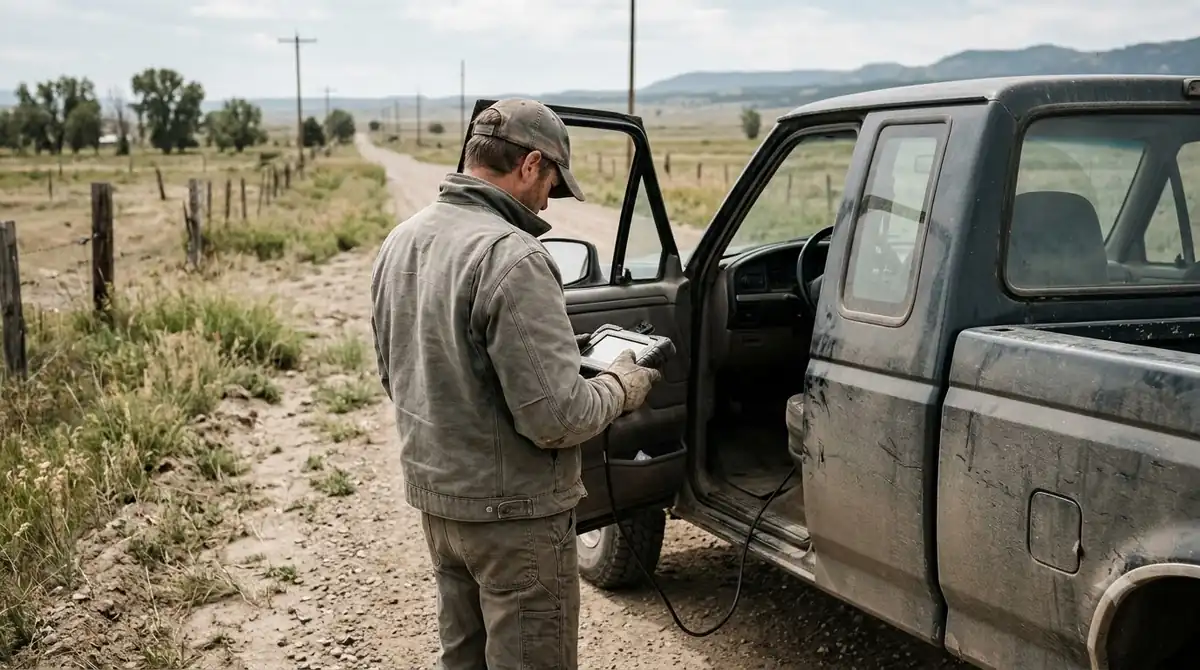
Kelley Blue Book names a loose or faulty gas cap as the most common cause. A gas cap that is loose or damaged can affect the fuel system, so tighten it and check whether the light goes off after a few drives. If it stays on, a Dodge Charger check engine light still needs a stored code before you replace anything.
Other causes include temporary environmental triggers, such as changes in humidity, which can turn the light off after a short drive. More serious causes named by the same source include excess pollutant release, high fuel consumption, and an engine misfire. If the car also shakes or hesitates, read about misfire signs and what to check first. If you also drive a Dodge crossover, our Dodge Journey check engine light guide covers that model.
Steady light: what to check first
With a steady light and no other warnings, check the gas cap first, then get the stored code read soon rather than waiting for the next service. A steady Dodge Charger check engine light is a reason to act this week, not a reason to panic. Dodge also warns that prolonged driving with a Dodge Charger check engine light on could cause further damage to the emission control system and affect fuel economy and driveability, and that the car must be serviced before any emissions test.
- Check the gas cap first. Make sure it is tight and not cracked.
- Look at the dashboard for other warning lights, such as temperature or oil pressure. Kelley Blue Book says other lights on at the same time signal a major problem, so get the car checked promptly.
- Have the stored code read soon, either with your own OBD-II scanner or at a shop.
Can I drive with the check engine light on?
This checklist applies to a steady light only. A steady light usually means a less urgent fault, but it still needs a code read. A flashing light calls for the steps in the next section, not this checklist.
Dodge Charger check engine light flashing: what to do right now
A flashing check engine light means a serious problem is active, so pull over safely and turn off the engine rather than continuing to drive. Kelley Blue Book gives the same advice for a flashing light.
The Motorist Assurance Program says a flashing light generally points to a more serious problem, often engine misfires or severe emissions issues. Dodge’s 2026 Charger guide is blunt about it: if the light flashes while the engine is running, severe catalytic converter damage and power loss will soon occur, and immediate service is required. A damaged converter is a costly repair, so see what a catalytic converter replacement costs before you put off the shop visit. A flashing Dodge Charger check engine light should never be treated as a routine warning.
- Pull over as soon as it is safe to do so.
- Turn off the engine and let the car sit.
- Call a tow or a qualified mechanic rather than driving the car farther.
A common mistake is waiting until the next service visit. A flashing light means the problem is active, so it is not something to schedule for later.
How to read the trouble code with an OBD-II scanner
An OBD-II scanner reads the stored code, which gives you a starting point before you buy any parts. A scanner does not repair anything, but it turns a Dodge Charger check engine light into a specific code you can look up.
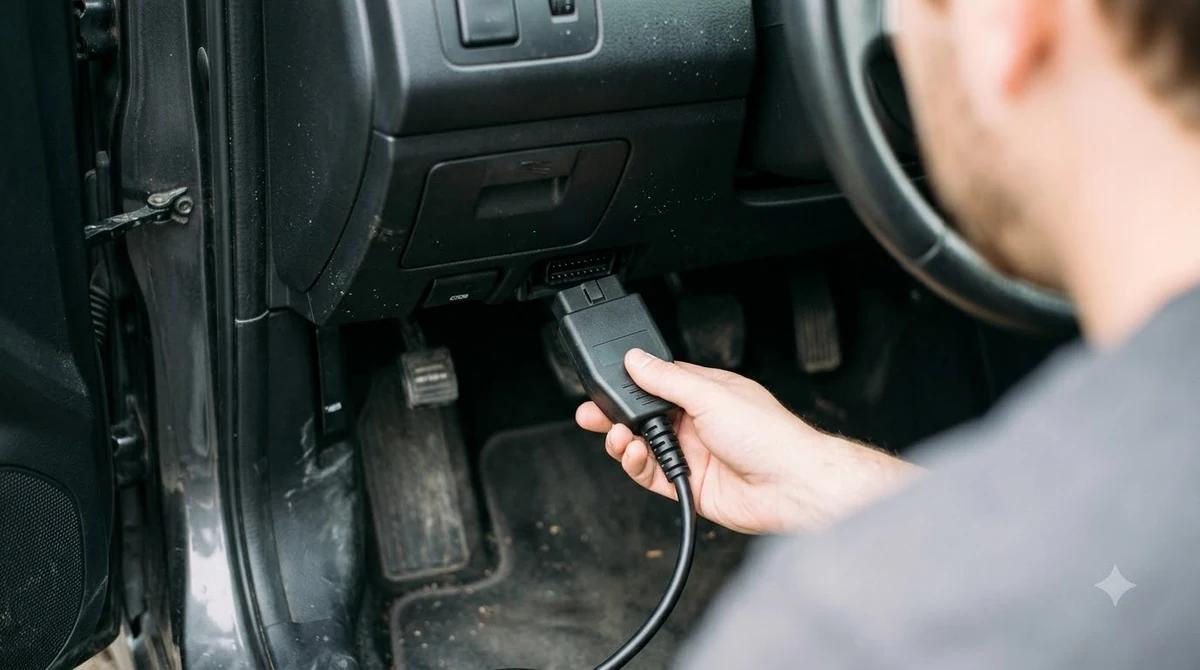
- Find the OBD-II port under the dashboard. The location can vary, so check your owner’s manual if you cannot find it.
- Plug the scanner into the port and follow its prompts to read the stored codes.
- Write down the code exactly, then look it up for your model year before buying parts.
The Motorist Assurance Program notes that OBD-II scanners can help with diagnosis, but a professional inspection gives a more thorough assessment. Use the scanner to learn the code behind your Dodge Charger check engine light, then decide whether a shop visit is needed. Dodge’s 2026 guide adds that only an authorized service technician should connect equipment to the OBD II port, and that unauthorized devices such as driver-behavior trackers could impair vehicle systems, so do not leave a tracking device plugged in.
A code is a clue, not a diagnosis. Confirm it with a service manual or a shop before you replace a sensor or a part, because the same code can have more than one cause.
How much a check engine light diagnosis costs
As of November 6, 2026, Kelley Blue Book puts the national average for check engine light diagnostics at $131 to $209 across all vehicles. The figure is not specific to a Dodge Charger check engine light, so treat it as a rough guide.
| Where | Typical cost | Notes |
|---|---|---|
| National average, all vehicles | $131 to $209 | Kelley Blue Book figure, not Charger-specific |
| General estimate | $100 to $200 | Motorist Assurance Program, no source named |
| Dealer | Usually a diagnostic fee | Ask whether the fee can be waived |
| Auto parts store or independent shop | May be free | Confirm the offer before you go |
The Kelley Blue Book check engine light guide adds that dealers usually charge a diagnostic fee, though it never hurts to ask for a free check. Ask about the price before the shop starts any work, so a Dodge Charger check engine light does not turn into an open-ended bill.
When the light goes off and when to see a shop
A check engine light usually turns off once the underlying fault is repaired, and clearing it without a repair does not fix the problem, and clearing the code after a repair explains what to expect. A light that goes off on its own does not prove the fault is gone, so the same Dodge Charger check engine light can return. The Dodge guidance quoted here comes from the 2026 Charger, while the other sources are general, so check the owner’s manual for your own model year.
Book a shop visit when one of these applies:
- The light flashes.
- Other warning lights, such as temperature or oil pressure, come on with it.
- The light stays on after you checked the gas cap and the code does not make sense to you.
Related Guides
Frequently Asked Questions
Can a loose gas cap turn on the check engine light?
Yes. Kelley Blue Book names a loose or faulty gas cap as the most common cause of the light. Check that the cap is tight and undamaged, then watch whether the light goes off after a few drives. If the Dodge Charger check engine light stays on, get the stored code read rather than replacing the cap as a guess.
Does a flashing check engine light mean I must stop driving?
A flashing light generally points to a more serious problem, so pull over safely and turn off the engine, as the Motorist Assurance Program and Kelley Blue Book both advise. Then call a tow or a qualified mechanic. Continuing to drive can make a serious fault worse, so do not treat it as a routine warning.
How much does a check engine light code read cost?
Kelley Blue Book gives a national average of $131 to $209 for check engine light diagnostics across all vehicles. The Motorist Assurance Program gives $100 to $200 without naming a source. Auto parts stores and independent mechanics may offer free diagnostics, so ask before you pay.
Can I reset the check engine light myself?
You can clear the stored code with a scanner, but clearing it does not repair the fault. If the cause is still there, the Dodge Charger check engine light can come back. Fix the underlying problem first, then clear the code if the light is still on.
Will the light turn off after a short drive?
Sometimes. Kelley Blue Book says temporary triggers, such as changes in humidity, can turn the light off after a short drive. A light that goes off does not prove the fault is gone, so keep an eye on it and get the code read if it returns.
What if the check engine light comes on with the oil or temperature light?
Kelley Blue Book says other warning lights on at the same time, such as temperature or oil pressure, signal a major problem. Stop driving, turn off the engine, and get the car checked promptly rather than waiting for the next scheduled service.
If the light is steady and the gas cap is fine, get the code read this week, then decide on any repair once you know the code. If the Dodge Charger check engine light flashes, or other warning lights come on with it, stop driving and arrange a tow or a mechanic before you spend money on parts.