

A rough idle means the engine runs unevenly while the vehicle is stopped, often with shaking, stumbling or a needle that moves up and down. Many drivers describe the same problem as a car that shakes at idle. The fix depends on the cause, and the dashboard light tells you how urgent that cause may be.
A steady warning light calls for a scheduled check. A flashing light calls for less driving and prompt service, so check the dashboard before you plan the repair.
What Rough Idle Feels Like and Why It Happens
A rough idle is a symptom, not a diagnosis. Listen for hissing near the engine, which can point to a leak, and note any smell of fuel or a change in sound. The engine may shake through the seat or steering wheel, the tachometer may drift, and the engine may stall if it is not corrected. Several systems can cause the same feeling, so the first job is to narrow the list. The five groups below cover the usual suspects. Notice whether the rough idle is constant or comes and goes, because a constant problem often points to a steady fault, while an intermittent one may depend on heat, fuel or load.
- Spark plugs or ignition parts that do not fire the cylinder cleanly.
- Vacuum leaks that let unmetered air into the intake.
- Fuel delivery problems, such as dirty injectors or a weak fuel pump.
- Sensors that send the engine computer the wrong data.
- Carbon buildup, which can affect valves, the EGR system or the combustion chamber.
Carbon buildup can be a real cause on some models. Toyota has issued a service bulletin that links rough idle to carbon on the piston heads for certain vehicles, which shows why the model and year matter. Carbon is not the only deposit problem, since a dirty throttle body can upset the idle too, and throttle body repair cost breakdown helps you budget for that repair.
Check the Dashboard Light First
The warning light tells you how much time you have. A rough idle with a steady light means the vehicle has detected a problem that needs service, and a rough idle with a flashing light means a misfire that needs prompt attention.
| Light condition | What it may mean | What to do |
|---|---|---|
| No light, rough idle | A problem that has not set a warning yet | Run the quick checks and book a visit if it continues |
| Steady light | The system has detected a fault that needs service | Schedule a check soon and read the code |
| Flashing light | A severe misfire | Reduce speed and seek service as soon as possible |
The table above is a starting guide, not a diagnosis. The same EPA sheet says a lit light means service is needed, not an order to stop the vehicle at once. The EPA’s consumer fact sheet on On-Board Diagnostics (EPA 420-F-97-003, dated May 1997) describes a blinking light as a sign of a rather severe engine misfire. It also warns that a severe misfire over a short period can seriously damage emission control components, and it names the catalytic converter as typically the most expensive part to replace. Read the EPA on-board diagnostics fact sheet for the full wording.
Jeep’s owner’s manual for the 2026 Grand Cherokee gives the same warning in its own terms: a flashing light can signal conditions that lead to immediate loss of power or severe catalytic converter damage. A steady light after a loose gas cap may clear, but the manual says to service the vehicle if the light stays on through several typical driving styles.
Quick Checks You Can Do at Home
Start with the simple checks that do not need tools. Write down what you see, then move to a code read if the rough idle continues.
- Confirm the gas cap is present and tight, and note whether the rough idle started after fueling.
- Note when it happens: cold start, warm engine, in park, in drive, or with the air conditioning on.
- Check the dashboard for a steady or flashing warning light, and write down the date it first appeared. If no light is on, the cause may still be real, so keep the notes and move on to the scan.
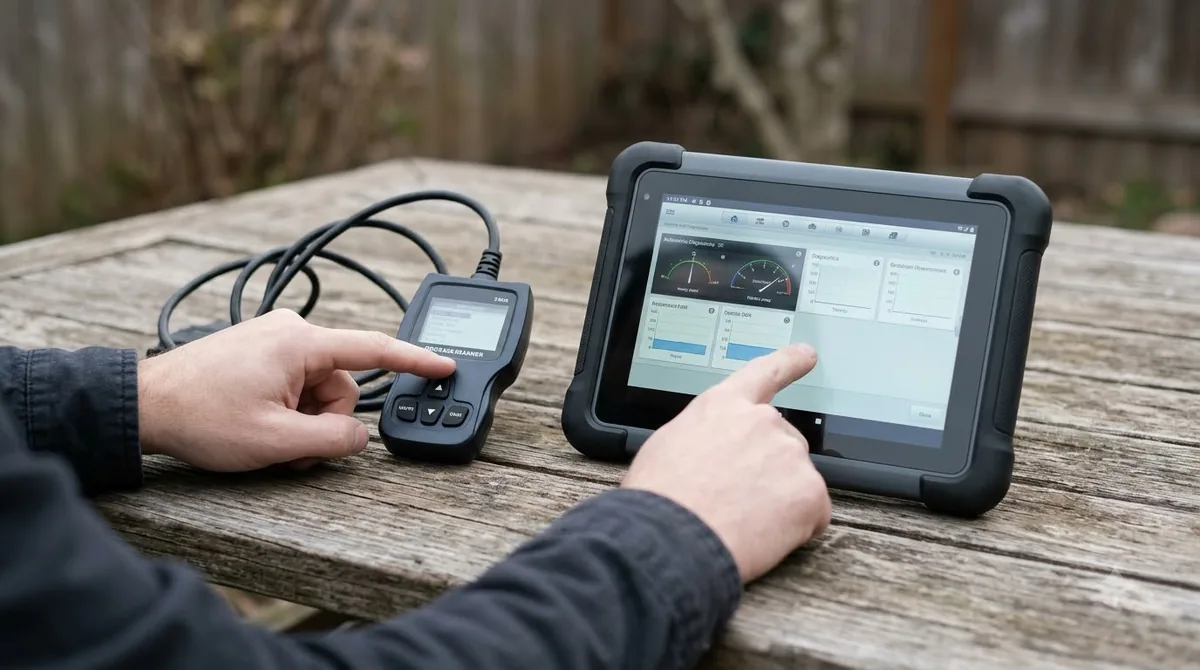
- Read any stored codes with an OBD-II scanner, and write each one down exactly before you clear anything. If a code names one cylinder, the cylinder 3 misfire guide shows what to check next.
A code gives a starting point, not a final answer. Keep the scan record with the date, the mileage and the conditions you noted, so a later visit can compare the new reading with the old one. A rough idle can have more than one cause, so the code narrows the search but does not replace a test. If the vibration only happens at a stop, the misfire and fuel filter sections below cover the usual causes.
Why a Car Shakes at Idle: Misfire Causes
Kelley Blue Book links shaking at idle to misfires, which are uneven combustion events in one or more cylinders. A KBB guide to the P0300 code describes rough idling as the shaking or vibrating of the vehicle while the engine is on and the car is stopped, and calls it a symptom of misfires.
KBB calls worn or damaged spark plugs the most common and relevant cause of misfires, so the plugs are the first ignition part to inspect. The same page lists a faulty or damaged distributor cap, low fuel pressure, leaking head gaskets, and faulty sensors or catalytic converters. Each one changes the code you read, so do not replace parts based on the shake alone. Plug jobs vary in price with the engine, as spark plug replacement cost by engine layout explains.
Some misfires are temporary. KBB notes that very low fuel can briefly disrupt fuel flow, so the light may turn off while the code stays stored. Keep a note of any shake even if the light goes out, and have the stored code checked.
KBB says a technician should address a misfire immediately, and it warns that misfires may result in dangerous conditions when driving with any P030X code. For P0300 to P0304, a misfire may cause the vehicle to stall or not even start. If the light flashes, or the shaking is hard enough to bring stalling, KBB suggests a tow may be the safest way to reach a service center.
Clogged Fuel Filter and Fuel Pressure
A clogged fuel filter can cause rough idle in stop-and-go traffic because the restriction limits the fuel supply. Kelley Blue Book’s fuel filter guide says roughness at stoplights can be a sign of a clog in the fuel line, most likely at the filter. Typical signs include:
- Hard starting, where the engine starts slowly.
- Excessive vibration at stops, which feels like lurching at idle.
- Rough cruising at slow speeds, since highway speeds need more fuel flow.
- Stalling while driving if the symptoms are ignored.
If the car shakes in traffic but runs smoothly on the highway, the fuel path is a likely suspect, because highway speeds need more fuel flow and can hide a clog. The same guide says there may be other causes, including a failing fuel pump, so a filter swap alone is not a guaranteed fix. KBB gives a dealership filter replacement at about $215 on average, a dealer part under $100, and about $50 for a filter bought at an auto parts store. Prices change by vehicle and region, and KBB’s misfire page gives no dollar figures, so ask for written estimates before approving parts.
When Rough Idle Is Model-Specific
Some rough idle problems are tied to one model. Toyota’s service bulletin S-SB-0008-16 covers certain 2012 to 2013 iQ vehicles that show rough idle, momentary idle drops, and a warning light with codes P1603, P1604 or P1605. The bulletin says those codes may be caused by excessive carbon buildup on the piston heads.
The bulletin also says to confirm the carbon with a video borescope before doing the repair, and to follow the bulletin only when the condition matches. That repair is a shop procedure that requires dealer software and specialized tools, so it is not a roadside or driveway job. The bulletin describes momentary idle drops along with the warning light, so describe exactly what the engine does when you report the problem. If the carbon is not present, the bulletin does not apply, and the diagnosis moves to the repair manual for your vehicle.
Use this example as a reminder rather than a diagnosis for your car. Search for bulletins by your exact year, make, model and engine, and ask a dealer whether any apply to your vehicle.
When to See a Mechanic
Ask the shop for a written diagnosis before you approve any parts, and ask which test confirmed the cause. A clear test result protects you from paying for a part that does not fix the problem.
Book a visit when the roughness continues after the quick checks, or when any warning light comes on. A flashing light is a reason to act now. A shake at idle that appears after a repair also deserves a return visit, because the repair may have changed a related system.
- A steady light that stays on or returns.
- Any flashing light, which calls for prompt service.
- Stalling, loss of power, or an idle that gets worse.
- A code you cannot interpret after the scan.
When you visit the shop, bring the written codes, the date the problem started, and the conditions that trigger it. That record lets the technician test the likely cause rather than replacing parts by guesswork.
Related Guides
Frequently Asked Questions
Is a rough idle dangerous?
It depends on the cause and the light. An uneven idle with a steady light calls for a scheduled check, not an immediate stop. A flashing light signals a severe misfire, and the EPA advises reducing speed and seeking service as soon as possible.
Can a rough idle fix itself?
Sometimes the engine runs rough only at certain temperatures or after certain fuel, then smooths out. If it keeps returning, or the warning light stays on, the cause is still there and should be tested rather than ignored.
Can a loose gas cap cause a rough idle?
Jeep’s manual lists a loose or missing gas cap as a condition that can illuminate the warning light after engine start. The manual does not say that a gas cap causes every case, so check the light and the codes before you decide.
Do I need a scanner to find the cause?
A scanner is the fastest way to see stored codes, and it helps narrow the list. Codes alone rarely give the whole answer, so a shop may still need to test the ignition, fuel and intake systems.
Will a rough idle damage the engine?
An uneven idle is a symptom of a condition that can be minor or serious. The EPA notes that a severe misfire can damage emission control components, so a flashing light should not wait. Repairing the cause early avoids larger costs later.
Can worn spark plugs make a car shake at idle?
Yes. KBB calls worn or damaged spark plugs the most common and relevant cause of misfires, and misfires can also cause hesitation, higher fuel use and difficulty starting.
Does a clogged fuel filter always cause rough idling?
No. KBB says a clog can cause rough idling in traffic, hard starting and stalling, but it also notes other causes, including a failing fuel pump, so a filter alone may not fix the shake.
How much does it cost to fix a car that shakes at idle?
KBB gives a dealership fuel filter replacement at about $215 on average, a dealer part under $100, and about $50 for a DIY filter. Its misfire guide gives no dollar figures, so ask local shops for written estimates.
If your rough idle is new, start with the dashboard light and a written note of when it happens. Choose the repair only after the code and the symptoms point to the same system, and do not ignore a flashing light.
