
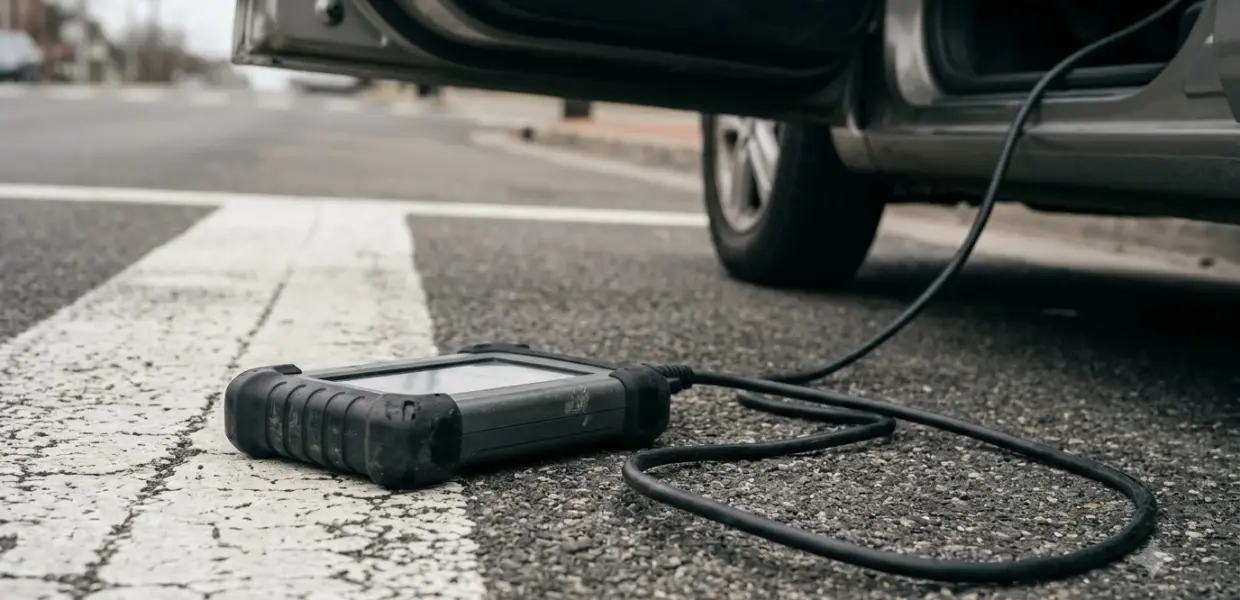

A P0441 Toyota code signals that the evaporative emission control system has incorrect purge flow. The fault sits in the fuel vapor system, and the car usually shows only a check engine light. Most owners can start with a gas cap and hose check before buying parts.
The purge valve, charcoal canister and vacuum hoses all belong to this system, so the cause can be cheap or costly. This guide covers the common causes, the checks you can do at home, and the repair cost ranges published in the guides used here.
What the P0441 Toyota Code Means
P0441 means the engine computer found purge flow that is higher or lower than expected in the EVAP system, according to Samarins’ diagnostic guide.
The purge valve, also called the purge solenoid, controls how much fuel vapor from the charcoal canister enters the engine. When the computer expects one flow rate and measures another, it sets the code. Samarins advises checking any P0446 or P0442 codes first, since the same fault can trigger them alongside a P0441 Toyota code. The general P0441 code guide covers other makes.
The EPA’s emissions modeling report counts fuel vapor escaping the fuel system as its own emission source, and the
A P0441 Toyota fault is usually an emissions issue rather than an immediate breakdown. The car typically drives normally, but the code still needs a cause found, because a leak in the vapor system can keep the light on.
Common Causes of P0441 on Toyota Vehicles
Common causes listed for a P0441 Toyota fault include a loose gas cap, cracked EVAP vacuum hoses, a faulty EVAP VSV valve, a failing purge valve and a cracked charcoal canister.
- Loose, missing or damaged gas cap seal
- Cracked, clogged or disconnected EVAP vacuum hoses
- Faulty EVAP VSV valve
- Failing purge valve
- Cracked or damaged charcoal canister
- Vacuum hose left unplugged or improperly reinstalled after a repair
A hose that was disconnected during an earlier repair is one of the cheapest causes to miss. 8020 Automotive notes that a disconnected or improperly reinstalled hose is a common cause, so trace every EVAP line before you buy parts.
The gas cap is the cheapest first check, and a loose gas cap is a known way to turn the light on. Its seal wears over time, so a cap that looks fine can still let vapor escape and set a P0441 Toyota code.
Symptoms You Might Notice With P0441
P0441 often shows up only as a check engine light, and the car usually drives normally. When symptoms appear, the listed ones are a rough idle and surging at idle.
Those signs can also come from other faults, so a P0441 Toyota diagnosis should include a full code scan rather than a guess based on how the engine feels.
Watch for P0446 or P0456 stored alongside P0441. 8020 Automotive lists these codes with it in some Toyota cases, which helps narrow down the vapor path that needs attention.
A P0441 Toyota code on its own does not show which part failed. Write down the stored codes, the mileage and whether the light came on after refueling. That timing often helps a shop narrow the cause, and it keeps you from replacing parts that were never the problem.
Check the Gas Cap and Visible Parts First
Start with the gas cap and a visual check of the EVAP parts, because these checks cost nothing and come first in the diagnostic steps of the guides used here.
- Confirm the gas cap is tight and its seal is clean and undamaged.
- Look at the charcoal canister for cracks or other visible damage.
- Trace each EVAP vacuum hose and confirm it sits on the correct port.
- Check for P0446 or P0442 codes, since they can share the same fault.
For many late-1990s and early-2000s Toyota and Lexus models, Samarins advises testing the EVAP VSV valve and its hoses, and checking the metal vacuum lines for blockage, then cleaning them if they are restricted. If the canister has shed charcoal pellets into the purge valve or lines, the canister may also need replacing.
A P0441 Toyota repair often needs a few trips before the result is clear. After you tighten the cap or reconnect a hose, watch the check engine light over several drives before deciding the fix worked. A light that stays off is a better sign than a single clean scan.
How to Test the Purge Valve
A good purge valve stays closed without power, holds vacuum with the power off, and opens fully when voltage is applied.
Testing needs a hand-held vacuum pump and a way to energize the valve, such as a scan tool that can command it. Work with the engine off and the car secured.
- Disconnect the purge valve electrical connector and the vacuum lines.
- With no power applied, attach a hand-held vacuum pump and draw vacuum. The valve should hold it.
- Apply voltage, or command the valve with a scan tool, and confirm it opens fully.
- Replace the valve if it leaks or fails to open.
Samarins warns that a valve can stick intermittently and still pass a test. If you suspect the valve, replacing it is reasonable, since the part is not very expensive. Replace it rather than retesting it again and again.
Keep the test focused on what the valve does. A P0441 Toyota diagnosis is about whether the valve holds vacuum when unpowered and opens when powered, and this guide does not cover electrical resistance checks.
Repair Costs for a P0441 Toyota Fix
As listed by 8020 Automotive in a guide updated January 2024, a gas cap costs $0 to $50 and a purge valve costs $50 to $150 in parts.
Prices change, so treat these as a starting range and check current parts prices as of 2026-11-06 before you buy. The table below shows the ranges from that guide.
| Repair | Typical cost listed | Notes |
|---|---|---|
| Gas cap | $0 to $50 | Often the cheapest fix |
| EVAP vacuum hoses and valves | $0 to $50 | Hoses under $10 to do yourself |
| Purge valve | $50 to $150 | The replacement section lists $50 to $100 |
| Charcoal canister | $0 to $200 or more | A new OEM canister runs about $150 to $200 or more |
Labor is estimated at one to two hours or less, which is why many owners handle the first checks themselves. The source does not break costs down by model year, so ask a shop for a quote tied to your specific vehicle.
The ranges above are parts figures, with labor as a separate estimate. Ask whether a quote for a P0441 Toyota repair includes the diagnosis, so you can compare two shops on the same basis.
When to See a Mechanic
Take the car to a shop if the code returns after the basic checks, because a full EVAP system test needs manufacturer-specific tools or a scan tool that can command the purge valve.
- The code returns after a new gas cap and the visible checks
- More than one EVAP code is stored at the same time
- The purge valve tests fine but the code keeps coming back
- You are not comfortable working near fuel system parts
A shop can run the EVAP test and watch system pressure while it commands the purge valve. That step narrows the cause faster than replacing parts one by one.
Bring the codes, the list of checks you finished and the date the light first came on. A P0441 Toyota diagnosis moves faster when the shop starts from those facts instead of from zero.
Frequently Asked Questions
Can I drive with a P0441 Toyota code?
Most cars with this code drive normally, and the check engine light is often the only sign. You can usually drive while you diagnose it, but a leak in the vapor system still needs a cause found. Stop driving if you notice a strong fuel smell or the engine runs roughly.
Will a loose gas cap cause P0441?
Yes, a loose, missing or damaged gas cap seal is one of the causes listed for P0441. Tighten the cap, check the seal, and replace the cap if it looks worn. Then drive a few trips to see whether the code returns.
How much does a P0441 Toyota repair cost?
Costs range from $0 to $50 for a gas cap to about $150 to $200 or more for a new OEM canister, according to a guide updated January 2024. Labor is estimated at one to two hours or less, so get a quote for your specific vehicle.
Should I check other codes with P0441?
Yes. Samarins advises checking any P0446 or P0442 codes first, since the same fault can trigger P0441. Read all stored codes before you buy parts so you replace the right component.
Can I clear the code myself?
You can clear the code with a scan tool, but it returns if the cause is still there. A code that comes back right away usually means the fault is still present. Fix the cause first, then clear the code and drive a few trips to confirm the light stays off.
Start with the gas cap and hoses before buying a part. Those checks cost nothing, and a shop can finish the P0441 Toyota diagnosis if the code comes back. Keep a note of which checks you finished so the shop does not repeat them.
