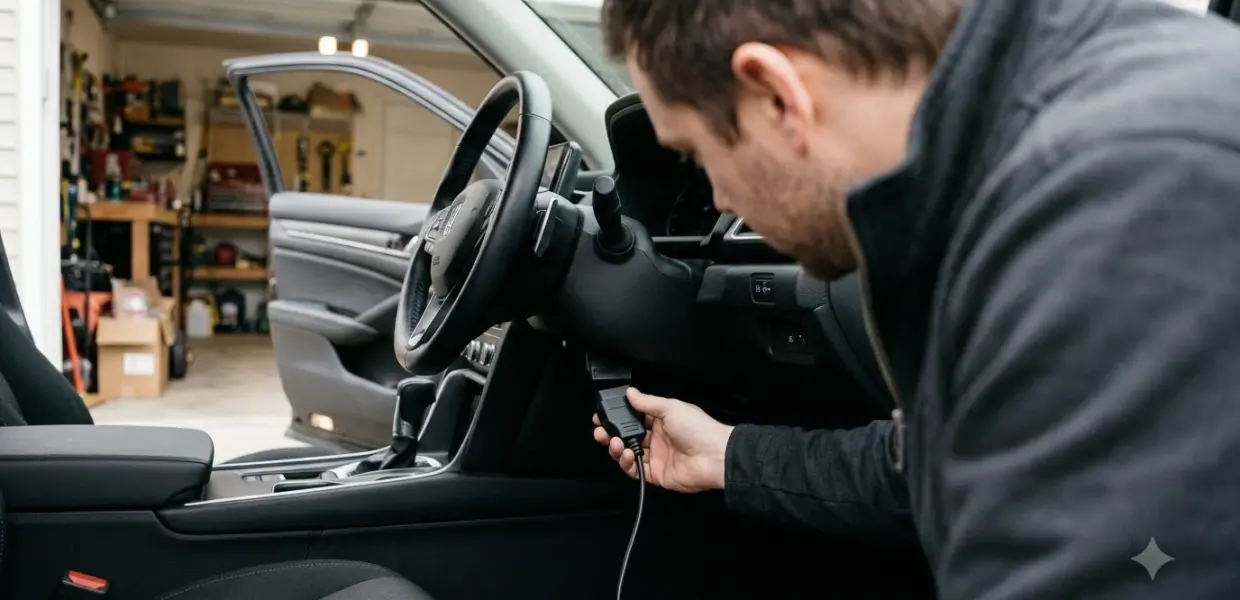

A P0496 code means the engine computer has detected high purge flow in the EVAP system, most often from a purge valve stuck open. It is a generic OBD-II code, and it is usually low severity, but the check engine light should not be ignored.
The useful question is whether the purge valve, a vacuum line or the charcoal canister is at fault. A few simple checks can narrow that down before you buy parts.
What the code means
P0496 is a generic code that means the engine computer sees fuel vapor flowing through the purge valve when that valve is commanded closed. The EVAP system captures fuel vapor from the tank and stores it in a charcoal canister.
The purge valve lets that vapor flow into the intake, where it is burned. Per Kelley Blue Book’s code guide, the code means more air is entering the canister than expected, which sends extra fuel vapor to the engine.
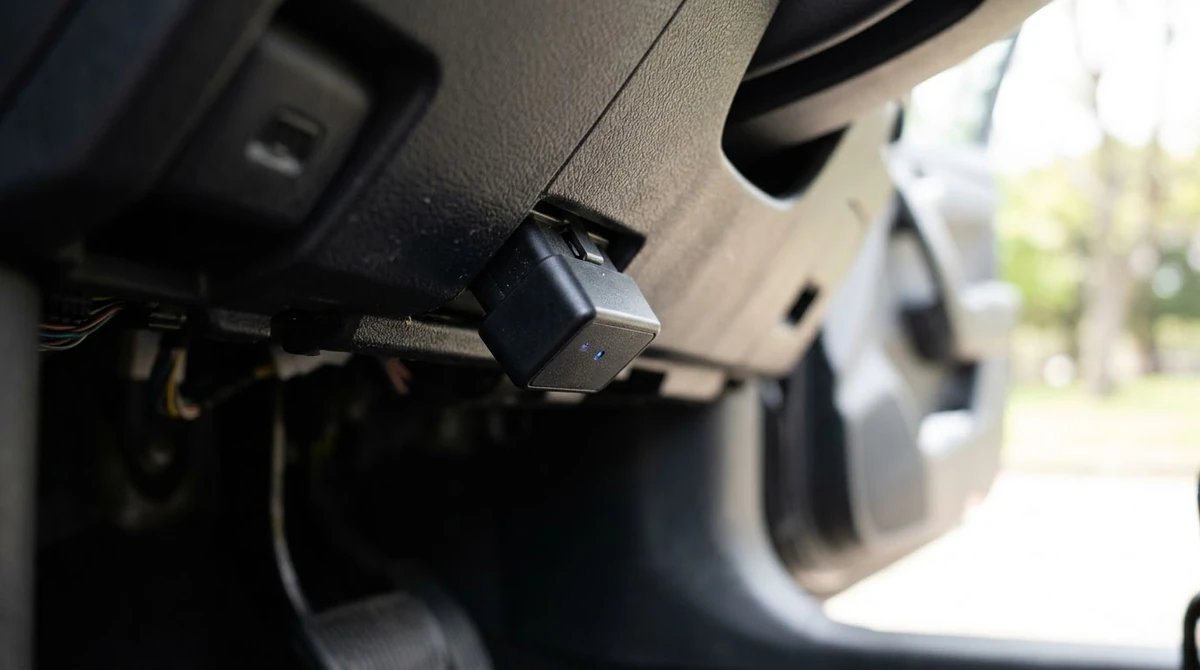
Common symptoms
The most common sign is a lit check engine light. Some vehicles also show a rough or hunting idle, hard starting or a drop in performance.
- Check engine light, the most frequently reported sign
- Rough or hunting idle at a warm engine
- Possible stalling at idle or low speed
- Hard starting, especially after refueling in hot weather
- A faint fuel smell under the hood, although Kelley Blue Book says there is usually no noticeable odor
What causes it
A purge valve stuck mechanically open is the most common cause of this code, according to a MechAI diagnostic guide. The table below lists the other common faults and the first check for each.
| Cause | What goes wrong | First check |
|---|---|---|
| Purge valve stuck open | Vapor flows when the valve should be closed | Warm idle disconnect test |
| Purge or vent solenoid fault | Valve or solenoid does not respond correctly | Bench test with a hand vacuum pump |
| Kinked or damaged vacuum line | Creates an extra vacuum path | Inspect hose routing and cracks |
| Cracked intake manifold | Lets air into the intake past the valve | Smoke test with the valve disconnected |
| Wiring fault or poor connection | Signal or power problem at the valve | Inspect the connector and harness |
| Saturated charcoal canister | Liquid fuel in the canister | Check the canister and lines for liquid fuel |
| Faulty EVAP or fuel pressure sensor | Sends a wrong reading to the computer | Review sensor data with a scan tool |
Because several parts can set the same code, the code alone does not confirm which part failed. Test the valve and its lines before you replace anything. A different EVAP fault sets a different code, such as the EVAP vent control circuit fault or a very small EVAP leak.
Wiring deserves attention too. According to MechAI’s guide, a wiring fault can hold the valve open, so inspect the connector, harness and ground for corrosion or chafing before condemning the valve itself. Kelley Blue Book also lists the vent solenoid among the parts to check, so the vent side of the system belongs in the inspection.
Can you drive with it?
Yes, usually for short trips, because this is a low-severity code. Kelley Blue Book notes that apart from the warning light, the code produces few obvious driving problems and does not call it unsafe to drive. The EPA’s on-board diagnostics fact sheet says the check engine light tells the driver that service is needed, not that the vehicle must be stopped.
Delay still matters. A lit check engine light from P0496 warrants prompt diagnosis, because a rich-running engine can damage the catalytic converter over time. That is a larger bill, so see what a failed catalytic converter costs before you put the repair off.
Stop driving and arrange a tow or a shop visit if the engine stalls, the car becomes hard to start, or the idle gets very rough.
How to diagnose P0496
You can narrow down this code with a warm idle test and a bench test of the purge valve before replacing parts. The steps below follow the order in MechAI’s diagnostic guide.
- Trace the canister hose to the purge valve on the intake side.
- With the engine warm and idling, disconnect the valve. If the idle smooths out, the valve was likely leaking vapor.
- Bench-test the removed valve with a hand vacuum pump. It should hold vacuum with no voltage and release it when 12 volts are applied.
- Check the canister and its lines for liquid fuel, which points to a flooded canister.
- Smoke test the system with the purge valve disconnected to look for a cracked intake manifold.
Read the results in order. If the valve holds vacuum with no power and releases at 12 volts, the valve is less likely to be the cause, and the lines, the canister and the intake manifold move up the list. If the valve fails either test, replacing it is the logical next step, but only after the wiring has been checked.
Keep hands and loose clothing clear of the belts and fan while the engine runs. Checking that the gas cap clicks shut and its seal is intact is a quick first look at the EVAP system. When the scan shows a broader EVAP fault instead, read about the general EVAP malfunction code P0440.
How to fix P0496
The usual fixes are replacing the purge valve, repairing its wiring or a hose, replacing a saturated canister, or repairing a cracked intake manifold. Choose the P0496 fix that your test results support.

- Replace the purge valve, the most common fix
- Repair the purge valve wiring or the engine computer driver
- Replace a saturated charcoal canister
- Repair or replace a cracked intake manifold
- Repair a kinked or damaged vacuum hose
No manufacturer bulletin was reviewed for this article. A dealer can check whether one applies to your VIN, which is faster than guessing at parts.
Clearing a P0496 code only turns off the light and does not fix the fault. Retest the system after the repair to confirm that the code stays off.
Repair cost and shop versus DIY
Repair cost for P0496 depends on the make, model and labor rate, but Kelley Blue Book describes it as relatively inexpensive for a mechanic to repair the faulty EVAP components.
Where the fault sits changes the job size. A purge valve or a hose is usually a small part to reach, while a cracked intake manifold is a much bigger repair. Your test results decide which of these you are paying for, so run the checks before you ask for a quote.
A DIY repair can be cheap if the fault is a loose or cracked hose. Diagnostic tools can cost more than a simple repair, so weigh the tools against the job before you start.
MechAI, in a guide updated May 25, 2026, lists rough US ranges of $80 to $300 for a stuck purge valve, $20 to $100 for a damaged vacuum line and $250 to $900 for a cracked intake manifold. Treat these as a guide only, since Kelley Blue Book gives no dollar figures. Before approving work, ask the shop to name the failed part and to give a written quote that lists parts and labor.
Frequently Asked Questions
Is P0496 an emergency?
No, P0496 is usually not an emergency and is not described as an immediate safety problem. It is still a low-severity warning, so schedule a diagnosis soon. Delay can lead to further damage, including to the catalytic converter, according to Kelley Blue Book.
Can a loose gas cap cause P0496?
The gas cap is a quick first look at the EVAP system, so check that it clicks shut and the seal is intact. The sources reviewed for this article do not single out the cap as a cause of P0496, so if the code returns, move on to the valve, lines and canister.
Will clearing the code fix P0496?
No. Clearing the code only turns off the warning light and does not repair anything. If the purge valve, a hose or the canister is still faulty, the code can set again. Repair the cause first, then confirm the fix with a follow-up scan.
Does P0496 cause a failed emissions test?
It can. MechAI lists a failed emissions or smog test as a possible symptom and warns that ignoring the code can lead to one. Fix the cause and recheck the system before the test to avoid a fail.
Can I fix P0496 myself?
Often yes, if the fault is an accessible purge valve, a cracked hose or loose wiring. Start with the warm idle test and the bench test, which need only basic tools. Get a shop involved if the tests are unclear or if the intake manifold needs work.
Before replacing the canister or the engine computer, have the purge valve, its wiring and the vacuum lines tested. Those parts are common sources of P0496. If the engine stalls or runs very rough, stop and have the car inspected.