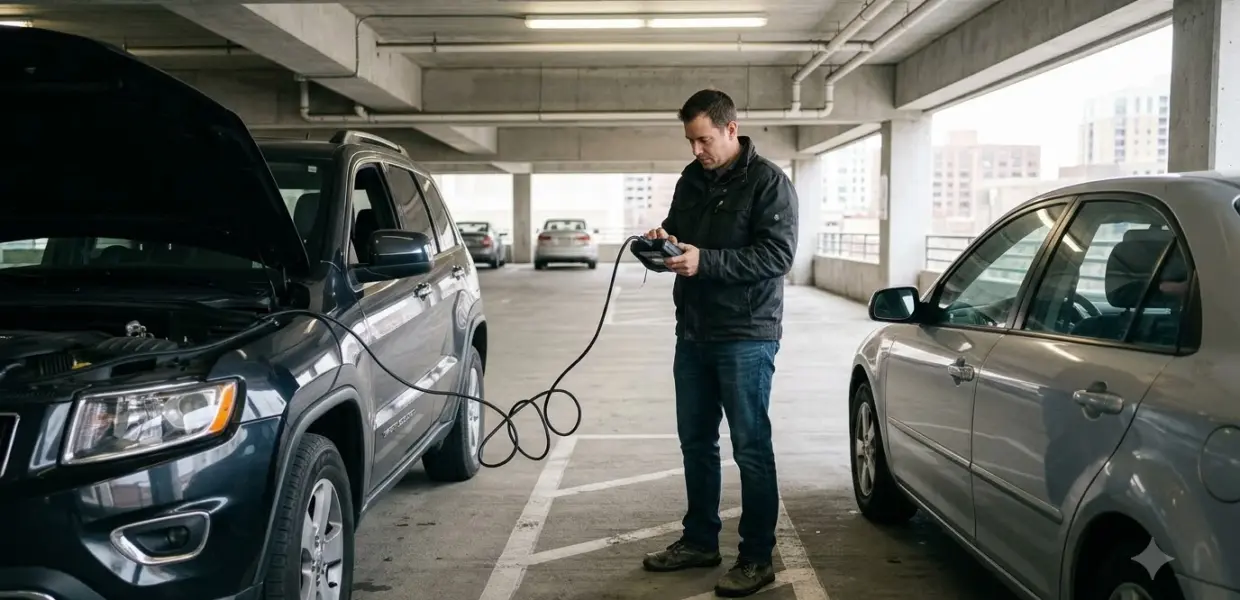

The Honda Civic thermostat location sits where a radiator hose meets the engine, but the exact hose and side depend on the generation and engine. Sources disagree on details, and none covers every model year, so check your year and engine before you open anything.
The table below marks which honda civic thermostat location spots are reported, which conflict and which still need a service manual. Read the safety section before any access step.
What the Thermostat Does in Your Civic
According to Motorist’s thermostat guide, the thermostat controls coolant flow so the engine holds its ideal operating temperature. When the engine is cold, the thermostat stays closed, so coolant does not circulate until the engine warms up.
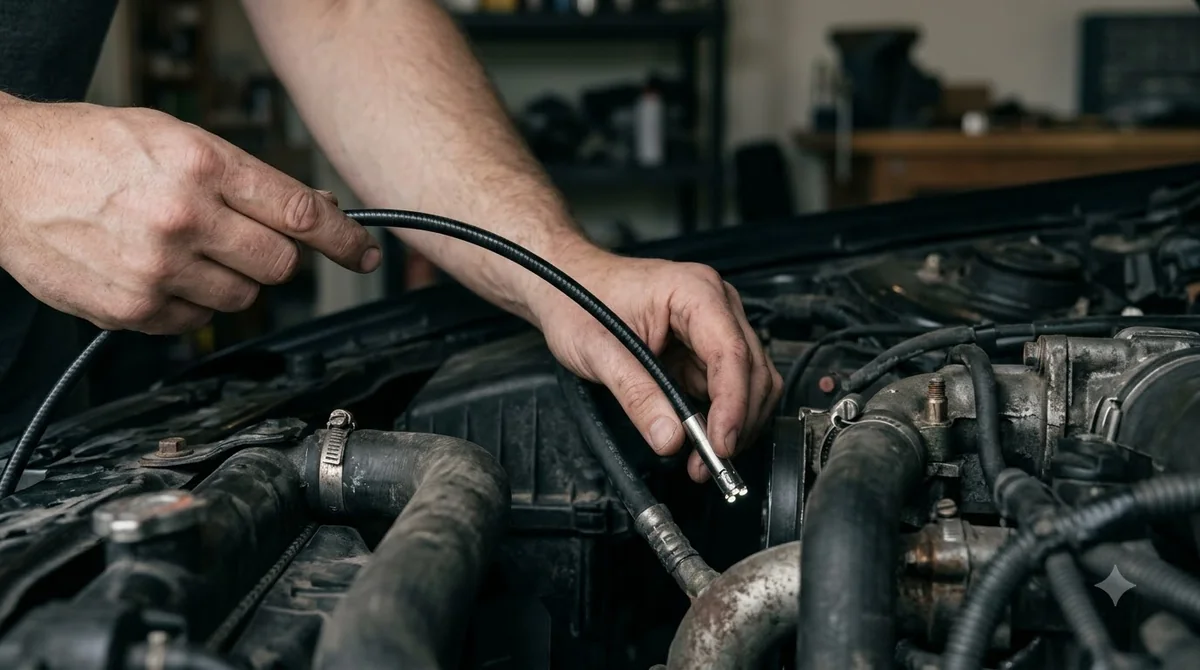
The thermostat sits in a housing bolted to the engine. You usually find that housing by following a radiator hose, which is why the honda civic thermostat location changes with the hose layout. Hose layouts differ between generations and engines, so one method does not give the same honda civic thermostat location on every Civic.
Honda Civic Thermostat Location by Generation and Engine
The honda civic thermostat location is reported near a radiator hose at the engine, but only the 2006 to 2011 R18A has a Honda-derived service source, and other years lack one. The table below separates reported honda civic thermostat location spots from confirmed ones. Read each row as a lead to check for the honda civic thermostat location, not as a final answer.
| Generation and engine | What the sources say | Status |
|---|---|---|
| 2006 to 2011 Civic, 1.8L R18A | A copy of Honda’s service steps removes the lower radiator hose and bypass hoses before the thermostat housing. No page states the housing location. | Procedure order confirmed; location not confirmed |
| 1.8L Civic, years not stated | A Honda parts specialist’s answer on HondaPartsNow says to reach the thermostat from the top of the engine bay and to find the housing cover by following the lower radiator hose to the engine. | Parts-dealer answer, no model years |
| 2.4L Civic, years not stated | The same answer says the thermostat is reached from underneath, after the front is raised and the splash shield is removed, and that the cover and thermostat are replaced as one assembly. | Parts-dealer answer, no model years |
| 2012 to 2015 Civic | Parts-retailer guides point to the upper radiator hose, and one says upper or lower depending on model. | Unverified, parts-retailer only |
| 2016 to 2021 Civic, 1.5L turbo (L15B7) | One DIY guide places the thermostat on the side of the engine block. Honda’s 2026 head-gasket bulletin lists a thermostat case gasket, with no location. | Single guide, unverified |
| 2016 to 2021 Civic, other engines | Not checked in this review. | Not confirmed |
| 2022 and newer Civic | Not checked in this review. | Not confirmed |
| 1999 to 2005 Civic | Owner reports disagree on which hose leads to the housing. | Conflicting, unverified |
2006 to 2011 R18A (1.8L)
The clearest source is a copy of Honda’s R18A service steps on HondaBook. Its removal order lists the lower radiator hose, the water bypass hoses and another radiator hose before the thermostat housing. The steps never state where the housing sits, so the lower-hose link is an inference, not a confirmed location. The copy also lists the EGR pipe and EGR valve among parts removed with the housing. A Honda parts specialist’s answer on HondaPartsNow points the same way for 1.8L cars, with no model years: follow the lower radiator hose to the engine to find the housing cover.
2012 to 2015 and the 2016 to 2021 turbo
Parts-retailer guides for 2012 to 2015 point to the upper radiator hose, and one says the hose depends on the model. That conflicts with the Honda parts specialist’s lower-hose advice for 1.8L cars, so neither is settled. For the 1.5-liter turbo, one DIY guide describes the thermostat on the side of the engine block in a cramped bay. Honda’s 2026 head-gasket bulletin for the 2016 to 2017 1.5-liter turbo lists a thermostat case gasket among its parts, with no location.
Older Civic models (1999 to 2005)
Owner reports from these years disagree on which radiator hose leads to the housing. Treat any single report as a starting point until a service diagram for your year confirms the route.
How to Find the Thermostat Without Damaging Parts
Each Civic has an upper and a lower radiator hose, and the housing sits where one of them meets the engine, so trace both hoses before you remove any part. Finding the honda civic thermostat location this way works for any generation.
- Let the engine cool completely, then open the hood.
- Follow the upper and lower radiator hoses to the engine to find the honda civic thermostat location, and note which one leads to a housing bolted to the block.
- Compare the layout with a service diagram for your exact year and engine.
- Photograph the thermostat and its position before you remove it, so you can match the orientation on reinstall.
On the 1.5-liter turbo, one DIY guide says the plastic turbo inlet pipe and a vacuum line bracket block access and should come off first. That claim comes from a single guide, so confirm it on your own engine before you start.
Cooling-System Safety Before You Touch Anything
Let the engine and radiator cool fully before you open the radiator cap, because pressurized coolant can spray out and cause serious burns. Honda’s owner’s manual page on adding coolant gives the same warning, so it applies to every honda civic thermostat location job. The page does not name a model, but it says removing the radiator cap while the engine is hot can spray coolant and seriously scald you.
Before you drain or disconnect any cooling-system hose, work through this checklist.
- Check the coolant reserve tank level while the engine is cold.
- Open the radiator only if the reserve tank is empty, which is general practice rather than Honda wording.
- If you do open the cap, Honda’s page says to turn it 1/8 turn counterclockwise first to relieve any pressure.
- Keep a drain pan and towels ready.
- Wear eye protection when you work near the radiator cap and hoses.
Symptoms of a Bad Thermostat
A thermostat stuck closed can make the engine overheat, while one stuck open makes the engine slow to warm up, according to Motorist. Checking for these signs helps you confirm a bad part before you work on the honda civic thermostat location. A stuck-closed unit restricts coolant flow, and Motorist also lists cool air from the heater, poor fuel efficiency and dashboard warning lights as signs. A single symptom is not proof, so check the gauge and warm-up together. If your scan tool also shows a coolant-temperature code, see the P0128 code guide.
| Symptom | Stuck closed | Stuck open |
|---|---|---|
| Temperature | Engine can overheat | Gauge stays low, even on long drives |
| Warm-up | Not listed in the source | Takes longer to reach operating temperature |
| Heater | Cool air from the heater | Not listed in the source |
| Dashboard | Warning lights | Not listed in the source |
| Fuel economy | Poor fuel efficiency | Not listed in the source |
When a Shop Is the Better Choice
Cars.com says a thermostat usually needs replacing only when it fails, and a computer-controlled unit that is hard to reach can cost several hundred dollars at a shop. The same Cars.com thermostat advice notes that on high-mileage cars, replacing the water pump, radiator or radiator hoses often covers most of the expense of the thermostat job. For a price idea on the pump, see the water pump replacement cost guide.
Before you decide who does the job, compare the honda civic thermostat location with your service diagram. A shop is the safer choice when the layout does not match, or when the engine bay is cramped. One DIY guide reports a cramped bay on the 1.5-liter turbo, so that engine is a fair case for a professional.
Related Guides
Frequently Asked Questions
Why do sources disagree on the Honda Civic thermostat location?
Most sources are parts-retailer listings, DIY blogs and forum posts, and they cover different model years and engines. Few are Honda-hosted, and none covers every generation. Confirm the honda civic thermostat location for your exact year and engine in a factory service manual before you open the cooling system.
Do I need to drain the coolant to replace the thermostat?
A copy of Honda’s 2006 to 2011 R18A service steps starts by draining the engine coolant before the thermostat comes out. Check your own service manual for the drain point, refill steps and any bleeding procedure, because that copy lists no torque values or drain details.
Should I replace the gasket when I reinstall the thermostat?
Parts listings for the honda civic thermostat location often pair the part with a new seal or gasket. Honda’s 2026 head-gasket bulletin for the 2016 to 2017 1.5-liter turbo lists a thermostat case gasket among its parts, so plan on a new gasket for that engine and confirm the part number for your VIN.
Is the 2016 to 2021 thermostat location confirmed?
No. Only one DIY guide’s search summary places the thermostat on the side of the engine block, and no service manual page confirmed it for this article. Treat the honda civic thermostat location for that engine as unverified until a diagram for your exact year and engine shows it.
Should I check the coolant reserve tank before I open the radiator?
Yes. Check the reserve tank level with the engine cold, since it shows the coolant level without opening the pressurized system. Opening the radiator only when the tank is empty is general practice. Honda’s page says to let the engine and radiator cool first and to turn the cap 1/8 turn counterclockwise to relieve pressure before removing it.
Confirm your exact year and engine in a factory service manual before any access step. The sources here conflict and do not cover every model, so a diagram for your own car beats any general guide to the honda civic thermostat location, including this one.