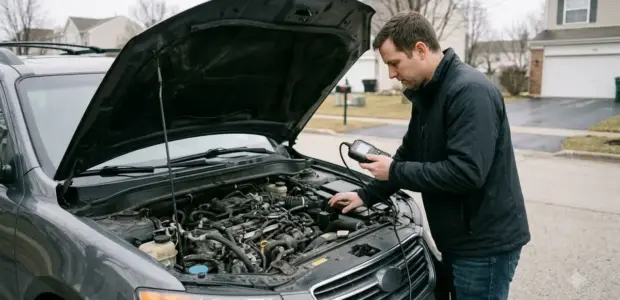

A P0456 code means your car has detected a small leak in its evaporative emissions (EVAP) system. That system traps fuel vapor from the gas tank in a charcoal canister, then sends it to the engine to burn.
In most cases a loose or damaged gas cap causes the code, and that is the cheapest fix. Check the cap before you pay for hoses, valves or a shop visit.
P0456 Code Meaning: A Small EVAP Leak
The P0456 code is a generic OBD-II code for a small leak in the EVAP system. The leak is very small, and the engine computer usually needs to see it on two tests in a row before the check engine light comes on.
The EVAP system keeps fuel vapor from escaping the gas tank, so even a tiny gap in it can set the P0456 code. Repair advice varies by make and model, so check a service guide for your vehicle before you start a repair.
A P0456 code is a warning about fuel vapor loss, not a sign that the engine is failing. Repair guides rate its severity as very low.
Common P0456 Causes, From Most to Least Likely
A loose or damaged gas cap is the most common cause of P0456, followed by cracked EVAP hoses and faulty canister or valve parts. Repair guides list the causes in a similar order. Leaks in the vapor system are a cousin of the vacuum leaks behind vacuum leak and lean fuel trim.
Check the cheapest and most frequent cause first, then move down the list before you buy any parts.
The P0456 code does not name the exact failed part, so the list is a guide to where to look rather than a final diagnosis.

- Damaged or loose gas cap: a cracked seal or an untightened cap lets vapor out.
- Faulty EVAP hose: a crack or loose connection causes a leak.
- Leaking or stuck purge valve: it controls how vapor flows to the engine.
- Bad charcoal canister: the canister traps fuel vapor and can be damaged.
- Defective canister vent control valve: a faulty vent valve can let vapor escape.
- Fuel tank leak: rare, but some guides list it as a cause.
Is It Safe to Drive With P0456?
Most cars drive normally with a P0456 code, and repair guides rate its severity as very low, but the leak should still be fixed. The code rarely affects how the engine runs. The dash message can read differently by brand, as service engine soon warning meaning explains.
The bigger concerns are a failed emissions test, wasted fuel and damage to EVAP parts if the leak is ignored. Drivers may notice these signs while the code is active:
- Check engine light, which may be the only warning
- Slightly lower fuel economy
- A faint fuel smell near the rear of the car
- A failed emissions test
A strong fuel odor or a visible fuel leak is not a normal P0456 sign. Have a shop inspect the car soon in that case.
How to Diagnose the Code Step by Step
Start with the gas cap and the visible hoses, then scan the car and read the freeze frame data before you replace any part. Repair guides suggest a simple order, so you find the cheap fix first and avoid replacing parts that still work. After tightening or replacing the cap, clearing codes after an EVAP repair covers how to turn the light off.
- Inspect the gas cap seal and replace the cap if the seal is damaged.
- Check the EVAP hoses, the charcoal canister and the purge valve for cracks or loose connections.
- Scan the car, confirm the P0456 code is stored, and review the freeze frame data.
- Clear the code, tighten or replace the cap, and drive for several cycles to see if the code returns.
- If it comes back, have a smoke test run to find the leak around the tank and hoses.
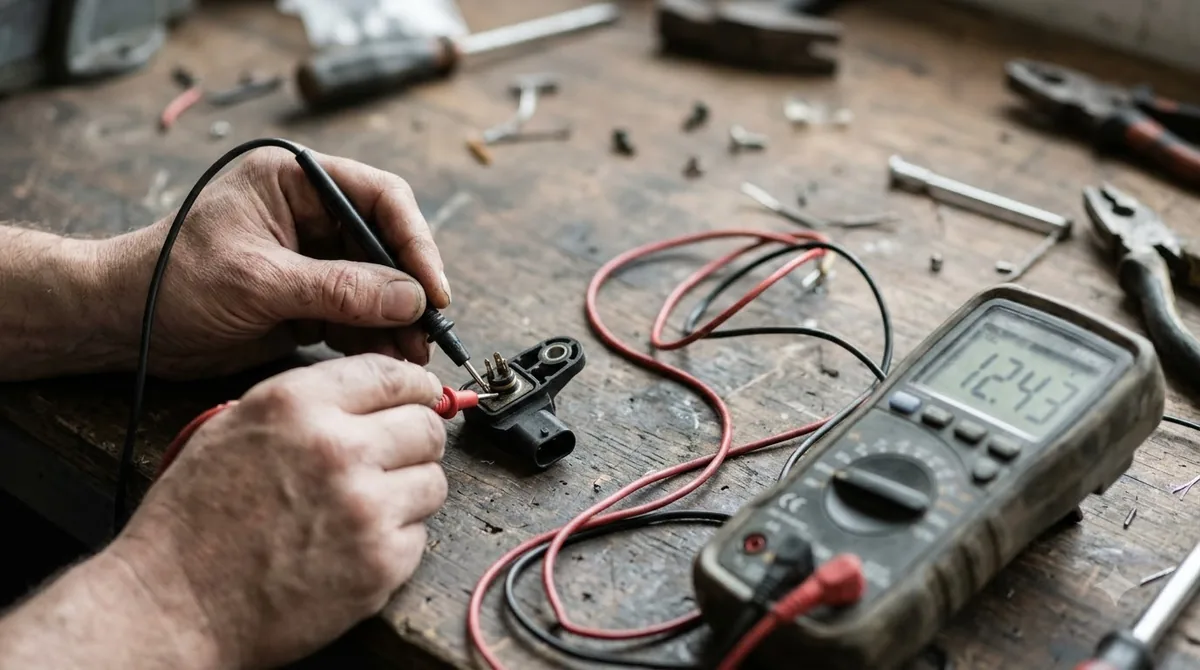
According to MechanicBase, a purge valve can be tested with a multimeter at 12 volts with a good ground, along with a scanner output test.
Keep notes on each step so you know which change made a difference. If a repair does not clear the P0456 code, those notes help a shop start from the right place.
How Much It Costs to Fix P0456
As of 2026-11-03, a new gas cap costs $5 to $35, while most other repairs fall between $75 and $450, according to MechanicBase estimates. Prices vary by make, model and shop, so use these figures as a starting range.
| Repair | Typical cost (parts and labor) | When it is needed |
|---|---|---|
| Gas cap | $5 to $35 | Seal is cracked or the cap is worn |
| EVAP hose | $75 to $250 | A hose is cracked or loose |
| Charcoal canister | $95 to $450 | The canister is damaged |
| Canister vent control valve | $125 to $350 | The valve is stuck or defective |
| Fuel tank | $450 to $3,000 | Rare, after other causes are ruled out |
Doing the work yourself costs less than these estimates, according to the same guide. A gas cap is the cheapest repair and the first thing to check for a P0456 code.
A fuel tank replacement is the worst case rather than the expected bill, because the tank is listed as a rare cause.
When you compare repair quotes for a P0456 code, ask the shop to confirm the leak before replacing parts. Testing first can save you from paying for a canister when the cap was the real problem.
What a Loose Gas Cap Does to the Light
The EPA says a cap left loose after refueling can trigger a vapor leak, and the dashboard light should go out within a few days once the cap is tightened.
The EPA’s On-Board Diagnostics fact sheet explains that the car can detect a vapor leak when the gas cap is not properly tightened after refueling.
If you tighten the cap, the light should go out within a few days, according to that document. The light can also turn off by itself after the system checks the component three times in a row without finding the fault.
After any refuel, make sure the cap is tightened fully, since that is the situation the EPA example describes.
A light that stays on well after a tightened cap points to another part of the system, so keep looking rather than tightening the cap again.
When P0456 Keeps Coming Back
If the P0456 code returns after you replace the cap, the leak is likely in a hose, valve or canister, and a smoke test is the next step. A repeat code means the cap was not the only problem.
A smoke test shows where vapor is escaping, so you can replace the faulty part instead of guessing. This advice covers a single P0456 code on a car that drives normally.
If the scanner shows other EVAP or engine codes, read those first, since they can point to a different part of the system. Reading other EVAP codes and choosing an OBD-II scanner are separate topics that this page does not cover.
Keep a simple timeline of each repair and code check. It helps a mechanic see whether the P0456 code returned after the cap, the hose or the canister was changed.
Frequently Asked Questions
Can I fix a P0456 code by tightening the gas cap?
Often, yes. A loose cap is the most common cause of P0456, so tighten it or replace it if the seal is worn. Then drive normally for several days and check whether the light goes out. If the code returns, the leak is elsewhere and a smoke test is the next step.
How long does the check engine light take to go off?
The EPA says the light should go out within a few days after the cap is tightened. The system can also turn it off by itself after three clean checks. If the light stays on longer than that, have the car inspected rather than waiting, because the leak may be in a hose, valve or canister.
Will P0456 fail an emissions test?
It can. Repair guides say the light may cause a failed emissions test, since vapor is escaping from the system. Fix the leak before the test, and confirm the code has not returned after the repair. A repeat code during testing usually means the leak is still present and needs a new diagnosis.
Will clearing the code turn the light off for good?
Not necessarily. Clearing the code only resets the light, and the code returns if the leak is still there. Repair guides advise driving several cycles after a repair to confirm it worked. If the code appears again, go back to the diagnosis steps and check the hoses, canister and purge valve.
Does P0456 mean I need a new fuel tank?
Almost never. Repair guides list the fuel tank as a rare cause, and cheaper parts are checked first. A tank replacement can cost up to $3,000, so it is the last step rather than the first. Start with the gas cap, then the hoses, and work toward the tank only if the cheaper fixes fail.
A P0456 code is usually a cheap fix, so there is no need to panic. Check the gas cap first, then drive normally for several days. If the code returns, book a smoke test rather than replacing parts one by one.