
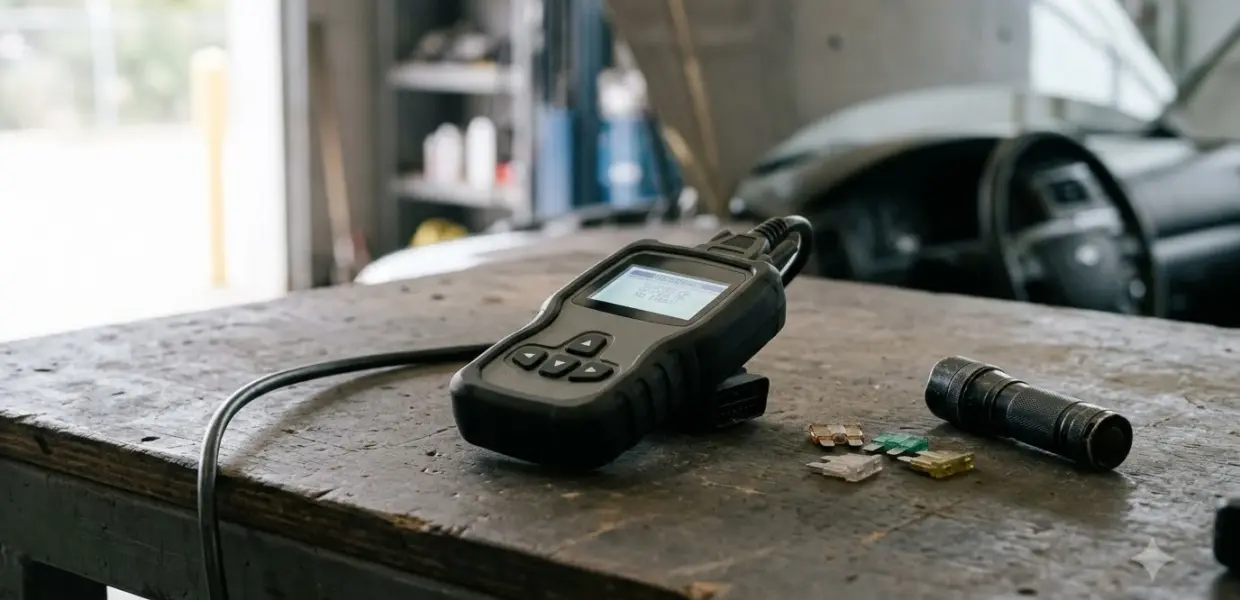

P0133 is an OBD-II code that means the front oxygen sensor on Bank 1 responds too slowly to changes in the air-fuel mixture. Your check engine light comes on, but the sensor is not always the part that failed. This guide explains the likely causes and how to narrow them down.
Most drivers see only the warning light and assume the sensor must be replaced. A few simple checks can separate a bad sensor from a wiring fault or a leak, which can save you money on parts you may not need.
What the P0133 Code Means
P0133 stands for O2 Sensor Circuit Slow Response, Bank 1 Sensor 1. It points to the upstream sensor on the cylinder 1 side of the engine, the one mounted before the catalytic converter.
Bank 1 is the side of the engine that contains cylinder 1, and Sensor 1 is the oxygen sensor closest to the engine. According to Mechanicbase’s code guide, the code means this sensor is not changing voltage fast enough when the air-fuel mixture shifts.
The engine computer relies on this sensor to judge whether the mixture is rich or lean, then it adjusts fuel delivery. When the sensor responds slowly, the computer works with late information. That is why the code is about signal speed, not always a dead sensor.
The Ross-Tech wiki says the front signal is checked while the engine runs. The code sets when the sensor shows a delayed response or slow transitions between rich and lean readings. In other words, the sensor may still produce a signal, but that signal arrives too late to be useful.
Common Causes of P0133
The most common causes are a worn oxygen sensor, damaged wiring, a faulty mass airflow sensor, and exhaust or vacuum leaks. The list below is not ranked, so check each item before you spend money on parts.
- A bad or worn O2 sensor
- Defective wiring or a damaged connector
- A malfunctioning mass airflow (MAF) sensor
- An exhaust leak ahead of the sensor
- A vacuum leak in the intake
- A bad engine computer (ECM), which is rare
Contamination is another common reason. The Ross-Tech wiki entry for this fault notes that silicone, coolant and leaded fuel additives can contaminate the sensor. It also lists fuel pressure problems and unmetered air as possible causes.
P0133 belongs to the P0130 to P0141 family of oxygen sensor codes. For example, the P0141 Bank 1 Sensor 2 heater code covers the rear sensor, so check which sensor your scan tool names before you start.
Symptoms You Might Notice
Many vehicles with this code show only the check engine light. Some drivers also notice changes in how the engine runs, which are useful clues when you narrow the cause.
- Check engine light, often the only sign
- Unusual exhaust smoke
- Rough engine performance
- Reduced fuel economy
- Erratic idle
- Misfiring or stalling
If misfires or stalling appear, the car needs attention sooner than a light that stays steady. Treat those signs as a reason to cut back on driving until the cause is found.
A slow sensor can go unnoticed until fuel economy drops, driveability problems appear or the car fails an emissions test, so a quiet light does not always mean the car is running well.
How to Diagnose P0133 Step by Step
To diagnose P0133, fix related codes first, then inspect the sensor wiring, the MAF sensor and the intake and exhaust for leaks. Replacing the sensor first is the most common way to waste money on this code.
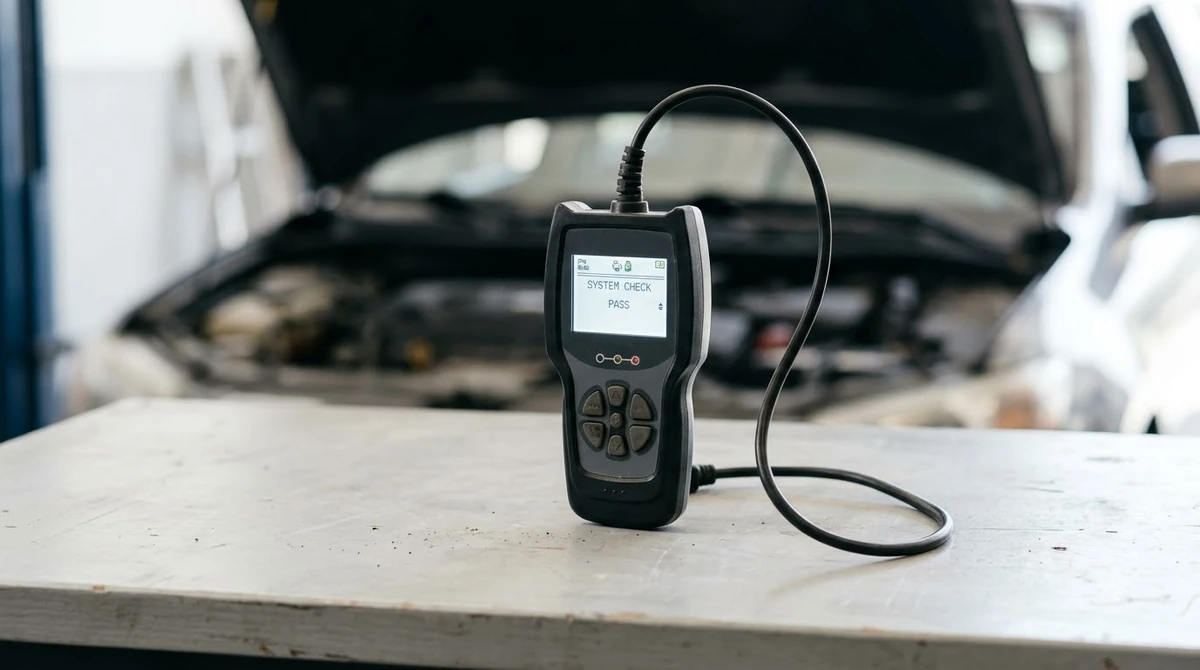
- Read all stored codes and fix any others first, since a repair may clear P0133 on its own.
- Check the freeze frame data to see the engine conditions when the code set.
- Inspect the front oxygen sensor, its wiring and its connector.
- Inspect the MAF sensor and its connectors.
- Check for vacuum leaks and exhaust leaks around the sensor.
- Check fuel trims and confirm the front sensor heater circuit works.
- Replace the oxygen sensor only if nothing else is wrong.
- Clear the codes, then test drive to confirm the check engine light stays off.
Ross-Tech states that its page gives no exact voltages, resistances or switching times for this code. Check the factory repair information for your vehicle before you condemn the sensor. If a MAF code is also stored, the P0101 MAF sensor code guide explains that fault.
A slow sensor is harder to confirm than a dead one, because a basic scanner alone cannot prove the sensor is slow. A shop that can graph the sensor’s voltage is the practical route, and testing an oxygen sensor with a multimeter covers the signal checks you can run yourself.
How Much Does the Repair Cost?
Repairs for P0133 typically range from about $50 to $550, depending on whether the fix is wiring, a leak, a MAF sensor, an O2 sensor or an ECM update. The table uses the parts and labor ranges listed by Mechanicbase, as of 2026-11-06. That source was last updated in November 2025, so prices vary by vehicle and local labor rates.
| Repair | Typical cost range |
|---|---|
| Clean or replace O2 sensor | $75 to $450 |
| Repair or replace wiring or connector | $50 to $550 |
| Replace MAF sensor | $75 to $350 |
| Repair exhaust leak | $50 to $350 |
| Repair vacuum leak | $75 to $375 |
| Update or replace ECM | $250 to $2,500 |
The lowest-cost outcome is usually a leak or connector repair, so diagnose before you buy parts. For sensor pricing alone, see the oxygen sensor replacement cost guide. An ECM update is rare and sits at the top of the range.
The cheapest fix is the one that matches the actual cause, which is why the diagnosis steps come first. Mechanicbase warns that prolonged driving can damage costly parts such as the catalytic converter, which costs far more than a sensor (see catalytic converter replacement cost). Waiting too long can turn a sensor job into a converter job.
Is It Safe to Drive With P0133?
P0133 is rated as a medium severity code, so short trips are usually safe. Mechanicbase warns that prolonged driving can damage costly parts, such as the catalytic converter, so do not ignore the light for weeks.
The safe approach is to diagnose soon, even when the car drives normally.
Stop driving and arrange a repair if you see misfires, stalling, heavy exhaust smoke or rough running. Those signs mean the engine is not running cleanly, which is a different risk from a steady light. This guidance covers a steady light only, not a car that is already unsafe to drive.
Common Mistakes When Fixing This Code
The most common mistake is replacing the oxygen sensor first. That often leaves the real cause in place, and the code returns after a few drives.
- Buying a sensor before checking wiring and connectors
- Ignoring other stored codes that may clear after one repair
- Skipping the vacuum and exhaust leak checks
- Clearing the code without a test drive
Clearing the code with a scanner only hides the symptom. Road test the car after any repair, then rescan to confirm the fault has not returned.
Frequently Asked Questions
Does P0133 always mean the oxygen sensor is bad?
No. P0133 can come from the sensor, its wiring, a MAF sensor problem or an exhaust or vacuum leak. Mechanicbase lists all of these as causes, so inspect the wiring and check for leaks before you buy a sensor.
Does the P0133 code mean the sensor is dead?
Not necessarily. The code means the front sensor changes voltage too slowly when the mixture shifts, according to Ross-Tech. A slow sensor can also be a symptom of wiring faults or leaks, so test before you replace it.
How long can I drive with P0133?
Short trips are usually safe under Mechanicbase’s medium severity rating. Stop driving and get the car checked if you notice misfires, stalling or heavy exhaust smoke, because prolonged driving can damage the catalytic converter.
Can I clear P0133 myself?
Yes, a basic scanner can clear stored codes. The code usually returns if the cause remains, so confirm the repair with a road test and a rescan.
How much does it cost to fix P0133?
Typical parts and labor range from $50 to $550, according to Mechanicbase’s cost ranges. Your price depends on the vehicle, the cause and local labor rates, so get a written quote before you approve work.
Start with the cheapest checks: codes, wiring and leaks. If those are clean and the sensor still reads slow, replacing the sensor becomes the logical next step. Ask the shop whether it tested the sensor response before recommending a replacement, and keep the old codes and freeze frame data on your records for comparison.
