

The oxygen sensor replacement cost depends on the sensor’s position, your vehicle, and whether a shop or you do the work. KBB puts a dealership replacement at about $350 using OEM parts, and AAA lists an O2 sensor part alone at about $350 to $400 as of November 3, 2026.
Get a diagnosis before you buy a sensor, because a fault code points to a circuit and the cause can differ. A useful quote names the sensor position, your year, make and model, and the labor rate.
Repair costs vary by vehicle, region and shop. The figures here come from published estimates, not a quote for your car, so get a written estimate before approving any work. O2 sensor replacement cost and oxygen sensor replacement cost describe the same job, so the figures here apply under either name.
What an Oxygen Sensor Does in Your Car
An oxygen sensor measures the exhaust, and the upstream and downstream sensors do different jobs. According to KBB, upstream sensors help the engine keep fuel efficiency by adjusting the air-fuel mixture, while downstream sensors monitor the catalytic converter to help the car meet emissions standards.

Position matters when you estimate the oxygen sensor replacement cost, because the wrong position means the wrong part. Because each position has its own job, a code or a symptom does not always name a single sensor. The shop needs to confirm which sensor the fault points to before any part is ordered.
Upstream and Downstream Sensors Serve Different Roles
The position of the sensor decides which fault it can reveal, so the oxygen sensor replacement cost depends on where the sensor sits in the exhaust. The table lists the roles that KBB describes, and what each role means for your estimate.
| Position | Role (per KBB) | What it means for your estimate |
|---|---|---|
| Upstream (before the catalytic converter) | Helps adjust the air-fuel mixture for fuel efficiency | Confirm the exact sensor on your vehicle before ordering a part |
| Downstream (after the catalytic converter) | Monitors the converter to help meet emissions standards | Ask whether the converter was checked, not only the sensor |
Ask the shop to name the position in writing, because a vague quote hides the real part. A vague quote that says only “oxygen sensor” leaves room for a wrong part or an unnecessary job.
On price, upstream sensors generally cost $100 to $250 more than downstream sensors, according to AAA as of November 3, 2026, because they manage the fuel mixture in real time. AAA advises asking which sensor is being quoted, because the two are not interchangeable in cost or function, and the wrong position alone can shift the cost by $100 to $250. A downstream sensor that reads lean can also store a fuel trim code, and post-catalyst lean fuel trim checks walks through it.
What KBB Estimates for an Oxygen Sensor Replacement
KBB puts a faulty oxygen sensor replacement at about $350 when the work is done at a dealership with OEM parts. That figure is a single benchmark for oxygen sensor replacement cost, not a fixed price. KBB’s check engine light guide says these general estimates vary depending on the vehicle, your region and the parts used.
The article was published June 5, 2025, and KBB says it has since been updated, so confirm the current figure for your area. The estimate assumes dealership labor and OEM parts, so an independent shop or an aftermarket sensor may cost less. For scale, KBB’s separate repair cost article cites CarMD data showing an average check engine light repair of $403 in 2022, with labor at $142.66. That average covers every cause of the light, not oxygen sensors alone, so treat it as context rather than a price for this job.
What an O2 Sensor Replacement Cost Includes
An O2 sensor replacement cost starts with the part, which typically costs about $350 to $400 according to AAA, as of November 3, 2026, before labor and fees are added.
The total bill has two main parts: the sensor itself and the labor to install it. AAA’s parts guide lists an oxygen sensor at about $350 to $400 without labor. That page shows no publication date, so use the figure as a starting point and confirm it with a local quote. KBB’s figure covers a dealership replacement and AAA’s covers the part alone, so treat them as two reference points, not one range. Unburned fuel from a failing EGR system can also harm oxygen sensors, as insufficient EGR flow diagnosis explains.
| Item | Figure | Notes |
|---|---|---|
| Oxygen sensor part | About $350 to $400 | Labor not included (AAA) |
| Upstream premium | $100 to $250 more than downstream | Sensor position drives the price (AAA) |
| Diagnostic charge | Not included in AAA estimates | Ask the shop before approving work |
| Taxes and disposal fees | Not included in AAA estimates | Check the final quote |
Every sensor that needs replacing adds its own part price, so the cost rises with each one on the job. Compare the full quote rather than the part price alone.
What Changes the Final Bill
Four factors move the final oxygen sensor replacement cost more than others. KBB names the vehicle, the region and the parts as the main variables, and the sensor position and shop type add to them.
- The vehicle: some models make the sensor harder to reach, which adds labor time.
- The sensor position: upstream and downstream sensors can differ in access and in the part needed.
- The shop type: dealerships can charge more than independent shops for the same job.
- The parts: OEM and aftermarket sensors can have different prices and warranty terms.
Hidden Charges in an O2 Sensor Replacement Cost
Labor, diagnostic charges, taxes and disposal fees can add to the total, and AAA’s estimator leaves all of them out. It states that its prices do not include diagnostic charges, taxes, disposal or environmental fees, oil or other fluid costs, or other ancillary parts. A low parts figure can look cheap on paper and still rise once those items appear on the final invoice. Another sensor job priced in camshaft sensor replacement price makes a useful comparison.
- Diagnostic charge to find the fault
- Labor to reach and install the sensor
- Taxes on parts and labor
- Disposal or environmental fees
- Fluids or ancillary parts added during the job
Labor time depends on how hard the sensor is to reach, so check the labor line on your own quote. AAA members can also save money: AAA Approved Auto Repair facilities offer members 10% off regularly priced parts and labor, up to $75, when the discount is requested before the work starts.
Diagnose Before You Buy a Sensor
A steady warning light means the emissions system needs service, but it is not a reason to stop immediately. The EPA on-board diagnostics fact sheet says the light signals a need for service, not an instruction to stop the vehicle. When the scan shows a heater circuit code on the upstream sensor, see the P0135 upstream sensor heater circuit.
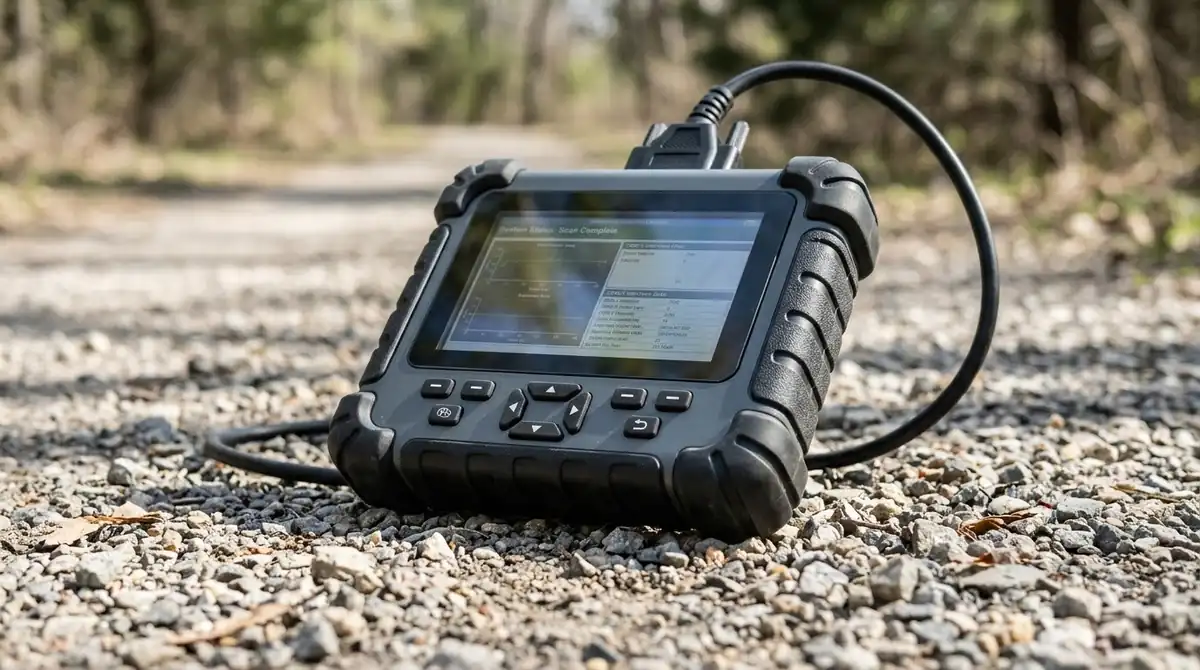
- Read the trouble code with a scanner, or ask the shop for it in writing.
- Confirm which sensor the code points to, upstream or downstream, and ask whether the quoted oxygen sensor replacement cost includes the diagnosis.
- Ask for a test result before you approve a replacement, since the test shows whether the oxygen sensor replacement cost is justified.
A failing O2 sensor and a failing catalytic converter can set the same converter efficiency code P0420, so confirm the faulty part before paying for a new sensor. A lean code does not always mean a bad sensor either, as lean code causes and fixes shows. AAA’s catalytic converter guide puts a converter replacement at $1,000 to $4,000 for parts and labor, as of November 3, 2026. It also says O2 sensors often fail when the converter goes bad, adding approximately $300 per sensor to the final bill, so confirm the cause before you assume the sensor is the whole bill.
DIY or Shop: Comparing the Two Routes
Doing the work yourself removes the labor line from the oxygen sensor replacement cost, but it adds risk if you pick the wrong sensor or cannot reach it. A shop charges both parts and labor, and its warranty terms should be checked before you agree. Other sensor jobs follow the same labor logic, and knock sensor replacement cost shows how access changes that bill.
| Factor | Doing it yourself | Using a shop |
|---|---|---|
| Parts | You buy the sensor and choose the brand | The shop supplies the part and adds its own markup |
| Labor | No labor charge, but your time | Billed for labor, which varies by shop type and region |
| Access | Can be hard to reach, depending on the vehicle | Shop tools and lifts can make access easier |
| Risk | Wrong sensor or a seized sensor if the job goes wrong | Check the warranty terms on the work |
Check the Gas Cap Before You Spend on a Sensor
A loose gas cap can trigger the warning light without any oxygen sensor fault, which means no oxygen sensor replacement cost at all. If the light is blinking rather than steady, read about a check engine light that flashes first. The EPA says the on-board diagnostic system can detect the vapor leak from a cap that was not fully tightened after refueling. The light should go out within a few days once the cap is tightened.
If the light returns after the cap is tightened and a few days of driving have passed, a diagnosis is the next step, and a sensor replacement should wait until the shop confirms the fault.
How to Compare Two Written Quotes
When you compare any oxygen sensor replacement cost, line up the items before you compare totals. Two quotes can look far apart when one includes a diagnosis and the other does not, or when one uses a different part type.
- The same sensor position, upstream or downstream, named on both quotes.
- The same part type, OEM or aftermarket, with the brand listed.
- The same labor hours and labor rate for the replacement.
- Whether a diagnosis or test is included before the replacement.
- Whether the diagnostic fee is credited if you approve the repair.
- Whether an AAA member discount applies, if you hold a membership.
A quote that matches on all four lines gives you a fair comparison of the oxygen sensor replacement cost. If the totals still differ widely, ask each shop to explain the gap in writing before you decide.
Common Mistakes That Raise the Bill
One costly mistake is replacing a sensor before the fault is confirmed, which adds parts cost without fixing the cause. Each of the following habits can add cost to an oxygen sensor replacement.
- Replacing a sensor before the diagnosis confirms that it is the fault.
- Ordering a part without knowing the sensor position.
- Approving the work by phone without a written estimate.
- Overlooking the warranty terms on the repair or the part.
A second trip is often the most expensive result, so confirm the position and the diagnosis before the first visit.
Related Guides
Frequently Asked Questions
Is the oxygen sensor replacement cost the same for every car?
No. The oxygen sensor replacement cost varies, and KBB says it depends on the vehicle, your region and the parts used. Compare written estimates that name the sensor position and the labor rate.
Can I replace an oxygen sensor myself?
Often, yes, but any oxygen sensor replacement cost you save depends on confirming the sensor position and whether you can reach it. A wrong part or a seized sensor can turn a small job into a larger repair.
Does a steady warning light mean I have to stop driving?
No. The EPA says the light signals a need for service, not an instruction to stop the vehicle. Book the diagnosis soon, since emission controls may not work as well while the light stays on.
Should I replace every oxygen sensor at once?
Not automatically. Replace the sensor the diagnosis points to, and ask the shop why any other sensor is recommended before you approve the extra work.
Will a warranty cover the replacement?
Coverage depends on your vehicle warranty terms and the cause of the fault. Ask the dealer to check the warranty before you pay, since no general rule applies to every car.
How much does an O2 sensor replacement cost?
KBB puts a dealership replacement at about $350 with OEM parts, and AAA’s parts guide puts the O2 sensor part alone at about $350 to $400 as of November 3, 2026. AAA’s figure excludes labor, any diagnostic charge and fees, so ask for an itemized quote before you agree to the work.
Does the diagnostic fee apply to an O2 sensor replacement?
AAA’s estimates do not include diagnostic charges, taxes or disposal fees, so any test fee adds to the cost. Ask the shop whether the test fee is charged separately and whether it is credited if you approve the repair.
Does an AAA membership lower the cost?
AAA members save 10% up to $75 on regularly priced parts and labor at AAA Approved Auto Repair facilities, if the discount is requested before the work starts.
Why does the P0420 code matter for this repair?
P0420 can come from a failing O2 sensor or a failing catalytic converter. Confirm which part is at fault before you pay for either repair.
Is a cheaper sensor a good choice?
Not always. A low O2 sensor replacement cost on paper means little if the part is in the wrong position, because it will not fix the fault. Match the sensor to the position named in the diagnosis and to your vehicle.
Ask for a written estimate that names the sensor position, the part and the diagnosis before you approve any oxygen sensor replacement. A clear quote is the best protection against paying for the wrong fix, and it keeps the oxygen sensor replacement cost honest.
