
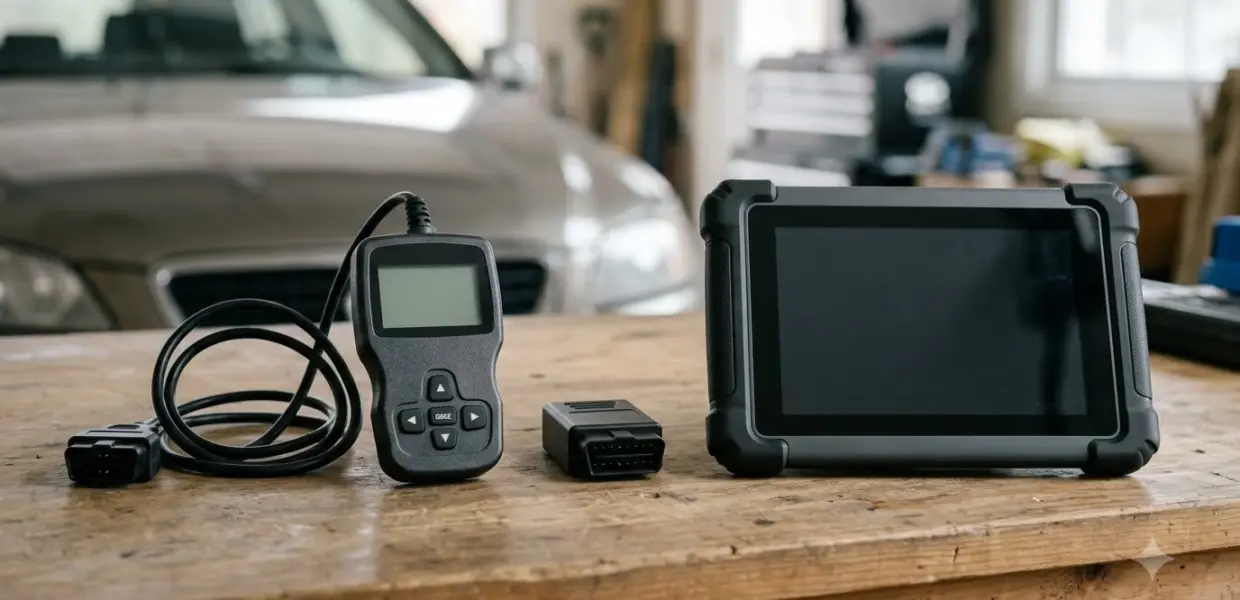

P20EE is a generic OBD-II code that means SCR NOx catalyst efficiency is below threshold on bank 1. The p20ee code appears only on diesel vehicles equipped with selective catalytic reduction, the system that cuts nitrogen oxide emissions using diesel exhaust fluid.
The code often points to fluid quality, a sensor or a leak rather than a failed catalyst. Diagnose the system before you buy parts, because the fix depends on the root cause.
This article is general diagnostic information and does not replace a hands-on inspection by a qualified technician.
What the P20EE Code Means
The code reports that the SCR system is converting less NOx than the engine computer expects, based on a stored threshold. The powertrain control module (PCM) calculates this result from sensor data rather than detecting a broken part directly.
Identifix gives the full definition as “SCR NOx Catalyst Efficiency Below Threshold on bank 1.” The name tells you which system is involved, but it does not tell you which component has failed. That is why this code needs a step-by-step check before any repair.
Kelley Blue Book describes the code as a generic diagnostic trouble code and advises assuming it is a fairly serious code. The Kelley Blue Book OBD-II guide is a useful starting point. Identifix adds that the PCM sets the code only after a valid monitoring period at steady load, usually during highway driving.
Which Vehicles Set the P20EE Code
P20EE is set only by diesel engines with selective catalytic reduction. Identifix names the following engines and vehicles in its P20EE guide, so check this list before you assume the code applies to your truck or SUV.
- GM: the 6.6L Duramax in Silverado and Sierra HD, and the 3.0L diesel in half-ton pickups and full-size SUVs such as the Yukon.
- Ford: the 6.7L Power Stroke in F-Series Super Duty trucks.
- Stellantis and Jeep: the Cummins EcoDiesel in Ram trucks, and the EcoDiesel in Jeep Gladiator and Wrangler models.
- Mercedes-Benz: the BlueTEC system on the Sprinter.
For some 2020 to 2022 Ford trucks, Identifix lists an upstream NOx sensor and a PCM reprogram as repair items.
A gasoline vehicle does not use SCR, so a P20EE reading on one is unusual. If you see it, read the scan data again and confirm the vehicle and engine before you change anything.

Symptoms You May Notice With P20EE
A check engine light may be the only sign of this code at first. Some drivers also notice black exhaust smoke, lost power or worse fuel economy, and the code can make a later emissions test harder to pass.
- The check engine light is on, sometimes as the only symptom.
- Excessive black smoke from the exhaust can show up.
- Engine performance drops and fuel economy gets worse.
- The vehicle may fail an emissions test.
- Other exhaust-related codes appear alongside this code.
Identifix reports that the system can step up its power limits over time. On some platforms the speed is capped near 65 mph, and clearing the code does not reset that countdown. The wider topic of lost power is covered in the guide to reduced engine power. Messages such as “DEF Quality Poor” or “Service Emission System” point to the same emissions system and should be read along with the code.
Common Causes of the P20EE Code
Identifix puts diesel exhaust fluid quality at the top of its list and calls NOx sensor failure a good starting point. The catalyst itself is listed last, because the code is a calculated result and many other faults can produce it.
- DEF quality: wrong, contaminated or low-concentration fluid. Identifix gives a 32.5 percent urea target, checked with a refractometer.
- NOx sensors: the upstream and downstream sensors are compared, so drift in either one can set the code.
- DEF system: a clogged or crystallized dosing injector, or a leak that leaves white residue.
- Exhaust leaks: air entering between the two NOx sensors skews the comparison.
- Calibration: outdated PCM or reductant control module software. Identifix cites GM bulletins 21-NA-128 (2021 L5P Duramax models) and 22-NA-069 (certain Sierra and Silverado 3500 4WD trucks).
- Catalyst: the least likely cause, to be confirmed only after the other items are ruled out.
Kelley Blue Book also lists faulty O2, NOx and exhaust gas temperature sensors as causes, plus circuit problems. A PCM software update can sometimes be the only fix needed, so ask a shop to check for calibrations before replacing hardware.
How to Diagnose P20EE Step by Step
Diagnosing P20EE means reading data before replacing parts, since the code comes from sensor comparisons. Work through the checks below in order, because each one can rule out a cause that would hide the next.
- Scan all modules and record the freeze frame data before clearing any code.
- Check related codes, including P20EC, P20ED, P20EF, P207F and P2201 through P2209.
- Graph the upstream and downstream NOx sensor data with an OBD2 scanner with live data on a loaded drive, not at idle. Once dosing is active, the downstream reading should sit well below the upstream reading.
- Check the sensor heater circuits and supply voltage with a digital multimeter on your car.
- Test the DEF with a refractometer and inspect fittings for leaks, using a smoke machine for finding leaks if needed.
- Check the exhaust gas temperature sensors, since dosing stays off until the catalyst reaches operating temperature.
- Search the VIN for bulletins and calibrations before ordering parts.
Identifix also suggests a useful test: check the NOx sensor readings with the engine under load, and compare them with the fluid and leak checks. The full guide is Identifix’s step-by-step P20EE repair guide, which lists the same checks in more detail.
Repair Steps and How to Confirm the Fix
A repair for this code is complete only when the root cause is fixed and the SCR readiness monitor reports complete. A cleared code on its own does not prove the repair worked.
- Fix the root cause, such as refilling with fresh DEF, replacing a NOx sensor with an OE or ACDelco or Motorcraft part, sealing a leak, or loading a calibration.
- Clear this code and the related codes with an OBD-II scanner. Clearing also resets the readiness monitors.
- Road test the vehicle and watch the downstream NOx reading fall below the upstream reading.
- Confirm that the SCR readiness monitor reports complete.
The readiness monitor needs normal driving to finish, so do not expect an instant result after a repair. Give the vehicle several ordinary drive cycles, then check the monitor status again before you decide the job is done.
Before you clear anything, save a copy of the freeze frame data and note the date of your last DEF refill. A shop can use that record if the code returns, and it shows whether the fault repeats after a repair.
Related Codes to Check Alongside P20EE
Related SCR and DEF codes help narrow P20EE to heat, fluid quality or sensor signals. Read them together with this code rather than one at a time, and use the table below as a quick reference.
| Related code | What Identifix lists it as |
|---|---|
| P20EC | SCR over temperature |
| P20ED | Pre-catalyst over temperature |
| P20EF | Pre-catalyst efficiency |
| P207F | DEF quality |
| P2201 to P2209 | NOx sensors |
What Repairs Cost and How Long They Take
Repair cost ranges for P20EE were not confirmed for this article, so this section gives no dollar figures. A DEF refill, a sensor replacement and a software update are very different jobs, and the diagnosis should come first.
Ask the shop for a written estimate that names the root cause, the parts and the checks behind the recommendation. That makes it easier to compare quotes and to confirm that the repair matches the data.
Frequently Asked Questions
Can I keep driving with a P20EE code?
Kelley Blue Book advises treating P20EE as a fairly serious code. Some platforms cap speed over time, so arrange a diagnosis soon rather than waiting for an emissions inspection.
Will clearing this code fix it?
No. Clearing removes the stored code and resets the readiness monitors, but the code returns if the cause remains. Identifix also notes that clearing does not reset the speed-limit countdown.
Does this code always mean the catalyst is bad?
No. Identifix describes the code as a calculated result and lists the catalyst last among likely causes. Fluid quality, NOx sensors and leaks are checked first.
Can a gasoline car set this code?
Identifix ties the code to diesel engines with selective catalytic reduction. A gasoline vehicle that reports it should be checked for the correct vehicle data and scan results before any repair.
What should I bring to the shop?
Bring the full list of codes with freeze frame data, the VIN, and notes on DEF refills and any dashboard messages. That lets the technician check bulletins and the related codes listed above.
If the code appears with several exhaust codes, read every code before buying parts. A technician with live NOx sensor data can usually tell whether the fluid, a sensor or a leak is responsible, so get the diagnosis in writing before you approve a repair.
