
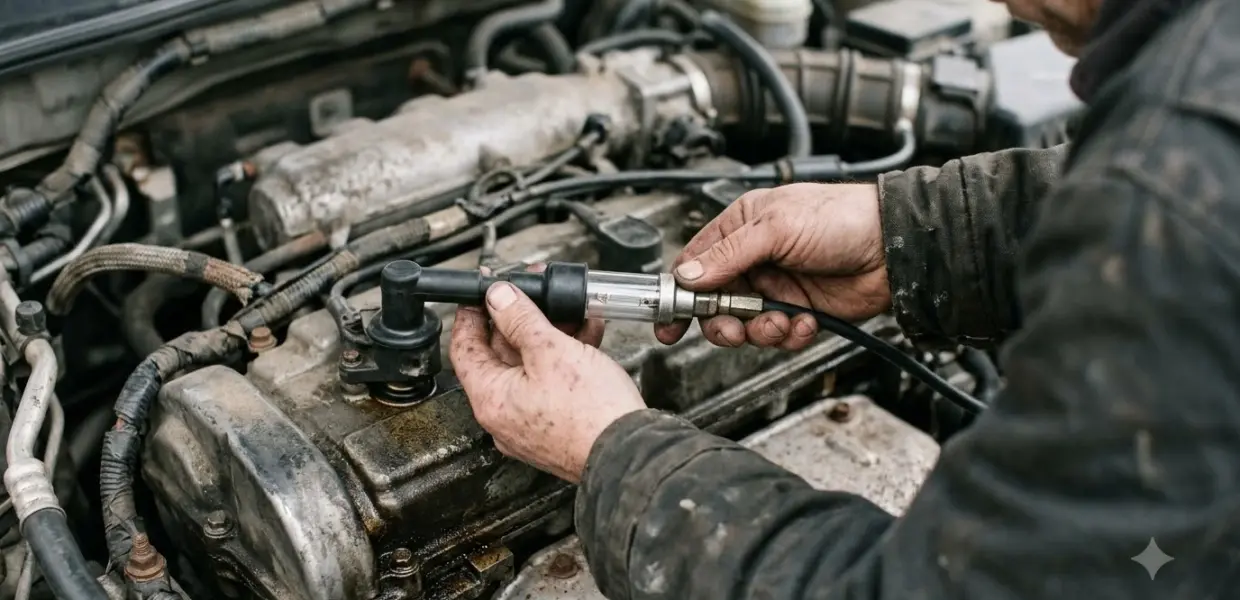

Black smoke from exhaust means the engine is burning more fuel than the available air can fully burn. The unburned fuel leaves the tailpipe as soot. Manufacturer guidance links this rich running to poor starting, misfiring and weak acceleration.
The causes range from cold-start habits to air, sensor and injector faults, and some black smoke from exhaust is normal on certain engines. Check the pattern you see, then read codes and spark plugs before you replace parts.
This guide gives general information. A correct diagnosis needs stored fault codes and a hands-on inspection of your vehicle.
What Black Smoke From Exhaust Tells You
Black smoke from exhaust usually means a rich air-fuel mixture, with more fuel than the air can burn fully. The surplus fuel leaves as soot and unburned carbon.
The engine computer tries to keep the air and fuel in a set balance. When the balance tips toward fuel, combustion becomes incomplete and the exhaust carries the excess out as dark smoke. Denso describes the same condition on spark plugs: a plug that is wet with gasoline right after removal shows that the air-fuel ratio is too rich and the fuel is not igniting. The guide on how a rich fuel mixture sets a code explains what a scan tool shows in that case.
The color of black smoke from exhaust is a first clue, not a diagnosis. Blue and white smoke point to other causes and are covered separately, so this guide stays with the black, fuel-related pattern and the checks that follow from it.
Common Causes of a Rich Fuel Mix
A rich mix happens when the engine gets too little air or receives too much fuel. The engine computer adjusts fuel using airflow and oxygen readings, so a fault in those readings or in the fuel supply can push the balance off course.
A car blowing black smoke from exhaust could have any of the following faults, and the smoke alone does not prove which part failed:
- A restricted air filter, which limits the air that reaches the cylinders.
- A mass airflow sensor sending a wrong reading, so the computer adds more fuel than the air needs (see the mass airflow sensor code guide).
- An oxygen sensor reporting exhaust oxygen incorrectly, so fuel adjustments drift toward rich (replacement is covered in what an O2 sensor swap costs).
- A fuel injector that sticks open or leaks, adding fuel the computer did not command.
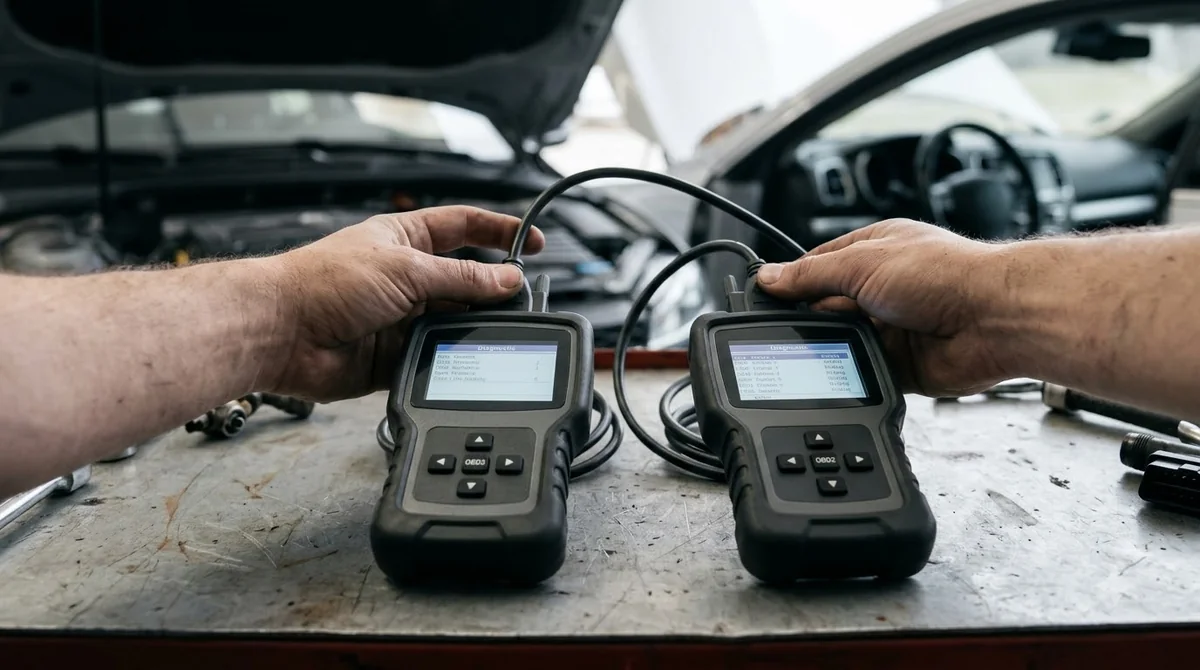
These causes come from general engine-control logic rather than a manufacturer ranking, so treat the list as a checklist, not a ranking. A scan tool that shows live fuel trim and oxygen sensor data is the most direct way to see which side of the balance is off. A stored code can narrow the search further.
Cold Starts and Short Trips
Some black smoke from exhaust after a cold start is normal on certain GM engines, while repeated short trips can leave carbon on the spark plugs. The cause behind each pattern is different, so the timing of the smoke matters.
Denso lists repeated short-distance driving with the engine cool as a cause of carbon fouling. Incorrect choking, which produces an overly rich mixture, is another named cause. The plug then carries dried, soft black carbon on its insulator and electrode, which can lead to poor starting, misfiring and acceleration defects.
GM’s technician bulletin PIP4919E describes a different case. On listed 2009 to 2016 Buick, Cadillac, Chevrolet, GMC and Saturn models with 3.0L or 3.6L direct-injection engines, a dual-pulse injection strategy runs for about 60 seconds after a cold start to heat the catalytic converter faster. GM says the black smoke from exhaust, soot, rough idle or minor misfires during that window are normal, and GM bulletin PIP4919E adds that top tier fuel reduces the rough-idle effect.
The bulletin is written for trained technicians and applies only to the listed models and engines. A technician checks injector pulse width with a scan tool. If the pulse width drops by about half and the engine smooths out, GM considers the condition normal and no repair is attempted.
The Spark Plug Clues
A spark plug shows how the mixture and oil have been burning, and each deposit type points toward a different cause. Compare the plug you pull with the three patterns below.
| Plug condition | What you see | Cause named by Denso |
|---|---|---|
| Carbon fouling | Dried, soft black carbon on the insulator and electrode | Short trips with a cool engine, incorrect choke, late injection timing, or a plug heat range that is too high |
| Fuel fouling | Plug wet with gasoline right after removal, then it dries | Air-fuel ratio too rich, so the fuel is not igniting |
| Oil fouling | Black, shiny, wet deposits | Oil leaking past worn piston rings, cylinder or valve guides |
Denso’s spark plug diagnosis guide names poor starting, misfiring and acceleration defects as the running results of carbon and fuel fouling. A plug is a clue, not a diagnosis of black smoke from exhaust, so compare it with stored codes and live data before you buy parts.
Oily, wet deposits point to a wear question inside the engine rather than to the fuel system. Read the plugs from all cylinders, not only one, because a single fouled plug can mislead you about the whole engine.
Injector Deposits After Shutdown
On some 2016 to 2019 Audi 3.0TFSI EVO engines, deposits can keep injectors from closing fully and let fuel into the cylinder after shutdown. That leftover fuel can make the next start too rich, so black smoke from exhaust may show up briefly after a restart.
Audi’s technical service bulletin says the deposits form because of fuel quality differences in some countries. It states that the injectors should not be replaced for this issue. The recommended first step is a multi-purpose gasoline additive to clean the injectors, with further diagnosis only if the problem continues.
The bulletin also advises TOP TIER detergent gasoline when a low-additive fuel is suspected. For the product side, see cleaning injectors with a pour-in additive. This is a scope boundary: it covers that engine range only, and other cars need their own bulletin or a shop’s diagnosis before anyone treats injectors as the cause of black smoke from exhaust.
Diesel Engines and Emission Parts
Diesel black smoke from exhaust has different causes from gasoline engines, and it involves parts such as the particulate filter and the exhaust gas recirculation valve. This guide does not name which diesel part is at fault, because the diesel sources reviewed were forum and repair-blog posts rather than manufacturer guidance.
Federal law bars anyone from knowingly removing or rendering inoperative an emission device installed on a vehicle after sale. The EPA tampering fact sheet also states that vehicles with defeat devices can produce significantly more emissions than compliant vehicles. Removing a filter or valve to stop smoke is a legal risk, not a repair.
A diesel specialist should read the codes and test the system with the emission parts still in place. That keeps the diagnosis honest and avoids paying for a fix that does not match the fault.
When Black Smoke Needs Prompt Attention
Arrange a diagnosis soon if black smoke from exhaust comes with misfiring, poor starting or weak acceleration, since Denso lists these as running results of fouling. Start with checks that do not need new parts, and work through them in this order:
- Read any stored fault codes with an OBD-II scan tool and write them down.
- Look at the air filter and visible sensor wiring for damage, without taking apart anything you do not understand.
- Pull the spark plugs and compare the deposits with the table above.
Heavy black smoke from exhaust with a strong fuel smell, or a car that runs badly, should be checked promptly rather than driven for weeks. A shop can confirm the cause before parts are replaced, which avoids swapping injectors or sensors that were not at fault.
Related Guides
Frequently Asked Questions
Is black smoke from exhaust always a serious problem?
Not always. Denso links repeated short trips and incorrect choking to carbon fouling, and GM describes some cold-start black smoke from exhaust as normal on listed engines. Smoke that keeps coming, or comes with misfiring or weak acceleration, needs a diagnosis rather than a wait-and-see approach.
Does black smoke mean my engine is burning oil?
Not by itself. Denso describes oil fouling as black, shiny, wet deposits from oil leaking past worn piston rings or valve guides. Fuel fouling looks different, with a plug that is wet with gasoline right after removal. A plug check helps separate the two patterns.
Can a fuel additive fix black smoke from exhaust?
Sometimes, but only in narrow cases. Audi’s bulletin for certain 2016 to 2019 3.0TFSI EVO engines recommends a multi-purpose gasoline additive before any injector replacement. That advice applies to that engine range, so check the bulletin or a shop for your model before you buy additives.
Is it safe to keep driving with black smoke?
Use caution and arrange a check soon, since Denso lists poor starting, misfiring and acceleration defects as results of fouling. If black smoke from exhaust comes with a strong fuel smell, avoid driving the car until it has been inspected.
Do diesel trucks also blow black smoke?
Yes, but the causes differ and need a diesel specialist. Federal law bars knowingly removing or disabling emission parts such as a particulate filter or EGR valve after sale, so keep those parts in place while the cause is found.
