


P0411 is a generic OBD-II code that means the secondary air injection pump is not delivering the airflow the engine computer commanded. It belongs to the emissions system, and it usually affects cold-start emissions more than how the car drives.
Most P0411 cases trace back to the pump, a valve, or a hose. The checks in this guide help you narrow down which one before you buy parts.
What P0411 Means on Your Car
P0411 is set when the engine control unit (ECU) sees secondary air flow outside its expected range. The code is part of the standard OBD-II set, so every make can report it. According to Hella, the ECU drives an electric pump through a control relay, and the pump blows air behind the exhaust valves. The system also uses an air filter, a change-over valve and a combination valve.
One scanner vendor describes it as the secondary air injection pump not delivering the airflow the powertrain control module commanded. Wording and test conditions can differ between manufacturers, so check the service information for your make and model before you assume the cause.
Because the code reports a mismatch between commanded and measured air flow, the fault can sit in the pump, the valves, the hoses, or the wiring. The code alone does not name the part.
Other stored codes can show whether the problem stays within the air system. Write them down before clearing anything, because clearing codes also erases the data a technician uses to trace a P0411.
Why Secondary Air Injection Matters at Cold Start
Secondary air injection pushes fresh air into the exhaust so the catalytic converter reaches working temperature sooner. A catalytic converter works effectively only from roughly 300°C to 350°C, so the engine needs help during the first minutes after a cold start. For converter-related codes, see the P0420 catalyst efficiency code guide, and for pricing, the catalytic converter replacement cost guide.
According to Hella’s technical overview of the system, up to 80% of a driving cycle’s emissions occur during a cold start. Fresh air supports the reaction that turns unburned hydrocarbons (HC) and carbon monoxide (CO) into less harmful gases while the converter is still cold.
A 2010 MIT doctoral thesis on cold-start air injection reported HC reductions of 46% to 88% and CO reductions of 37% to 93% compared with normal operating conditions. Treat those ranges as research results, not a promise for any single vehicle.
The system does not run for the whole drive. On vehicles with a three-way catalytic converter and lambda control, it switches off after about 100 seconds, and it shuts down as soon as lambda control becomes active.
Common Causes Behind P0411
A faulty secondary air pump is the most frequent cause of P0411, followed by blocked lines and valve failures. The main causes fall into five groups. Moisture can seize the pump, and blocked or leaking lines can lead to control valve or combination valve failure.
- Failed pump: the most frequent cause, often seized or worn on high-mileage vehicles.
- Moisture: can seize the pump.
- Ground or voltage supply faults: can cause the pump to fail.
- Blocked, corroded, or leaking hoses and check valves: can disrupt the air path.
- Stuck solenoid or failed vacuum switching valve: keeps the pump from activating.
The combination valve closes without vacuum and opens under intake vacuum, so one that stays shut or stays open is faulty. Use the table below to match what you see during basic checks with the part most likely to be at fault.
| Check | Fault sign | Likely part |
|---|---|---|
| Pump sound at cold idle | No pump noise when it should run | Pump, control relay, or wiring |
| Hose inspection | Chafed, kinked, or blocked hose | Hose or line |
| Vacuum at control valve fitting | No vacuum when the pump starts | Control valve or vacuum path |
| Combination valve test | Stays shut or stays open | Combination valve |
Symptoms and Risk You Should Know
Most P0411 cases show a check engine light and a longer cold-start warm-up, with no loss of power. The fault mainly appears as a warning light and in emissions results.
Because a P0411 affects emissions rather than power, many owners first notice it when the warning light appears or during an emissions inspection. The sources reviewed give no fixed emissions-test rule for this code, so check your state’s requirements.
Hella notes that higher emissions during cold start and warm-up are the main effect, and that the ECU can light the engine indicator lamp when it monitors the system. Scanner guidance says the engine usually drives normally, with no power or drivability problems.
Hella says the pump should be audible at cold idle and stop audibly after shutdown, so a silent pump is a reason to run the checks in the next section.
Checking the System Step by Step
Work through these checks in order for any P0411, starting with the simplest, so you do not replace a good pump by mistake. Start with sound and visual checks, then read stored codes and run an actuator test on the pump, relay, and valve. Hella’s secondary air injection overview lists the test sequence in more detail.
- Listen to the pump at cold idle. It should be audible, and it should stop audibly after you shut off the engine.
- Inspect cables, hoses, and fuses. Hoses must not be chafed, kinked, or blocked.
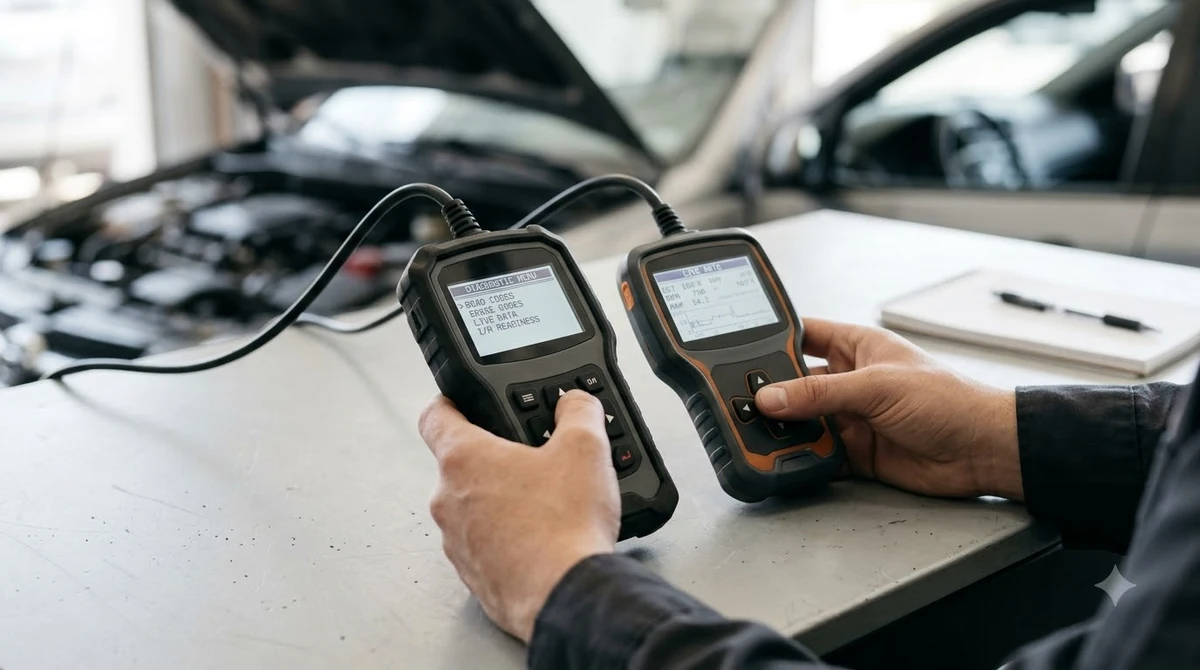
- Read stored codes. If there are no other codes, run an actuator test on the pump, relay, and control valve with a bidirectional OBD2 scan tool.
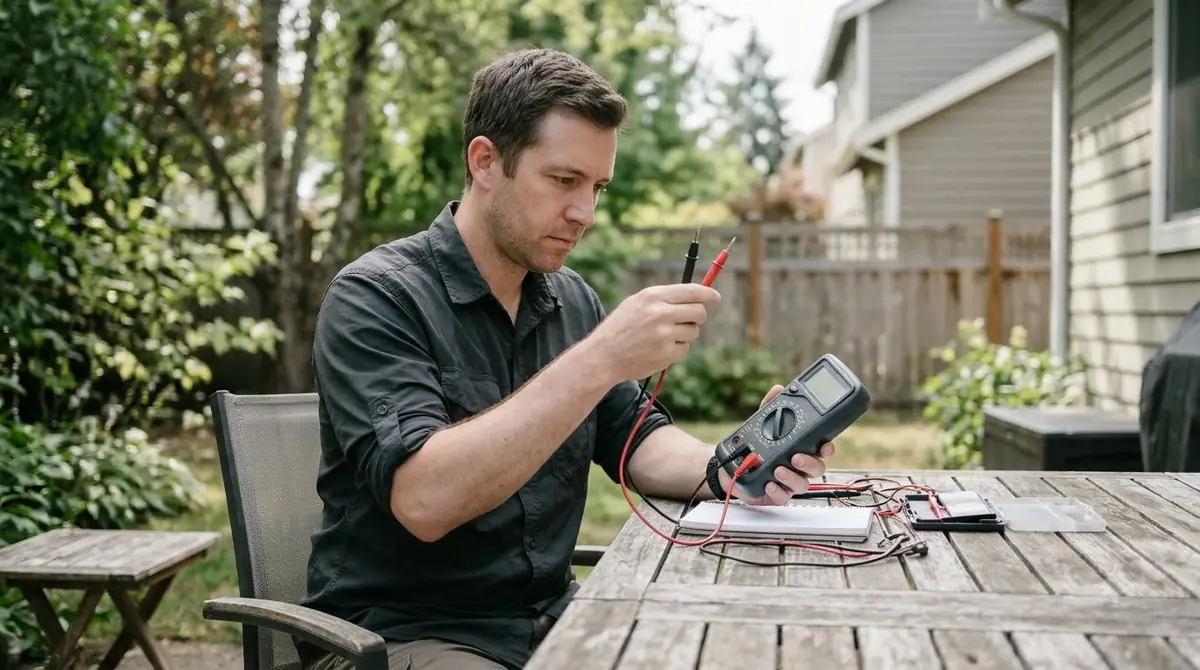
- Check for vacuum at the control valve fitting when the pump starts. If there is none, check the valve trigger with a digital multimeter on your car.
- Test the combination valve with a hand vacuum pump. It should close with no vacuum and open under vacuum. A valve that stays shut or stays open is faulty.
- Blow gently into the hose fitting, using light breath pressure only. Do not use compressed air.
Pay attention to the power and ground side before you condemn the pump. A faulty ground or voltage supply can cause pump failure, so clean and check the connections first, and a silent pump may simply be missing power.
Vehicle-specific values such as resistance and voltage vary by make, so use the manufacturer’s service information for the exact figures.
Repair Options and When to Get Help
Repair depends on which part failed: a split hose or clogged check valve is usually simpler than a seized pump. A vendor guide suggests clearing blocked passages and replacing check valves, and replacing the pump if it is seized.
The same vendor view holds that this is often a mechanical fault rather than an electrical one. That is one scanner company’s opinion, so confirm it with a diagnosis on your own car.
Cost depends on the make, the part, and local labor rates. This article gives no repair price because no US cost range was verified for this code. If the pump itself is seized, replacement is the usual fix for a P0411 caused by the motor. Ask a shop for a written diagnosis before replacing parts, since the code can point to several components.
Frequently Asked Questions
Can I still drive with P0411?
In most cases the engine drives normally, with no loss of power, so the fault is mainly an emissions issue. Get a diagnosis soon, since the fault can cause higher cold-start emissions and may fail an emissions test.
Does P0411 always mean the pump is bad?
No. The pump is the most frequent cause, but blocked lines, a stuck solenoid, a failed vacuum switching valve, and voltage or ground faults can produce the same code. Check the valves, hoses, and wiring before you replace the pump.
Will clearing the code fix P0411?
Clearing the code can turn off the warning light, but it does not repair anything. If the pump, valve, or hose fault remains, the code is likely to return. The guide to resetting a check engine light covers the clearing steps.
Is P0411 the same on every car?
The code is generic under OBD-II, but the exact wording and test conditions can differ by manufacturer. Check the service information for your make and model before you assume the cause.
What tools do I need to check P0411?
A scan tool that reads stored codes and runs actuator tests is the core tool. A multimeter, a hand vacuum pump, and a flashlight help with the valve and hose checks.
Does P0411 affect fuel economy?
The sources reviewed describe the effect on cold-start emissions, not on fuel economy, so this guide gives no fuel economy figure. A shop can confirm whether your car shows any other fault.
A P0411 is a good reason to have a shop confirm the fault before you buy parts. The code points to a system, not a single part, so a clear diagnosis saves money and repeat visits.
