
Short term fuel trim is the percentage your engine computer adds or removes from fuel delivery in real time, using the oxygen sensor reading to keep the air-fuel mixture close to ideal. A reading near zero means the computer needs little correction.
Most readings land between -10% and +10%, but the pattern over time tells you more than one number. Compare it with long term fuel trim before you replace any part.
Fuel trim targets and diagnostic thresholds vary by make, model and engine, so check your vehicle’s service information before you act on a reading.
How Short Term Fuel Trim Works
Short term fuel trim is a fast correction that the engine computer makes after the upstream oxygen sensor reports what is left in the exhaust. It changes within moments and is not saved.
The oxygen sensor sits upstream of the catalytic converter. In The Drive’s fuel trim guide, the author explains that the computer responds to that reading immediately, which is why the value is called short term. The sensor feeds the computer a new reading after every correction, so the value keeps moving while the engine runs. If you suspect the sensor itself, follow the steps for testing an O2 sensor.
The correction is not stored. Haltech’s support article on fuel trim says short term trim does not get saved anywhere, so no learning is applied to it. Only the long term value is kept by the computer between drives.
Trim only applies in closed loop, the mode where the computer uses oxygen sensor feedback to hold the mixture. Hondata’s FlashPro help page makes this point, so readings taken outside closed loop do not describe normal feedback control.
Short Term vs. Long Term Fuel Trim
Long term fuel trim is the learned average of the short term corrections, so it changes slowly and stays stored in the computer. Short term trim shows what the computer is doing now.
| Criteria | Short term fuel trim | Long term fuel trim |
|---|---|---|
| Speed of change | Moment to moment | Slow, averaged over time |
| Stored by the computer | No, not saved | Yes, learned values are kept |
| What it reflects | Current oxygen sensor feedback | Learned baseline for the engine |
| Typical use | Fine correction of the mixture | Coarse, lasting adjustment |
Because long term trim is built from short term corrections, a problem that lasts will show up in both. A short term value that stays high while the long term value climbs is a sign the problem is persistent rather than a passing event.
What Positive and Negative Fuel Trim Numbers Mean
A positive short term fuel trim means the computer is adding fuel because the mixture reads lean, and a negative value means it is cutting fuel because the mixture reads rich. Read the sign first, then judge the size.
- Positive value: the mixture reads lean, so the computer adds fuel.
- Negative value: the mixture reads rich, so the computer reduces fuel.
- Both values near zero: the computer has little correction to make.
- A large value in either direction: the system is working hard, so look for the cause.
A high positive number points toward missing fuel or extra air entering the engine. A high negative number points toward excess fuel. The scan tool does not say which one, so the other data and physical checks have to narrow it down.
Normal Short Term Fuel Trim Range
Normal short term fuel trim usually sits between -10% and +10%, according to Hondata’s FlashPro help page, a tuning vendor’s reference on the subject. Treat that band as a starting point, not a pass or fail line for every vehicle.
The same page says that when trim falls outside the band, the part-throttle fuel maps need tuning. That points to a calibration question rather than one broken part, so a technician should review it before any map is changed.
Scan tools display trim as a percentage, so you can see how far a reading sits from the band. A value of 4% sits well inside it, while a value of 14% sits outside it on the high side and deserves a second look.
Short term trim swings more than long term trim. During fuel overrun and gear changes it can read very high, according to Hondata, so a single spike does not describe the whole engine. Look at the trend across several readings instead.
Common Causes of Out-of-Range Trim
Out-of-range short term fuel trim usually traces back to the fuel system, an oxygen sensor, the mass airflow sensor or a leak. The Drive lists these as the main categories that push the mixture lean or rich.
- Fuel system problems, where fuel levels entering the engine run too high or too low, which a fuel injector test can help narrow down.
- A failed oxygen sensor, which gives the computer a wrong picture of the exhaust.
- A failed mass airflow sensor, which reports air volume inaccurately and can be checked with MAF sensor testing steps.
- Leaks and damage that let the mixture drift from what the computer expects.
A vacuum leak is one example of the last item. Air that enters after the mass airflow sensor is never measured, so the computer adds the wrong amount of fuel and the trim moves to compensate. The fix is to find the leak, not to chase the trim number.
The Drive also advises having a professional diagnose the cause rather than altering trim values or reflashing the computer. That advice matters most when the reading is part of a check engine light.
Reading Lean Codes Alongside Fuel Trim
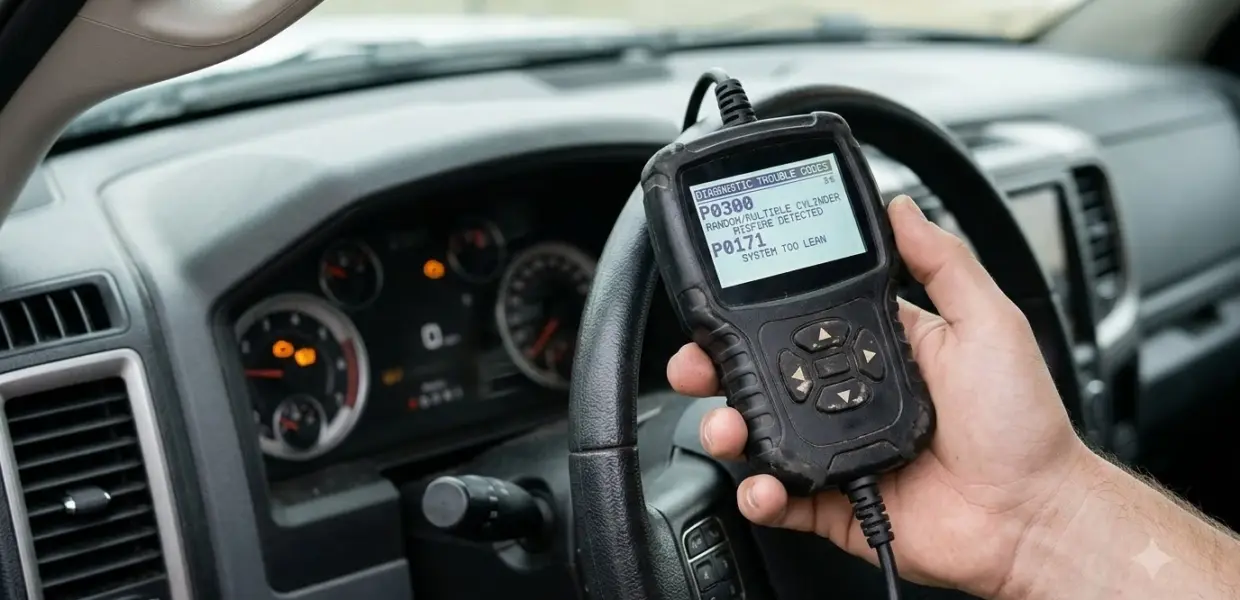
A lean fuel code confirms that the computer sees the mixture as too lean, but it does not name the cause. A scanner that displays P0171 reads System Too Lean, which matches the positive trim direction described earlier. The P0171 code guide covers that code in more detail.
Pull short term and long term trim with the code active, and note which one is high. Short term trim alone can look alarming at idle and calm at cruise, so compare readings at both points before you judge the system.
How to Check Short Term Fuel Trim
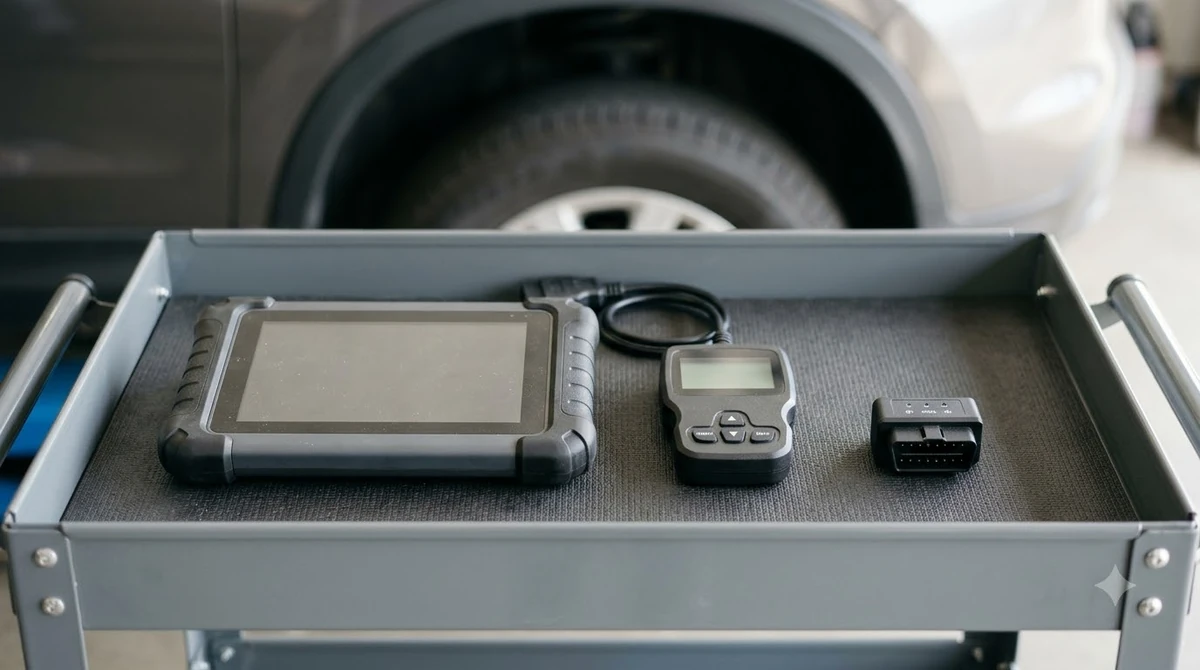
To check short term fuel trim, connect an OBD2 scanner with live data, run the engine until it is warm, and record the value at idle and at a steady cruise. Writing down each reading makes the trend easier to read.
- Connect a scanner with live data and open the fuel trim values.
- Run the engine until it reaches normal operating temperature.
- Record short term and long term trim at idle.
- Hold a steady speed and record both values again.
- Repeat the readings and compare the trend, not a single value.
Note the engine speed and load with each reading when your scanner allows it, since trim changes with both. A reading that is only noted as high or low gives you less to work with later.
Hondata notes that trim is only meaningful in closed loop, so check that the engine is in closed-loop operation before you trust the figures. Readings taken during hard acceleration or deceleration are a poor basis for judgment.

What Short Term Fuel Trim Cannot Tell You
Short term fuel trim shows the computer’s correction but not the cause. It works best as one clue alongside live data, fault codes and a physical inspection of the intake and exhaust.
A reading alone does not prove that a sensor failed. The Drive lists sensor failures, fuel system problems and leaks as possible causes, and the same reading can come from more than one of them.
Trim values also depend on the engine and the vehicle design. A number that is normal on one car may need a closer look on another, so compare your readings with the service information for your specific vehicle.
Frequently Asked Questions
Is -10% short term fuel trim bad?
Not automatically. Minus 10 percent sits at the edge of the commonly cited band, so the reading matters most when it stays there, moves with a fault code or comes with a drivability problem.
Is short term fuel trim the same as long term fuel trim?
No. Short term trim is the immediate correction and is not stored, while long term trim is the learned average that the computer keeps between drives.
Can I reset short term fuel trim myself?
Short term trim is not stored, so it has no learned value to reset. The Drive advises a professional diagnosis rather than changing trim values or reflashing the computer.
Does a high short term fuel trim always mean a bad oxygen sensor?
No. The Drive lists fuel system problems, mass airflow sensor failure, leaks and oxygen sensor failure as possible causes, so the reading alone cannot point to one part.
Do I need a special scanner to read fuel trim?
You need a scanner that can display live data, because trim is a live value that a basic code read may not show. This article does not compare scanner prices.
Before you buy parts, confirm the reading is out of range at steady idle and cruise, check the fault history, and compare with the service information for your vehicle. A single spike during a gear change is not enough to decide on a repair.