
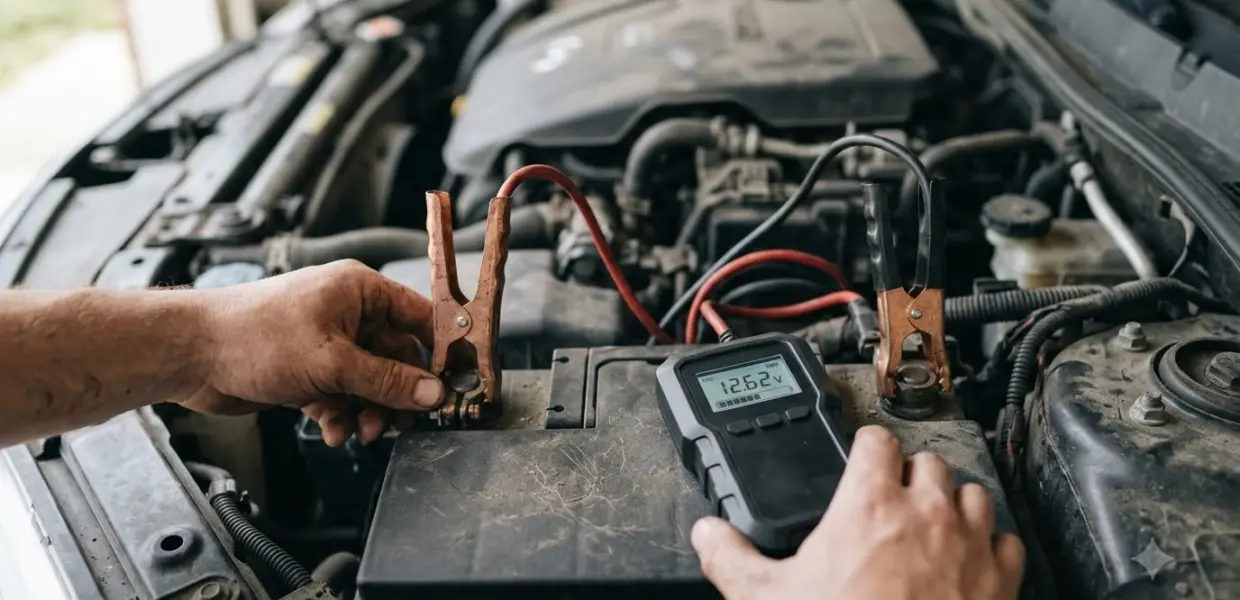

Battery replacement cost usually lands between about $110 and $430 before tax, depending on the battery type, the installation labor and the core deposit. These figures are as of November 6, 2026, and assume a standard 12-volt car battery.
The battery type decides most of the battery replacement cost. A standard flooded battery fitted to a start-stop car can fail within 12 to 18 months, so the cheapest price tag is not always the cheapest choice.
What a Battery Replacement Costs Today
A typical replacement costs about $110 to $430 before tax, combining the battery price with installation labor. The low end is a basic flooded battery, and the high end is an AGM battery installed by a shop.
The range is wide because two things move the battery replacement cost: the battery technology your car needs and who does the installation. The table uses the price ranges from Battery Tender’s battery guide, a battery charger maker, and adds its labor range to each battery type. Prices are as of November 6, 2026, and change with the market.
| Cost part | Flooded battery | AGM battery |
|---|---|---|
| Battery price | $80 to $180 | $180 to $350 |
| Installation labor | $30 to $80 | $30 to $80 |
| Typical total before tax | $110 to $260 | $210 to $430 |
The totals add the two rows above, so they show the full battery replacement cost before the core charge. They leave out the core charge, which is covered later in this article.
Two cars that share a model name can still need different batteries, because engine size, electrical load and start-stop systems change the requirement. Check the battery specification in your owner’s manual before you compare prices, since a lower price only saves money if the battery fits the car. A guide to choosing a replacement car battery lists the specs to match.
How Battery Type Changes Battery Replacement Cost
Flooded batteries cost $80 to $180, while AGM batteries cost $180 to $350 and usually last longer, according to Battery Tender. That gap is the main reason the same car can have two very different battery replacement costs.
Flooded batteries typically last 3 to 5 years in normal service. AGM batteries typically last 5 to 8 years with proper maintenance. The gap shows up in cycle life too: a quality flooded battery handles about 200 to 300 deep discharge cycles before significant capacity loss, while an AGM handles 400 to 600 or more.
Start-stop cars change the decision. Only AGM or EFB batteries can handle that duty cycle, and a standard flooded battery installed in such a car may fail within 12 to 18 months. A second replacement can erase the savings from the cheaper unit and raise the total battery replacement cost.
| Battery type | Typical price | Typical life | Start-stop fit |
|---|---|---|---|
| Flooded | $80 to $180 | 3 to 5 years | Not suitable |
| EFB | Not confirmed for this article | Not confirmed for this article | Built for start-stop duty |
| AGM | $180 to $350 | 5 to 8 years | Built for start-stop duty |
Battery Tender also says that one AGM often costs less than two flooded replacements over a 10-year ownership period. That is the maker’s own comparison, so check it against how long you plan to keep the car.
Labor and Installation Fees
Installation labor usually adds $30 to $80 per battery, so labor is the smaller share of most battery replacement cost totals. It is still the part you can remove on your own.
If you install the battery yourself and the terminals are easy to reach, the labor line disappears. Shops set their own hourly rates, so the same battery can carry different installed prices from one shop to the next. Ask each shop for its total battery replacement cost, not only the labor line.
One published repair guide cites a higher shop total for a full replacement, with labor around $60 to $88. That figure differs from the manufacturer range above, so ask for a written quote before you approve any work. Other items that can change the final battery replacement cost include:
- The battery type: flooded, EFB or AGM
- The labor rate at the shop you choose
- Registration or programming after installation, if your car needs it
- The core charge, which is refundable on return
- Sales tax on the battery and any shop fees
Some newer vehicles need the new battery registered with the car’s computer after installation. Check your owner’s manual before you buy, and ask whether a shop charges for this step. The fee amount was not confirmed for this article.
If you do the job yourself, disconnect the negative terminal first, keep tools from bridging the two posts, and wear eye protection. Batteries release hydrogen gas while charging, so work in a ventilated space away from open flames.
The Core Charge and Disposal Fee
The EPA reports core charges of $5 to $20 on lead-acid batteries, and the deposit is refunded when you return the old battery. Forty-five states have enacted battery recycling laws based on a model law, and the EPA reports that 99 percent of lead-acid batteries are recycled in the US each year. The EPA’s battery collection case study describes how the system works.
The state sets the exact core charge, so your battery replacement cost may not match the typical range. Keep the receipt, and bring the old battery back when you pick up the new one, because the refund depends on returning it.
When you compare offers, subtract the expected refund from the quoted total to see your net battery replacement cost. A shop that quotes a lower total with no core line may simply be listing the deposit inside the price, so ask how the number is built.
How to Lower Your Battery Replacement Cost
The cheapest safe choice is usually a flooded battery for a car without start-stop, installed at a low-cost shop or by you. The checks below take a few minutes and can change the final battery replacement cost more than a small difference in the battery price.
- Confirm the battery type in your owner’s manual or on the label of the old battery.
- Compare the installed price, not just the battery price, because labor can offset a cheaper battery.
- Ask whether a core charge applies and how you get it back.
- Ask whether your car needs the new battery registered after installation, and whether the shop charges for it.
- Request a written quote that shows tax and every fee.
When Replacement Is Not the Answer
A weak battery does not always need replacing, so test it before you pay for a new one. A battery can look dead when the real fault is elsewhere.
A failing charging system, a drain that keeps the battery flat overnight, or a loose cable can all mimic a bad battery, so rule out the alternator with alternator testing steps. A load test or a battery voltage check with a multimeter shows whether the battery holds charge under load. Some parts stores offer battery tests, but availability and fees vary, so call ahead, or try a car battery tester at home.
A common mistake in battery replacement cost planning is buying on the sticker price alone and ignoring the battery type the car requires. A battery that does not match what the car needs can fail early and cost you a second purchase.
If the test shows a weak but healthy battery, a slow charge with a car battery charger that matches the battery type may restore enough capacity to delay the purchase. Read the charger’s instructions first, and do not charge a battery that is cracked, leaking or swollen.
Frequently Asked Questions
How much does it cost to replace a car battery?
The battery replacement cost for most cars is about $110 to $430 before tax. The low end is a flooded battery with the lowest labor fee, and the high end is an AGM battery installed by a shop. Prices are as of November 6, 2026, and vary by store and region.
Is it cheaper to replace a car battery yourself?
Usually yes, because you skip the installation labor that is part of the battery replacement cost, which is about $30 to $80 per battery according to Battery Tender. You still pay for the battery, any core charge and tax. Check whether your car needs the new battery registered, since that step may need special equipment and can add to the battery replacement cost.
Do I get my core charge back?
Usually yes. A core charge is part of the battery replacement cost, and the EPA reports typical core charges of $5 to $20, and the state sets the exact amount. The deposit is refunded when you return the old battery, so keep your receipt and bring the old unit back.
Do I need an AGM battery for my car?
Not every car needs one, but vehicles with start-stop need AGM or EFB technology. Battery Tender reports that a standard flooded battery in such a car can fail within 12 to 18 months. Check your owner’s manual before you choose.
How long should a new car battery last?
Flooded batteries typically last 3 to 5 years in normal service, and AGM batteries typically last 5 to 8 years with proper maintenance, according to Battery Tender. Driving habits and climate also affect how long any battery lasts.
Use these ranges as a starting point, not a quote. The battery type your car requires matters more than any other factor in battery replacement cost. If your car uses start-stop, paying for an AGM or EFB battery is often the decision that prevents a repeat purchase within about 18 months.
