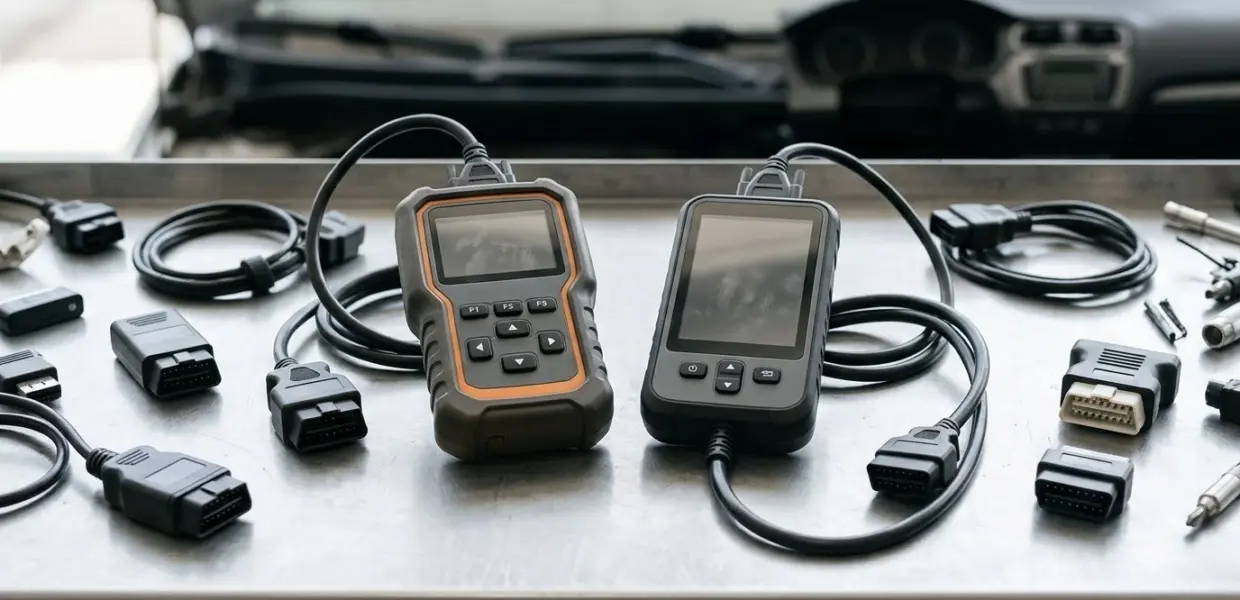

P2187 is a generic OBD-II code that means the engine runs too lean at idle on Bank 1. The engine computer sets it when it keeps adding fuel at idle to hit the target air-fuel ratio, which usually means extra unmetered air is entering the engine.
The code is bank-specific and checked only at idle, so a leak is a more likely cause than a failed sensor. Check the common leaks first, then read your fuel trims before you buy parts.
What the P2187 Code Actually Measures
P2187 sets when the combined long-term and short-term fuel trims exceed the calibrated enrichment limit at idle speed. In plain terms, the computer is adding more fuel than it normally needs to keep the air-fuel ratio where it should be.
The TaT code database entry for P2187 describes it as a generic OBD-II code named System Too Lean at Idle (Bank 1). It calls the fault bank-specific, meaning it applies to only one cylinder bank of a multi-bank engine. The same entry says the usual cause is unmetered air entering the engine.
Bank 1 refers to the cylinder bank that contains cylinder 1, so the code points you to one side of a V or flat engine. Confirm the bank layout in your service information before you start testing. Because the condition is evaluated only at idle, higher airflow at cruise can hide a problem that is obvious when the engine is idling. The definition is the same on every make because P2187 is a generic code, but the repair steps and part locations differ by vehicle.
Common Causes of a Lean Idle Condition
P2187 usually points to unmetered air entering after the mass airflow sensor, such as an intake or vacuum leak, though fuel delivery faults can also cause it. The Ross-Tech wiki entry for this Bank 1 code lists three possible causes for Volkswagen and Audi vehicles: injectors that leak or are blocked, an air intake leak after the MAF sensor, and an exhaust leak.
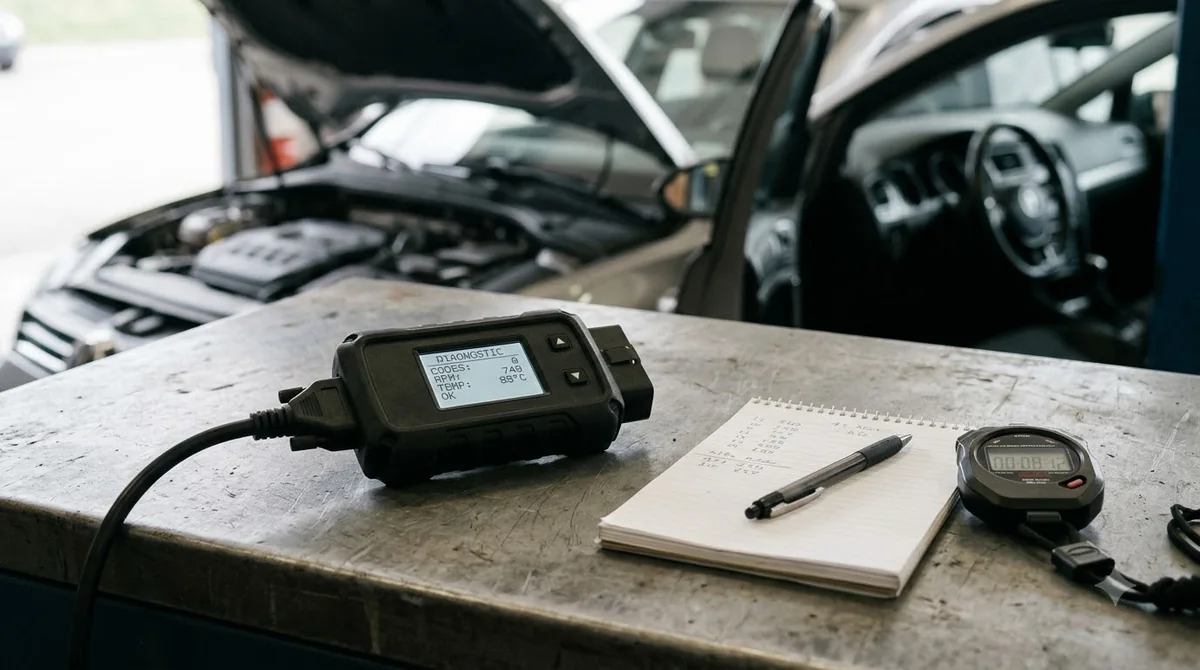
Its suggested checks start with the mass airflow sensor, then the injectors, the fuel pump, and the EVAP purge solenoid, which Volkswagen and Audi label N80. Across makes, diagnostic sources describe these fault families:
- Cracked intake hoses or loose clamps between the mass airflow sensor and the throttle body.
- A split vacuum line, such as the brake booster hose or a PCV hose.
- A mass airflow sensor that under-reads intake air, so the computer adds too little fuel.
- Injectors that leak or are partly blocked, which change how much fuel reaches the cylinder.
- An exhaust leak upstream of the oxygen sensor, which pulls in outside air and makes the sensor read lean.
- An EVAP purge valve stuck open, which lets fuel vapor into the intake at idle.
Step by Step Checks for a P2187 Vacuum Leak
Start with a visual check of the intake and vacuum hoses, then run a smoke test to find leaks you cannot see. Work with the engine off and cool, and keep hands clear of the fan and belts when the engine runs.
- Inspect the intake tube between the mass airflow sensor and the throttle body for cracks, loose clamps, and collapsed sections.
- Check the PCV valve, its hose, and the oil filler cap seal. A faulty PCV valve can let unmetered air in at idle.
- Look at the brake booster hose. A split here is a common vacuum leak, and it is easy to miss from above.
- Run a smoke test through the intake. Smoke leaking from a hose, gasket, or joint shows the exact leak point.
- Clear the code only after the repair, then scan again to confirm the fault does not return.
A clean smoke test does not always rule out a leak. Some owners report that smoke found nothing on a car with a lean idle code. If the smoke test is clean and the trims stay high, check the mass airflow readings and fuel delivery next. Stalling when the car is stopped can also come from mismatched throttle and pedal sensor readings, as the P2135 code guide explains.
Reading Fuel Trims at Idle and at Cruise
Comparing long-term fuel trims at idle and at steady cruise, around 2,500 RPM, shows whether the lean condition is limited to idle. Diagnostic guides often suggest logging Bank 1 long-term fuel trim (LTFT) at both points, because the pattern narrows the cause faster than a single reading.
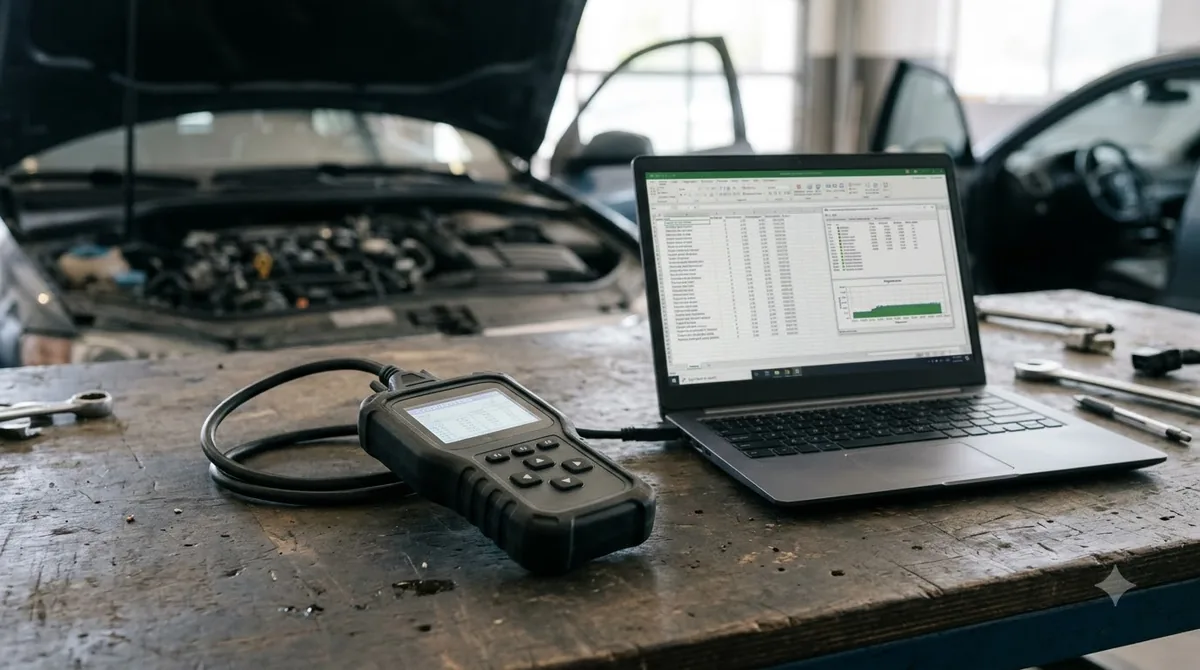
The trigger values in forum posts vary. Some owners report a trigger near +5 percent over two consecutive drive cycles, while others cite idle trims near +20 percent. These numbers are owner-reported, so compare your readings with your vehicle’s service data before you act on them.
| Trim pattern | What it often suggests | Next step |
|---|---|---|
| High at idle, near zero at cruise | Idle-only vacuum or intake leak | Smoke test the intake and vacuum lines |
| High at idle and at cruise | Broader lean condition, often with P0171 set too | Check mass airflow readings and fuel pressure |
| Normal trims, but the code is stored | Intermittent leak or a noisy sensor signal | Log data through several idle periods |
Use the table as a starting point rather than a verdict. Log the readings through several idle periods, since a stored code means the condition repeated. Write down the engine temperature and the RPM for each reading so you can compare them later. Also note any recent repairs to intake or vacuum parts, because a previous job can change where the leak is.
Repair Options and What Each Usually Involves
Most P2187 fixes begin with a hose, clamp, gasket, or valve, and sensor or injector work usually comes after those checks come back clean. This article does not include verified repair prices, so get written quotes from a local shop rather than relying on online estimates. Cost depends on the make, the engine, and how hard the leak is to reach.
- Replacing a cracked intake hose or clamp, which is often the simplest repair once the leak is found.
- Cleaning or replacing the mass airflow sensor. Use a cleaner made for MAF sensors and never touch the sensing element. Our guide shows how to test a MAF sensor before you buy one.
- Replacing a PCV valve or an EVAP purge valve that is stuck open. Check the typical purge valve replacement cost before you book the work.
- Replacing injectors or the fuel pump only after fuel pressure and injector tests confirm a fault.
- Repairing an exhaust leak upstream of the oxygen sensor before you replace the sensor.
When to Get the Car Checked Right Away
Have the car checked soon if you notice a rough idle, the engine stalls, or the car drives poorly, since those signs show the lean condition is affecting how the engine runs. The sources used here do not rate the severity of P2187, so judge by how the engine behaves. A stalling or rough engine is a reason to stop and arrange a diagnosis.
Frequently Asked Questions
Is P2187 a serious code?
The sources used here do not rate how serious P2187 is. The code means the mixture runs too lean at idle, so the engine may feel rough. The usual cause is unmetered air, which basic checks can often find.
Can I drive with a P2187 code?
No source reviewed here sets a driving limit for P2187. If the idle is rough, the engine stalls, or the car runs poorly, avoid driving it far and have it inspected before you go on. Safety comes first when the engine behaves oddly.
Does P2187 always mean the oxygen sensor is bad?
No. A lean code means the computer sees a lean mixture, and an intake or vacuum leak can cause that without any sensor fault. Test for leaks and check fuel trims before you replace the oxygen sensor, because a new sensor will not fix an air leak.
Can I clear P2187 myself?
Yes, a basic OBD-II scanner can clear the stored code. Clearing it does not fix the cause, though. If the leak or fault is still present, the code is likely to return, so repair the cause first and then clear the code to confirm the result.
Do I need a professional scan tool?
A basic code reader shows the stored code, but comparing long-term fuel trims needs a scanner that displays live data. Check that your tool lists long-term fuel trim (LTFT) before you buy one, because the idle and cruise comparison depends on that reading.
Is P2187 the same as P0171?
No. P2187 is set only at idle and only on one bank. A lean condition across the whole operating range can set P0171 instead of, or in addition to, P2187 (see the P0171 code guide), so read every stored code before you start repairs.
If your car throws P2187, start with the free checks: hoses, clamps, and the PCV valve. Move to mass airflow or injector work only after a smoke test and fuel trim readings point there. Keep a log of each reading, because a clear pattern makes the shop visit shorter and the diagnosis more reliable. Note any other stored codes too, since a P0171 alongside P2187 points to a wider lean condition.