
Normal oil pressure is the range your engine’s maker specifies, and it shifts with engine speed and temperature. Manufacturer service bulletins for GM’s 3.6L engines show about 60 psi once the engine is warm, while Mazda’s main-line figures rise steadily as rpm climbs.
Your reading depends on rpm, oil grade and how warm the engine is, so one number rarely proves a fault. Check the figure in your owner’s manual, and treat the warning light as a reason to stop.
What Is Normal Oil Pressure?
Normal oil pressure has no single value for every vehicle, because each engine design sets its own range. The figures in this guide come from manufacturer service bulletins, not general guesses.
Gauges and bulletins usually report pressure in psi, or pounds per square inch. Some bulletins also give kilopascals (kPa), where 60 psi equals about 413 kPa. Broad ranges such as 25 to 65 psi appear often in general articles, but those articles rarely say which engine they describe.
The most useful normal oil pressure figure is the one for your own engine. A reading that matches a table from another brand tells you little about your car. Your owner’s manual or the manufacturer’s service information lists it for your make, model and year. Use that figure as the reference, and treat any range from a general article as a starting point only.
Typical Readings by Engine Speed
For Mazda SKYACTIV engines covered by bulletin 01-016/19, main-line pressure should be at least 7 psi at 650 rpm and roughly 43.6 to 62.3 psi at 4,500 rpm. Pressure rises with engine speed because the oil pump moves more oil each minute.
| Engine speed | Main-line pressure (kPa) | Main-line pressure (psi) |
|---|---|---|
| 650 rpm | 50 kPa or more | 7 psi or more |
| 1,500 rpm | 110 to 175 kPa | 16.0 to 25.3 psi |
| 4,500 rpm | 300 to 430 kPa | 43.6 to 62.3 psi |
Normal oil pressure at 4,500 rpm sits far above the 650 rpm minimum, which is why a single reading cannot describe the whole picture. These ranges apply only to the Mazda SKYACTIV models listed in that bulletin, which lists 2012 to 2018 Mazda3, 2014 to 2017 Mazda6, 2013 to 2017 CX-5 and 2016 to 2018 CX-3 vehicles. The bulletin measures with the engine warmed to 90 C (194 F) or more and electrical loads switched off, and it gives figures at three speeds rather than one idle figure. Compare your gauge with the table only after confirming your vehicle is in scope, since normal oil pressure for another engine can look very different.
Why Gauge Readings Change
A cold engine often shows much higher oil pressure than a warm one, and GM treats a cold-start reading up to 110 psi as normal on certain 3.6L engines. Cold oil is thicker and flows less easily, so pressure starts high and settles as the engine warms. Coolant temperature matters too; the guide to normal coolant temperature shows what your gauge should read.

A 2013 GM service bulletin covers 2008 to 2014 Cadillac CTS and 2010 to 2014 Chevrolet Camaro models with 3.6L engines. It says that as the engine and oil warm, the gauge should return to about 60 psi, and that pressure can fall to 20 to 25 psi when warm and still be normal. That low end still counts as normal oil pressure for those engines, so a reading in that band is not automatically a fault.
Cold start and acceleration readings
The same bulletin says the gauge may read as high as 110 psi during a cold start, sometimes sitting all the way to the right. It also notes that the needle can swing high under some acceleration conditions. The bulletin treats these readings as normal operation, and no repair or parts replacement is needed for them.
An earlier 2012 GM bulletin for 2010 to 2013 Camaro models with 3.6L engines describes about 60 psi as normal in various conditions, and up to 70 psi on a cold start.
Oil grade also affects the reading. Jalopnik notes that oil which is too thick, whether from the wrong viscosity or from cold weather, can push pressure high. Matching the grade the manufacturer recommends keeps your normal oil pressure readings closer to the specification. A dash light that appears right after service is a separate matter, covered in the guide to a check engine light after an oil change.
When the Oil Pressure Warning Light Means Stop
The oil pressure warning light warns of low oil pressure, which is why it signals a stop. A lit light is a reason to stop safely and shut the engine off as soon as you can.

Nissan’s dashboard indicator guide describes the light as a warning of low engine oil pressure. If it flickers or comes on during normal driving, the guide says to stop safely as soon as possible, shut off the engine immediately, and contact a Nissan dealer or another authorized repair shop.
- Pull over safely as soon as you can.
- Shut off the engine right away.
- Once the engine has cooled, check the dipstick for oil level.
- Contact a dealer or authorized repair shop before you drive the vehicle again.
A full dipstick does not clear the warning, and other lights have their own guides in the Learn section. Nissan states that the light is not designed to indicate a low oil level, so a sensor fault or a worn oil pump still needs a professional check. The oil pressure sensor replacement cost guide covers the sensor side.
Common Causes of Low and High Oil Pressure
Low oil pressure most often comes from low oil level, a faulty sensor or a worn oil pump, while high oil pressure usually comes from oil that is too thick or from clogged oil passages. The list below comes from Jalopnik, an editorial article rather than a manufacturer source.
- Low pressure: low engine oil level
- Low pressure: a faulty oil pressure sensor
- Low pressure: a worn oil pump
- High pressure: oil that is too thick for the engine
- High pressure: cold weather thickening the oil
- High pressure: clogged oil passages
Each cause above pushes normal oil pressure out of range in one direction or the other. Oil also thins as the engine warms, which can lower the normal oil pressure reading over time. Jalopnik adds that ticking, knocking or whining sounds can signal trouble alongside an abnormal gauge, so a gauge reading and a sound check go together. Our guide to engine knocking explains what each sound can mean.
How to Check Oil Pressure Accurately
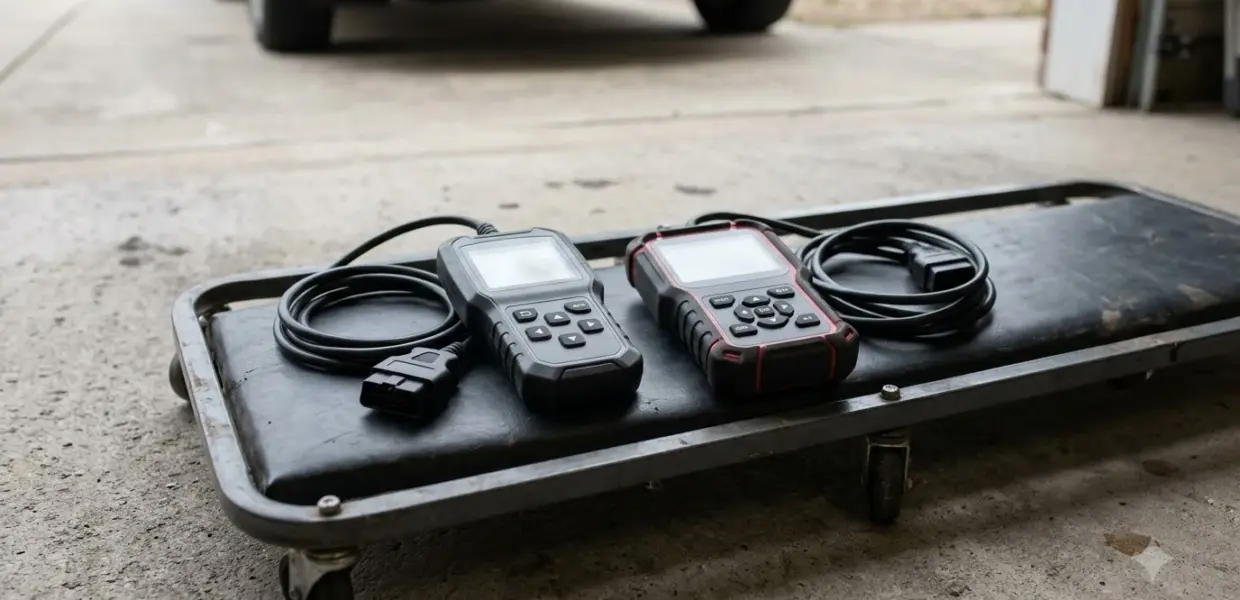
To check your normal oil pressure accurately, compare a mechanical gauge or scan tool reading with the manufacturer figure, because the dash sensor alone may not settle the question. Jalopnik recommends an accurate gauge or scan tool to rule out sensor issues.
- Check the oil level on the dipstick first.
- Confirm the oil grade matches the manufacturer’s recommendation.
- Attach a mechanical gauge, or connect a scan tool that shows live oil pressure data.
- Start the engine with electrical loads such as air conditioning and headlights switched off, and warm it to 90 C (194 F) or more, as Mazda’s procedure requires.
- Read the pressure at 650, 1,500 and 4,500 rpm, then compare each value with the specification.
Mazda’s bulletin uses this three-speed method, so a single idle reading cannot be compared with its table. Measuring at three speeds also shows whether the pump keeps up as rpm rises. When readings are abnormal, the bulletin lists replacing the oil pump and fitting a modified oil strainer, cleaning the oil pan and changing the engine oil as the next steps, which is work for a qualified technician.
Frequently Asked Questions
Is 20 psi oil pressure normal?
It can be, depending on the engine and its temperature. A 2013 GM bulletin for certain 3.6L engines says pressure may fall to 20 to 25 psi when warm and still be normal. Check the normal oil pressure specification for your own engine before deciding, because that bulletin does not apply to every car.
Is high oil pressure dangerous?
Not always. Normal oil pressure can read high during a cold start, and GM says a high reading during a cold start, or when the needle swings under hard acceleration, is normal for those 3.6L engines. Persistent high readings when warm can come from oil that is too thick or from clogged oil passages, according to Jalopnik, so have them checked.
Does the oil pressure warning light always mean low oil?
No. Nissan states that its engine oil pressure warning light is not designed to indicate a low oil level. The light warns of oil pressure below normal oil pressure for your engine, which can come from a sensor fault or a worn pump, so stop safely and have the car inspected rather than relying on the dipstick alone.
Can a faulty sensor cause a false oil pressure reading?
Jalopnik lists a sensor fault as a cause of low readings and recommends a mechanical gauge or scan tool to rule out sensor issues. Comparing the sensor reading with a direct normal oil pressure measurement shows whether the sensor or the engine is the problem.
Where can I find the normal oil pressure for my car?
Check the owner’s manual, the instrument panel section or the manufacturer’s service information for your make, model and year. Those sources give the normal oil pressure specification for your engine, which general articles and forums often cannot provide.
Treat your owner’s manual as the final authority on normal oil pressure, and do not keep driving with the oil pressure warning light lit. If you measure pressure yourself, keep your hands and clothing clear of moving engine parts while the engine runs.