
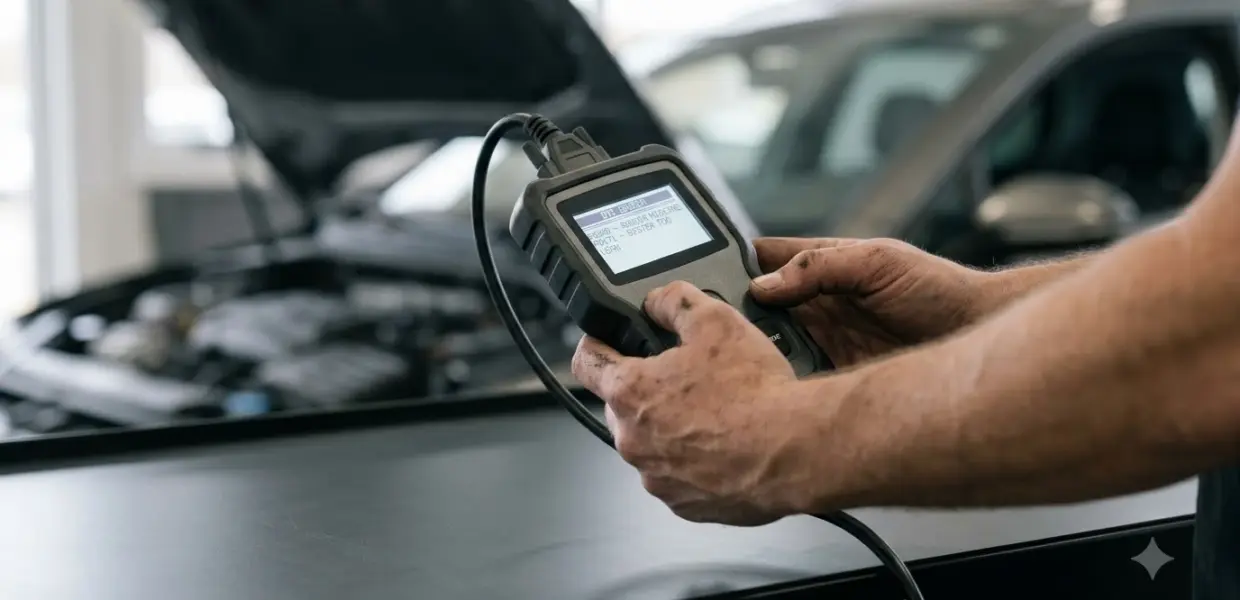

The oil pressure sensor replacement cost is about $100 to $300 in one published guide, as of 2026-11-06, plus 0.5 to 1.8 hours of labor. Most of the final bill depends on labor time and on whether the sensor is really the fault.
Confirm the sensor before you pay for a part, because a warning light can also point to real low oil pressure. The oil pressure sensor replacement cost range here comes from a single source, so use it as a starting point and get a written quote.
What Does the Oil Pressure Sensor Do?
The oil pressure sensor monitors oil pressure in the lubrication system and is usually mounted in the cylinder block near the oil filter or its housing.
Knowing what the part does helps you judge any oil pressure sensor replacement cost quote. In most cars the part is a simple switch. With the ignition on and the engine off, the switch is closed and the low oil pressure light is on. Once the oil pump builds minimum pressure, the switch opens and the light goes off. The Foxwell guide puts that trigger point at about 5 to 7 PSI.
Some engines use a sensor that measures pressure all the time and sends the reading to the engine computer. An OBD2 scanner can read that live data, which makes a scanner test useful for this part, and the Innova 5110 guide to reading and clearing codes shows the basic steps.
Sensor or Switch: Why the Type Changes the Repair
Your car has either a switch that only turns a warning light on or off, or a sensor that reports actual pressure, and that difference decides what a shop can test.
| Feature | Oil pressure switch | Oil pressure sensor |
|---|---|---|
| Signal | On or off (binary) | Continuous pressure data |
| Output | Turns the warning light on or off | Feeds live data to the engine computer |
| Scanner access | None | Readable with an OBD2 scanner |
Check which type you have before you ask for an oil pressure sensor replacement cost quote. A switch and a sensor are different parts with different tests, so a quote for the wrong part wastes money. The same guide lists switch thresholds that vary by brand, such as 0.9 to 1.8 bar on some VW and Audi engines.
Oil Pressure Sensor Replacement Cost Breakdown
As of 2026-11-06, one guide puts the oil pressure sensor replacement cost at about $100 to $300, while the same guide’s FAQ gives $70 to $300 in total, so the range is rough.
The replacement section of the Foxwell oil pressure switch guide says the job is usually between $100 and $300. Its FAQ breaks the cost into a part of about $20 to $100 and labor of about $50 to $200.
The two figures in that guide do not match, so treat them as a rough estimate for oil pressure sensor cost, not a quote. The table below shows each number and where it appears.
| Cost item | Figure as printed in the source |
|---|---|
| Total, replacement step | $100 to $300 |
| Total, FAQ | Commonly $70 to $300 |
| Part, FAQ | About $20 to $100 |
| Labor, FAQ | About $50 to $200 |
| Labor time, glossary | 0.5 to 1.8 hours plus the part |
The oil pressure sensor labor cost is the line to question first. Within the stated labor time, the labor charge should match the billed hours multiplied by the shop’s hourly rate, so ask for both numbers.
These figures are not split by make or model. Get a quote for your own vehicle before you decide, and ask whether the diagnosis is included.
Symptoms That Point to the Sensor
A warning light that stays on or flashes while oil pressure is normal is a common sign of a failing sensor, and a gauge that reads zero is another.
- A warning light that stays on or flashes even when oil pressure is normal
- A gauge that reads zero or shows abnormal values, such as 0.99 bar at idle
- Oil leaking from the sensor threads or body
- Code P0522 (low pressure signal failure) or P0523 (abnormal voltage)
- Code P0520, which the Samarins glossary says a failed sensor can set
A check engine light can appear along with these signs. The glossary advises checking the sensor wiring and service bulletins for codes such as P0520, so inspect the wiring before you buy a new part.
These signs help you decide whether the oil pressure sensor replacement cost is worth paying before you book a repair.
How to Confirm the Sensor Is at Fault Before Paying
Check the oil level first, then compare a mechanical gauge reading with the sensor’s signal, so you replace the sensor only when real pressure is normal.
Testing first keeps you from paying the oil pressure sensor replacement cost for a part that was not broken. The Foxwell guide sets out this order.
- Check the oil level and condition first.
- Test real pressure with a mechanical gauge. Low pressure points to the pump or an oil passage.
- If pressure is normal and the light is still on, the sensor is the likely cause.
- Connect an OBD2 scanner and read live data to check the sensor’s output voltage.
- Compare the engine computer’s oil pressure value with the mechanical gauge reading.
The guide gives no resistance or voltage ranges, so look up the exact specifications in your vehicle’s service information rather than relying on a guessed number. A confirmed fault keeps the oil pressure sensor replacement cost tied to a real repair.
What Makes the Price Go Up or Down
Labor is the wider part of the oil pressure sensor replacement cost quote, and whether the leak is at the threads or the body decides if a new part is needed at all.
- Labor time: the glossary gives 0.5 to 1.8 hours plus the part.
- Labor rate: rates vary by location and shop, which fits the FAQ labor range of $50 to $200.
- Leak type: a thread leak may be resealed, but a leak from the body needs replacement.
- Access: a sensor that is hard to reach adds labor time, within the range above.
- Diagnosis: some shops bill it as a separate line, so ask whether it is included in the oil pressure sensor replacement price.
If the leak is not coming from the sensor itself, the leak repair is a separate job, and the sensor price alone is not the full bill. Ask the shop to name the leaking part in writing, because that decides the oil pressure sensor replacement cost. For a sense of how another engine sensor is priced, see the camshaft position sensor replacement cost guide.
Replacing It Yourself or Using a Shop
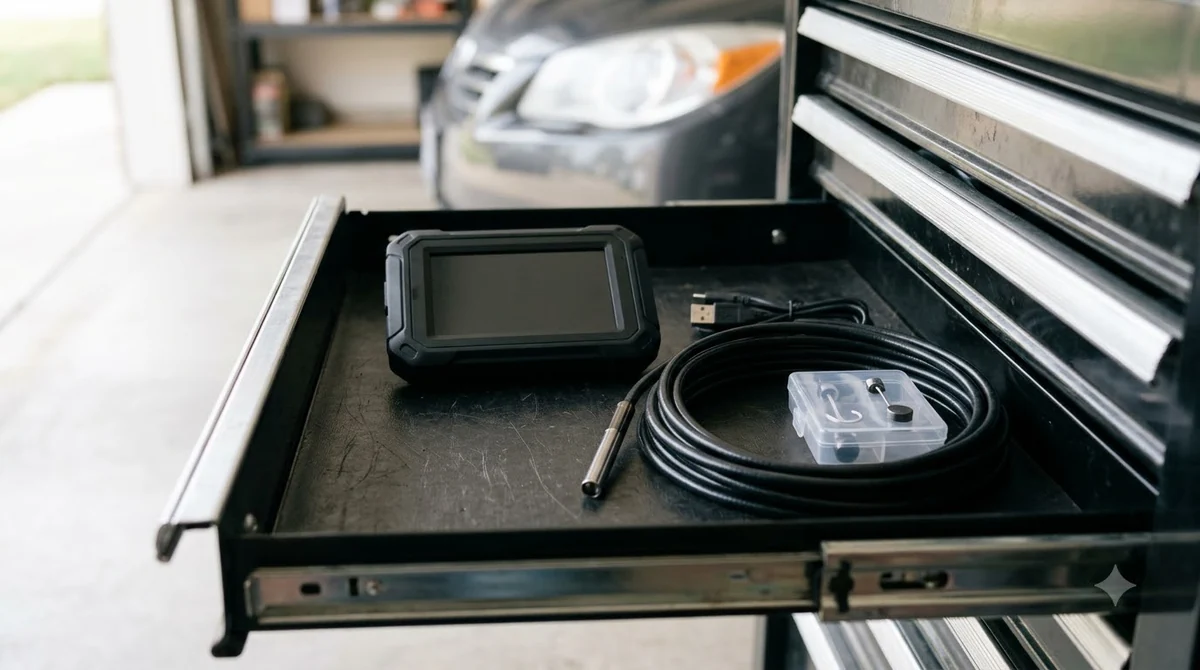
A do-it-yourself oil pressure sensor replacement needs a sensor socket, carburetor cleaner and thread sealant, and the Foxwell guide lists the steps from draining the oil to a leak check.
- Locate the sensor and drain the engine oil.
- Disconnect the connector and remove the old sensor.
- Clean the mounting surface and apply thread sealant to the new sensor.
- Install the new sensor without over-tightening it.
- Reconnect the connector and check for leaks.
Draining the oil adds a cost of its own, so count it in your total. Doing it yourself changes the oil pressure sensor replacement cost mainly by removing the labor line.
The part cost still applies to the oil pressure sensor replacement cost, and a leak after reconnecting means the job is not finished, so recheck the installation before you close the hood.
Related Guides
Frequently Asked Questions
Can a bad oil pressure sensor cause a check engine light?
Yes, in some vehicles. The Samarins glossary says a failed sensor can set code P0520, which it calls common on Dodge, Chrysler and Jeep vehicles. Read the stored codes before you assume the problem is elsewhere, and check the sensor wiring too.
What trouble codes point to an oil pressure sensor?
The Foxwell guide lists P0522 for a low pressure signal failure and P0523 for abnormal voltage. The Samarins glossary adds P0520. Confirm the code with your vehicle’s service information before you buy a part.
How much does an oil pressure sensor replacement cost?
One guide puts the oil pressure sensor replacement cost at about $100 to $300 as of 2026-11-06, and its FAQ gives $70 to $300 in total. The figures differ and come from one source, so use the range as a starting point and get a written quote.
How long does an oil pressure sensor replacement take?
The Samarins glossary gives 0.5 to 1.8 hours of labor plus the part. Harder access means more time within that range, and the glossary does not give a fixed figure for each make.
Should I replace the sensor if it leaks?
Not always. The Samarins glossary says a thread leak may be resealed, while a leak from the sensor body means it needs replacing. Check which part is leaking before you pay for the oil pressure sensor replacement cost.
Can I drive with the oil pressure light on?
Treat the light as possible real low pressure until you check the oil level and a mechanical gauge. The Foxwell guide says the light can point to real low pressure, so the sensor is not always the cause.
Can I replace the oil pressure sensor myself?
The Foxwell guide lists the tools and steps, so the job can be done at home if the sensor is reachable. Use a sensor socket, thread sealant and care with torque, and check for leaks after reconnecting.
Before you approve a repair, ask for labor hours and the part price as separate lines. Compare them with the 0.5 to 1.8 hour labor range and the rough oil pressure sensor replacement cost range in this guide, and confirm whether diagnosis is included.
