

P0101 means the mass air flow sensor signal is outside its expected range. The engine computer cannot read the air entering the engine correctly, so it sets this code and may turn on the check engine light.
A dirty sensor, an intake leak or a loose connector causes many cases, so check those inexpensive causes before you buy a new part.
What the P0101 Code Means
P0101 is set when the mass air flow (MAF) sensor signal falls outside its expected range. According to Samarins, a diagnostic reference site, the sensor is not measuring airflow correctly when this code sets.
The MAF sensor reports how much air enters the engine. The engine computer uses that reading to calculate fuel delivery and engine load, so a wrong reading affects how the whole engine runs.
The code does not always mean the sensor itself has failed. A dirty sensor, an air leak after the sensor or a wiring fault can each push the signal out of range.

Common Causes of P0101
The most common causes of P0101 are a dirty or damaged MAF sensor, a cracked intake boot and vacuum leaks. Samarins lists a longer set of causes, and the simple ones are the first to check.
- A dirty, obstructed or faulty MAF sensor, since debris can block the hot-wire element
- A cracked, torn or disconnected intake boot
- Vacuum leaks, such as a stuck-open PCV valve or leaking intake gaskets
- A clogged or badly installed air filter, or a filter soaked in oil
- A dirty throttle body or a faulty MAP sensor
- Loose pins, corrosion or damage in the MAF wiring or connector
- A clogged catalytic converter or restricted exhaust
Less common causes include a stuck-open EGR valve, incorrect valve timing and a faulty PCM. Those need a deeper scan tool check before any part is replaced. A leaking boot or hose can also push the mixture lean, which a lean mixture after an air leak explains from the fuel trim side.
Symptoms You Might Notice
A P0101 code often comes with stalling, hard starting, lack of power or an unstable idle. The MAF reading feeds the engine load calculation, so a bad reading changes how the engine responds.
- Stalling, especially at idle or low speed
- Hard starting
- Lack of power under load
- An unstable or rough idle
- Traction control that stops working, with its warning light on
- Changes in automatic transmission shift patterns
The check engine light usually comes on with the code. A car that drives normally can still store P0101, so do not rely on the symptoms alone to judge the fault. If the engine feels uneven at a light, see the checks for uneven idle and shaking at a stop.
How to Diagnose P0101 Step by Step
Work through these checks in order. Each step is inexpensive, and many cases are resolved at the first or second step. Start with the parts you can see and touch before you move to scan tool data.
- Inspect the MAF sensor and clean it if it is dirty. Debris can block the hot-wire element.
- If the code appeared soon after an air filter change, check that the filter is installed correctly.
- Inspect the intake boot for cracks and tears, and check for other vacuum leaks.
- Check the MAF connector for loose pins or corrosion, and check the sensor reference voltage and ground.
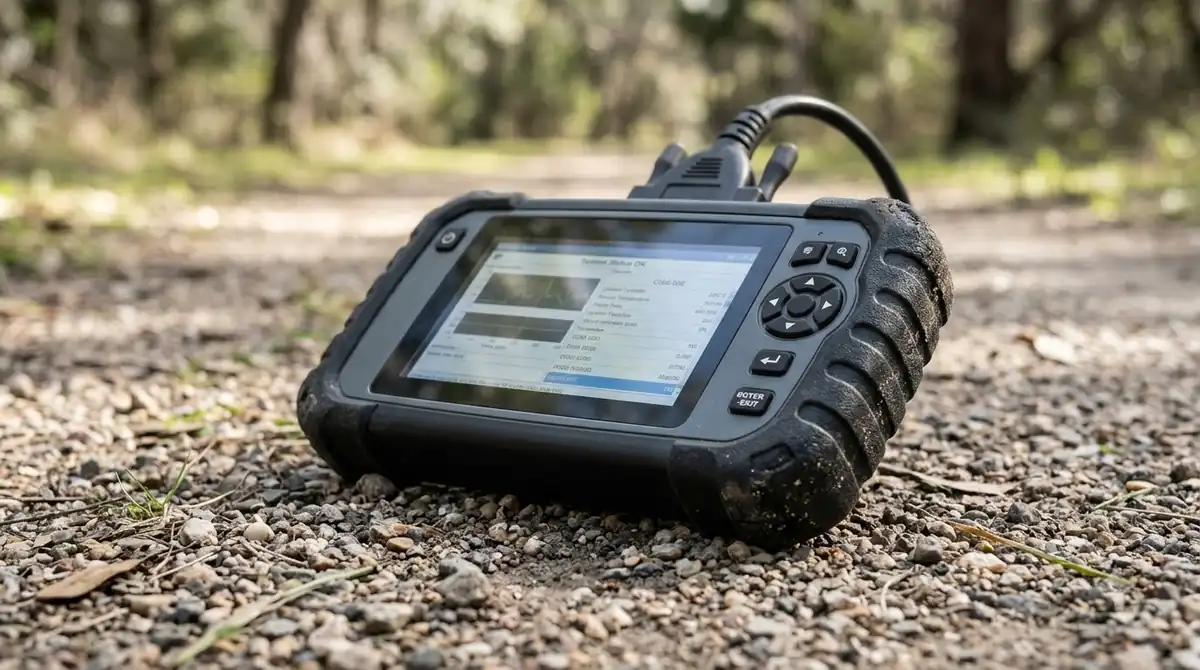
- Use a scan tool to read live MAF values at 1000, 2000 and 3000 RPM, then compare them with specifications or a known-good sensor.
- On some trucks, check exhaust back pressure or intake vacuum to rule out a clogged catalytic converter.
On some Volkswagen models, the metal mesh intake screen ahead of the filter should also be checked and cleaned. Clear the code only after the cause is fixed, then retest. A code that returns right away points to a fault that is still present. For the clearing step, the safe way to clear a check engine code shows what to do first. A skewed airflow reading can also push the mixture rich, so read about the P0172 Bank 1 rich condition if your fuel trims point that way.
What Manufacturer Bulletins Say About P0101
Manufacturers publish service bulletins for specific vehicles, and some of them show that P0101 can come from sources other than the sensor. GM bulletin PIP5729, dated May 13, 2020, covers 2019 and 2020 Chevrolet Silverado, Suburban and Tahoe, GMC Sierra and Yukon, and Cadillac Escalade models in North America.
That bulletin describes P0101 with DTC P1682 set after the MAF sensor was replaced. It says the cause may be a faulty ignition relay or an underhood fuse block terminal, so technicians should inspect the ignition relay circuits and replace the relay if required before replacing the MAF sensor. Nissan owners can find a model-specific walkthrough in P0101 on Nissan vehicles.
The Nissan bulletin EC12-012k, dated December 1, 2016, covers 2011 and 2012 models such as the Altima, Sentra, Versa and Xterra. It describes P0101 with the MIL on and no drivability concerns. Its action is an ECM reprogramming, and it applies only if the ECM part number matches the bulletin’s table.
GM bulletin 21-NA-032, dated April 2021, covers the 2019 new-model and 2020 to 2021 Chevrolet Silverado 1500 and GMC Sierra 1500 with the 5.3L and 6.2L engines, in several regions including the United States and Canada. It describes P0101 set together with P1682, and says the cause may be a compromised connection in the underhood electrical center connector X3 at position H6.
For that case, the correction is to repair the wire connection, and the bulletin says not to replace the MAF sensor. Replacing the sensor first would leave the connector fault in place.
A Volkswagen technical tip 21-20-01TT, dated March 6, 2020, covers the 2020 Passat with the 2.0L engine. It describes the code as set when the mass air flow sensor draw is too high or too low. Its service step is a pressure test of the charge air system and a check for a loose or popped-out boost hose. The document states that it is a tech tip, not a technical bulletin.
These bulletins apply only to the listed model years, engines and regions. If your vehicle is not on the list, use them as a reason to check the ignition circuit and wiring, not as a repair instruction.
When to Replace the MAF Sensor
Replace the MAF sensor only after the cleaning, boot, connector and vacuum checks come back clean. A new sensor is a reasonable fix when live readings stay out of range or a bulletin for your vehicle calls for it.
| Check | What it tells you | Next step |
|---|---|---|
| Sensor condition after cleaning | Dirt or debris on the element | Clean, clear the code and retest |
| Intake boot and PCV valve | Vacuum leaks after the sensor | Repair the leak and retest |
| MAF connector and wiring | Loose pins or corrosion | Repair the connection |
| Live MAF readings | Signal outside expected values at several RPM | Replace the sensor if it stays out of range |
| Bulletins for your vehicle | Known fixes such as an ignition relay check or ECM reprogramming | Follow the listed steps for your model |
The Nissan bulletin EC12-012k is a useful reference for the reprogramming step, but a sensor swap is not part of its action.
Frequently Asked Questions
Can I drive with a P0101 code?
Often yes, but only with care. If the engine stalls, hesitates or loses power, stop driving and have it checked. The Nissan bulletin describes a case with no drivability concerns, but that applies only to the vehicles it lists.
Will clearing the code fix P0101?
No. Clearing the code does not repair the fault. The code returns if the cause is still present, such as a dirty sensor or a vacuum leak. Clear it only after the repair, then retest to confirm it stays off.
Is P0101 the same as a vacuum leak?
Not exactly. P0101 is a MAF circuit range or performance code, but a vacuum leak after the sensor can cause it. Live MAF readings and a check of the intake boot help separate the two.
Does P0101 always mean a new MAF sensor?
No. Dirt, air leaks and wiring faults all come before the sensor in the diagnosis. Some manufacturer bulletins point to an ignition relay check or an ECM reprogramming instead, so check those before buying a sensor.
Can a dirty air filter cause P0101?
Yes. Samarins lists a clogged or badly installed air filter as a cause, and an oil-soaked filter can contaminate the sensor. Check the filter installation first, then inspect the MAF sensor and the intake boot before replacing any part.
The code alone does not prove which part failed. Ask for live MAF readings and a check of the bulletins for your model before you agree to a sensor replacement.
