


P0506 is a generic OBD-II code meaning the engine’s idle speed is lower than the engine control module expects. It is a symptom code: it shows low idle, not the failed part. The usual culprits are a dirty throttle body, a vacuum leak and a worn idle air control valve.
The repair depends on the cause, and the cause depends on your vehicle. Start with the cheap checks, then test the idle system before you buy any parts.
What the P0506 Code Means
The engine control module sets P0506 when idle speed stays below its target even at maximum correction. One German workshop puts the trigger at actual idle under about 600 rpm, against a warm target of 700 to 850 rpm.
The official name is Idle Control System RPM Lower Than Expected. It is a generic code, so the name is the same across brands, but the exact threshold is not. A German repair shop’s P0506 guide calls it a symptom code rather than a component code, which means it names a result, not the broken part. Other makes may use different thresholds, so treat any single number as a guide and check your make’s service data.
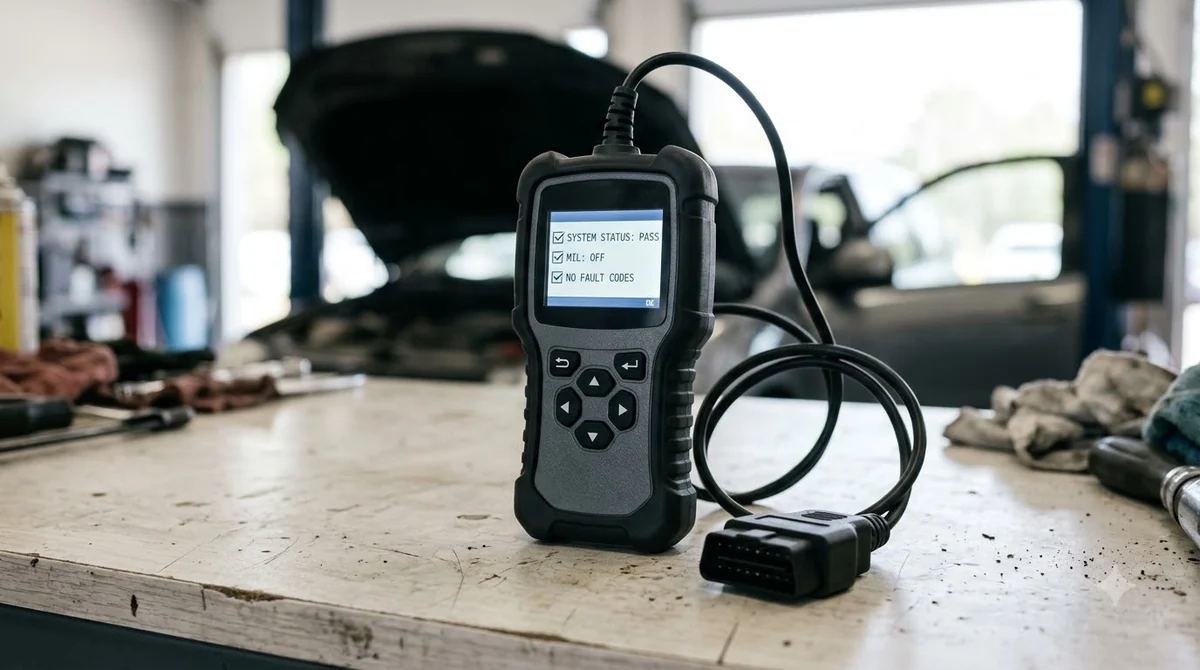
Because P0506 only reports a low idle, two cars with the same code can need different repairs. A rough idle on its own has a wider list of causes, and the P0505 code covers the idle control system malfunction on the same family of faults. The code tells you where to look, and the test results tell you what to replace.
Symptoms You Are Likely to Notice
P0506 usually shows up as a rough or unstable idle, hard starts and stalling. Stalling is most likely when a load such as the air conditioning switches on.
- Rough idle with noticeable vibration
- Stalling right after the air conditioning switches on
- Stalling while steering at a standstill or using the rear defroster
- Hard cold starts that need several tries
- Idle dipping below about 500 rpm at traffic lights
- Check engine light that stays on
Those symptoms can also come from ignition, fuel or vacuum faults, so the list is not proof on its own. The same workshop notes that the engine usually runs normally above about 1,500 rpm. A problem that appears only at low speed points toward the idle system, while a misfire under load points toward ignition or fuel.
Common Causes, Ranked by Likelihood
A carbon-fouled throttle body and a vacuum leak account for most P0506 faults in one workshop’s breakdown. That breakdown puts the throttle body at about 40 percent and vacuum leaks at about 20 percent of cases.
The table groups the usual P0506 causes, what each one does to idle and how to check it. Work down the list in order, because the shares show where most faults sit.
| Cause | What it does to idle | How to check |
|---|---|---|
| Carbon-fouled throttle body | Blocks airflow at idle, so the engine cannot hold speed | Inspect the throttle plate and bore for carbon, then clean. One workshop says the share rises above 60 percent on direct-injection engines. |
| Vacuum leak | Unmetered air leans the mixture and drops idle | Smoke test the intake, and check hoses and the intake manifold gasket for cracks. |
| Idle air control valve | Controls bypass air at idle; a stuck or carboned valve lets speed fall | Blow-test the valve and read its duty cycle with a scan tool. |
| Sensor or fuel fault | A drifting oxygen sensor can run the mixture rich, and low fuel pressure also lowers idle | Read the oxygen sensor data and check fuel pressure against your service data. |
| Weak battery or charging system | Idle adaptation after a repair needs stable system voltage above 12.5 volts | Test battery voltage and charging output. |
The workshop’s share estimates were 40 percent for a dirty throttle body, 20 percent for vacuum leaks, 20 percent for the idle valve, 10 percent for a drifting oxygen sensor and 10 percent for low fuel pressure or a control unit fault. These are one shop’s estimates, not a national study, so use them to set the order of your checks.
How to Diagnose the Idle Fault Step by Step
Start by reading every stored code, because P0506 is often secondary to another fault. Then test the idle air control valve, read its duty cycle and check the bypass air path.
Saab’s published procedure for P0506 on the 2005 9-2X 2.0T says to check for other codes first, and the steps below follow the same logic. The Saab service information for P0506 is model specific, so confirm the thresholds in your own car’s service data.
- Record every stored code and the freeze frame data before you clear anything.
- If another code is present, diagnose it first and recheck P0506 after that repair.
- With the ignition off, remove the idle air control valve and blow air into its bypass inlet. Air should exit both the main and assist passages. If it does not, replace the valve and recheck.
- With the engine warm and accessories off, read the valve duty ratio. A reading above 60 percent points to the bypass air line.
- Remove the valve and throttle body, then blow air into the valve area and the throttle bore. If air escapes, replace the valve. If not, replace the throttle body.
- After the repair, run the clear memory and inspection modes called for in the service information.
Long-term fuel trim adds a clue. One workshop puts normal at minus 5 to plus 5 percent. A reading of plus 15 to plus 25 percent suggests a vacuum leak, and a reading near zero points to a mechanical cause.
Fixing P0506: Cleaning, Replacement and Adaptation
Cleaning the throttle body or idle valve is usually the cheaper first repair, and one German workshop says a full throttle body replacement costs more. For U.S. numbers, see the throttle body replacement cost guide. Any cleaning or replacement also needs an idle adaptation afterward.
Cleaning is the first step when carbon is visible on the throttle plate or the valve. Use a throttle body cleaner made for the job, and keep it away from sensor connectors and electrical plugs.
Repair prices depend on the make, the part and the shop rate. No U.S. repair prices were confirmed for this code, so get a written quote for the specific part before you order anything.
Clearing the code does not fix the idle. After cleaning or replacement, the engine has to relearn its closed-throttle position. According to the same workshop, adaptation needs a warm engine with coolant above 80 degrees Celsius and system voltage above 12.5 volts, and it takes about 60 to 120 seconds.
Do not swap parts to chase P0506. The code points at idle speed, not at a failed part, so a new valve will not fix a vacuum leak. A lean mixture from a leak can also set the P0171 code, so check for that code too. The related P2187 code sets when the engine runs too lean at idle, which can also follow a vacuum leak.
Is It Safe to Keep Driving?
Driving with P0506 is risky when the engine stalls at low speed, because a stall at a traffic light or in a turn removes power at a bad moment. The code itself does not say how fast the problem will get worse.
Some stalls come on suddenly after the air conditioning switches on. Plan a check soon, and avoid long trips until the idle is stable.
If the engine stalls while moving, stop driving and have the car checked before you go further.
Frequently Asked Questions
Can I clear the code and keep driving?
Clearing the code turns off the light for a while, but it does not fix the cause. Saab’s service data says the code sets after two consecutive driving cycles with the fault, so a cleared P0506 often returns if the fault is still there.
Is a throttle body always the cause?
No. A dirty throttle body is a common cause of P0506, but a vacuum leak or a faulty idle air control valve can cause the same low idle. Test the vacuum system and the valve before you decide the throttle body is at fault.
What idle speed should I expect?
One workshop lists a warm target of about 700 to 850 rpm, and the code sets when actual idle falls under about 600 rpm despite maximum correction. Your make’s service data gives the exact target, which can differ by engine.
Can a vacuum leak cause P0506?
Yes. A vacuum leak lets unmetered air into the intake, which leans the mixture and drops idle. One workshop links plus 15 to plus 25 percent long-term fuel trim to a vacuum leak, so check that reading before you replace the valve.
Do I need a special scan tool?
A basic code reader shows the code but not always the data you need. To test the cause, you need live data such as idle speed, valve duty cycle and fuel trims, which a scan tool with live data can display.
Should I replace the idle air control valve first?
Not usually. Saab’s procedure starts with a blow test of the valve and replaces it only after that test or the later bypass line check points to it. Test it first, then clean or replace it based on the result, since cleaning is the lower-cost step.
Start with the cheapest checks for P0506: look for cracked vacuum hoses, inspect the throttle body for carbon and read every stored code. Replace parts only when a test points to a specific failure, and keep your car’s service data at hand.
