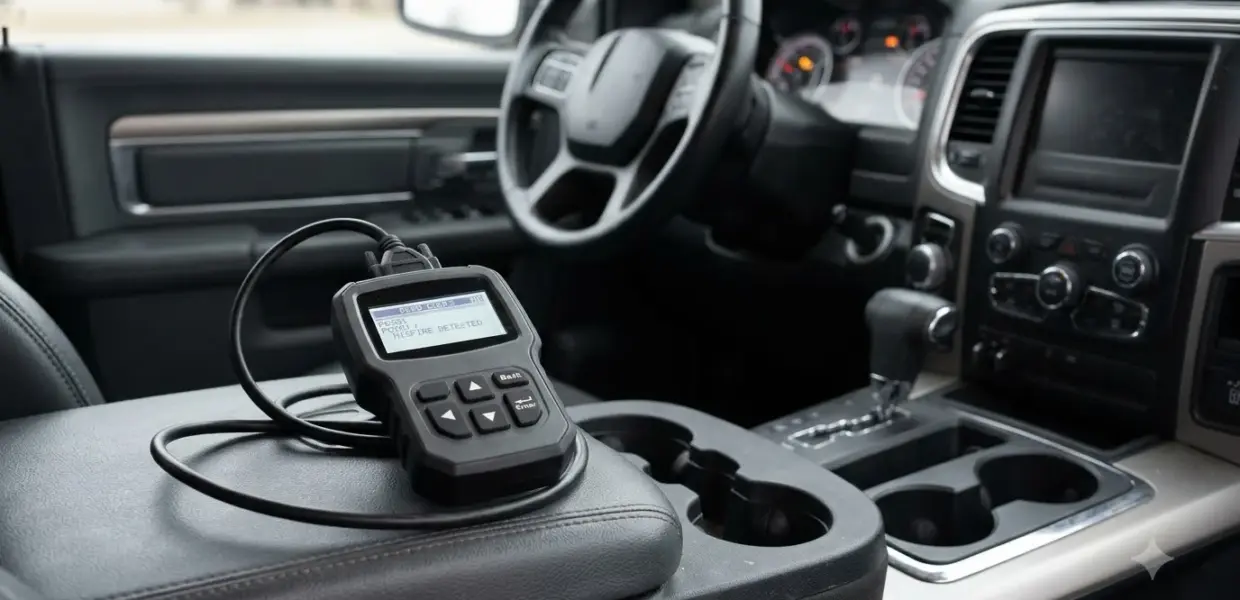

A Toyota Tacoma check engine light means the engine control system has stored a fault that needs service. A steady light asks for service soon, while a flashing light signals a severe misfire and needs prompt action.
Several faults can trigger a Toyota Tacoma check engine light, and a loose gas cap is the simplest one to check. Read the trouble code before you replace any part, because the code shows which system needs attention.
This guide gives general information, not a diagnosis of your truck. Confirm the cause with your owner’s manual and a qualified technician, especially when the light flashes.
What the Toyota Tacoma check engine light means
The Toyota Tacoma check engine light, also called the malfunction indicator lamp, tells you the engine control system has detected a fault. A Toyota Tacoma check engine light has two states, and they carry different levels of urgency.
The EPA’s on-board diagnostics fact sheet says a steady light is meant to tell the driver that service is needed, not that the vehicle must stop. A flashing light is more serious and points to a rather severe level of engine misfire.
| Light state | What it means | First step |
|---|---|---|
| Steady | A fault is stored and needs service | Get service as soon as possible; no need to stop the truck |
| Flashing | A severe engine misfire | Reduce speed and seek service as soon as possible |
The Toyota Tacoma check engine light can also turn off on its own. EPA says it goes out when the system evaluates the component three consecutive times and no longer detects the original problem. If the truck drives normally, our guide to the check engine light but car runs fine situation explains what to check.
Common causes of a check engine light on a Tacoma
Several faults can turn on the light, and each points to a different system. The stored code, not the Toyota Tacoma check engine light alone, tells you which one applies.
Typical triggers include a loose fuel cap, a P0420 catalyst efficiency code, and faults in the oxygen sensors or in the engine’s misfire-related systems. This guide does not rank them by frequency, because the sources reviewed here did not provide verified frequency data for Tacoma trucks.
| Cause | What it points to | First step |
|---|---|---|
| Loose or damaged fuel cap | The EVAP system detects a vapor leak | Tighten the cap and check its seal |
| Catalyst efficiency (P0420) | The catalytic converter is working below threshold | Read the full code and check for a rattle at the converter |
| Oxygen sensor fault | A sensor reading outside the expected range | Confirm with a technician before replacing the sensor |
| Engine misfire | A fuel, spark or compression problem in one or more cylinders | Reduce speed if the light flashes, then have it inspected |
Loose or damaged fuel cap
A loose gas cap can turn on the Toyota Tacoma check engine light because it lets the EVAP system detect a vapor leak (our guide to a check engine light caused by a loose gas cap has more). EPA says the light should go off within a few days after the cap is properly tightened.
- Check the cap’s rubber seal and threads for cracks or wear.
- Tighten the cap until it is snug and seated.
- Drive normally for a few days and watch whether the light goes off.
If the Toyota Tacoma check engine light stays on, the cap is probably not the only cause. Look at the fuel filler neck for damage, then read the stored code. The EPA document dates from 1997, so confirm current procedures in your owner’s manual.
Catalytic converter and the 2010 Tacoma P0420 bulletin
Toyota bulletin T-58-0161-13 covers some 2010 Tacoma trucks with the 2TR-FE engine that show a front exhaust rattle or a P0420 code. The listed fix is a front exhaust pipe replacement, and only when the rattle matches.
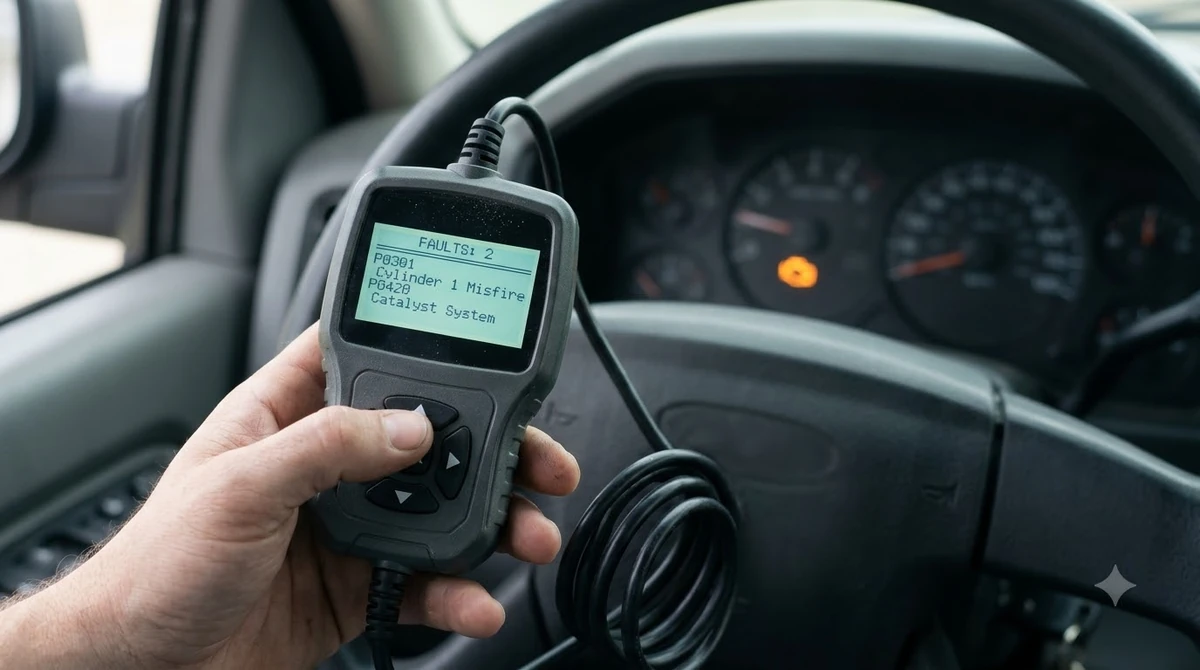
Per Toyota’s technical service bulletin, the condition is a catalyst rattle noise and or a check engine light on with OTC P0420, Catalyst System Efficiency Below Threshold, stored in the engine control module. The bulletin lists six vehicle descriptor codes for 2010 Tacoma models.
- Test drive the truck and confirm the rattle while accelerating.
- Raise the vehicle on a hoist with the engine running, increase engine speed, and listen at the catalytic converter section of the front exhaust pipe.
- If the noise is loudest there, replace the front exhaust pipe assembly. If it is not, the bulletin does not apply and diagnosis continues with the repair manual.
The exhaust is very hot during this check, so let it cool before you touch it.
Scope boundary
For a Toyota Tacoma check engine light, the bulletin covers only 2010 model year trucks with the 2TR-FE engine and the listed codes. Other years and engines are outside its scope, so its repair does not apply to them.
The bulletin also lists Toyota’s federal emission warranty of 96 months or 80,000 miles, whichever comes first, but only for the condition it describes.
Oxygen sensors, misfires and what the code tells you
Oxygen sensor faults and engine misfires are two reasons a Toyota Tacoma check engine light comes on, and the stored code shows which one applies. The bulletin’s diagram labels separate oxygen sensors for 2WD and 4WD models on the front exhaust pipe, so the truck’s drive type matters when a sensor code appears.
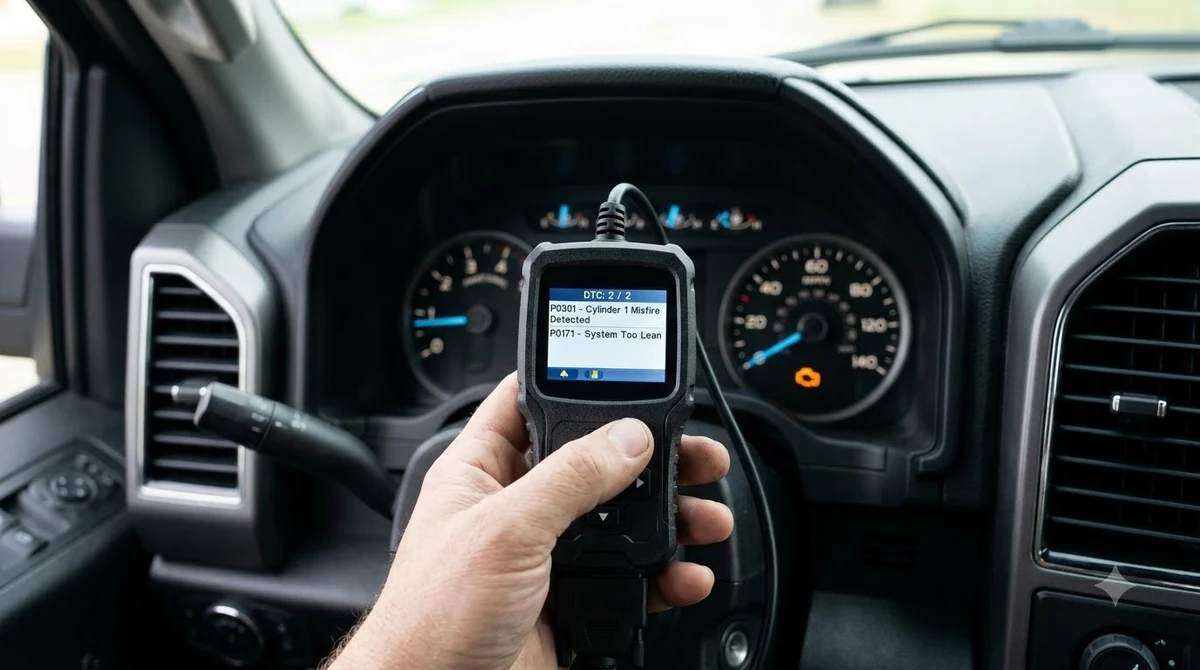
- An engine misfire can make the light flash, which is why EPA treats a flashing light as urgent.
- A sensor code points to a circuit or reading, not always a dead sensor, so confirm with step-by-step O2 sensor checks before you buy a part.
- Several codes can be stored at once, so record all of them, not only the first.
Read the code with an OBD-II scanner
An OBD-II scanner plugged into the diagnostic port reads the stored trouble code, which is the starting point for any Toyota Tacoma check engine light fix. Write the code down before you clear anything.
- Plug the scanner into the diagnostic port and turn the key to the on position.
- Record every stored code, and any pending codes the scanner shows.
- Look up each code in your owner’s manual or Toyota’s repair information before you replace anything.
- Clear the codes only after the repair is done or after you have recorded them.
A code behind a Toyota Tacoma check engine light is a clue, not a final diagnosis. It tells you which system reported a fault, and a technician confirms the actual cause with tests. If the code points to the converter, see what catalytic converter replacement costs.
Flashing light: act now
A flashing Toyota Tacoma check engine light means a severe misfire, so reduce speed and get the truck serviced as soon as possible. EPA describes this level as a rather severe engine misfire, and a steady light is less urgent but still needs service soon.
- Ease off the throttle and avoid hard acceleration while the light flashes.
- Do not ignore it. Book service as soon as you can.
- If you notice loss of power or rough running, pull over safely and stop driving.
Clearing the light and when to see a shop
Clearing the code behind a Toyota Tacoma check engine light without a repair only hides the fault, and the light returns if the fault is still there. The light can also turn off by itself once the system stops detecting the problem.
- Book service if the Toyota Tacoma check engine light stays on after you tighten the cap and it has not gone out within a few days.
- Get service promptly for any flashing light.
- Bring the codes you recorded, your truck’s year and VIN, and a note of any symptoms.
Frequently Asked Questions
Can I drive my Toyota Tacoma with the check engine light on?
A steady Toyota Tacoma check engine light is less urgent, and EPA guidance says to seek service as soon as possible without needing to stop the vehicle. A flashing light means a severe misfire, so reduce speed and get service promptly. If you are unsure, have a technician inspect the truck before long trips.
Will a loose gas cap turn on the Toyota Tacoma check engine light?
Yes. EPA says a gas cap that is not properly tightened after refueling can let the OBD system detect a vapor leak. Tighten the cap, and the light should go off within a few days. If it does not, look for other causes and read the stored code.
Does the check engine light turn off by itself?
It can. EPA says the Toyota Tacoma check engine light turns off when the system evaluates the component three consecutive times and no longer detects the original problem. A cleared code without a repair is not the same as a fixed fault, so keep watching the light.
What does P0420 mean on a 2010 Tacoma?
P0420 means catalyst system efficiency is below threshold. Toyota bulletin T-58-0161-13 covers some 2010 Tacoma trucks with the 2TR-FE engine that show a front exhaust rattle or this code. The listed repair applies only if the noise is loudest at the catalytic converter section.
Can I read the trouble code myself?
Yes. An OBD-II scanner plugged into the diagnostic port reads stored codes. Write each code down before clearing anything, because the code shows which system reported a fault. A technician then confirms the cause with tests before parts are replaced.
Why does the VIN matter for bulletins?
Bulletins cover specific years, models, engines and vehicle descriptor codes, so the vehicle details decide which one applies. The bulletin in this guide covers only 2010 Tacoma trucks with the 2TR-FE engine. Check Toyota’s official service information with your VIN before applying any bulletin.
Start with the simple checks, record the code, and do not ignore a flashing Toyota Tacoma check engine light. A technician should confirm the cause before you replace expensive parts such as the catalytic converter or the exhaust pipe.