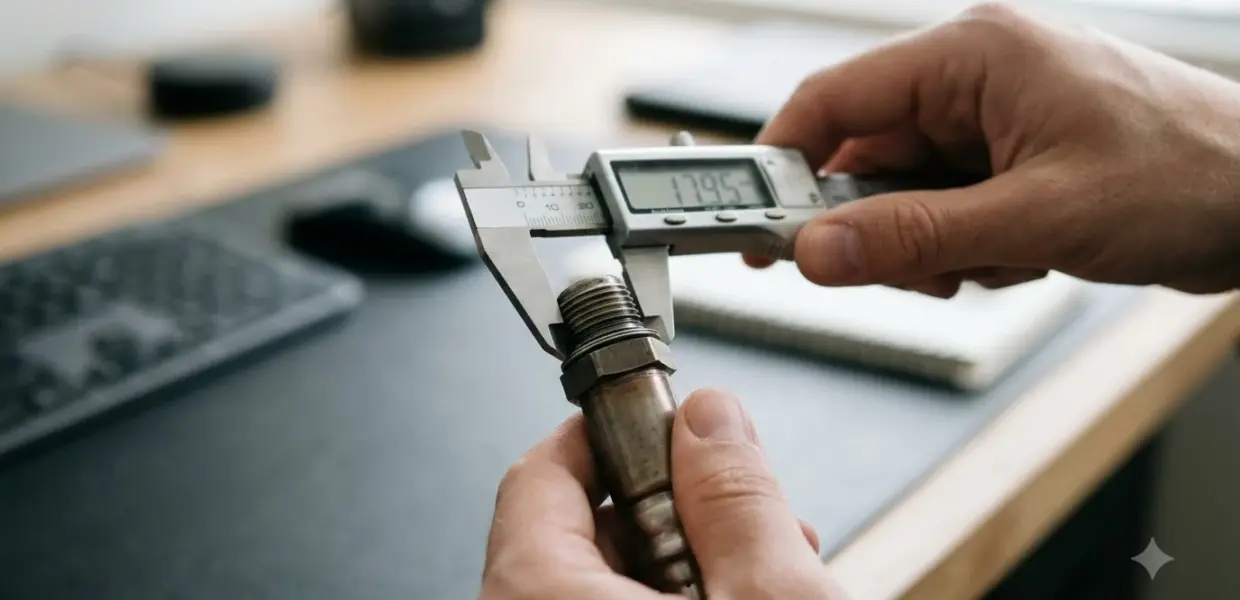

A P0138 code means the oxygen sensor circuit for Bank 1, Sensor 2 reads high voltage. Bank 1 Sensor 2 is the downstream oxygen sensor, mounted after the catalytic converter, and the engine computer monitors its signal.
The code usually comes from the sensor, its wiring or the heater circuit. Test the wiring and sensor before you buy parts, because a shorted wire can look like a bad sensor.
Repair steps and voltage limits vary by make, model and year. Have fuel system or exhaust work checked by a qualified technician.
P0138 Code Meaning: What the Sensor Signal Shows
A P0138 code means the engine computer sees a higher voltage than expected from the Bank 1 Sensor 2 oxygen sensor. The code is generic, so its meaning is the same across most vehicles.
Sensor 2 sits after the catalytic converter. Because its signal is used to judge the converter, a bad reading can affect those checks as well as the fuel mixture.
On a 2011 Saab 9-5 with a 2.0 L petrol engine, the computer set P0138 when the sensor voltage stayed above 1,500 mV. The code set within 15 seconds of that condition. Other makes use different limits, so treat that figure as one example of how the test works. A basic code reader shows only the stored code, not the limit your vehicle uses, so the exact threshold has to come from the manufacturer’s service information.
The same service page lists enabling conditions. System voltage must be between 10 and 32 V, fuel level above 10 percent, and engine run time above 2.5 minutes plus a 40-second delay. Fuel ethanol content must be 87 percent or less, and the test runs continuously once those conditions hold for 5 seconds. Those conditions explain why the P0138 code may not set right away, because the computer waits for a steady driving state before it judges the sensor.
P0138 pairs with P0158, which covers the same type of sensor on Bank 2. If you see P0158, the same reasoning applies to the other side of the engine. The reverse fault on this sensor is a low reading, covered in the P0137 code for low voltage.
What Causes a P0138 Code
A P0138 code usually comes from a failed sensor, a wire shorted to voltage, or a heater circuit fault. Check the wiring and heater before you replace the sensor.
- A failing oxygen sensor that reads high even when the circuit is sound.
- A signal wire shorted to a voltage source.
- An open circuit or high resistance in the signal wire.
- A heater supply or heater control fault, which is listed for this code in Saab’s fault table and has its own Bank 1 Sensor 2 heater code.
- A damaged, corroded or loose connector.
A 2013 Buick Verano 2.4L case shared by a technician found a Bank 1 Sensor 2 sensor shorted to power. Replacing that sensor brought the reading back down. One case does not prove the cause on another vehicle, so test first.
Can You Drive With a P0138 Code?
You can often keep driving with a P0138 code, but the check engine light means a fault is stored. In emissions inspection, EPA’s OBD inspection guide treats a light that stays on while the engine runs as a failure.
The stored code alone does not tell you how the car will drive, and the sources read for this article give no test data on driveability. Do not use how the car feels to judge whether the fault is safe to ignore.
Some codes are intermittent. EPA notes that intermittent codes can clear on their own if the condition does not return within a set number of trips. A cleared light is not proof of a fix. A light that stays on while the engine runs is also what the EPA inspection guide treats as a failure, so the P0138 code needs a confirmed repair before a retest.
How to Diagnose and Fix a P0138 Code
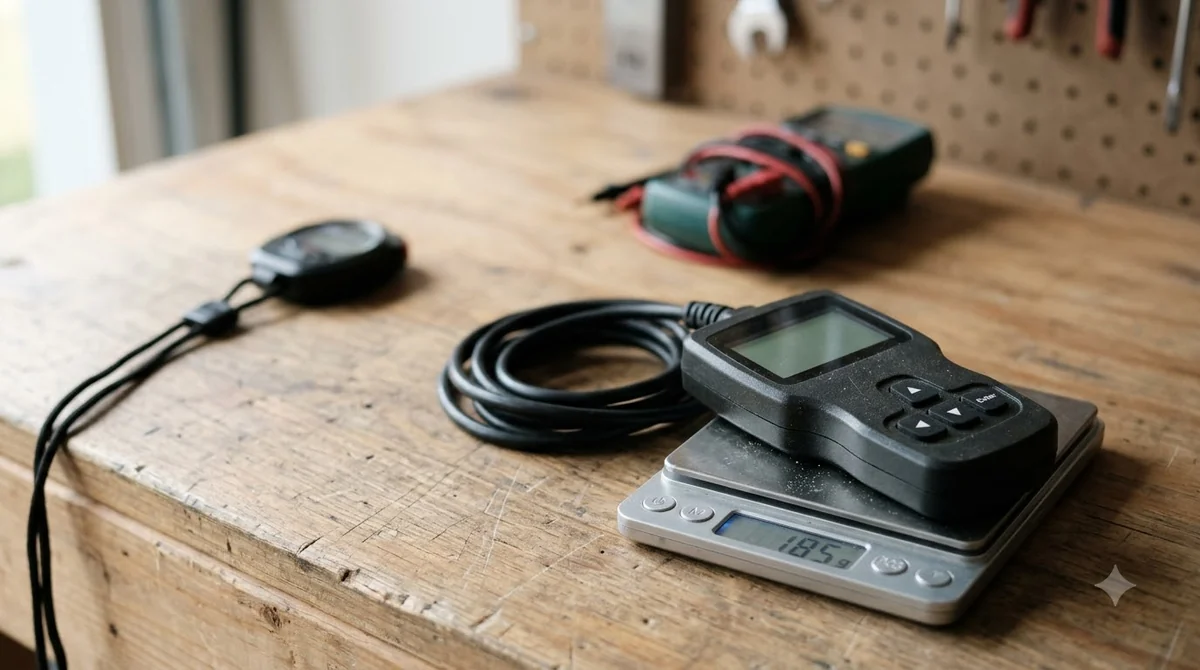
Start with a scan tool and live oxygen sensor data, then check the wiring before you test the sensor itself. A separate guide explains how to test an O2 sensor once the wiring passes. Exact voltage values depend on the vehicle, so confirm them in your service manual.
- Read the code with a scan tool and note whether it is current or pending.
- Watch the live Bank 1 Sensor 2 voltage with the engine running, and note any reading that stays high.
- Inspect the sensor wiring and connector for chafing, corrosion and loose pins.
- With the sensor unplugged and the key on, check the scan tool reading. On the 2.0 L Saab 9-5 in the service information, the scan tool should read 1.9 V at this step, so treat that value as one example and confirm yours in the manual for your vehicle.
- Test the high and low signal wires for shorts to ground, an open circuit, or a short to voltage. The Saab 9-5 procedure also places a 3 A fused jumper across the signal terminals, and the scan tool should then read 0.0 V.
- Check the heater supply and control circuit, since heater faults are linked to this code.
- Replace the sensor only if its circuit tests normal and the reading stays high.
Only after the wiring tests pass should you test or replace the sensor. In Saab’s procedure, the sensor is tested or replaced only after every circuit tests normal, and the engine computer is replaced only when a failed reading traces to circuits that test normal.
Clear the code only after the repair, then drive the vehicle through a drive cycle to confirm the code does not return.
When to Replace the Sensor, Wiring or Computer
Replace the sensor when its circuit tests normal and the reading stays high, and repair the wire when it shorts to voltage. Rule out the wiring first, and treat the computer as a possible cause only after the wiring and sensor checks.
| Finding | What it points to | Next step |
|---|---|---|
| Signal wire shorts to voltage | Wiring fault | Repair or replace the damaged harness section |
| Heater circuit fault | Heater supply or control | Test the heater circuit, then the sensor |
| Circuit tests normal, reading stays high | Sensor failure | Replace the Bank 1 Sensor 2 sensor |
| Circuit and sensor both test normal | Possible computer fault | Have a shop with your vehicle’s service data check the computer |
A P0138 code does not mean the catalytic converter failed. EPA places the catalyst monitoring codes in the P0420 through P0439 range, so P0138 is a sensor or circuit code, not a converter code. The P0420 catalyst efficiency code is the one that points at the converter.
Some repair guides list exhaust leaks and fuel problems as causes. Those can change oxygen sensor readings, so check for leaks before you condemn a part.
Checklist Before You Buy a New Oxygen Sensor
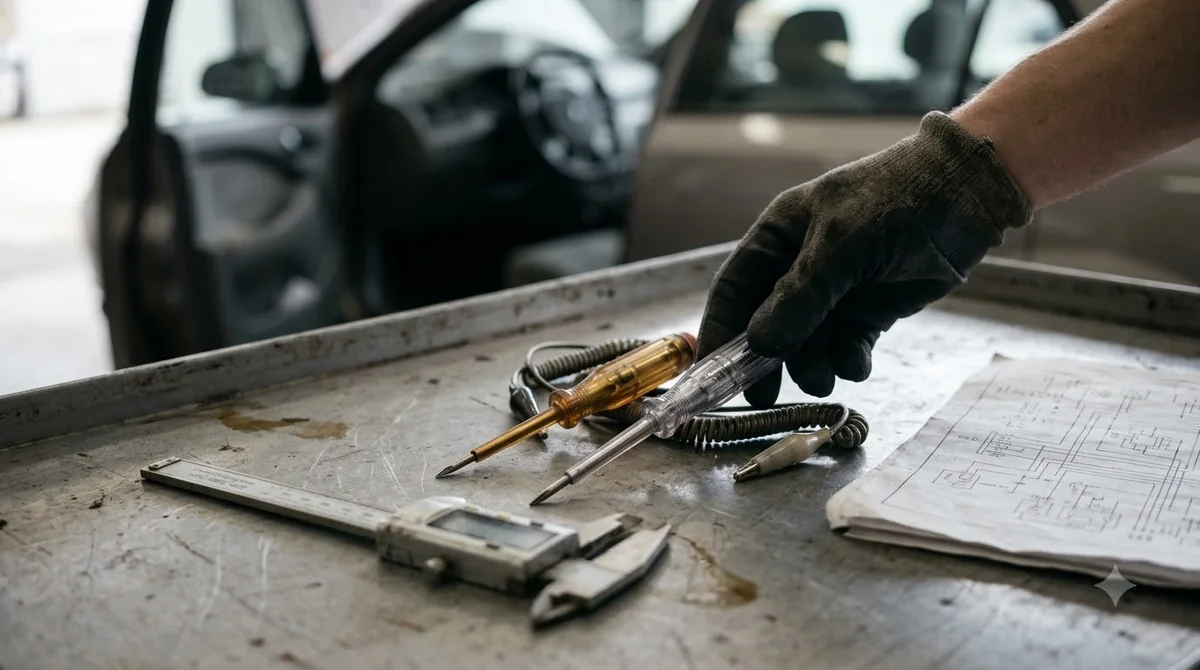
Confirm the p0138 code, the wiring and the heater circuit before you buy a new oxygen sensor. Buying a part without these checks can leave the code in place, and the oxygen sensor replacement cost is wasted if the wiring is the real fault.
- Confirm the code is current, not only pending.
- Check the wiring and connector for damage or corrosion.
- Confirm the heater circuit tests normal.
- Match the sensor to your vehicle’s exact year, make and engine.
- Clear the code and retest after the repair.
Clearing the p0138 code alone does not fix the fault. If the reading returns after a drive cycle, the cause is still there.
Frequently Asked Questions
Can I drive with a p0138 code?
You can usually drive short distances with a P0138 code, but the check engine light means a fault is stored. Get the wiring and sensor checked soon, since the light will not go away on its own.
Does a P0138 code always mean the oxygen sensor is bad?
No. A P0138 code can come from a wire shorted to voltage, a heater circuit fault or a failed sensor. Test the wiring and heater first, because replacing the sensor does not fix a short in the wire.
Will clearing the code fix p0138?
Clearing the code removes the stored record but does not repair the fault. Intermittent codes can clear on their own, so check the repair after a drive cycle to confirm the code stays off.
Is p0138 the same as p0158?
No. P0138 covers Bank 1 Sensor 2 and P0158 covers Bank 2 Sensor 2. Both involve the downstream sensor, but on different sides of the engine, so check which code you have before you buy parts.
Do I need a new catalytic converter for p0138?
Usually not based on P0138 alone. EPA places catalyst monitoring codes in the P0420 through P0439 range. Check for those codes and for exhaust leaks before you decide on a converter.
How much does a p0138 fix cost?
The cost depends on whether the fix is wiring, a heater check or a sensor, and on the vehicle. Ask a shop for a written estimate that lists each test and part before you approve the work.
Test the wiring and heater before you buy an oxygen sensor, and replace the sensor only when its circuit tests normal and the reading stays high. Confirm the repair with a retest after a drive cycle, since a cleared p0138 code proves nothing by itself.