

P0500 is the generic OBD-II code for a vehicle speed sensor malfunction, meaning your car’s computer is getting inaccurate speed readings or no speed signal at all. The code often comes with a check engine light, and in many cases the fault is intermittent and fixable.
Causes range from a corroded connector to a failed sensor, so the order of your checks matters more than the code itself. Test the wiring and voltage before you buy any parts.
P0500 Code Meaning: What the Sensor Reports
P0500 means the vehicle speed sensor circuit is malfunctioning, so the engine computer receives wrong or missing speed data. The p0500 code is set when the powertrain control module (PCM) or engine control module (ECM) detects inaccurate speed readings or no signal from the vehicle speed sensor (VSS). Kelley Blue Book’s P0500 guide titles the fault Vehicle Speed Sensor (VSS) Malfunction.
Depending on the manufacturer, the same fault may appear as P050x or as code 501. That means the number alone does not tell you which part has failed. Check your model’s service information for the exact definition.
The VSS sits at each wheel or near the transmission, depending on the vehicle. Its signal is used by the speedometer, the odometer and automatic shifting, and KBB notes that ABS and traction control can also be affected when the signal is wrong.
Common Causes of a P0500 Code
A faulty vehicle speed sensor is a common cause of P0500, but wiring, connectors, a damaged reluctor wheel and ECU faults can set the same code. The causes below are listed by KBB and Haynes.
- A faulty or broken vehicle speed sensor
- Corroded connectors, poor wiring connections or damaged wires
- A damaged VSS drive gear or a broken reluctor wheel
- A PCM or ECM malfunction
- Low transmission fluid on some vehicles
A wiring fault can look exactly like a bad sensor, which is why a voltage test should come before a parts order. Replacing a sensor that is fine wastes money and leaves the real fault in place.
Symptoms You Might Notice
The usual symptoms of this fault are a check engine light, a speedometer that fails or reads erratically, and rough automatic shifting. The table lists the most common signs and what each one can point to.
| Symptom | What it can mean |
|---|---|
| Check engine light | The computer has stored the code and keeps it until a scanner clears it |
| Speedometer failure or erratic readings | The speed signal is missing or inconsistent |
| Erratic or failed automatic shifting | The transmission relies on speed data to decide when to shift |
| Loss of power or jerking while driving | Reported on some vehicles with this fault |
| Odometer failure | The same speed signal feeds the odometer |
| ABS or traction control disabled or erratic | Speed data is used by these systems, so a bad signal can affect them |
Some of these symptoms overlap with other faults, including the ones described in the transmission slipping guide, so a scan for other codes is the first real step before you assume the sensor is at fault.
How Serious Is a P0500 Code?
A P0500 code is usually intermittent and typically does not leave a car stranded, but it should still be checked promptly. Haynes notes that an ignored fault can worsen into loss of power or transmission failure.
KBB recommends addressing the issue promptly for safety reasons and advises against driving when serious symptoms appear, especially if ABS or traction control is affected. This article does not cover the manufacturer-specific repair steps for every model.
How to Diagnose P0500 Step by Step
To diagnose P0500, scan for other codes, record freeze frame data, road test the car, and then check the speed sensor signal before replacing parts. KBB describes this order for a P0500 check.
- Scan for other codes, record the freeze frame data, then clear the codes.
- Road test the vehicle to see whether the code returns.
- Check the VSS signal in live data on the scan tool.
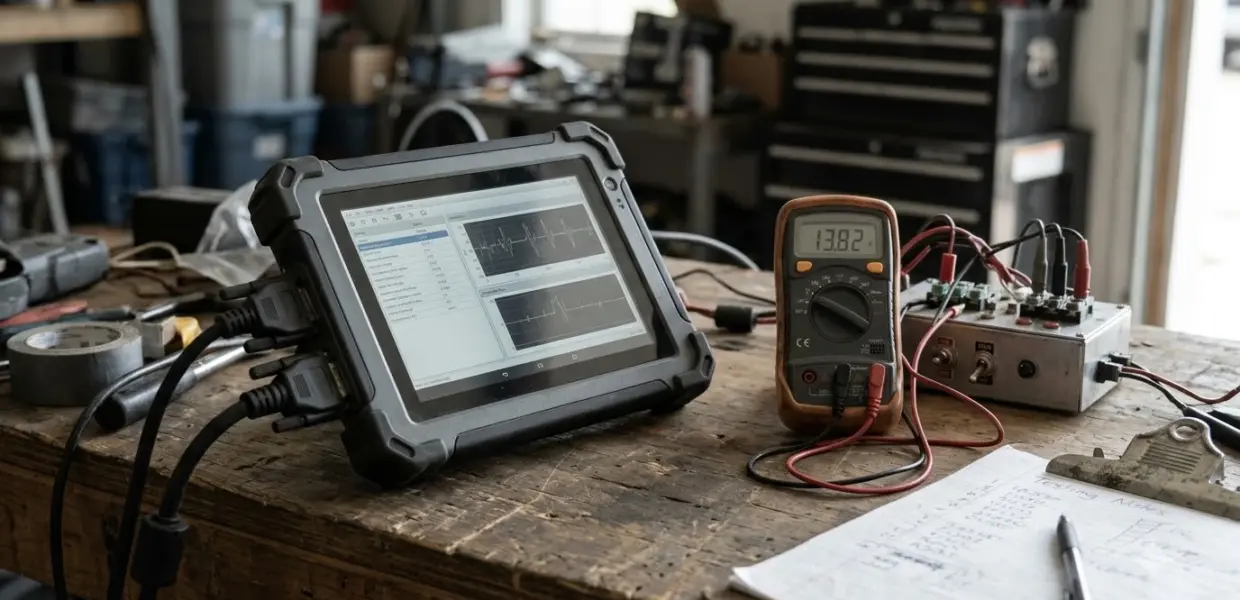
- If the live data is unclear, use an oscilloscope to look for an AC signal from the sensor.
- Measure the sensor voltage with a multimeter, then inspect the sensor, wiring and connectors for damage.
The most common mistake is clearing codes before recording freeze frame data. Freeze frame data shows the conditions when the fault was set, such as vehicle speed and engine load, which helps you match the fault to a real driving situation.

A factory service procedure for a manual-transmission Mitsubishi, published in Mitsubishi’s technical information site, shows how a manufacturer checks this fault. The ECM sets it when it sees no pulse from the sensor for 2 seconds while the engine runs between 2,000 and 4,000 r/min. The first check compares the speedometer with the scan tool speed at about 25 mph, and a match can point to an intermittent fault.
The same procedure checks the sensor supply, which should read 4.9 to 5.1 volts with the ignition on, and the ground circuit, which should read 2 ohms or less. The page does not name the exact model, so use these figures as an example of the check order and confirm the values for your car.
How to Fix P0500 Without Guessing
Fixing this code usually starts with the wiring and connectors, and the speed sensor is replaced only if the voltage test fails. Haynes’s repair guide lists a similar order of work for this fault.
- Run an OBD-II scan to locate the fault.
- Check the wiring and connectors, and replace any damaged parts.
- Test the voltage with a multimeter, and replace the VSS only if the test shows a failure.
- Reset the ECU.
- Test drive the car to confirm the fault has not returned.
Wiring checks usually cover three things: power to the sensor, a clean ground and the signal wire back to the computer. Look for open circuits, high resistance and shorts to ground or power, because a damaged harness can mimic a failed sensor. The steps for measuring voltage, resistance and continuity with a Fluke 115 show the meter settings for these readings.

The VSS sits at each wheel or near the transmission, so the access route depends on your car. Repair costs and mileage intervals were not verified for this article, so check your vehicle’s service information or a local shop estimate before budgeting.
Mistakes to Avoid When Fixing a P0500 Code
The most common mistake is replacing the speed sensor before testing the wiring and voltage, which can cost money without fixing the fault. Several other errors repeat often.
- Buying a new sensor before checking the wiring and connectors
- Clearing codes before recording freeze frame data
- Skipping the test drive, so you cannot confirm the repair worked
- Ignoring transmission fluid on vehicles where low fluid is a listed cause
- Assuming P050x or code 501 is the same fault on your model without checking its service information
The code definition and repair steps can vary by manufacturer. If the transmission itself starts to act up, the P0700 transmission control system code guide explains the related warning. When a procedure is specific to your car, use the service manual for your model.
Related Guides
Frequently Asked Questions
Is P0500 the same on every car?
P0500 is the generic OBD-II code for a vehicle speed sensor malfunction, so it applies across many makes. Some manufacturers use P050x or code 501 for a similar fault, and the exact procedure can differ. Check the service information for your model before you replace any parts.
Can I drive with a P0500 code?
Often the code does not leave a car stranded, because the fault is usually intermittent. KBB, however, advises against driving when serious symptoms appear, especially if ABS or traction control is affected. If the warning lights are on or the car drives erratically, have it inspected soon.
What does the P0500 code mean on the dashboard?
The check engine light means the computer has stored a fault. For P0500, that fault is in the vehicle speed sensor circuit or the speed data it sends. The code stays stored until a scanner clears it.
How to fix p0500 at home?
Start with an OBD-II scan, then check the wiring and connectors for corrosion or damage. Use a multimeter to test the sensor voltage, and replace the sensor only if the test shows a fault. Test drive the car afterward to confirm the code does not return.
What happens if this code is ignored?
Haynes notes that an ignored fault can worsen into loss of power or transmission failure. Prompt inspection shows whether the sensor, the wiring or the ECU is at fault, before a small repair becomes a larger one.
If the check engine light is on with ABS or traction control warnings, or the car shifts badly, have a technician scan and test the system before driving far. A careful check of wiring and voltage comes first, before you spend money on parts.
