
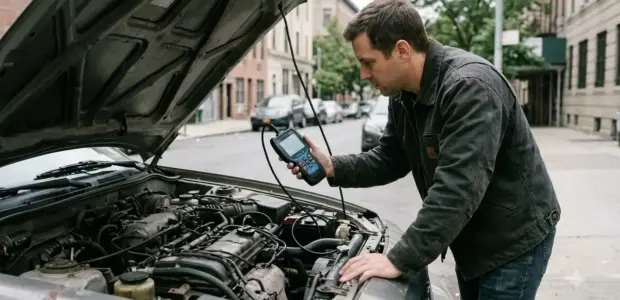

A P0700 code means the transmission control module has requested the check engine light because it found a transmission fault. The flag is generic, so the real cause is stored in a companion code that comes with it.
The code appears on many makes and models, and a full scan of transmission codes usually narrows the fault quickly. Read the companion codes before you buy any parts.
What the P0700 Code Means
A P0700 code is a generic OBD-II flag. It means the transmission control module (TCM) has requested the check engine light after it detected a transmission fault.
The official name is Transmission Control System (MIL Request). MIL stands for malfunction indicator lamp, which is the check engine light on your dashboard. The code says something in the transmission control system needs attention, but it does not name the failed part.
Think of the flag as a signal to look further, not a diagnosis. OBD Advisor describes it the same way: the flag is not the diagnosis, and the stored companion code is where the real fault shows up. Because one flag covers many faults, the code alone cannot tell you which repair to buy.
Why the Code Usually Comes With Another Code
The flag has no cause of its own, so the companion code stored with it points to the failing part. Because the transmission code often arrives with a lamp on the dash, general engine warning lamp guide helps you read the bigger picture.
The TCM sets the flag when it finds a transmission problem, and the specific fault is recorded as a second code. A reader who sees only the flag has no reason yet, so the companion code is the most useful part of the scan.
| Companion codes | What they usually point to |
|---|---|
| P0750 to P0755 | Shift solenoid circuit |
| P0741 | Torque converter clutch stuck off |
| P0720 | Output shaft speed sensor |
| P0711 to P0714 | Transmission fluid temperature sensor |
| P0731 to P0734 | Gear ratio or clutch slip |
| P0613 and U0101 | TCM communication fault |
This list covers the main groups and is not complete. Some CVT and hybrid vehicles store other codes alongside the flag, such as P0705 for the transmission range sensor. Read the full list your scanner shows for your P0700 code before you guess at the cause.
What Usually Triggers the Flag
The most common causes are faulty shift solenoids, a bad valve body, contaminated transmission fluid, an open or shorted TCM circuit and a defective TCM.
Repair guides list the same groups, and each one can set a P0700 code through a companion code. Expect the causes to overlap, since a fluid problem and a solenoid fault can both appear under one flag.
- Faulty shift solenoids, which control the gear changes
- A bad valve body, the hydraulic block that routes fluid
- Contaminated transmission fluid
- A bad transmission
- An open or shorted circuit to the TCM
- A defective TCM
Start with the cheap checks, such as fluid condition and wiring, before you assume a P0700 code means a failed transmission. Those checks rule out common faults before a shop has to open the unit.
Can You Keep Driving With the Warning Light On?
Usually yes, a car with the flag can often keep running in limp mode, locked in second or third gear, but the fault should be diagnosed soon.
Limp mode protects the transmission by holding one gear, so the car feels slower and less responsive. According to OBD Advisor, the symptoms matter more than the code itself, and its guide was last updated in May 2026.
Stop driving and arrange a tow if any of these appear alongside a P0700 code:
- Burning or burnt-smelling transmission fluid
- The gearbox slipping badly or severely under throttle
- The AT temperature light is on
- Harsh banging into gear
- No forward engagement or a major delay
- An overheat warning
P0700 Code Repair Cost
A P0700 code repair ranges from $30 to $400 for a DIY fix, such as fluid service or one solenoid, up to $4,500 or more at a shop for a rebuild.
Costs depend on the fault, the vehicle and local labor rates. The table below shows the ranges OBD Advisor lists, with the guide last updated in May 2026, so get a written estimate from a shop before you approve any work.
| Repair | DIY cost | Shop cost |
|---|---|---|
| Fluid and filter service | $60 to $150 | $220 to $500 |
| Quick range, from fluid service to rebuild | $30 to $400 | $150 to $4,500 or more |
| Full rebuild | Not listed | $2,500 to $4,500 or more |
Fluid service is the lowest-cost P0700 code repair in the table, so it is the usual first step when the fluid is low or old. The rebuild sits at the top of the range, and a solenoid or sensor costs far less than a rebuild.
How to Diagnose and Fix It
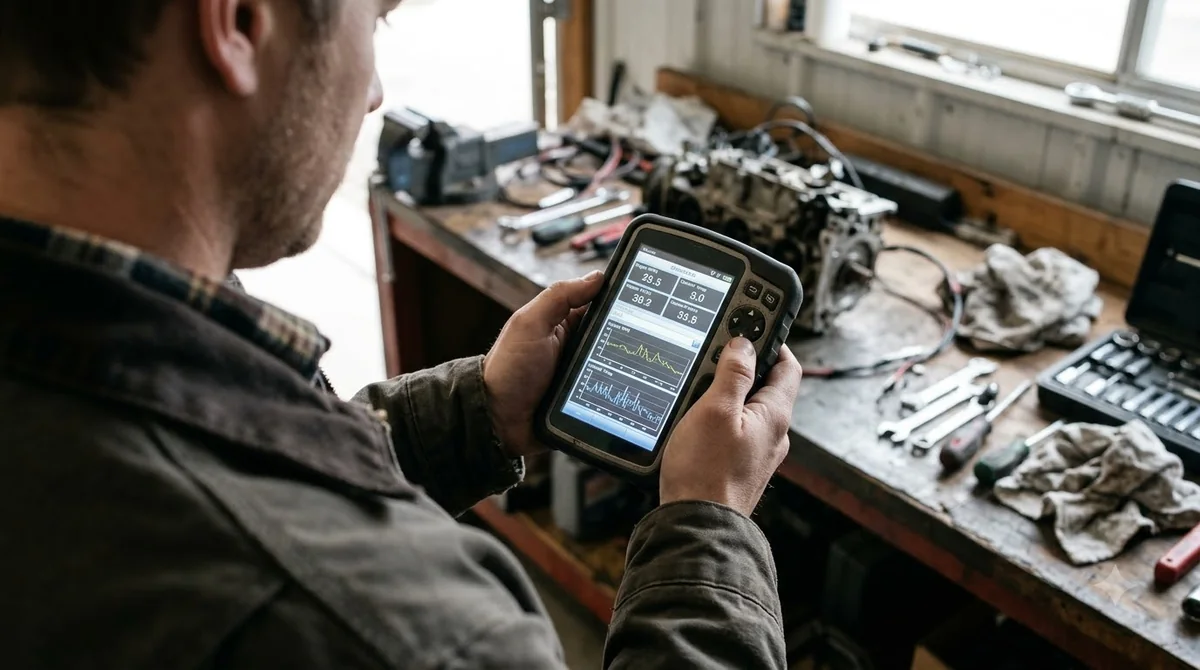
To fix a P0700 code, start with the transmission fluid, then read every transmission code and the freeze frame data before you replace a part. Wiring checks on the speed sensor circuit are easier with testing wiring with a digital meter.
Repair guides describe the same order of checks. Working through them first helps you avoid replacing a solenoid when the real fault is low fluid or a wiring problem.
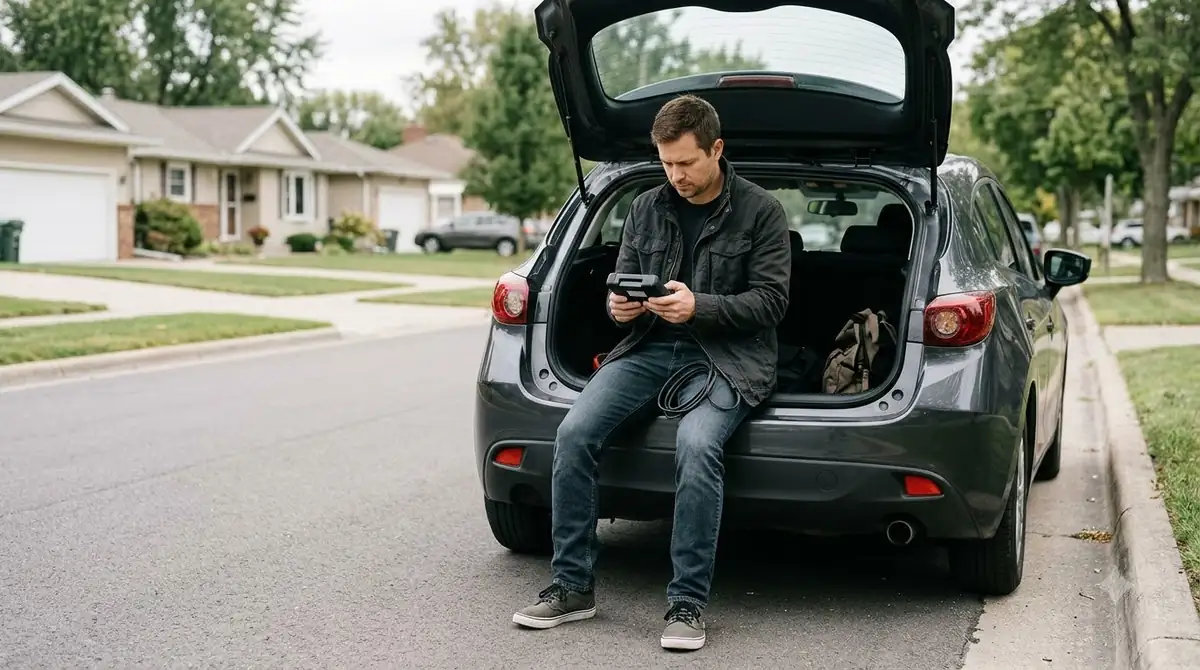
- Check the transmission fluid. Top it up if it is low, or change and flush it if it looks old or contaminated.
- Scan for all transmission codes, not only the flag.
- Review freeze frame data, including engine load, RPM and throttle position.
- Compare input and output RPM on a flat surface.
- Clear the code and take a short test drive to see whether it returns.
Clearing the code does not repair anything, so the test drive only shows whether the fault comes back. If a P0700 code remains after these checks, consult a professional who can read the full code list from the TCM.
GM Bulletin 23-NA-210 for 2023 to 2024 Models
GM bulletin 23-NA-210, dated December 2023, covers P0700 and P18AE on 2023 and 2024 Cadillac CT4, CT5 and Escalade models, Chevrolet Silverado 1500 and GMC Sierra 1500.
The bulletin is written for professional technicians, not do-it-yourself owners, and it warns that its conditions may not apply to your vehicle. Its subject is a malfunction indicator lamp with DTC P18AE, P0700 or both set in the TCM. The full text is on NHTSA’s site: GM service bulletin 23-NA-210. A P0700 code appears in this bulletin only on the models listed, so check your model year and engine code first.
The bulletin treats a P0700 code and P18AE as a pair. For vehicles with 5,000 miles or less, it lists these steps:
- Clear the DTC using GDS, the GM diagnostic tool.
- Shut the engine off, let all modules power down, restart and idle for 10 seconds.
- Shift from Park to Drive, Drive to Reverse, then Reverse to Park.
- Repeat the power-down and 10-second idle.
- Check whether P18AE or any other transmission DTC has set again.
Vehicles over 5,000 miles follow the P18AE diagnostic path instead. If P18AE returns, the bulletin says to replace the valve body, and if other transmission DTCs have set, technicians follow the published service information. Correct other performance DTCs before you start.
Frequently Asked Questions
How is P18AE different from the flag?
The flag is the generic P0700 code that the TCM sets to request the check engine light. P18AE is a GM transmission code that the bulletin pairs with it, and the bulletin covers only the 2023 and 2024 models listed in its table.
Do I need a scan tool to read it?
Yes. A code reader or scan tool shows P0700 along with the companion codes stored in the TCM, and those companion codes point to the fault. The flag on its own does not show the cause, and freeze frame data shows the conditions when it set.
Is the code always a failed transmission?
No. The flag is generic, and the stored fault can be a shift solenoid, a valve body problem, fluid condition, an open or shorted TCM circuit or a defective TCM. A failed transmission is only one possible cause among several listed in repair guides.
When should I see a mechanic about this code?
See a mechanic when the diagnosis or repair is unclear, or when the car shows any stop-and-tow sign such as burning fluid, badly slipping gears or the AT temperature light. A shop can read the full code list from the TCM and run the freeze frame checks.
Do I need a transmission rebuild for this fault?
Usually not. Many cases are settled by a fluid service, a sensor or a single solenoid. According to OBD Advisor, a full shop rebuild costs $2,500 to $4,500 or more, so a repair that targets the specific companion code is worth checking first.
Does clearing the code fix the problem?
No. Clearing the code removes the stored flag but does not repair the fault. If the underlying problem is still there, the code can come back, so use a test drive to check and the companion codes to find the cause.
