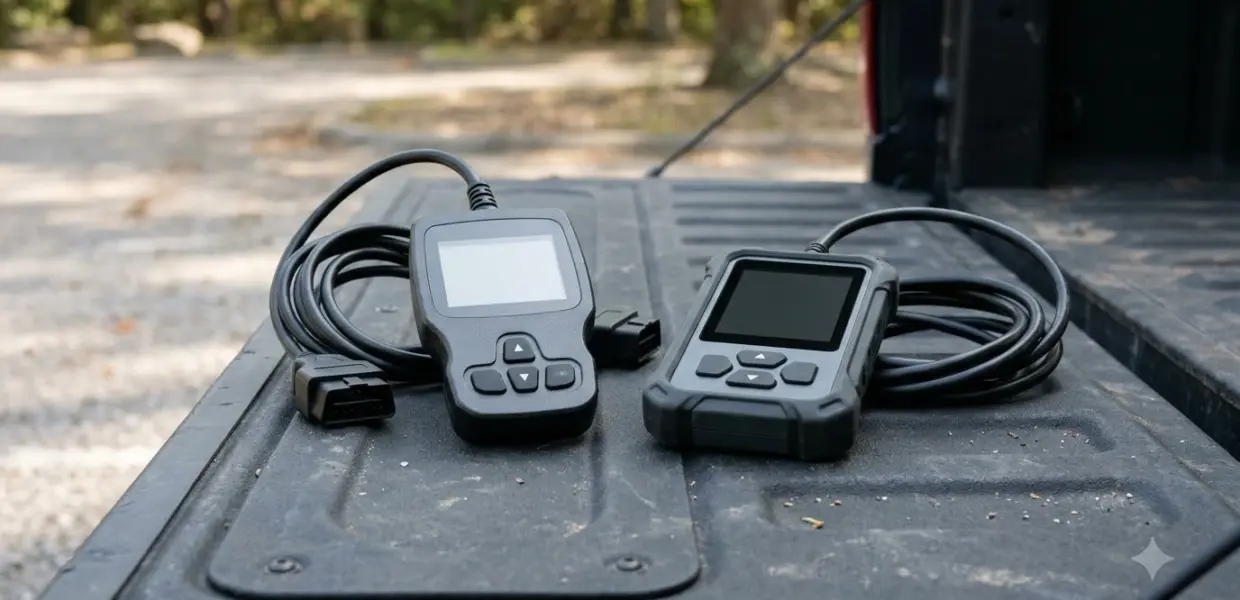

A Ford F150 check engine light means the powertrain control module has stored a fault code. The cause can be as minor as a loose gas cap or as specific as a fuel injector problem on a 2018 2.7L EcoBoost.
Start by reading the stored codes, then compare them with the causes below. That tells you whether the fix is a quick check at home or a visit to a shop.
What the Light Is Telling You
A check engine light that stays on means the onboard diagnostic system has found a fault and saved a code a scanner can read. The Ford F150 check engine light does not name the failed part. It only signals that the truck computer detected something outside normal limits, so the stored code is the real clue to follow.
According to the fueleconomy.gov maintenance guide, run by the Department of Energy and the EPA, the Ford F150 check engine light can point to something as minor as a loose gas cap. It also warns that a more serious problem can lower fuel economy, raise emissions or cause expensive repairs later. That is why the light should be checked soon rather than ignored for months.
Ford owners often ask whether a steady Ford F150 check engine light is different from a flashing one. Ford’s dashboard lights guide says a steady Ford F150 check engine light while the engine runs means the on-board diagnostics system has detected an error in the emission control system, and to contact a dealer. If the light continuously flashes, an engine misfire may be occurring, and Ford says to have the vehicle checked as soon as possible. The same page says the light normally stays on until the engine starts and then turns off if no system errors are present. A wrench light on the same truck is a separate warning; see what the Ford F150 wrench light means.
Check the Gas Cap First
A loose or damaged gas cap is the cheapest cause to rule out, and it can turn on the Ford F150 check engine light. Start here before you buy any part, because the fix takes a few minutes and costs nothing.
Remove the cap, inspect the rubber seal for cracks, dirt or debris, and reinstall it until it clicks. Then watch the light over the next few drives. If the Ford F150 check engine light stays on, the cap was not the only cause, and the stored code still needs to be read.
A cap check does not replace a scan. The fueleconomy.gov guidance says a loose cap is one possible cause, not a diagnosis, so treat it as the first test in a short list rather than the final answer.
The 2018 F-150 2.7L EcoBoost Bulletin
Ford bulletin 18-2270 covers some 2018 F-150 trucks with a 2.7L EcoBoost built on or before July 12, 2018, with more than 500 miles and specific codes stored. The bulletin is a Ford service document about this Ford F150 check engine light, written for trained technicians. It lists the trigger codes as P0300, P0316, P0301 through P0306, P2196, P2198, P0171 and P0174. The bulletin is dated August 30, 2018, and the full text is on NHTSA’s site as Ford bulletin 18-2270.
Who the bulletin covers
The bulletin applies only to the 2018 Ford F-150 with a 2.7L EcoBoost engine. The truck must have been built on or before July 12, 2018, and have more than 500 miles on the odometer. If either condition is not met, the bulletin does not apply, and the bulletin directs the technician to the powertrain diagnostics manual instead.
The bulletin also warns that its information is meant for trained technicians with the right tools, and that a described condition does not automatically affect every truck. Ford directs owners to a Ford or Lincoln dealership to confirm whether the bulletin applies to a specific vehicle.
Because the bulletin is limited to the 2018 model year, a 2016 or 2017 F-150 should not be matched to it just because the codes look similar. Use the build date, mileage and engine on the door sticker and in the owner records to confirm the match first.
What the repair involves
The bulletin lays out a short decision path. Each step is a yes or no check for the technician.
- Confirm the build date and mileage meet the bulletin conditions.
- Retrieve the stored codes with a Ford scan tool or equivalent, and check for the listed codes.
- Start the engine, let it idle for 30 seconds, shut it off, and monitor fuel rail pressure.
If fuel rail pressure falls below 6.9 kPa (10 psi), as the bulletin prints it, within 30 seconds after shutdown, the bulletin calls for replacing the direct injection fuel injectors. The parts list includes six high pressure direct fuel injectors, injector clips, a fuel tube and gaskets. Ford lists 4.4 labor hours for the job and says the repair is eligible under the new vehicle limited warranty and emissions warranty, subject to warranty terms.
Read the Codes With an OBD2 Scanner
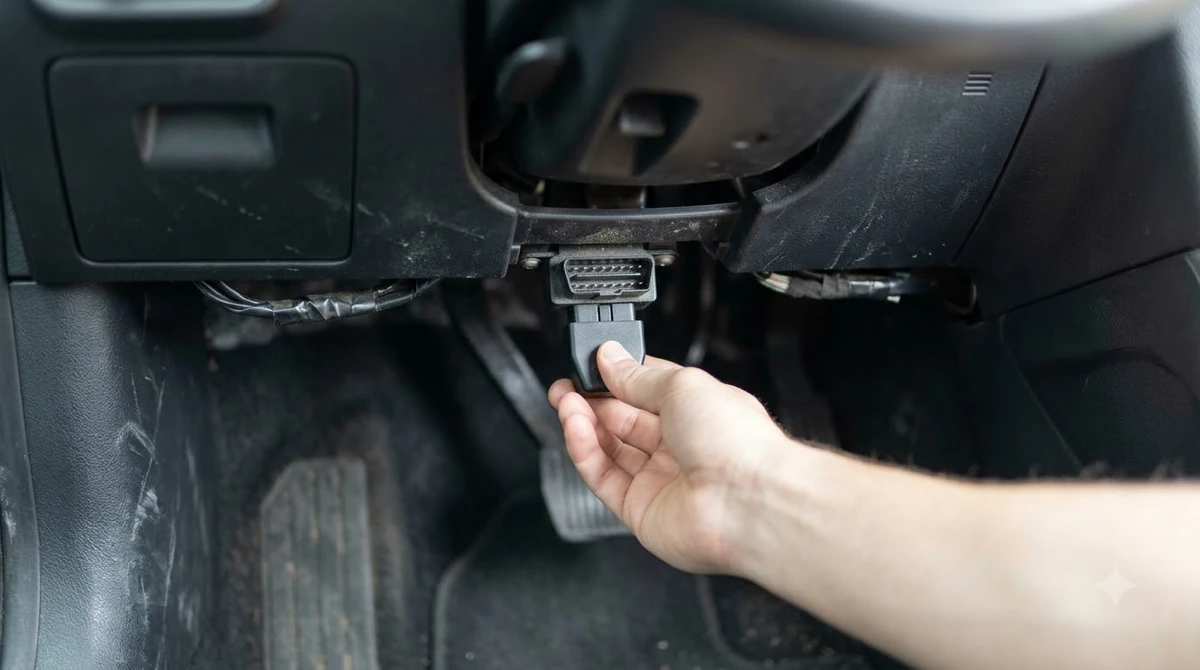
An OBD2 scanner reads the stored codes behind the Ford F150 check engine light, and those codes are the starting point for any repair decision. Plug the scanner into the port under the dash, turn the ignition on, and read the codes without starting the engine. Write each code down in the order shown, since a shop will ask for the full list, not only the first code.
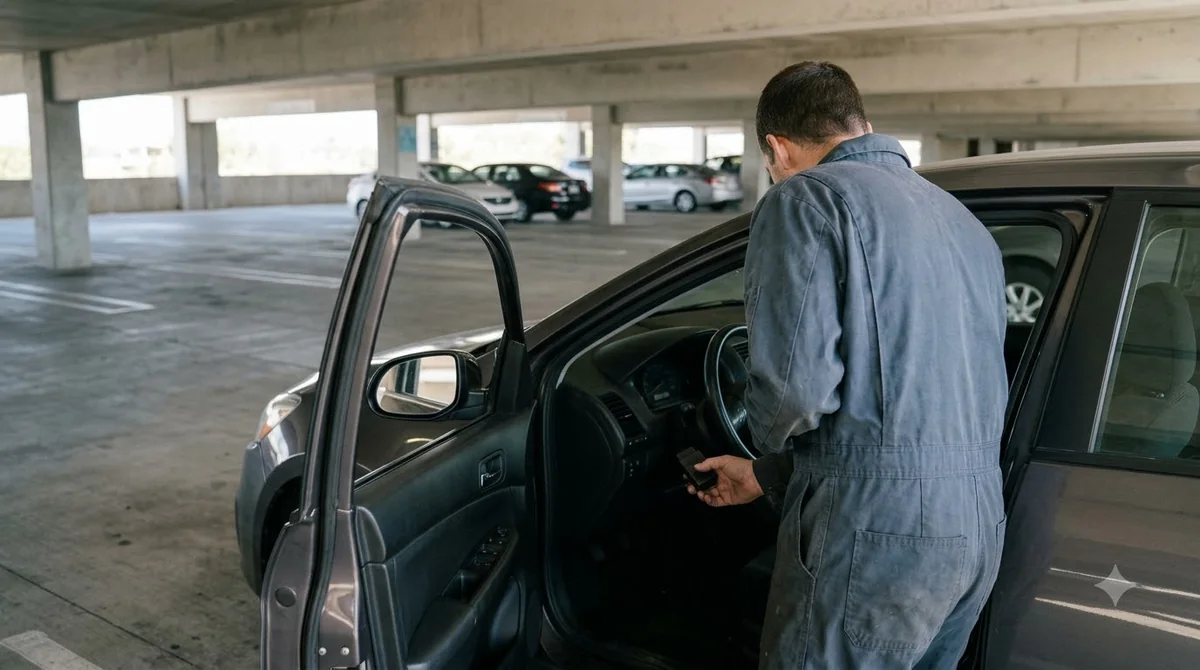
Codes such as P0301, a cylinder 1 misfire and P0171 appear in the bulletin list for 2.7L trucks, so a scan result that matches the bulletin is a reason to check its scope. Ford owners who want a Ford-specific tool can read how FORScan reads Ford codes. A single code rarely names one failed part behind a Ford F150 check engine light, so the code only tells you where to look.
Some scanners show a short description for each Ford F150 check engine light code and others show only the number. Keep both. If your scanner shows only the number, write it down and compare it with the list in the bulletin or with a repair database before you buy parts.
Causes at a Glance
Each cause has a different scope and next step, so match the code and model year before you buy parts. The table below sorts the common cases behind a Ford F150 check engine light.
| Cause | Scope | Next step |
|---|---|---|
| Loose or damaged gas cap | Any year, any engine | Tighten or replace the cap, then watch the light |
| 2.7L EcoBoost bulletin codes | 2018 F-150 built on or before July 12, 2018, over 500 miles | Shop checks fuel rail pressure per the bulletin |
| Misfire code P0301 | Listed in the 2.7L bulletin range | Scan for the full code list before parts |
| Catalyst code P0420 | Not on the 2018 bulletin list | Treat as a separate check |
When to Take the Truck to a Shop
Take the truck to a shop when the codes match the bulletin list or when the Ford F150 check engine light returns after a gas cap check. A shop can do what a home scan cannot, such as monitoring live data and testing fuel rail pressure. The bulletin uses that test to decide whether injectors need replacement, so a shop is the right place for it.
If your scan also shows P0420, a catalytic converter efficiency code, note that it is not on the 2018 bulletin list, so a shop should check it as a separate fault rather than assume the bulletin covers it. Bring the full code list and a note of when the light first came on, plus what the truck was doing at the time.
The bulletin notes that warranty coverage depends on the warranty and extended service plan documents, and that the identified causal part is checked with Ford’s part coverage tool. Ask the dealership to confirm coverage before any work starts. Ask the shop to show you the stored codes and the test results before approving repairs. Clear answers about the code behind your Ford F150 check engine light and the test make it easier to decide whether the work is needed now or can wait.
Related Guides
Frequently Asked Questions
Is a Ford F150 check engine light always serious?
No. A loose gas cap can trigger a Ford F150 check engine light, but the light can also flag a fault that lowers fuel economy, raises emissions or causes more expensive repairs later. The stored code tells you which situation applies, so get it read soon.
Does bulletin 18-2270 cover a 2016 F-150?
No. The bulletin is written for the 2018 Ford F-150 with a 2.7L EcoBoost engine, built on or before July 12, 2018, with more than 500 miles on the odometer. Other trucks fall outside it and should follow standard diagnostics.
Can a loose gas cap cause the light?
Yes. The fueleconomy.gov guidance says a loose gas cap could be the reason the Ford F150 check engine light is on. Tighten the cap until it clicks, check the seal and watch the light over the next few drives. If it stays on, get the codes read.
Does clearing the code fix the problem?
No. Clearing the code removes the stored message but does not repair the fault behind the Ford F150 check engine light. If the cause is still there, the code and the light can come back, so fix the cause first and clear the code only as part of the repair.
What does a technician check first on a 2018 2.7L?
The bulletin starts by confirming the build date and mileage, then retrieving the listed codes. The next step is monitoring fuel rail pressure after the engine is shut off, and the injectors are replaced only if the pressure drops below the limit.