
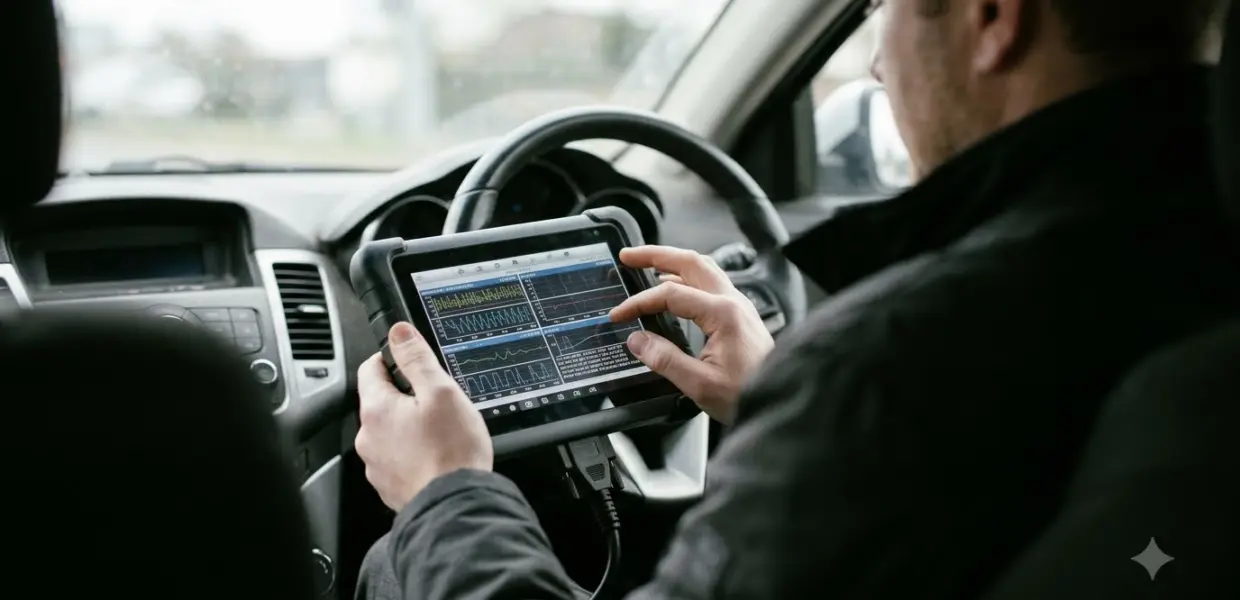

P2097 is an OBD-II code that means the engine computer has detected a rich fuel mixture after the Bank 1 catalytic converter. The code is usually written as Post Catalyst Fuel Trim System Too Rich (Bank 1), and GM calls the same condition High Limit.
The cause can be a sensor, an injector, a leak or a software setting, so the fix starts with reading the fuel trims, not with buying parts.
What P2097 Means on Your Engine
P2097 means the engine control module sees the post catalyst fuel trim running too rich on Bank 1, read from the downstream oxygen sensor. In Saab service data, the trigger is a learning value above 0.018.
GM uses the title Post Catalyst Fuel Trim System High Limit for this code and lists P2096 as the Low Limit counterpart, which the P2096 low limit code guide covers. Both codes can be set in the engine control module, so a scan that shows one may need a check of the other.
What the Code Name Says
Fuel trim is the correction the engine computer makes to keep the air-fuel mix near its target. When the post catalyst trim sits on the rich side, the sensor after the converter is reporting more fuel than the target calls for.
What Causes a P2097 Code
Some repair sources list a faulty downstream oxygen sensor, leaking fuel injectors and a clogged converter as causes of P2097. GM names a software anomaly as a cause in one bulletin.
The downstream oxygen sensor sits after the converter and is the sensor that reports the rich condition, so a bad sensor is a common suspect. Leaking injectors can add extra fuel, and a clogged converter can change the readings the sensor sees. Converter wear itself is normally reported by a different code, P0420, as described in the P0420 catalyst efficiency code guide. The manufacturer data reviewed here does not confirm these points, so treat them as possibilities and test before replacing parts.
Leaks and Intake Problems
An intake leak or a dirty air filter changes the air that the engine computer uses to set the mixture, so both can push the trims off target. Some repair sites also list an exhaust leak near the downstream sensor, but the service data reviewed here does not confirm that cause.
Software Causes
GM’s bulletin for a 2017 Chevrolet Malibu lists a software anomaly as a possible cause of P2096 and P2097, and the correction is a software reprogram. Software is the one cause the manufacturer data reviewed here confirms.
What Symptoms Come With P2097
The check engine light is the usual first sign of P2097, and some drivers report rough idle, hesitation or poor fuel economy.
Some repair sites list the following signs, so treat them as possible rather than certain. Some vehicles may feel normal, which is why a scan matters more than how the engine feels. A rough idle can come from many faults besides this one, so the code is the clearer clue. Match each symptom to the freeze frame data before you change any part, and note whether the symptom appeared before or after the light came on.
- Check engine light on
- Rough idle or hesitation
- Poor fuel economy
- A strong smell of fuel from the exhaust
- A failed emissions test
How to Read P2097 With a Scan Tool
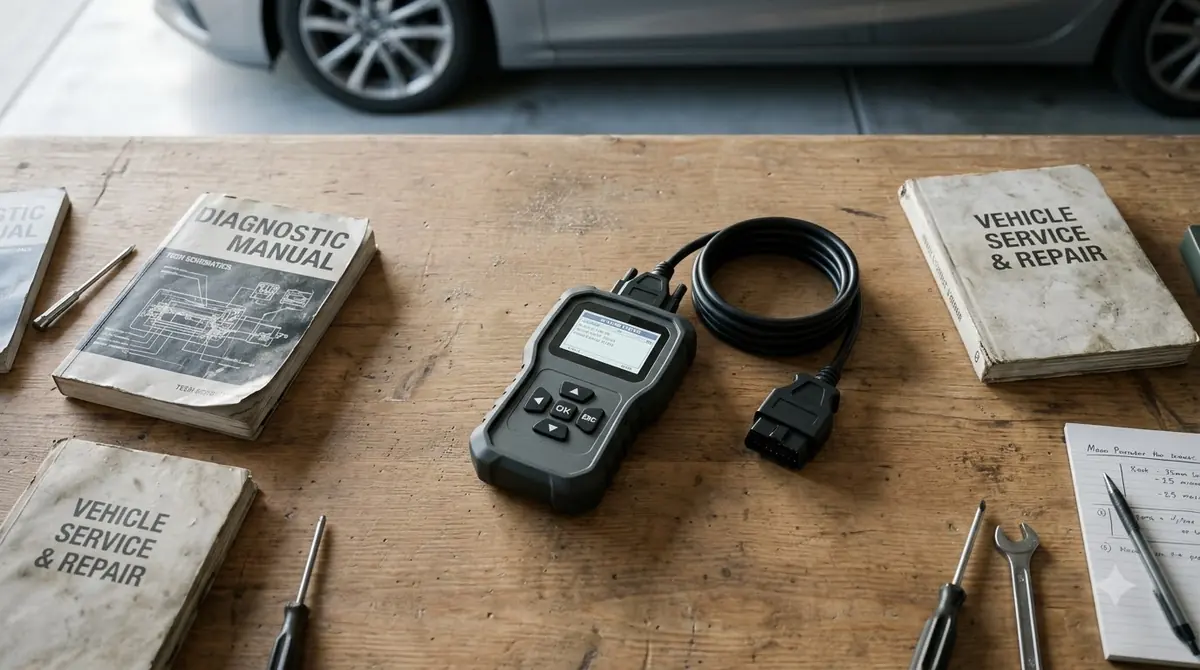
A scan tool shows P2097 along with freeze frame data and fuel trim values, which show what the engine was doing when the code set. Read those values before you choose a part. A scan tool with live data shows the trims as the engine runs. A lean pattern points to a different family of codes, such as the one in the P0171 lean code guide, so note which direction the trims lean.
Saab service data for a 2005 9-2X 2.5i gives the trigger as a sub feedback learning value above 0.018 that holds for more than 5 seconds. The check needs the sub feedback learning control to be complete, and it runs during steady driving at 50 to 100 km/h (31 to 62 mph). The lamp lights after two drive cycles with the fault and clears after three clean cycles.
The lamp does not light on the first drive where the fault appears. It needs the fault to repeat across drive cycles, so a light that returns soon after a repair is a sign that the cause is still present.
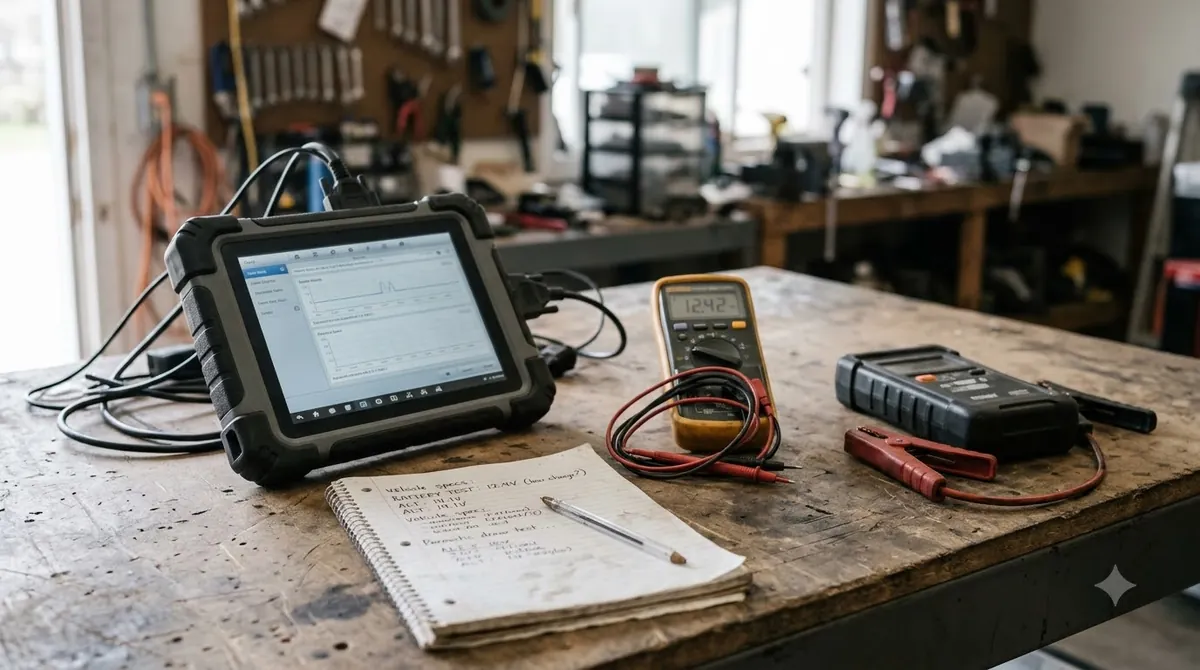
These thresholds come from one Saab model, and other makes use their own limits. Use the table below to decide what to check next, and compare the steps with the service information for your vehicle.
| What to check | What it helps you rule out |
|---|---|
| Freeze frame fuel trim values | Whether the engine was adding or removing fuel when the code set |
| Downstream oxygen sensor heater and wiring | Whether the sensor itself is sending a bad signal |
| Air filter and intake hoses | Whether unmetered air is changing the mixture |
| Fuel injector condition | Whether a leaking injector is adding extra fuel |
| Exhaust near the downstream sensor | Whether an exhaust leak is changing the readings |
How to Fix P2097 Step by Step
To fix P2097, check the trims and the sensor first, then the intake, injectors and exhaust, and only then consider the catalytic converter.
Work through these checks in order. Each one rules out a cause before you spend money on parts.
- Read the stored code and freeze frame data with a scan tool, and write down the fuel trim values.
- Inspect the air filter and intake hoses for cracks or looseness.
- Check the downstream oxygen sensor heater and its wiring for damage.
- Inspect the fuel injectors for leaks, and test them if your shop has the equipment.
- Look for an exhaust leak near the downstream sensor.
- Check the manufacturer’s service bulletins for your VIN, including any software update.
- Clear the code and drive the car. Saab data says the lamp clears after three drive cycles without the fault.
Common Mistakes That Waste Money
One costly mistake is replacing the downstream sensor or the catalytic converter before reading the trims. Clearing the code without fixing the cause brings the light back, because the fault is still present.
The steps above are a general order. Exact values and test methods differ by make and model, so follow your vehicle’s service information.
Write down the trim values and the scan results before and after each repair. A set of notes lets you see whether a change helped, and it gives the next technician a clear starting point if the light returns.
When a Software Update Fixes P2097
GM’s bulletin lists a software anomaly as a cause of P2096 and P2097 on a 2017 Chevrolet Malibu 1.5L and asks for an engine control module reprogram.
According to GM service bulletin 19-NA-017, the correction is to reprogram the engine control module with the latest available software. Stable battery voltage matters during programming, because any fluctuation or loss of voltage can interrupt the update. GM lists the reprogram as a 0.5 hour labor operation and writes the bulletin for professional technicians.
The bulletin covers one model and engine in North America and Israel. Check the service information for your VIN before assuming a software fix applies to your car.
If a shop performs the update, ask whether the bulletin matches your model year and engine, and keep the repair invoice. The invoice shows what was changed, which helps if the code returns later.
Related Guides
Frequently Asked Questions
Is a P2097 code serious, and can I keep driving?
The sources reviewed do not give a safety rating for P2097. A lit check engine light with rough idle or hesitation is a reason to have the car checked soon rather than wait. Reading the freeze frame data first helps a technician know which system to test.
Does P2097 always mean a bad oxygen sensor?
No. The downstream oxygen sensor is one possible cause, but leaking injectors, intake problems and software can also set the code. Check the fuel trims and the sensor heater and wiring before you buy a replacement sensor.
Is P2096 the opposite code?
GM pairs P2096, Post Catalyst Fuel Trim System Low Limit, with P2097, High Limit, so the two codes cover opposite edges of the same trim system. The bulletin names both codes together, so a technician may check them as a pair.
Can I clear a P2097 code myself?
A basic scan tool can clear a stored code, but the light may return if the cause is still present. Saab data says the lamp clears after three drive cycles without the fault, so a clean drive pattern shows whether the repair worked.
Do I need a professional scan tool to read P2097?
A basic OBD-II reader can show the code, but fuel trims and freeze frame data need a tool that shows live data. GM’s bulletin calls for a GM Authorized Programming Support Tool to hold system voltage during the update, so a software fix needs a shop with the right equipment.
A P2097 code points to the fuel mix, not to one specific part. Check the trims, intake and exhaust before you replace a sensor or converter, and follow the service information for your exact vehicle.
