
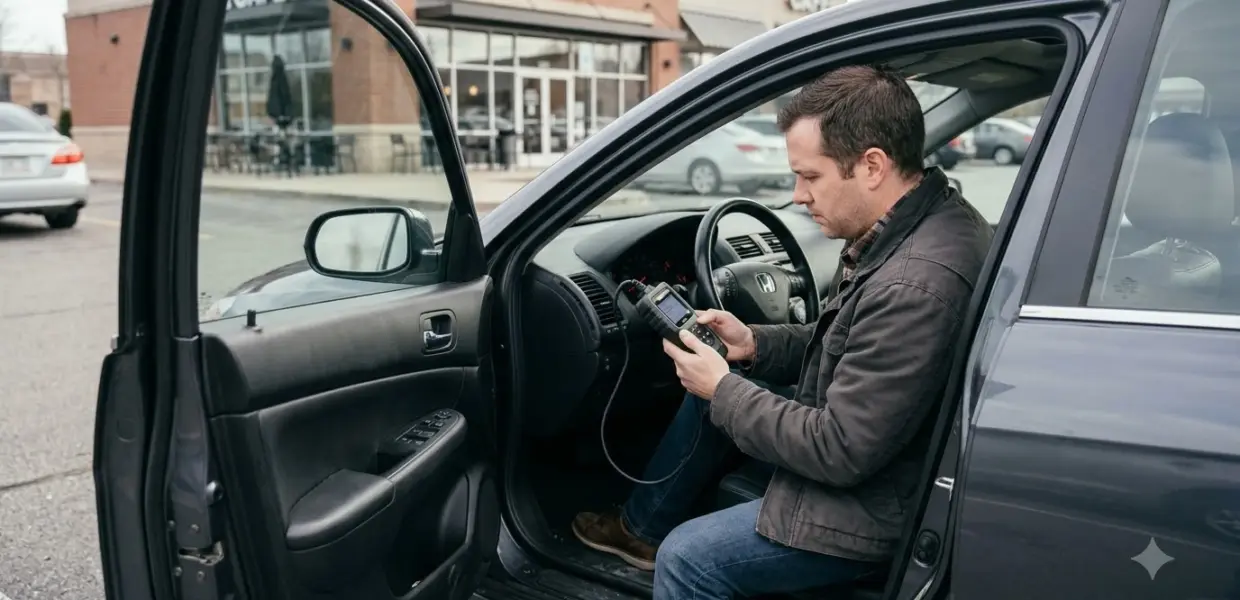

P0131 is an OBD-II code meaning the engine computer detected a low voltage signal from the upstream oxygen sensor on Bank 1, Sensor 1. GM service bulletin 18-NA-009 names it HO2S Circuit Low Voltage Bank 1 Sensor 1.
The code can come from wiring, a leak or the sensor itself, so check those before buying parts. A 2019 GM bulletin documents one cause on a limited set of 2016 and 2017 vehicles.
What the P0131 Code Means
P0131 means the engine computer reads a low voltage from the Bank 1 Sensor 1 oxygen sensor, which sits before the catalytic converter. GM bulletin 18-NA-009, dated April 2019, lists this sensor as the pre-catalyst bank 1 sensor 1 part.
On OBD-II systems, Sensor 1 sits upstream of the catalyst and Bank 1 is the side of the engine that has cylinder 1, according to NTK’s oxygen sensor guide. That placement matters because the sensor sees the exhaust before the catalytic converter changes it. A low reading is a circuit signal, so the cause can be the sensor, its wiring or a real lean condition that the sensor reports.
The bulletin does not cover every car. It applies to Buick Enclave, Chevrolet Traverse and GMC Acadia models from 2016 and 2017, with the VIN and engine limits listed in the bulletin. Check your VIN against those limits before you apply its repair steps.
The GM parts list places this sensor in the pre-catalyst position, so match the sensor label on your scan report to that same position on your vehicle before you order any part. A label that points to the wrong sensor leads to a wrong part and a code that returns.
Symptoms You May Notice With P0131
The GM bulletin lists three customer concerns for this code: the check engine light stays on, the idle is rough and power is low.
- Check engine light (MIL) illuminated
- Rough idle
- Low engine power
The bulletin says some customers may have one or more of these concerns. The symptoms are a prompt to check the system, not proof that the sensor has failed. A rough idle or low power is a drivability problem that deserves prompt attention.
Common Causes of the P0131 Code
A power steering fluid leak can soak the O2 sensor wiring and skew its readings, which GM bulletin 18-NA-009 names as a cause of this code. The leak comes from the power steering hose that runs above the bank 1 oxygen sensor harness.
Other causes come from general diagnostic practice rather than the bulletin. Check these groups before you assume the sensor is at fault:
- Fluid or contamination on the sensor wiring
- An exhaust leak ahead of the sensor
- Damaged, shorted or poorly connected sensor wiring
- A failed upstream sensor, checked after the items above
The bulletin also notes that this may be a repeat concern. A repair that only swaps the sensor can leave the original source in place. NTK’s oxygen sensor guide makes the same point: a check engine light does not necessarily mean the sensor is faulty, and the root cause should be fixed along with any sensor replacement.
Related Codes That Often Appear With P0131
GM bulletin 18-NA-009 lists six other codes that can appear with P0131, including P0171 lean fuel trim on bank 1.
| Code | Meaning | Why it matters |
|---|---|---|
| P0032 | HO2S heater control circuit high voltage, Bank 1 Sensor 1 | Points to the heater circuit of the same sensor |
| P0132 | HO2S circuit high voltage, Bank 1 Sensor 1 | The opposite voltage fault on the same sensor |
| P0133 | HO2S slow response, Bank 1 Sensor 1 | The sensor reacts too slowly to exhaust changes |
| P0137 | HO2S circuit low voltage, Bank 1 Sensor 2 | The same low-voltage fault on a different sensor |
| P0171 | Fuel trim system lean, Bank 1 | The engine may be running lean, which can be the root cause |
| P2096 | Post catalyst fuel trim system low limit, Bank 1 | A fuel trim fault read after the catalytic converter |
The bulletin lists these codes together, but that does not mean every vehicle sets all of them. For the post-catalyst fuel trim entry, see this P2096 meaning and causes explainer. Compare your scan results with this list to see which sensor and fuel trim readings need a closer look.
How to Diagnose P0131 Step by Step
Start by checking the power steering hose, the sensor wiring and the connector for leaks or contamination. The GM bulletin’s correction begins with that same inspection.
- Read the stored and pending codes with a scan tool, and record the freeze frame data before you clear anything.
- Inspect the power steering inlet hose above the bank 1 O2 sensor harness for any sign of leakage.
- Check the sensor wiring and connector for damage, contamination or a short to ground.
- Look for exhaust leaks ahead of the sensor, then review fuel trims and fuel pressure with the scan tool.
- Replace parts only after these checks. If fluid contaminated the harness, the bulletin calls for replacing the sensor, the power steering inlet pipe or hose, and the engine wiring harness.
If no leak shows up, the bulletin says to follow the service information for the vehicle. Specifications, thresholds and wiring diagrams differ by make, model and year, so use the factory manual for exact values.
Keep a written record of each reading, each check and the freeze frame data. A written record makes it easier to see whether a repair changed the code, the symptoms or the sensor readings, and it saves time if the code returns later.
When Replacing the Sensor Is Not the Fix
An Audi bulletin for 2013 to 2018 A8, S6, S7, S8 and RS 6 models, and 2014 to 2018 RS 7 models with the 4.0L engine, says not to replace the front oxygen sensor for a post-catalyst code.
That bulletin covers P209600 and P209800, which report a post catalyst fuel trim that is too lean, not P0131. It tells technicians to ignore other pre-catalyst oxygen sensor codes logged with them, and to replace only the after-catalyst sensor on the affected bank. Read the full text in Audi technical service bulletin 2046611/5.
This example has a narrow scope and does not show the correct repair for your P0131. It does show why a sensor swap should follow the stored codes and test results, not the code name alone. If a test does point to the sensor, what an O2 sensor replacement costs helps you judge a quote.
Common Mistakes When Clearing P0131
Clearing P0131 without finding the cause can let the code return. The GM bulletin says the condition may be a repeat concern.
- Replacing the upstream sensor before checking the wiring and hose
- Clearing the code and driving without a retest
- Ignoring related codes such as P0171 or P0137
- Skipping the exhaust leak check
A retest after the repair confirms whether the fix worked. If the code sets again soon after clearing, go back to the wiring and leak checks.
Related Guides
Frequently Asked Questions
What is the p0131 code meaning in simple terms?
P0131 means the upstream oxygen sensor on Bank 1, Sensor 1 reads a low voltage, as GM bulletin 18-NA-009 defines it. Because it is a sensor circuit code, the cause can be the sensor itself, its wiring or a real lean condition in the engine. Check the wiring and leaks before assuming the sensor failed.
Is P0131 the same on every vehicle?
No. The GM bulletin covers a limited set of 2016 and 2017 Buick Enclave, Chevrolet Traverse and GMC Acadia models, with VIN and engine limits. Other makes and model years can set the same code under different thresholds and repair steps, so check the service information for your vehicle.
Can I drive with a P0131 code?
The GM bulletin lists the check engine light, rough idle and low power as possible customer concerns. If the engine runs roughly or power drops, have a technician inspect it before driving far. A stored code without symptoms still needs a check of the wiring and leaks.
Does P0131 always mean the O2 sensor is bad?
No. The GM bulletin describes power steering fluid soaking the sensor wiring as a cause, and its correction starts with inspecting the hose and harness. The sensor is replaced when those checks point to it or when the factory steps call for it.
Will clearing P0131 fix the problem?
Clearing the code removes the stored message but does not repair a leak or damaged wiring. The GM bulletin says this condition may be a repeat concern, so retest after any repair to confirm the fix worked. If the code returns, go back to the wiring and leak checks.
If P0131 comes back after the hose, wiring and leak checks, have a technician read live O2 sensor data before replacing parts. A repeat code after a clean inspection can point to a wiring or ground problem that a sensor swap alone may not fix.
