

P0121 is a generic trouble code meaning the throttle or pedal position sensor “A” circuit is reporting a value outside its expected range. When the engine computer sees a signal it cannot trust, it stores the code and may switch the car into reduced-power mode.
Most p0121 cases trace back to the sensor, its wiring or a dirty throttle body. A basic inspection with a scan tool and a multimeter usually narrows the fault down.
What the P0121 Code Means
P0121 flags a range or performance problem in the throttle position sensor A circuit, so the sensor signal does not match what the engine computer expects. Some manufacturers word the same fault as a pedal sensor problem.
The throttle position sensor, or TPS, sits on the throttle valve shaft and reports how far the valve is open. According to Wikipedia’s throttle position sensor article, the sensor monitors throttle valve position for the engine control unit, so a bad reading affects how the engine responds to your foot.
That link between the pedal, the throttle plate and the computer is why a faulty signal shows up as hesitation, surging or a car that feels unresponsive, even when the gas pedal itself is fine.
The full definition used by repair references is “Throttle/Pedal Position Sensor ‘A’ Circuit Range/Performance Problem.” Toyota uses similar wording with “Throttle Pedal Position Sensor/Switch ‘A’,” so the same p0121 code can point to either sensor depending on the make.
P0121 Symptoms You May Notice
A p0121 code usually turns on the check engine light and can put the engine into limp mode, which limits throttle response. The symptoms below are the ones repair references list most often.
- Check engine light on
- Hard starting or no start
- Sputtering, knocking or stalling
- Rough, high or unstable idle
- Slow acceleration and reduced top speed
- Limp or failsafe mode that limits throttle response
According to OBD Advisor’s P0121 page, the engine goes into failsafe mode and limits throttle response when the signal is out of range. That protective setting keeps the engine from reacting to a signal the computer does not trust, but it also means you lose power when you need it most, such as merging onto a highway.
Common Causes of a P0121 Code
The listed causes are an open or short in the TPS or its wiring, loose or corroded connections, and a dirty or faulty throttle body. A failed engine computer is also named, but only as a rare cause.
Because the same symptoms can come from several parts, the cause is often found by ruling things out one at a time. Start with the cheapest and easiest checks, such as the connector and the throttle body, before moving to the engine computer. A dirty throttle body is also a common reason to read about throttle body repair costs before you commit to a repair.
Sensor and Wiring Faults
An open or short circuit in the TPS or its harness is the first cause that repair references list. Moisture or corrosion inside the sensor connector can produce the same out-of-range reading, so look at the plug before you replace anything.
Dirty or Faulty Throttle Body
A dirty throttle body is listed among the causes of this code. The 8020 Automotive guide recommends removing and cleaning the throttle body, then retesting, before you condemn the sensor.
Cleaning is a low-cost step to try before testing or replacing the sensor. Follow your service manual for the cleaning method, because some throttle bodies are electronically controlled.
Throttle Sensor Voltage Reference
A healthy TPS signal usually reads about 0.5 V at idle and about 4.5 V at wide open throttle, on a 5 V reference supply. Exact values differ between vehicles, so confirm them in your service manual.
| Condition | Typical signal | What it suggests |
|---|---|---|
| At idle | About 0.5 V (0.5 to 1.0 V on 8020 Automotive) | Normal idle range |
| Wide open throttle | About 4.5 V (4.5 to 4.7 V on 8020 Automotive) | Normal full-throttle range |
| Reference supply | 5 V | Expected supply to the sensor |
| Signal circuit reading | 12 V | Short in the signal circuit |
Treat these figures as a sanity check, not a pass or fail rule. Compare the reading with the value in your service manual for your engine and model year. A reading that sits far outside them, or jumps when you move the throttle, points to wiring or the sensor itself.
If your scanner shows live data, watch the sensor reading as the throttle opens. A signal that stays fixed instead of rising from the idle value toward the wide open throttle value points to the sensor or its wiring.
How to Diagnose P0121
Start by confirming the code with a scanner, then check the sensor and harness before you clean the throttle body and test with a multimeter. Work in this order so you do not replace a good part.
Keep a record of the scanner readings, the voltage numbers and the order of checks. If you need to hand the car to a shop, that log saves time and avoids paying for the same test twice.
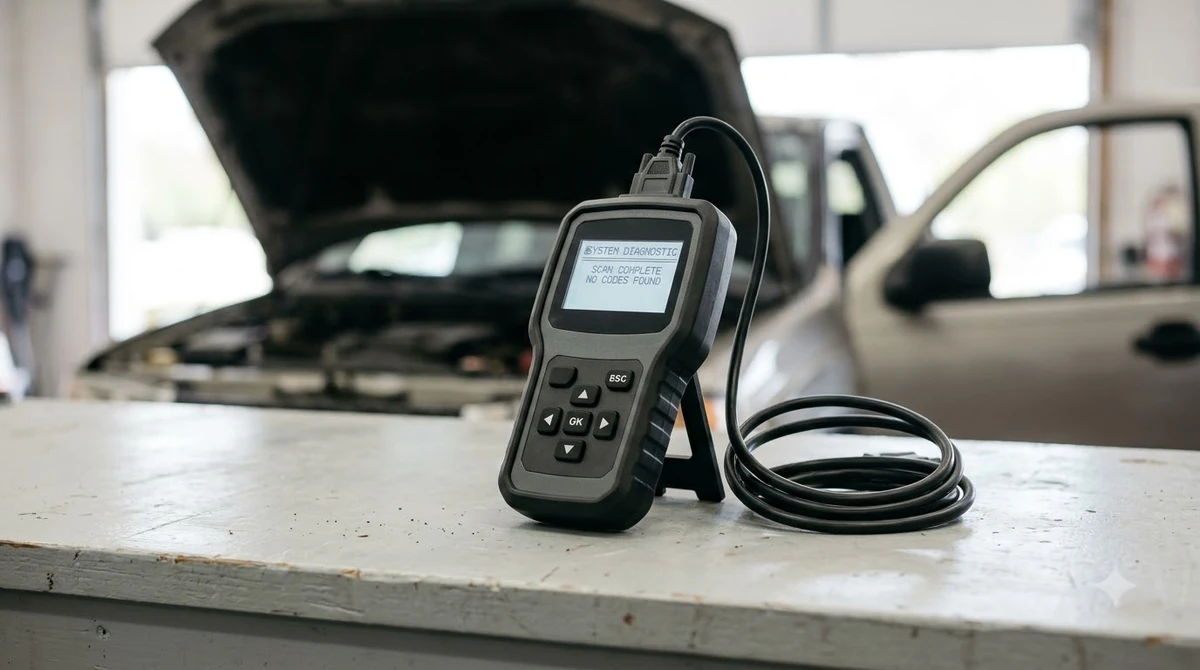
- Confirm the code with an OBD-II scanner and write it down before clearing anything.
- Inspect the TPS and its harness for damage, corrosion or a loose connection.
- Remove and clean the throttle body, then retest to see if the code returns.
- Test the TPS and harness with a multimeter (here is how to use an automotive multimeter) and compare the readings with the voltage reference above.
If the code returns after cleaning and the wiring checks out, the sensor or its harness is the likely fault. Confirm the part number and procedure in your vehicle’s service information before buying a replacement.
If the scan shows other throttle or pedal codes along with P0121, record them too, because they can point to the same circuit and change the order of your checks. A code from another system, such as the oxygen sensor heater code, needs its own checks; see the P0030 code guide.
What a P0121 Repair Can Cost
The 8020 Automotive guide lists a TPS part at 30 to 150 USD and shop labor at 120 to 150 USD per hour, but that page was published in October 2022 and updated in June 2023. These figures are a dated reference, not a current quote, and newer prices were not confirmed.
Our guide to throttle position sensor replacement cost breaks the same repair into parts and labor. Labor time and parts prices also depend on the make, the model year and whether the car uses a drive-by-wire pedal. A shop quote for your specific vehicle is the only reliable number for a current repair.
- TPS part: 30 to 150 USD, currency presumed from the dollar sign on the page
- Shop labor: 120 to 150 USD per hour
- Typical job: 1 to 2 hours plus parts, per the same page
Cleaning the throttle body is a lower-cost step than replacing the sensor, so it is worth doing first. Treat the figures above as one reference point and compare them with a local quote.
For budgeting, set aside money for diagnosis first, because a cleaning or wiring repair can cost less than a sensor replacement and may solve the fault outright.
Pedal Sensor vs Throttle Sensor
On cars with drive-by-wire throttle control, the accelerator pedal and the throttle body each have their own sensor, so a p0121 code can name either one. Read the exact wording on your scanner before you buy a part.
Toyota’s wording points to the pedal side, while generic references point to the throttle side. Wikipedia notes that accelerator pedal sensors are used in drive-by-wire systems, which is why the two parts are easy to confuse.
When you read a p0121 code, check the scanner text and the vehicle service information for the exact sensor named, because the repair path depends on which part the manufacturer flags.
Frequently Asked Questions
Can I keep driving with a P0121 code?
The car may enter limp mode, which limits throttle response and power. Reduced power can be unsafe in traffic, so have the car checked soon. Stop driving if the engine stalls or will not idle normally.
Does P0121 always mean the throttle sensor has failed?
No. Repair references list open or shorted wiring, loose or corroded connections and a dirty throttle body alongside a failed sensor. Check the wiring and clean the throttle body before you replace the sensor.
Can a dirty throttle body cause P0121?
Yes, a dirty or faulty throttle body is named as a cause. Remove and clean the throttle body, then retest the code to see whether the reading returns.
Do I need a scan tool to read P0121?
You need an OBD-II scanner to read the code and a multimeter to check the sensor voltage. Confirm the code before you replace parts, because the code alone does not identify which part has failed.
What voltage should a throttle sensor show?
Repair references report about 0.5 V at idle and about 4.5 V at wide open throttle on a 5 V reference. Values vary by vehicle, so confirm the figures in your service manual.
If the code returns after cleaning and the wiring checks out, stop replacing parts and have a technician test the harness against the vehicle wiring diagram before you buy anything else.
