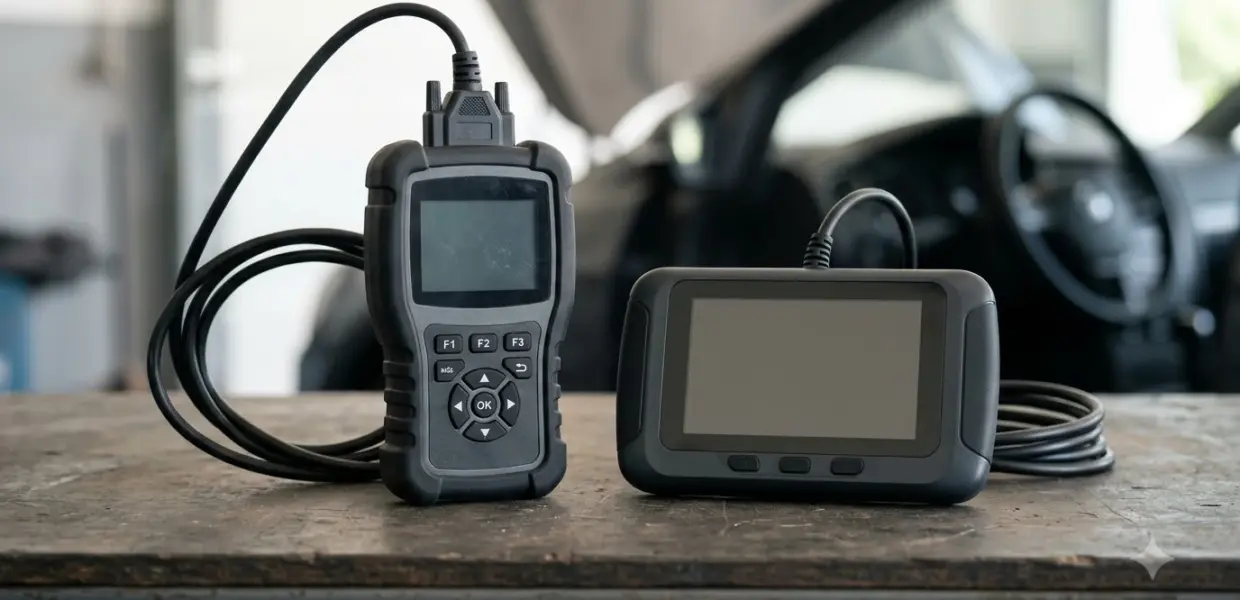

A P0073 code means the ambient air temperature sensor circuit reads high. It is a generic OBD-II trouble code, so its name is the same across most makes, and it points to the sensor, its wiring or its connector rather than the engine itself.
Most cases come from a damaged or corroded sensor connection, and the code is usually low priority. Check the connector first, and have a mechanic look at the car if the code comes back.
What the P0073 Code Means on Your Car
P0073 means the ambient air temperature sensor circuit reports a high signal, so the car’s computer reads an outside air value that is out of its expected range.
The full name in scan data is Ambient Air Temperature Sensor Circuit ‘A’ High. Ambient means outside air. According to Kelley Blue Book’s P0073 code page, the same sensor feeds the outside temperature display and can affect automatic climate control. The code number follows the standard format: according to MyCarly’s P0073 page, the P marks a powertrain fault, the 0 after it marks a generic OBD-II code, and 73 is the specific number. Do not confuse it with intake air temperature codes such as the P0113 code, which involve a different sensor.
Symptoms That Come With P0073
With a P0073 code, the most noticeable symptoms are heating or air conditioning that does not perform as expected and an outside temperature reading that may be wrong.

- Heating or cooling that needs a larger temperature adjustment to reach the setting you choose
- Difficulty reaching the desired cabin temperature
- An outside temperature display that may show an inaccurate value
The check engine light usually stays off with this code, according to Kelley Blue Book, although another warning light may come on. Compare the outside temperature display with the weather you can feel; a reading far off supports a sensor circuit problem, though only a scan and tests can confirm it. Do not rely on the dashboard light alone to judge the fault. If another dashboard light does come on, read what the MIL means to understand the warning.
Common Causes of the P0073 Code
The most common cause of a P0073 code is a damaged or corroded ambient air temperature sensor or its connection, according to Kelley Blue Book. The sensor and its connector are the first place to look. Kelley Blue Book calls a P0073 diagnosis fairly easy on average and says a broken sensor can often be spotted just by looking at it.
The same source describes a control module fault as very rare, and says it usually comes with other trouble codes. The list below covers the faults that most often set this code.
- A damaged or failed ambient air temperature sensor
- Corrosion or loose contacts at the sensor connector
- Damaged wiring between the sensor and the control module
- A powertrain control module fault, which is rare and usually shows other codes
How to Check a P0073 Code Step by Step
Check the connector and wiring before you replace the sensor, because corrosion is the most common fault behind a P0073 code. The steps below move from the simplest checks to electrical tests.

- Read all stored codes and the freeze-frame data with an OBD-II scanner, and write down any other codes. Other codes point to a different cause.
- Inspect the ambient air temperature sensor connector for corrosion, bent pins, moisture or a loose fit.
- Follow the wiring from the sensor toward the control module and look for chafing, cuts or heat damage.
- Test the sensor and circuit with a digital multimeter, comparing the readings with the factory service information for your vehicle. Do not guess the expected values.
- Clear the code, drive the car, then scan again to see whether the code returns.
If the connections look fine but the P0073 code stays, Kelley Blue Book says the diagnosis becomes harder and recommends an expert, especially for beginners. Use the table below to match each check to what it tells you.
| Check | What it tells you |
|---|---|
| Other stored codes | Whether the fault is limited to the temperature circuit |
| Connector condition | Corrosion or looseness, the most common fault behind this code |
| Wiring continuity | Breaks or damage between the sensor and the control module |
| Sensor reading | Whether the sensor signal matches the factory specification |
Is P0073 Serious and Can You Keep Driving?
P0073 is one of the least serious diagnostic codes, and Kelley Blue Book says you can almost always keep driving if it is the only code. That answer assumes the car runs normally and shows no other warning. MyCarly also calls the issue not serious for now and suggests checking regularly whether it gets worse, while Kelley Blue Book still recommends having an expert look at it. If the cause turns out to be the control module, which is rare, Kelley Blue Book says the car should go to an expert more quickly. Our guide on a check engine light that comes on while the car runs fine covers the wider question.
A check engine light can come from a minor cause. The U.S. Department of Energy’s fueleconomy.gov maintenance guide notes that the cause can be as minor as a loose gas cap, and advises having a mechanic inspect the vehicle when the light comes on.
- Keep driving only if P0073 is the only code and the car drives normally
- Get the car checked soon if another code or warning light appears
- Stop and get help if the engine runs roughly, overheats or shows a brake, steering or airbag warning
When to See a Mechanic and What a Repair Involves
See a mechanic if the P0073 code returns after the connector check or if other codes appear. Kelley Blue Book notes that the impact and likelihood of this code depend on the make, model and age of the vehicle, and it lists no specific models. An oxygen sensor code such as P0138 is a separate circuit, so check it with the P0138 code guide.
None of the pages reviewed for this guide gave a repair cost, so no price is quoted here. For another temperature sensor job, see the coolant temperature sensor repair cost guide. Ask for a written estimate that separates the diagnosis time, the parts and the labor, and check whether the shop tested the sensor or only replaced it.
Frequently Asked Questions
Can I drive with a P0073 code?
Usually yes, if it is the only code and the car drives normally. Kelley Blue Book calls P0073 one of the least serious diagnostic codes. Still, get the car checked soon, especially if another warning appears.
Will the check engine light come on with P0073?
Usually not. Kelley Blue Book says the check engine light usually does not turn on with this code, though another warning light may appear.
Is the P0073 code the same on every car?
The code name is the same because it is a generic OBD-II code. How it shows up and how much it matters depend on the make, model and age of the vehicle.
Does clearing the code fix P0073?
No. Clearing the code only removes the stored record. If the sensor, connector or wiring fault is still there, the code will return after the car is driven for a while.
What should I tell the mechanic?
Give the exact code, any other codes you saw, the symptoms and when they started. Ask the shop to check the sensor connector and the wiring before replacing the sensor.
If the P0073 code returns after a connector check, or if another code or warning light appears, get the car inspected before you rely on it for a long trip. A single code is usually a small problem, but several codes deserve a full diagnostic. Start with the connector and wiring, and ask for a written estimate before any repair.