

A car shuts off while driving when the engine loses fuel, spark or its crank signal, and the cause is usually a fuel, electrical, ignition or sensor fault. Safety comes first: turn on your hazard lights and get off the road as soon as you can.
Tracing why a car shuts off while driving takes a scan tool and a few checks of the fuel, charging and crank signal. Some causes are recalls tied to specific models, so check your VIN before you pay for parts.
If a car shuts off while driving, this guide is general information, not a repair guarantee. If the engine stalls on the road, get the car checked before you drive it again.
Car Shuts Off While Driving: What Usually Causes It
A car shuts off while driving when the engine stops getting the fuel, spark or crank signal it needs, and most cases fall into four groups. The fuel system, the charging system, the crankshaft sensor and ignition parts, and the air and engine-management system all cause stalls.
A 2019 Consumer Reports article counted more than one million U.S. vehicles recalled for stalling concerns from October 2018 onward. When a car shuts off while driving, the symptoms before the stall often point to the right group.

Fuel System Causes: Pump, Filter and Empty Tank
A failing fuel pump is one of the most direct causes when a car shuts off while driving, because the engine stops without enough fuel. The filter and the fuel gauge can also mislead you.
- Fuel pump: a pump that cannot deliver enough fuel can starve the engine. Acura’s 2018 RDX service bulletin describes a swollen fuel pump impeller that can seize the pump and cause a stall while being driven.
- Clogged fuel filter: a brand blog from Carista lists a clogged filter as a cause, with rough running or misfiring as the early sign.
- Empty tank or a faulty gauge: the gauge can show fuel when the tank is nearly empty, so check the level by other means before blaming the pump.
The Acura bulletin covers only certain 2018 RDX vehicles with eligible VINs. If your car is a different model, a fuel pressure test is needed to confirm the pump before you replace it. When a car shuts off while driving with fuel in the tank, run that test before buying any part.
Electrical Causes: Alternator, Battery and Wiring
A failing alternator or a weak battery can cut power to the ignition and engine computer, so the engine stalls. A car that shuts off while driving often gives warning signs first, and the charging system is the group to check when those signs appear.
Carista, a brand blog, lists dimming lights and electrical accessories that fail before the stall as alternator signs. Dead battery signs include hard starting and a clicking sound when you turn the key. Loose or corroded wiring can also break the electrical connection for a moment and cut the engine.
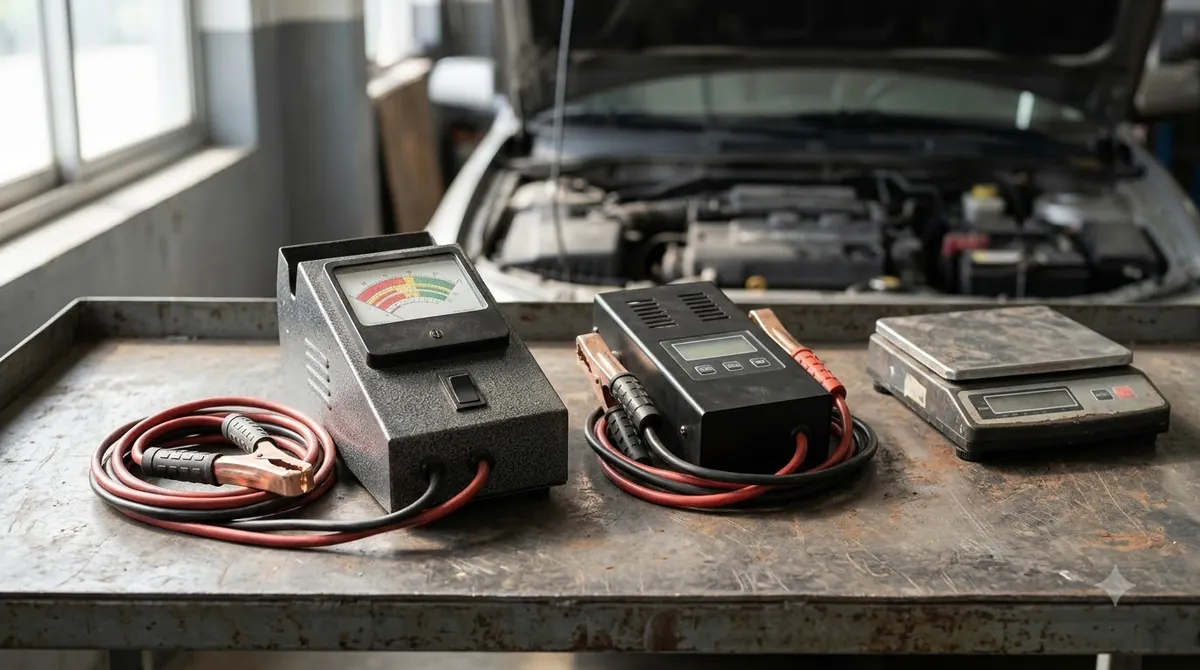
When a car shuts off while driving after the lights dim, charging is the first suspect, and a shop can test the charging output and the battery under load. If the electrical system checks out, move on to the crankshaft and ignition group.
Crankshaft Sensor and Ignition Causes
A crankshaft position sensor or tone wheel fault can stall the engine and stop it from restarting, as NHTSA recall 20V-475 documents for certain 2014 to 2016 Ram 1500 and Jeep Grand Cherokee trucks. The recall covers about 240 vehicles with the 3.0L engine, where loss of the magnetic signal on the crankshaft tone wheel makes the engine lose timing sync. A car only fits this cause when it matches the recall. NHTSA recall 20V-475 instructions give the details.
Toyota recall 17V-356 covers certain 2016 to 2017 Tacoma V6 trucks. Excess anti-corrosion coating on the crankshaft timing rotor can make the sensor malfunction, and the recall notes that a stall while driving at higher speeds may raise the risk of a crash. The recall lookup is worth the time when a car shuts off while driving at speed.
Ignition parts can also cut spark or power. A brand blog lists a faulty ignition switch, defective ignition coils and worn spark plugs as stall causes. For crank signal faults, the P0335 code is the one to look for. Check your VIN in NHTSA’s recall lookup before you assume a recall applies to your car.
Air, Sensor and Engine Management Causes
A dirty throttle body, a faulty mass airflow sensor or a vacuum leak can upset the air-fuel mix and stall the engine. Engine management faults often leave a check engine light, but a car that shuts off while driving may show no light at all.
- Mass airflow and throttle position sensors: rough idle can come before a stall.
- Vacuum leaks: cracked hoses let unmetered air in.
- Engine control unit: a faulty computer can cause unexpected stalls.
- Torque converter: a failing converter can stall the engine at low speed.
- Overheating: a coolant leak, failed radiator or broken water pump can overheat the engine.
Not every time a car shuts off while driving is an air problem. Read the codes first, because a symptom alone does not separate a sensor fault from a fuel or ignition fault.
Why a Car Shuts Off While Driving: Check After a Restart
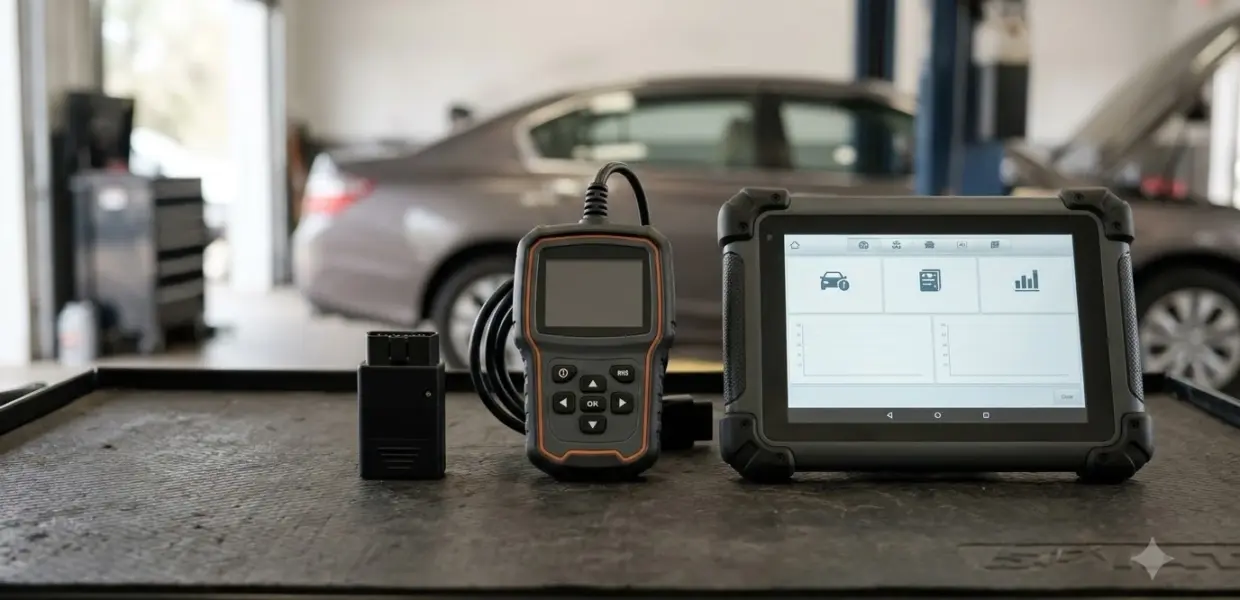
After a restart, an OBD-II scanner can show stored codes, and a code such as P0087 (fuel rail pressure too low) points toward the fuel system. When a car shuts off while driving, its best clue is in those codes. Read them before you clear anything, because a cleared code can hide the clue a shop needs.
| Symptom before the stall | Likely group | First check |
|---|---|---|
| Sputtering or hesitation under load | Fuel delivery | Read stored codes such as P0087 and test fuel pressure |
| Dimming lights and accessories failing | Charging and battery | Test the battery and the charging output |
| Stall with no restart | Crankshaft signal or ignition | Check crankshaft sensor codes and your VIN in the recall lookup |
| Hot gauge or coolant loss | Cooling system | Check the coolant level and look for leaks |
Common Mistakes to Avoid
The biggest mistake is restarting the engine again and again on a live road, since a car that shuts off while driving once can do it again. Each restart is a test, not a fix.
- Ignoring a warning light that came on before the stall.
- Buying parts before the stored codes have been read.
- Clearing codes before a shop has seen them.
What to Do If Your Car Shuts Off While Driving
If a car shuts off while driving, turn on the hazard lights first, then coast to the shoulder in neutral if you can do it safely, because the brakes and steering get harder once the engine stops.
- Turn on the hazard lights right away.
- Shift to neutral and coast out of traffic if you can do it safely.
- Park as far from the traffic lanes as possible.
- Once stopped, shift to Park in an automatic or Neutral in a manual, then try to restart.
- If it restarts, drive to a safe spot off the road and call roadside assistance or a tow truck in case it stalls again.
- If it will not start, stay inside the car in a traffic lane, call 911 for police help moving the vehicle, then call roadside assistance or a tow truck.
AAA, quoted by Consumer Reports, notes that with the engine off, the brake pedal becomes harder to push and stopping distance increases, so brake early. On a highway, use the same steps with extra care for the traffic behind you. Consumer Reports’ stall guide covers the full sequence.
Frequently Asked Questions
Can a bad fuel pump make a car shut off while driving?
Yes. A car shuts off while driving when a weak fuel pump cannot supply enough fuel to the engine. Acura’s 2018 RDX service bulletin describes a swollen fuel pump impeller that can seize the pump and cause a stall while being driven. That bulletin covers only certain 2018 RDX vehicles, so check the VIN before you assume it applies to your car.
Will the check engine light come on when a car shuts off while driving?
Not always. Some stalls store a code and light the check engine lamp, while others leave no code. The Acura bulletin notes that fuel rail pressure code P0087 may be stored with the stall. Read the stored codes with an OBD-II scanner before clearing anything.
Why does my car turn off while driving but restart?
When a car shuts off while driving and restarts, an intermittent fault is the likely reason, because the fault comes and goes. A loose wire, a failing sensor or a brief interruption in the fuel supply can cut the engine and then let it restart. A restart does not mean the cause is fixed, so get the car checked before the next long drive.
Does the car restart after it shuts off while driving?
Sometimes. A car that shuts off while driving may not restart, and NHTSA recall 20V-475 describes a crankshaft signal loss that can stall the engine and prevent a restart. Other causes may let the engine restart. If it does not start, stay inside the car in a traffic lane and call 911 for help moving it.
Is it safe to keep driving after the car restarts?
Not until a shop or a scan tool has checked why the car shuts off while driving. A restart does not show what caused the stall, and it can happen again without warning. Until then, drive only to a safe spot off the road and call a tow truck.
A stall while driving is a safety problem first, not a nuisance. Even if the engine restarts, get a scan-tool diagnosis before the next trip, and ask the shop to check any open recall for your VIN. Driving on a suspected fault risks another stall in traffic, and a car that shuts off while driving once can do it again.
