


A battery light on your dashboard usually means the charging system is not keeping the 12-volt battery charged, and a failing alternator is the most common reason. Treat it as a warning that needs prompt attention, especially when it appears while you drive.
The light should come on at startup and then go off. If it stays on or comes on while you drive, the steps below explain what to do first and how to check the charging voltage yourself.
What the Battery Light On Really Means
A battery light on means the charging system needs attention, and it is not always a dead battery. The light should come on when you turn the key, then go out once the engine runs.
The Nissan X-Trail owner’s manual describes this same pattern. The light comes on at ignition and turns off, which indicates the charging system is operational. If it stays on while the engine runs, the manual says the charging system may not be functioning properly and may need servicing.
The light is usually a battery-shaped icon, and Interstate Batteries lists that icon among signs of a bad battery. Because one light can point to either the alternator or the battery, you need a test rather than a guess.
A battery light on is one of the few warning lights that can point to either part of the electrical system, so check the basics first. Watch whether the light goes out after startup. If it stays on once the engine is running, the charging system is not confirming normal output, and the next step is a voltage check, and our alternator testing guide explains the full procedure.
Battery Light On While Driving: What to Do Now
If the battery light on your dashboard comes on while driving, stop the vehicle safely as soon as possible and cut the electrical load. Nissan’s manual gives the same first instruction for its charging warning light.
- Switch off non-essential accessories such as heated seats, the stereo and the air conditioning.
- If you must keep moving, head straight to home or a repair shop.
- Do not turn the engine off unless you are home or in a garage, because the battery may not have enough reserve to restart.
- If the car feels like it is about to shut off, pull over safely and call for help.
- When the engine is off and cool, look at the drive belt. Nissan’s manual says a loose, broken or missing belt means the charging system needs repair, and you should not keep driving.
A belt problem is easy to spot, but the belt can look fine while the alternator is failing. If the belt looks sound and the light stays on, have a qualified workshop check the charging system promptly.
Common Causes of the Battery Light On
A failing alternator is the most likely cause of a battery light on, according to Jalopnik. The alternator recharges the battery and powers accessories while the engine runs.
The alternator is driven by a serpentine belt, so a fault in the alternator, the belt or the battery can trigger the light.
- A failing alternator, the most common cause
- A loose, broken or missing serpentine drive belt
- A weak or failing 12-volt battery, which can also trigger the light
The sources reviewed for this article do not list every possible fault. A shop should confirm the exact cause with a diagnostic test before you replace parts.
A battery light on can also come from a weak battery that no longer holds charge (see our battery replacement cost guide). In that case the alternator may work, but the battery cannot store what it supplies. The distinction matters, because a new battery will not repair a failing alternator, and a new alternator will not fix a battery that is worn out.
Signs of a Failing Alternator
Dim headlights and unresponsive electrical accessories are among the signs of a failing alternator. Jalopnik’s guide to the battery light lists several symptoms to watch for alongside the warning light.
- Dim headlights or a flickering instrument cluster
- A whining noise and hard starting
- A burning rubber or scorched wiring smell
Note which symptoms appear with the light, because that detail helps a mechanic narrow the fault.
How to Check Charging Voltage With a Multimeter
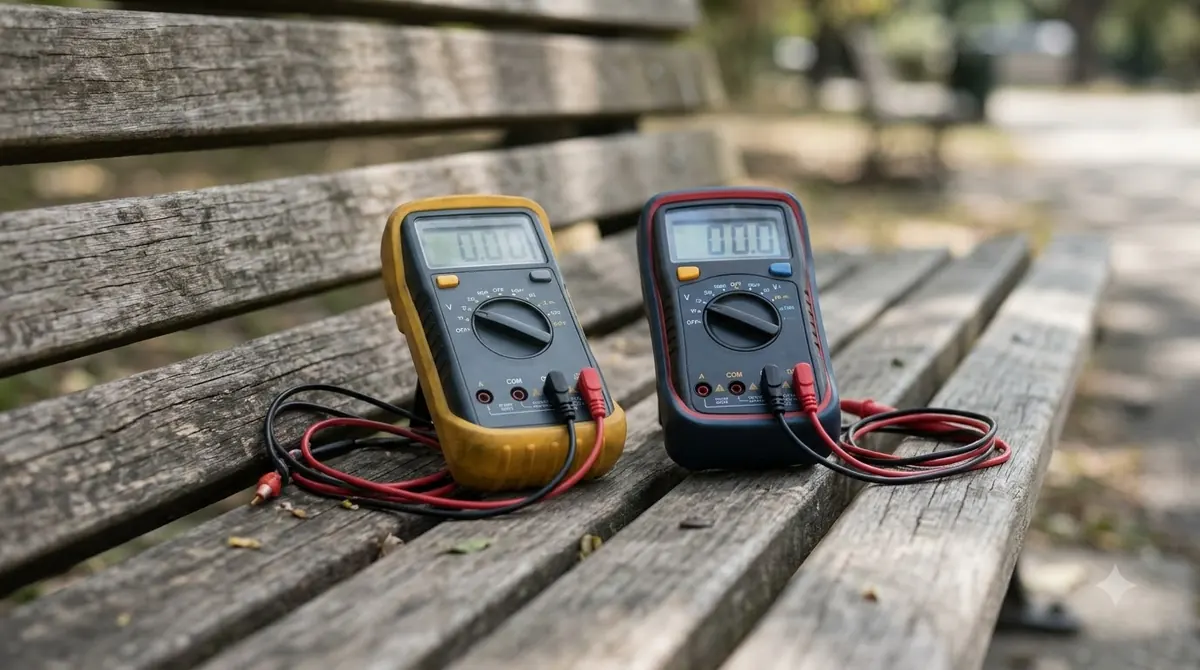
You can check charging voltage with a multimeter set to the 0 to 20 volt range. A resting reading near 12.5 volts is typical, and a running engine should read higher than 13 volts. Interstate Batteries’ test guide explains the steps, and the P0562 code guide covers the related low system voltage code.
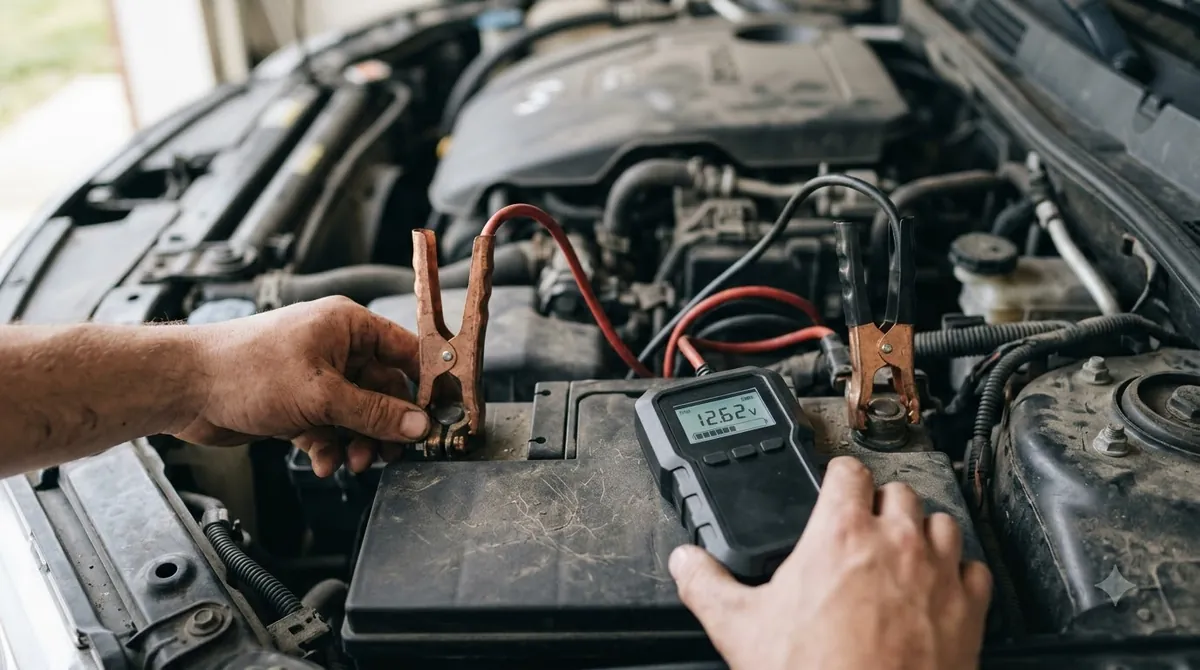
- Set the multimeter to the 0 to 20 volt range.
- Turn the headlights on for about two minutes to clear the surface charge, then switch them off.
- Connect the meter to the positive and negative battery terminals and read the resting voltage, which should be around 12.5 volts.
- Start the engine, keep the meter connected and read the voltage again.
Interstate notes that a good resting reading does not prove the battery is healthy, so the running test matters more for the alternator. Use the table below to read your results.
Keep the meter leads clear of belts, fans and hot exhaust parts while the engine runs, and never let the two probes touch. A battery light on check should be done with the hood open and only with the engine off when you connect or disconnect leads.
| Reading | What It Suggests |
|---|---|
| About 12.5 volts, engine off | A typical resting reading for a charged battery |
| Higher than 13 volts, engine running | The alternator is likely charging the battery |
| 13 volts or lower, engine running | A bad alternator or a bad battery is possible |
These readings are a screening test, not a full diagnosis. A shop can run a load test and a charging-system test before any part is replaced.
Repair Costs and When to See a Mechanic
Jalopnik’s article from September 29, 2025 puts alternator replacement between $750 and $850, and a new 12-volt battery from about $200. Those prices are dated and may not match your area, so treat them as rough estimates and get written quotes.
After an alternator replacement, ask the shop to test the 12-volt battery as well. A battery light on that comes on briefly at startup is normal, but one that stays on after the engine warms up needs service soon.
Before you approve a repair, ask the shop for the voltage readings behind its diagnosis. A battery light on often needs a charging-system test, and a printed result makes it easier to compare quotes from two shops. For a deeper cost breakdown, see our alternator repair cost guide.
Frequently Asked Questions
Can I keep driving with the battery light on?
Stop safely as soon as possible. Nissan’s manual says not to keep driving if the drive belt is loose, broken or missing, and Jalopnik gives an average of about 30 minutes to an hour with the light on, but that is one publisher’s estimate and the real time depends on the battery.
Does a battery light on always mean a dead battery?
No. A battery light on usually points to the charging system, and Jalopnik calls a bad alternator the most likely cause. A weak 12-volt battery can also trigger it, so a voltage test helps separate the two before you buy parts.
Should I turn the engine off after the light comes on?
Only when you are home or in a garage. Jalopnik warns that the battery may not have enough reserve to restart the engine once it is shut off. If the car feels like it is about to stall, pull over safely and call for help.
What voltage should I see with the engine running?
Interstate Batteries says the reading should be higher than 13 volts with the engine running. A reading of 13 volts or lower can point to a bad alternator or a bad battery, so have the system tested before you buy parts.
How much does a battery light on repair cost?
Jalopnik’s 2025 article gives $750 to $850 for alternator replacement and from about $200 for a new 12-volt battery. Prices change by region and vehicle, so ask a local shop for a written quote and a diagnosis first.
If the battery light on appears with dimming headlights, a burning smell or grinding under the hood, stop driving once it is safe and arrange a tow or an inspection. Those signs point to a charging fault that can leave you stranded.
