
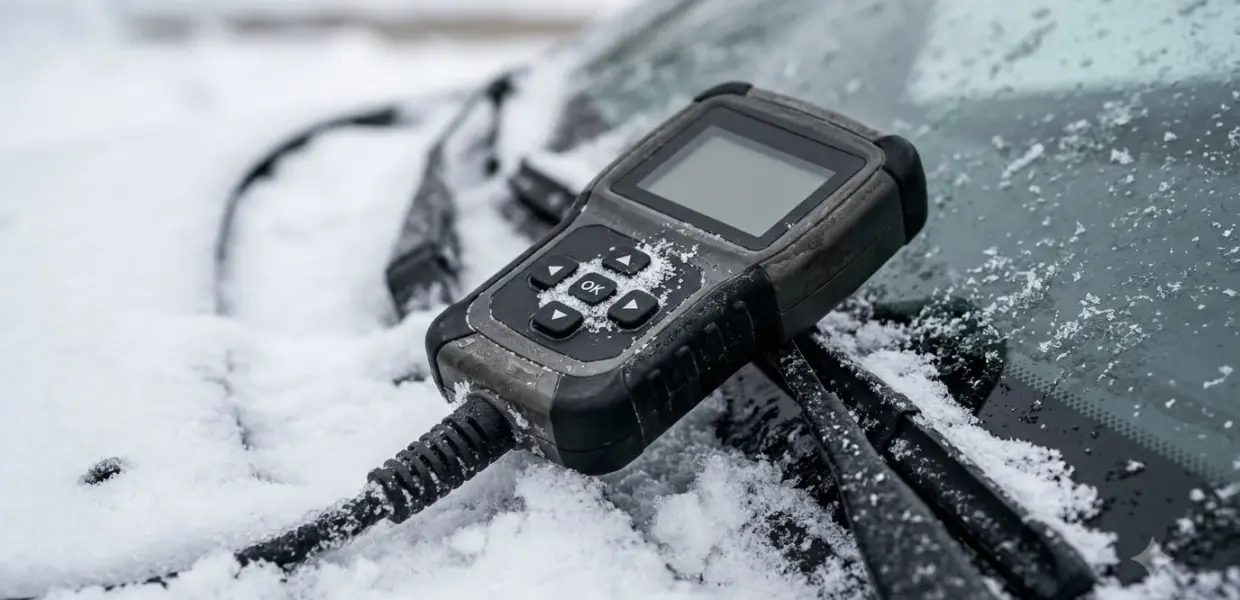

An ABS and traction control light on your dashboard means the anti-lock or traction system has detected a fault, or a sensor is sending bad data. Your regular brakes usually still work, but the extra safety functions may not.
Wheel speed sensors are the part most likely to fail behind an ABS and traction control light on, and they are easier to inspect than the control module. The stored codes show how urgent it is.
What the ABS and Traction Control Light On Means
The ABS light should glow for a few seconds at startup, then go out. A traction control light that flashes means the system is working, while one that stays lit points to a fault.
| Light | Normal behavior | Stays lit while driving |
|---|---|---|
| ABS | Glows for a few seconds at startup | Anti-lock function is switched off |
| Traction control | Flashes while the system limits wheel slip | Traction help is unavailable and the system needs a check |
When the ABS and traction control light on together, the shared wheel speed sensors are a logical first suspect, because both systems use the same sensors.
The Mazda6 owner’s manual describes the same pattern. If the traction light remains lit after startup, the traction, stability or brake assist system may be malfunctioning, so have it checked.
Cars.com notes that the traction light should come on for a couple of seconds when you start the vehicle, and that it can briefly illuminate while the system is actively working. A light that stays on means you are not getting help from the system to control traction, and the system needs to be checked.
The ABS light works the same way at startup. Cars.com says it is supposed to come on for a few seconds each time the vehicle starts. If it stays on or comes on while you drive, the antilock system has been deactivated, and that is the moment to plan a check.
Do the Brakes Still Work With the Light On?
On many vehicles the regular brakes still work when the ABS light is on, but anti-lock action is switched off. Braking feels the same, but the safety functions are gone.
According to the Mazda CX-30 owner’s manual, when the ABS control unit detects a malfunction, the brakes work as if the vehicle had no ABS. The same page says brake assist does not operate while the ABS light is lit, so you lose that help during a hard stop.
Cars.com describes the ABS light staying on as a sign that the control module has failed, a wheel sensor has failed, or another problem has developed. Before the control module is blamed, the shop should look for a loose or corroded connection or a component at one of the wheels.
Mazda advises consulting an authorized dealer as soon as possible. Until then, with the ABS and traction control light on, leave extra following distance and brake earlier than usual, because the anti-lock system will not help on a sudden stop.
Common Causes Behind the Light
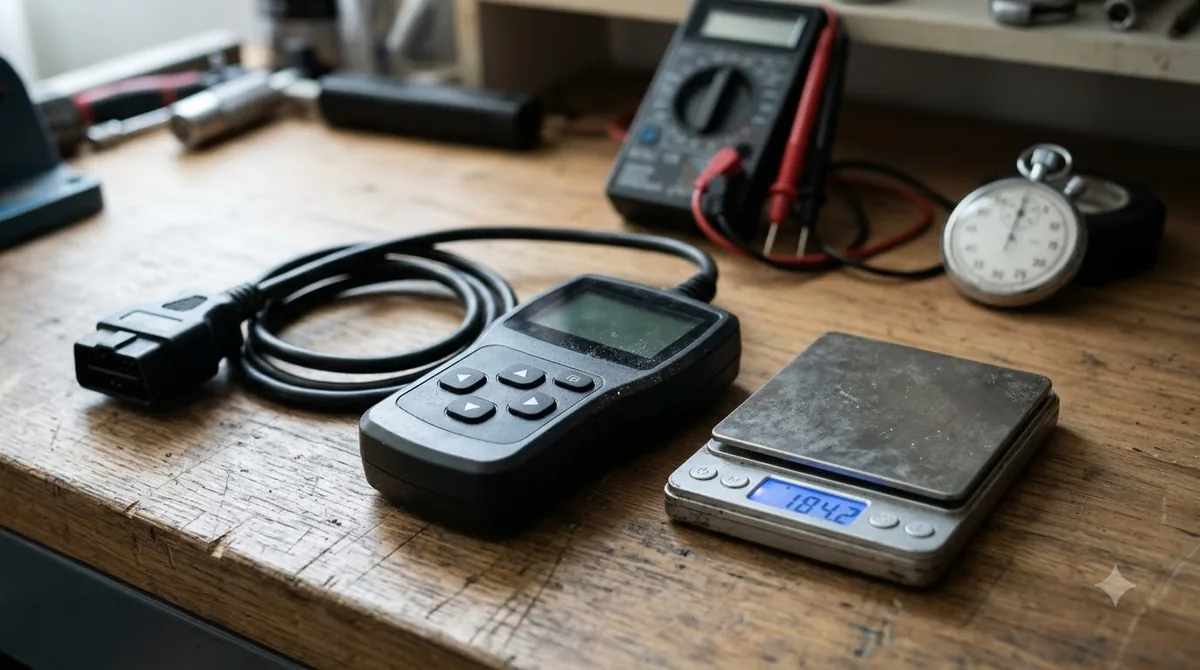
The usual causes behind an ABS and traction control light on are a failed wheel speed sensor, damaged wiring or connectors, road grime on a sensor, or a faulty control module. Sensors at each wheel are more likely to fail than the control module.
- Wheel speed sensor failure, since sensors sit at each wheel and face harsh conditions
- Damaged wiring or connectors at the wheel, which take a beating from road conditions
- Road grime or debris covering the sensor, which can make the light come on
- A faulty ABS control module, which is less likely than a sensor fault
- Low battery voltage, which can trigger the light after a jump start
Treat an ABS and traction control light on as one symptom, then trace it to the wheel and the module. A jump start can light the ABS warning because engine speed becomes uneven while the battery charges. Mazda says this points to a weak battery rather than an ABS fault, and recharging the battery is the fix. A wiring fault and a sensor fault can look the same on the dashboard, so the stored codes tell you more than the light does.
Trouble Codes That Point to a Wheel Sensor
On listed GM models, an ABS and traction control light on can set four codes, C0035 to C0050, which GM’s service bulletin ties to the wheel speed sensor at each corner.
| Code | Wheel position |
|---|---|
| C0035 | Left front |
| C0040 | Right front |
| C0045 | Left rear |
| C0050 | Right rear |
According to the GM wheel speed sensor bulletin, these codes cover listed 2008 to 2014 GM models that show specific symptom bytes. Treat this mapping as a guide for those cars, and check your own service information for other makes. The wheel position helps narrow an abs and traction control light on case quickly, and wheel speed sensor repair costs show what a sensor job can involve.
In that bulletin, GM says debris on the magnetic encoder ring can often be cleaned without replacing the bearing hub or sensor. Brush it carefully, because the bearing outer seal can be damaged. Do not use a magnetic tool, since an external magnet can damage the encoder ring.
Your scanner must reach the ABS module to show these codes, because they come from that module rather than the engine. Check its listed ABS support before you rely on it, or compare OBD2 scanners with ABS functions.
Is It Safe to Keep Driving?
With an ABS and traction control light on, repair is less urgent unless you drive on slippery surfaces, where the missing traction help matters most. Until the fault is fixed, ease off the gas pedal to limit wheel slip.
A car can drive normally with an abs and traction control light on, but the light still needs a diagnosis. Cars.com says traction control only comes into play on slippery surfaces, so treat poor-grip roads with extra caution.
If traction control stops you from leaving snow or a rutted spot, you can turn it off on most vehicles and rock the car back and forth. The system cannot help with wheel slip until you switch it back on, so treat the switch as a short-term step, not a repair.
This advice covers a lit ABS or traction light on its own. If another warning light also comes on, check your owner’s manual before you keep driving. Model-specific examples include the Nissan Altima ABS light and the Honda Accord ABS light guides. For an SUV example, see the Nissan Rogue traction control light guide.
How to Fix an ABS and Traction Control Light On
Start with the cheap checks: battery condition first, then the stored codes, then the sensor and wiring at the wheel the code names. That order fits most cases of an abs and traction control light on.
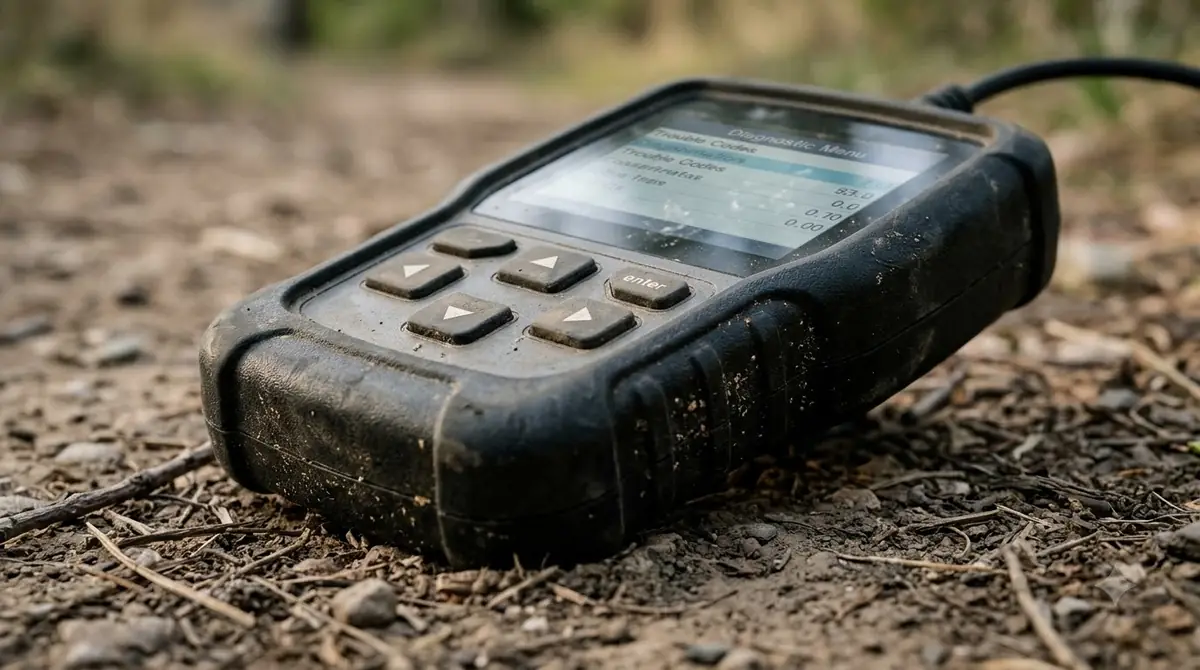
- Check the battery. If the light came on during a jump start, recharge the battery and see whether the light goes out at the next start. A battery test with a multimeter confirms its condition.
- Read the stored codes with a scan tool that reaches the ABS module. The code names the wheel and the type of fault.
- Inspect the sensor, its wiring and its connector at that wheel for damage, looseness or corrosion.
- Clean any debris from the encoder ring carefully, without a magnetic tool.
- Before replacing the control module, confirm that no connection or wheel component is loose or corroded.
Clear codes only after the repair, because clearing them does not fix the fault. For an abs and traction control light on, the fix is often at the wheel rather than in the module. If the light returns or stays lit after these checks, have a dealer or qualified shop inspect the system.
Frequently Asked Questions
Does an ABS and traction control light on mean my brakes have failed?
No, not usually. On many vehicles the regular brakes still work when the light is on, but anti-lock action is off. Still, have the system checked soon, because anti-lock and brake assist will not help during a hard stop. Repeated warnings also deserve a diagnosis, not a reset, because the stored code helps identify the faulty part.
Why does the traction control light flash?
A flashing light means the system is actively controlling wheel slip, such as when it is working on slippery ground. That is normal in that situation. If the light stays lit after startup, the system may be malfunctioning, so have it inspected by a qualified shop.
Can a weak battery turn on the ABS light?
Yes. Mazda’s CX-30 manual says a jump start can cause uneven engine speed that lights the ABS warning. In that case the battery is the cause rather than the ABS, so recharge it and check whether the light goes out.
Can I turn off traction control to get unstuck in snow?
On most vehicles, yes. Cars.com describes turning the system off and rocking the car back and forth to get out of snow or a rutted spot. Switch traction control back on once you are moving again, because the system helps with wheel slip on slippery roads. A light that stays on after you are moving again still needs a diagnosis.
Will a basic code reader show these ABS codes?
Check first. The codes behind an ABS and traction control light on come from the ABS module, so the scanner needs ABS support. Look for that support in its specifications before you buy it or rely on its results, because an engine-only reader will miss ABS faults.
Do not ignore an abs and traction control light on that stays lit, because the anti-lock or traction help may be gone when you need it most. Have the codes read soon, check the wheel the code names, and fix the faulty part before the next wet or icy drive.
