
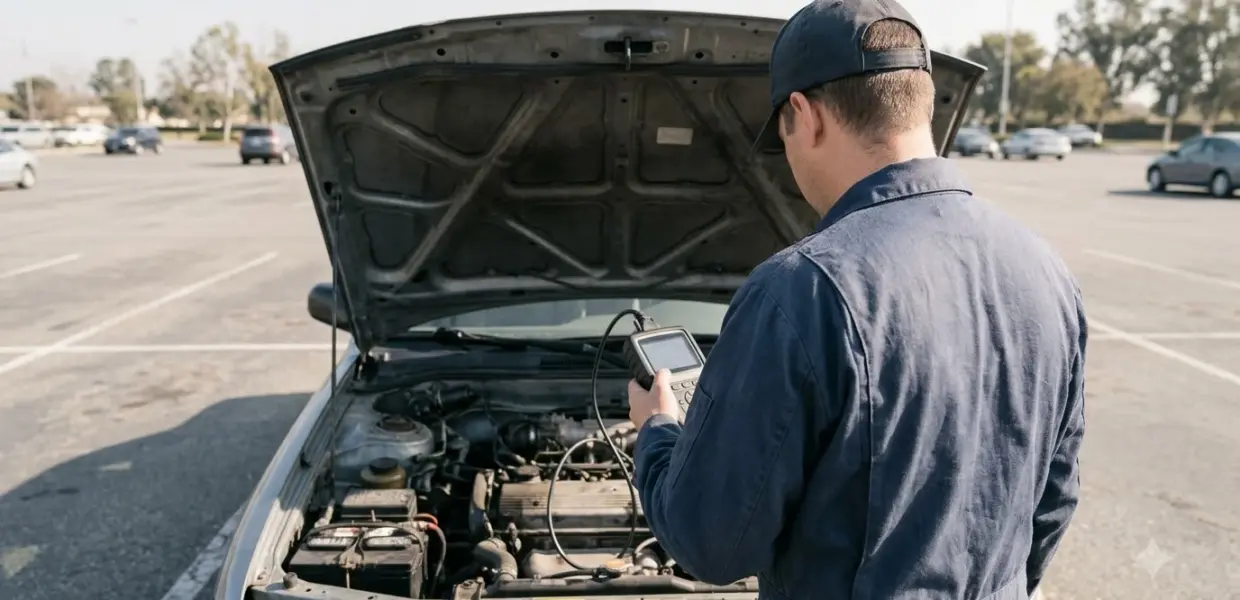

A P2181 code means the cooling system is not performing as expected. It is a generic OBD-II code, so the engine computer has detected a temperature pattern outside its normal range, not a specific broken part.
Most P2181 cases trace back to coolant level, the thermostat, or the coolant temperature sensor. Check those in order before you buy parts or clear the code.
What the P2181 Code Means
The P2181 code is a generic OBD-II code labeled Cooling System Performance. According to Kelley Blue Book’s P2181 page, it is sent when the engine operates above or below its recommended temperature range.
The engine control module watches the temperature readings and expects the engine to warm up and stay in range. When the readings fall outside that pattern, the module stores the code. The same idea applies whether the car runs too hot or too cold.
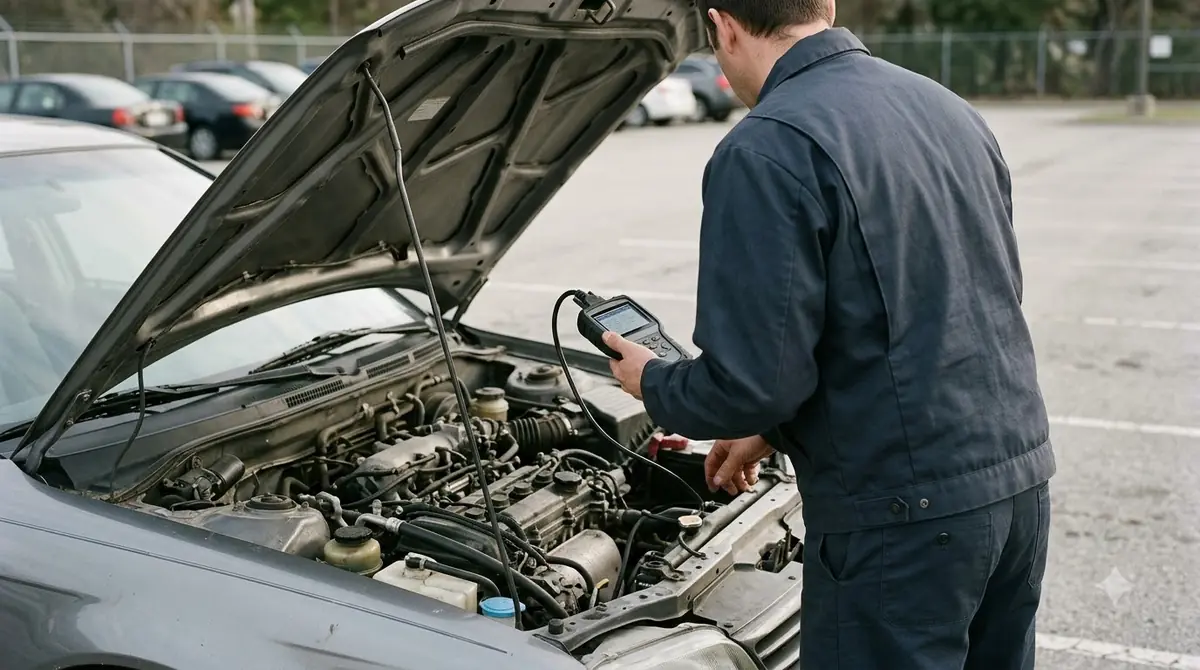
Because the code describes a system, it does not name one failed part. A P2181 code is a starting point for diagnosis, not a final answer about which component to replace.
Definitions also differ by make. In one 2006 Ram 1500 service manual text, the code is tied to the engine computer finding that the engine coolant temperature sensor failed its self-coherence test. Other manufacturers use their own warm-up tests, so the exact pass or fail rule depends on your vehicle.
Common Causes Behind the P2181 Code
The causes listed most often for P2181 are low coolant, a thermostat stuck open or closed, and a faulty coolant temperature sensor. Other causes include a weak water pump, a restricted radiator, a cooling fan fault, and trapped air in the system.
Mechanicbase’s P2181 overview lists these causes and notes that the code does not identify a failed part. Kelley Blue Book names low coolant and a stuck thermostat as the main ones, so both belong at the top of your check list.
| Cause | What goes wrong | First check |
|---|---|---|
| Low coolant or a leak | Temperature readings drift outside the expected range | Check the level after the engine cools, then look for leaks before refilling |
| Thermostat stuck open | Engine stays too cold and warms up slowly | Watch warm-up on the scan tool and compare with a thermometer |
| Thermostat stuck closed | Engine runs hotter than normal | Watch whether temperature climbs quickly at idle |
| Coolant temperature sensor | Reported temperature does not match the real engine | Compare scan data with a thermometer reading and check the wiring |
| Cooling fan or fan control | Overheating at idle or in traffic | Watch fan operation once the engine is warm |
| Water pump or radiator | Coolant does not circulate well | Look for leaks, weak circulation, and blockages |
Sources do not rank these causes the same way, so the check order matters more than any single ranking. A thermostat that stays open can also set the P0128 coolant temperature code, which is worth checking if both appear. Start with the cheap checks, such as coolant level and leaks, before you test parts that cost more to replace, such as a thermostat or a water pump. The thermostat replacement cost guide and the water pump replacement cost guide show how the bills compare.
Why the Sensor Can Be the Culprit
A faulty coolant temperature sensor can report a temperature that does not match the real engine. Kelley Blue Book notes that a faulty sensor could return an incorrect reading, so the gauge and the scan data may disagree. The coolant temperature sensor replacement cost guide covers that part.
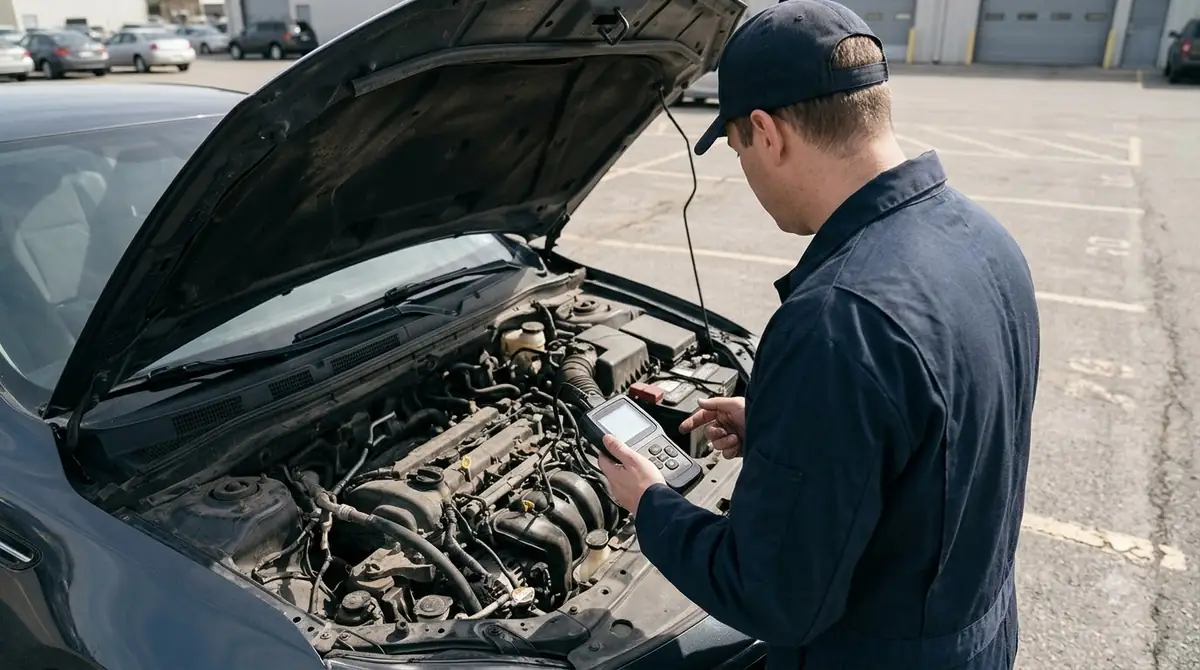
A sensor fault and a thermostat fault can look alike on the gauge. Before you replace either part, compare the scan tool’s coolant reading with a thermometer reading during warm-up, and check the sensor wiring for damage.
Symptoms You Can Confirm Yourself
A P2181 code usually shows up as a temperature gauge that reads too high or too low, a slow warm-up, or a cabin heater that blows cool air. On some vehicles the check engine light is the only sign.
- The temperature gauge reads higher or lower than normal.
- The engine overheats, especially at idle or in traffic.
- The engine warms up unusually slowly.
- The temperature warning light comes on.
- The cabin heater blows cool air.
- The check engine light is the only visible sign.
Cold running and overheating are different problems. Kelley Blue Book notes that an engine running too cold may have poor fuel economy and harder cabin heating, so a weak heater can be the first clue that a P2181 code is present.
Step-by-Step: How to Check a P2181 Code at Home
Start by reading all stored codes and saving the freeze-frame data before you clear anything. The saved data shows what the engine was doing when the P2181 code was set, which helps you test the right part first.
- Scan for all codes and save the freeze-frame data before clearing anything.
- If the engine is hot, let it cool fully. Then check the coolant level and look for leaks.
- After the vehicle sits overnight, compare the scan tool’s coolant temperature with the outside air temperature.
- Watch the temperature during warm-up. If the engine warms slowly, test the thermostat before you replace it.
- If the temperature rises at idle, check the cooling fan. Keep hands and tools clear of the fan blades.
- Test the sensor circuit and the cooling system using the manufacturer’s procedure.
- Repair the confirmed fault, refill and bleed the cooling system, then confirm the temperature stays stable and the code does not return.
Replacing parts based on the code alone skips the checks that show which fault is real. Each step above is meant to confirm one cause before you spend money on another part.
Thermostat and Sensor Checks With Vehicle Values
One 2006 Ram 1500 3.7L service manual text sets a thermostat test on a cold-soaked engine and a sensor test that asks for a reading below 1.0 volt. These limits apply to that model only, not to every P2181 code.
For the thermostat test, the manual says that if coolant reads above 82 C (180 F), you should let the engine cool to 65 C (150 F) before starting. During warm-up, compare the scan tool reading with a thermometer, and replace the thermostat if it does not open at the proper temperature.
For the sensor, the same manual describes jumpering the sensor signal to the sensor ground at the harness and reading the voltage. A reading below 1.0 volt points to replacing the sensor. The manual also covers wiring, shorts and the engine computer, so check those before you decide.
Do not apply these numbers to another vehicle. Thresholds, connector pins and test steps change by make, model and year, so use your own service information for the exact values.
When Is It Safe to Keep Driving?
If the temperature gauge climbs or the temperature warning light comes on, stop driving (see engine overheating for what to do next), because an engine that runs too hot can be permanently damaged. Kelley Blue Book advises treating the code as the most serious possibility and avoiding further driving until it is checked.
- Stop driving if the engine overheats or the warning light comes on.
- A cold-running engine is less urgent, but poor heat and fuel economy still need a check.
- Never open a hot cooling system. Let it cool first.
- Driving with low coolant can lead to overheating again, so refill only after you find the leak.
The safest choice is a shop visit with a scan tool that can read live temperature data. Home readings are useful for narrowing the cause, but they do not replace a full inspection of the cooling system.
Frequently Asked Questions
Is a P2181 code serious?
It can be. Kelley Blue Book advises treating a P2181 code as serious because an engine running too hot can be permanently damaged. A cold-running engine is less urgent, but the fault still needs a check before your next long trip.
Can I keep driving with a P2181 code?
Only if the gauge stays normal and the engine does not overheat. If the temperature climbs or the warning light comes on, stop driving and let the engine cool. If readings stay normal, plan a check soon rather than waiting for a breakdown.
Does a P2181 code always mean a bad thermostat?
No. A stuck thermostat is one common cause, but low coolant, a faulty coolant temperature sensor, a fan fault, or a weak water pump can set the same code. Test the thermostat and sensor before replacing either part, because the code alone does not name the failed part.
Will a P2181 code clear by itself?
A stored code can disappear, but that does not prove the cause is gone. Save the freeze-frame data before clearing anything, then confirm the fix by watching the temperature through a full warm-up and a normal drive.
Can a bad sensor cause a P2181 code?
Yes. Kelley Blue Book notes that a faulty coolant temperature sensor can return an incorrect reading. Compare the scan tool’s coolant temperature with a thermometer during warm-up, then confirm the wiring and circuit before you replace the sensor.
How much does a P2181 code repair cost?
This article does not give a verified price, because repair cost depends on the cause, your vehicle, and local labor rates. Ask for a written quote that names the failed part after the diagnosis is done, and compare it with the cost of a thermostat or sensor check.
If the P2181 code returns after a repair, stop repeating the same steps and get a full cooling system inspection. Clearing the code again only erases the stored data that a technician needs to find the real fault.
