
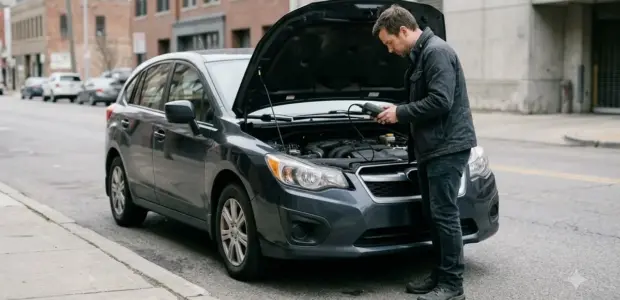

White smoke from exhaust is usually water vapor on a cold start, and it fades within minutes. Smoke that keeps coming after the engine warms up can mean coolant is burning inside the engine, which is a serious problem.
Three checks tell the two apart: how long the smoke lasts, whether it smells sweet, and whether coolant is dropping or the engine runs hot. The answer decides whether you can wait it out or need an inspection soon.
This article is general information, not a diagnosis. Only a mechanic who inspects your vehicle can confirm the cause and the repair.
What White Smoke From Exhaust Usually Means
White smoke from exhaust is usually harmless water vapor on a cold start, but smoke that lasts after warm-up can signal coolant burning in the engine.
The cloud you see is water vapor. On a cold start, moisture that has collected in the exhaust turns to steam, which looks like white smoke. Coolant is different. When it gets into the combustion chamber, it burns and leaves thick white smoke. The two look alike from behind a car, so timing, smell and coolant level tell them apart better than color alone.
A cloud of white smoke from exhaust is not automatically a sign of engine damage, but it is a symptom worth tracking.
Normal Condensation on a Cold Start
On a cold start, moisture in the exhaust turns to steam and looks like white smoke, and it clears after a few minutes as the engine warms up. This is the harmless case for white smoke from exhaust. The smoke appears on the first start and fades as the exhaust heats up. According to the AA, the smoke clears after a few minutes, so a light puff that disappears is the expected pattern.
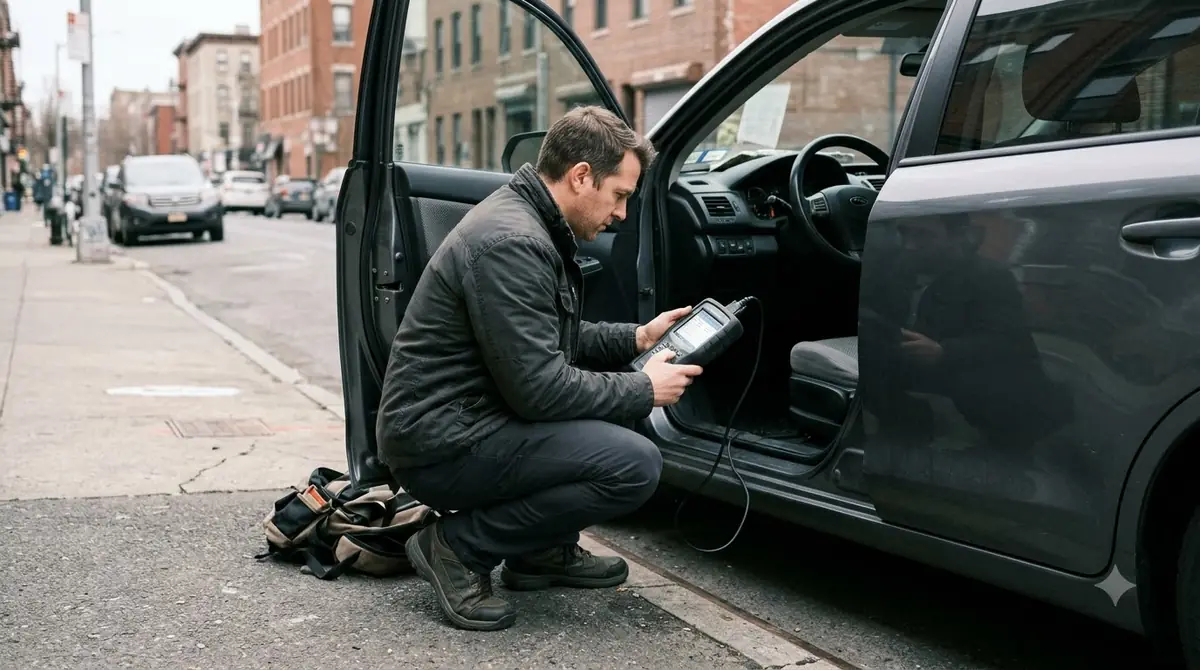
The scope has a limit. If white smoke from exhaust keeps going after the car has warmed up, or returns during a drive, condensation no longer explains it. Treat that as a symptom to check, not as steam.
How Coolant Burning Produces White Smoke
Coolant that leaks into the combustion chamber burns with fuel and air and leaves thick white smoke, most often from a blown head gasket or a cracked block or cylinder head. According to the AA, coolant that leaks into the engine is burned along with fuel and air, and that burning produces the smoke.
The AA lists these common causes of white exhaust smoke:
- A blown head gasket, which lets coolant enter the combustion chamber.
- A cracked engine block or cylinder head, which lets coolant leak through the crack.
- Overheating, which can fail the head gasket or damage the block or head.
- A damaged radiator, which can cause the overheating.
- Leaking or malfunctioning fuel injectors, listed as a less common cause.
Overheating links several of these causes, so temperature and coolant level matter alongside the smoke.
Signs That Separate Harmless Steam From a Coolant Leak
Three checks separate harmless steam from a coolant leak: how long the smoke lasts, whether it smells sweet, and whether coolant is dropping or the engine overheats. A thermostat that never warms up can set a related code, covered in coolant temperature code causes explained.
| Check | Usually steam | Possible coolant leak |
|---|---|---|
| Duration | Clears within a few minutes as the car warms up | Continues after warm-up or returns while driving |
| Smell | No distinct smell described | Sweet, syrupy smell |
| Coolant and temperature | Coolant level stable and normal temperature | Unexplained coolant loss, overheating or reduced performance |
Use the table as a checklist rather than a diagnosis. The Who Can Fix My Car advice page says a sweet smell with smoke that continues after warm-up suggests coolant is burning inside the engine. The overheating row matters most. According to the AA, overheating can fail the head gasket, so a temperature rise with white smoke from exhaust deserves a prompt inspection.
What Manufacturer Bulletins Show
Ford and GM service bulletins tie white exhaust smoke to coolant entering the cylinders, and Ford’s fix for some 1.5L EcoBoost cars is replacing the short block and head gasket. Ford service bulletin 19-2139 covers some 2014 to 2019 Fusion and 2017 to 2019 Escape models with that engine. Ford says low coolant, white exhaust smoke or a rough-running condition can appear, with or without a warning light, due to coolant intrusion into the cylinder.
The bulletin applies only to Fusion vehicles built on or before 21 February 2019 and Escape vehicles built on or before 6 April 2019. It lists these trouble codes: P0300, P0301 to P0304, P0316, P0217, P1285 and P1299. The correction is to replace the short block and head gasket.
General Motors bulletin PIP5498H describes a different pattern: code P050D with P0300 after a cold start, and white smoke or a coolant odor from the exhaust for an extended time at cold start. GM names coolant entering the cylinders as the cause, for a specific list of GM trucks, SUVs and performance cars from 2014 to 2019. Neither bulletin applies to other vehicles, so treat them as examples of how the cause shows up, not as a verdict on your car.
What to Do When White Smoke From Exhaust Continues
If white smoke from exhaust continues after warm-up, stop driving as soon as it is safe, because the AA does not recommend driving with it. The AA says continuous white smoke should be inspected by a qualified mechanic as soon as possible. Follow these steps: A compression test can also help confirm internal damage, as engine compression test instructions explains.
- Pull over once it is safe to do so, if the smoke continues after warm-up.
- Check the coolant level and note whether it has dropped since the last check.
- Note any overheating warning or sweet smell to describe to the mechanic.
- Book a diagnostic, and ask whether a service bulletin covers your model year and VIN.
Describe the exact pattern when you call, because the timing of the smoke helps a mechanic narrow the cause. Note how long the white smoke from exhaust lasted, when it started, and whether it came with a sweet smell. A bulletin only covers listed vehicles, so a dealer’s answer matters more than any general list.
How a Mechanic Confirms a Coolant Leak
A mechanic confirms a coolant leak with a cooling system pressure test and a dye check, because residual fuel on the piston can look like coolant. GM bulletin PIP5498H describes adding coolant dye to the system, running the engine through warm-up, pressurizing the cooling system once it is at operating temperature, and letting it cool overnight. The mechanic then inspects the suspect cylinder with a borescope for dye evidence. A shop confirms a coolant leak with a pressure test, and cooling system pressure test steps shows how it is done.
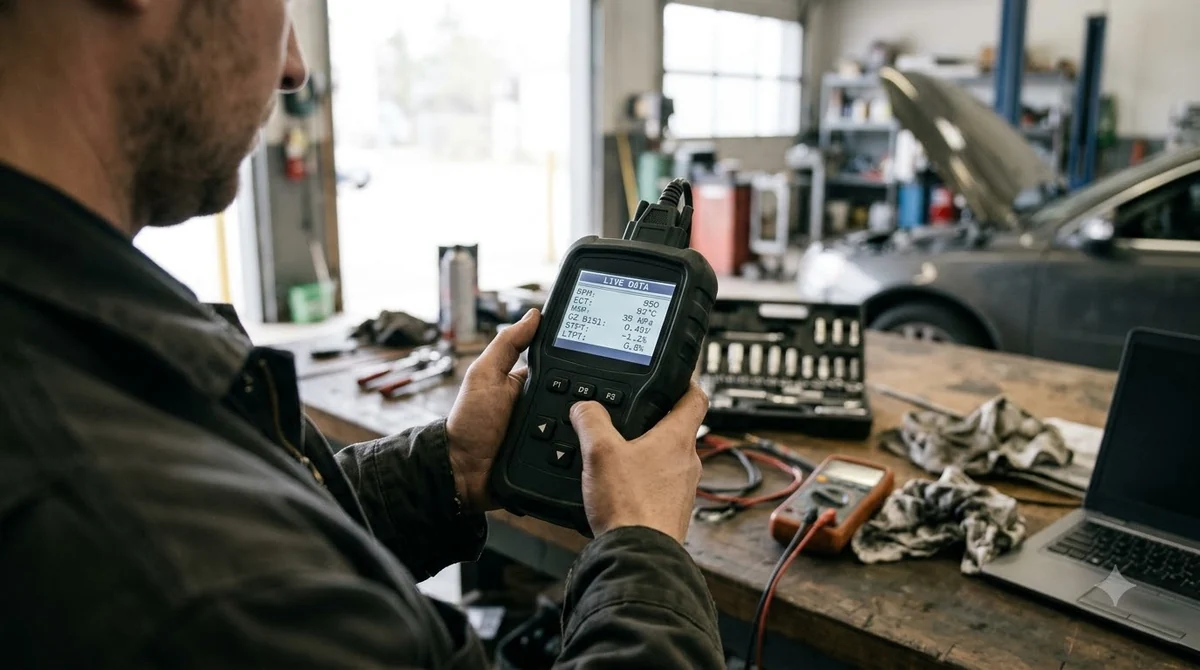
The same bulletin says a black light confirms whether the liquid is coolant, because fuel residue can look the same. It also says small surface pitting on the deck is normal and does not connect to coolant passages, so pitting alone is not a reason to replace an engine. Before any repair, white smoke from exhaust should be confirmed with tests rather than guesses.
Two related checks often come into this diagnosis. Our coolant pressure tester guide and compression tester guide each cover one of them in more detail.
Frequently Asked Questions
Is white smoke from exhaust always a problem?
No. White smoke from exhaust is often harmless condensation on a cold start that clears within a few minutes. Smoke that continues after warm-up should be checked by a mechanic. Timing is the simplest test, so note how long the white smoke from exhaust lasts each time you start the car.
How long should white smoke last after a cold start?
Condensation smoke usually clears after a few minutes as the car warms up. According to the AA, smoke that continues beyond that is a reason to have the car inspected, because persistent smoke suggests a more serious problem.
Does a sweet smell mean coolant is burning?
A sweet, syrupy smell with smoke that continues after warm-up suggests coolant is burning inside the engine. The Who Can Fix My Car advice page describes this pattern, so book a diagnostic soon.
Can low coolant cause white smoke?
Low coolant can point to a leak, a faulty water pump or a faulty radiator, according to the AA. Coolant that enters the combustion chamber can burn and produce white smoke.
Can I keep driving with white smoke from exhaust?
The AA does not recommend it. Continuous white smoke from the exhaust should be inspected by a qualified mechanic as soon as possible, so stop driving once it is safe to do so.
Can fuel injectors cause white smoke?
Yes. According to the AA, leaking or malfunctioning fuel injectors are a possible cause of white exhaust smoke. A mechanic can test the injectors to check whether they are the source.
If white smoke from exhaust keeps going after warm-up, treat it as a repair question and get the car inspected rather than waiting to see what happens. Ask the mechanic to check the cooling system and cylinders, and ask for the results in writing so you know which cause was confirmed before you approve any repair. A repeated episode of white smoke from exhaust deserves the same attention as one long episode.
