

Here is how to use a compression tester: warm the engine, remove every spark plug, and crank at least five strokes per cylinder while you read the gauge. Compare each cylinder’s peak reading with the others to find the weak spot.
A compression tester shows the peak pressure each cylinder builds. A low reading points to rings, valves or the head gasket, so compare cylinders and check your service manual for the exact spec.
Engine parts run hot, and the engine can start if the ignition is not disabled. Follow the safety steps below and your vehicle’s service manual before you begin.
What a Compression Test Tells You
A compression test measures the peak pressure each cylinder builds while the engine cranks, which shows how well its piston rings, valves and head gasket seal. The tool reads pressure at each cylinder at cranking speed, so the readings can be compared directly. Low compression is one cause of misfires, covered in misfire diagnosis steps.
Learning how to use a compression tester starts with knowing what it checks. The Innova manual says to perform a compression check as part of every tune-up, not only when the engine runs badly.
Once you know how to use a compression tester, record a baseline reading. A later reading taken after a repair shows whether the work changed the seal.
What You Need Before You Start
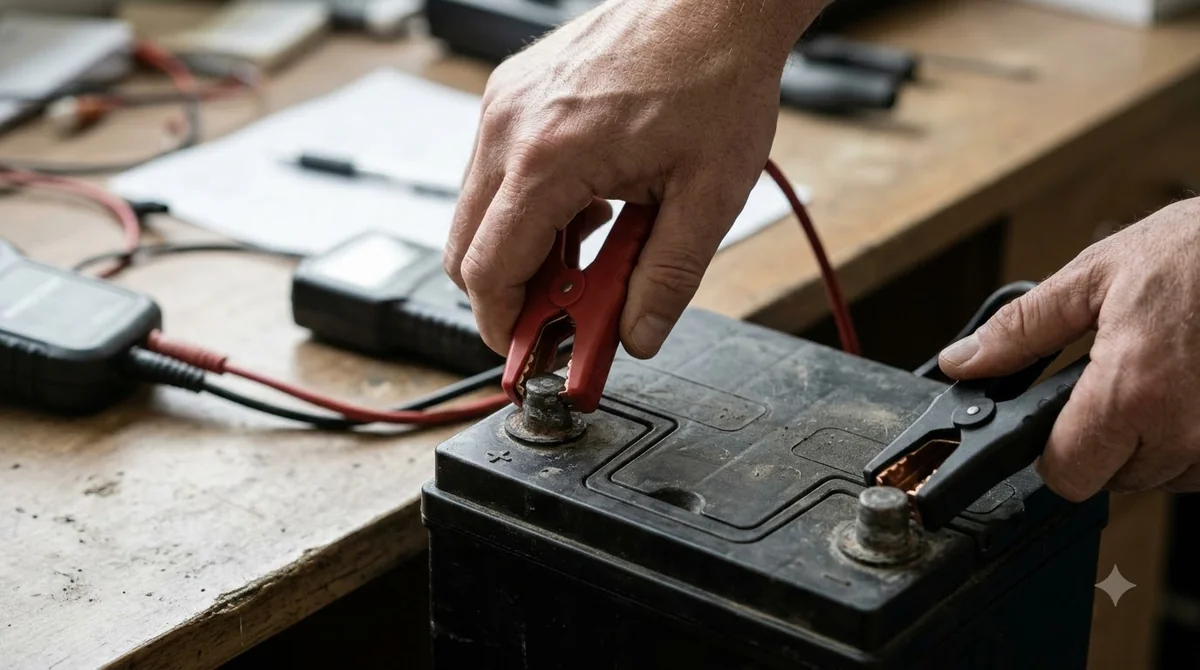
You need a compression gauge kit with the right spark plug adapter, a fully charged battery, a helper for the throttle and eye protection.
- A compression gauge with a hose and quick-connect coupling.
- Adapters for your spark plug holes. The Innova kit includes 14 mm, 12 mm and 10 mm adapters.
- A fully charged battery and a starter in good condition, so the engine cranks evenly.
- A helper to hold the accelerator open, if your setup needs one.
- Safety glasses for the whole test.
Get the adapter right before you learn how to use a compression tester on any engine. Use the 14 mm long-reach adapter only in long-reach plug holes, because in a short-reach hole it can hit the top of the piston.
Prepare the Engine Safely
Warm the engine to normal operating temperature, park in park or neutral, set the parking brake and block the drive wheels before you remove any plugs. These steps protect you and keep the readings accurate. Another engine check is in timing light instructions for engines.
- Warm the engine to normal operating temperature.
- Remove all spark plugs. On aluminum heads, wait about ten minutes first to avoid damaging the threads.
- Put an automatic in park or a manual in neutral, set the parking brake and block the drive wheels.
- Wear eye protection for the whole test.
Good preparation is the difference between a usable reading and a misleading one when you learn how to use a compression tester. The Innova manual says a fully charged battery and a good starter are needed for accurate readings.
Keep conditions the same each time you use a compression tester, because a cold engine and a warm engine will not give matching readings.
How to Use a Compression Tester, Step by Step
The test runs in seven steps: label and remove the plugs, hold the throttle open, disable the ignition, fit the tester, crank, record, then repeat on each cylinder. Work through the cylinders in the same order every time so the readings line up.
- Disconnect the spark plug wires by twisting and pulling the boot, not the wire. Number them so they go back in the same order.
- Remove all spark plugs and lay them out in cylinder order. The condition of a plug can point to the cylinder that is failing.
- Hold the throttle plate wide open. An assistant can hold the accelerator pedal down if needed.
- Disable the ignition so the engine cannot start. Use the method for your ignition type, such as grounding the coil wire, as your service manual describes.
- Screw the hose into the first spark plug hole by hand only, then snap it onto the gauge with the quick-connect coupling.
- Crank the engine for at least five compression strokes. Use the same number of strokes for every cylinder.
- Record the peak reading, press the release valve, then move the hose to the next cylinder and repeat.
Check that the quick-connect coupling clicks before each crank, so the hose stays locked to the gauge. A repeatable routine is the easiest way to master how to use a compression tester.
What Your Compression Readings Mean
A healthy cylinder builds pressure quickly and evenly on each stroke, and its peak should sit close to the other cylinders’ peaks. Compare the readings with each other first, not only against a number you remember. That comparison is the core of how to use a compression tester well.
The Innova manual’s worked example uses a highest reading of 140 psi and a lowest allowable reading of 105 psi, which is 75 percent of the highest. That is an example, not a universal spec, so use your engine’s service manual for the real number.
| What you see | What the manual says it points to |
|---|---|
| Low on the first stroke, builds on later strokes but never reaches normal | Worn or leaking piston rings |
| Low on the first stroke and does not rise on later strokes | Leaking or damaged valves |
| Reading above the manufacturer’s specification | Possible carbon build-up in the cylinder or on the piston |
| Two adjacent cylinders 20 psi or more lower than the others | A possibly defective cylinder head gasket |
The head gasket rule comes from the Innova compression tester manual, which lists the 20 psi drop between adjacent cylinders. Once you know how to use a compression tester, the peak comparison is the step that tells you where to look next.
The 20 psi rule applies to two adjacent cylinders. A single low cylinder points to rings or valves, so the pattern matters more than any one number, which is the core lesson of how to use a compression tester.
Wet Test: Telling Rings From Valves
A wet test adds about one tablespoon of medium-grade oil through a low cylinder’s spark plug hole and retests, which separates ring wear from valve leakage. Use it only after a cylinder reads low, and once you have run a full test to see how to use a compression tester on every cylinder. A head gasket leak can also be confirmed with cooling system pressure checks. White smoke is another sign of head gasket trouble, covered in white smoke from the tailpipe causes.
Write down the before and after readings with the cylinder number. A clear record is what makes the wet test useful when you learn how to use a compression tester.
Pour the oil through the spark plug hole, then retest that cylinder with the same cranking count you used before, following the same routine you used when you learned how to use a compression tester. If the reading rises, the piston rings are worn, broken or poorly seated. If it stays the same, the valves may be leaking or damaged.
Common Mistakes That Skew Readings
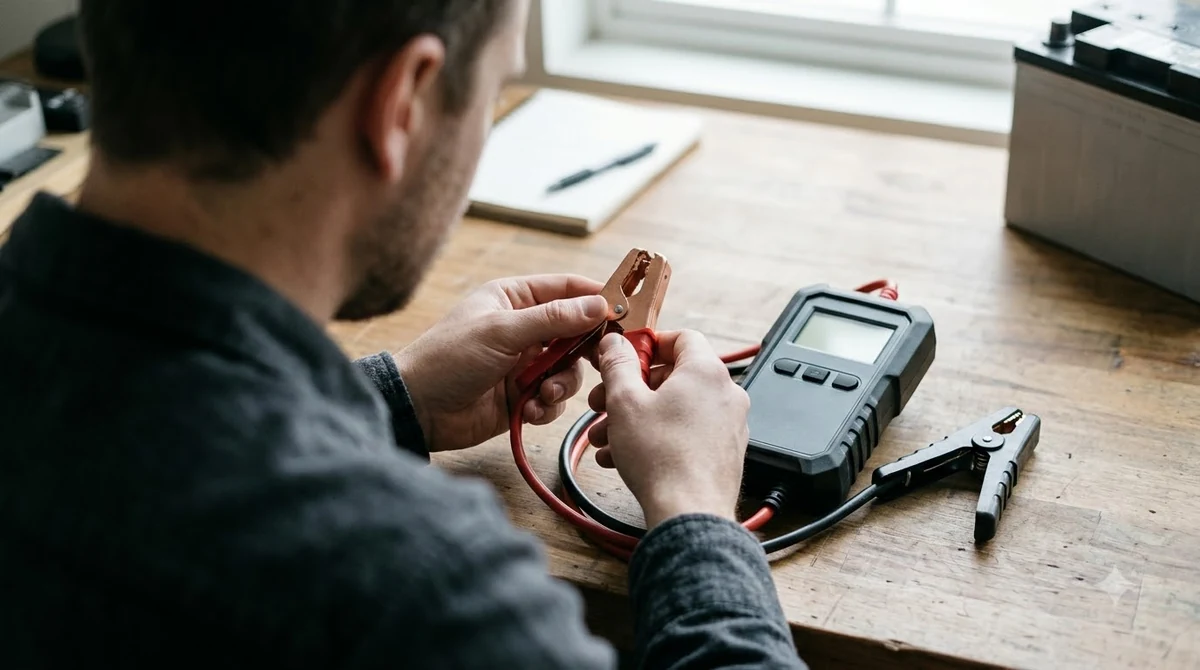
Most misleading readings come from a weak battery, a throttle plate left open after the test, or uneven cranking. Check those before you blame an engine part. Worn timing parts can cost compression, as timing chain replacement price explains.
- Leaving the throttle plate open after testing. Return it to the closed position before starting the vehicle, because failure to do so can cause serious engine damage.
- Cranking one cylinder for a different number of strokes than the others.
- Using the 14 mm long-reach adapter in a short-reach hole.
- Crossing the spark plug wires, which can cause rough running, misfires and possible catalytic converter damage.
- Using the tool on a diesel engine. The Innova tool is designed for spark-ignited gasoline engines that do not exceed 250 psi.
Label the wires before you remove them and check each adapter fit before you crank. These errors are easy to avoid once you know how to use a compression tester properly. Repeatable steps make the readings worth comparing when you learn how to use a compression tester.
Frequently Asked Questions
How many times should you crank the engine during a compression test?
Crank the engine for at least five compression strokes per cylinder, according to the Innova manual. Use the same count for every cylinder, because unequal cranking makes the peak readings unfair to compare. Keep a note of the count for each cylinder, so every reading can be checked later.
Should spark plugs be removed before a compression test?
Yes. The Innova manual says to remove all spark plugs before testing, and to wait about ten minutes on aluminum heads so the threads are not damaged. Lay the plugs out in cylinder order, because a plug from a weak cylinder can show what is happening inside it.
Is there one normal compression number for every engine?
No. The Innova manual uses a worked example with a highest reading of 140 psi and a lowest allowable reading of 105 psi, and that is only an example. Check the service manual for your engine’s specification, and compare each cylinder with the others as well.
Can I use this tester on a diesel engine?
The Innova manual says the tool is designed for spark-ignited gasoline engines that do not exceed 250 psi. It warns that any other use may cause personal injury, damage to the tool or damage to the vehicle. Check the tool’s rating before you use it on any other engine type.
What should you check first if every cylinder reads low?
Check the battery and starter first. The Innova manual says the battery must be fully charged and the starter in good condition for accurate readings. Weak cranking lowers the peak on every cylinder, so recharge the battery and retest before you check the rings or valves. Recharging first is part of how to use a compression tester correctly.
Knowing how to use a compression tester is only half the job, because one low cylinder does not name the failed part by itself. Use the wet test, the spark plug condition and your service manual’s spec together, and decide from the pattern before you buy parts. That combination turns a guess into a repair plan.