
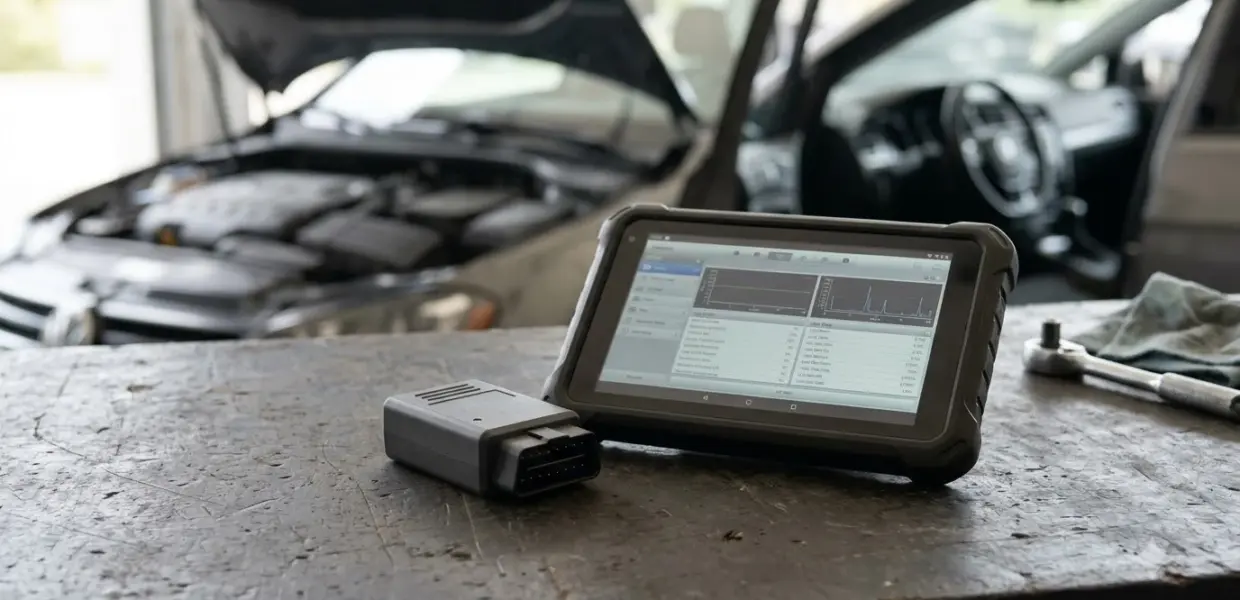

A P0106 code means your engine computer sees manifold absolute pressure outside its expected range. The code points to the MAP sensor circuit or, on some vehicles, the barometric pressure (BARO) sensor circuit. The fault can be the sensor itself, its wiring, or a vacuum leak.
Causes range from a cracked vacuum hose to a faulty sensor or a software calibration issue. Check the simple items first, then test the sensor before you replace any parts.
General guidance only: driving with a check engine light can affect your safety and engine health, so confirm the fault with a qualified technician for your vehicle.
What the P0106 Code Means
The P0106 code stands for a manifold absolute pressure or barometric pressure circuit range or performance problem. The exact meaning depends on the vehicle. On some cars the code points to the MAP sensor circuit, and on others it points to the BARO sensor circuit.
Either way, the engine computer is reporting a pressure reading it does not expect. Kelley Blue Book says the P0105 through P0109 codes all indicate an issue with the MAP sensor, so P0106 belongs to a family of related codes. Those neighbors are useful clues when you compare results.
Where the MAP Sensor Fits in the Engine
The MAP sensor measures absolute pressure inside the engine intake manifold, and the engine computer uses that reading to manage performance and fuel economy. The sensor sends a voltage signal that changes with manifold pressure. A bad reading can therefore affect how the engine runs.
With the key on and the engine off, the sensor reads close to atmospheric pressure, so its value should match the barometric reading. Some vehicles use a separate BARO sensor as that outside-air reference. On those cars, a P0106 code may point to the reference circuit rather than the MAP sensor.
What Causes a P0106 Code
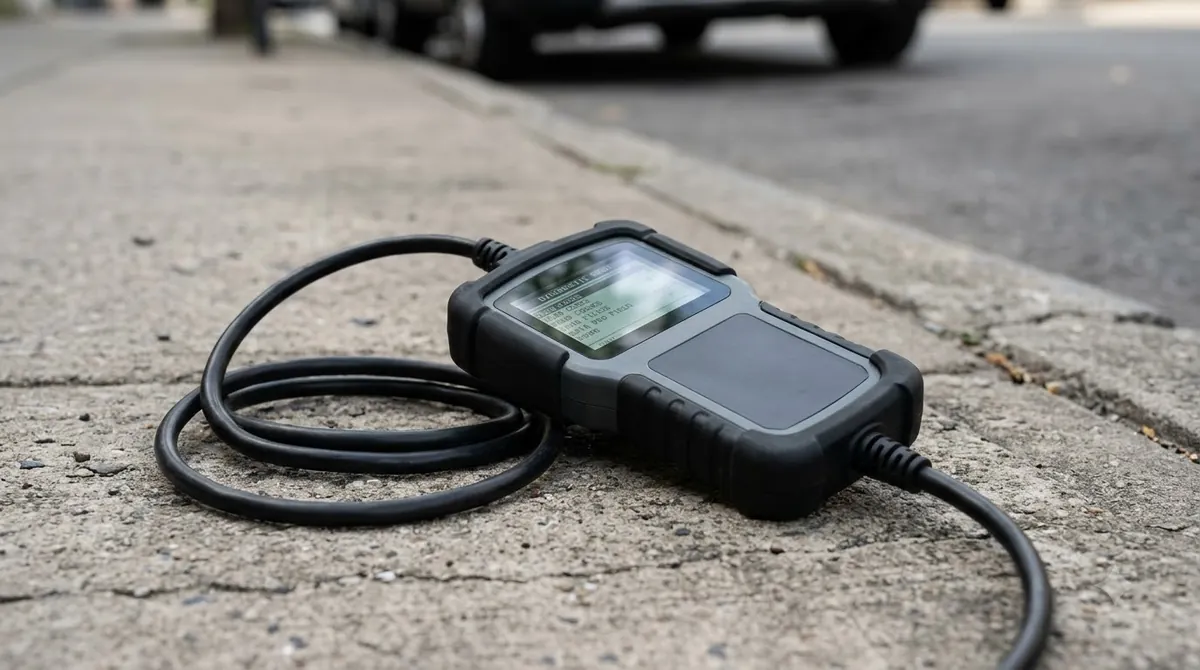
A P0106 code can come from a clogged or cracked vacuum line, a faulty MAP or BARO sensor, or wiring and connector problems. Samarins and Kelley Blue Book list overlapping causes, as the table shows.
| Cause | Samarins | Kelley Blue Book |
|---|---|---|
| Clogged or cracked vacuum line | Listed | Listed as intake vacuum leak |
| Faulty MAP or BARO sensor | Listed | Listed as defective MAP sensor |
| Wiring, connector or PCM power supply | Listed | Listed as shorted or outside wiring |
| Dirty throttle body | Listed | Not listed |
| EGR problems | Listed | Listed |
| Bad MAF sensor | Listed | Listed |
| PCV problems | Listed | Not listed |
| Clogged catalytic converter | Listed | Listed |
| PCM software needing update | Listed | Not listed |
Neither source ranks these causes for a P0106 code. A vacuum leak, which the P0171 code guide also covers, changes the pressure the sensor sees, so the computer reads a value that does not match engine load. Start with the cheapest checks, such as hoses and connectors, before you buy a sensor. Kelley Blue Book also names defective throttle position sensors and severe misfires as possible triggers.
Software and Calibration Causes
Some cases of this code come from the engine computer calibration rather than a broken part. A 2012 Volkswagen Golf service bulletin, VW TSB V011423, says the MAP monitoring strategy was too sensitive and could set the code with no actual fault.
The fix named in NHTSA TSB 10122617 was improved engine computer software, published on November 17, 2014. That bulletin is one example of how a P0106 code can have a software cause. Search for a bulletin that matches your own make, model and year before you assume a hardware fault.
Symptoms You May Notice With P0106
The check engine light is the main symptom of a P0106 code, often paired with rough idle, lack of power or an idle speed that runs too high or too low. Kelley Blue Book and Samarins describe the following signs.
- Check engine light, which Kelley Blue Book calls the main symptom
- Rough idle or rough running
- Idle speed that is too high or too low
- Lack of power or poor acceleration
- Excessive exhaust smoke and worse fuel economy
- Occasional backfiring
Samarins lists lack of power, rough idle and an idle speed that is too high or too low. Kelley Blue Book adds excessive exhaust smoke, poor acceleration and worse fuel economy. These symptoms overlap with many other faults, so a symptom alone cannot confirm the cause. Pair what you notice with the scan tool data and the checks below. Compare OBD2 scanners with live data if your reader cannot show MAP readings.
How to Check the MAP Sensor
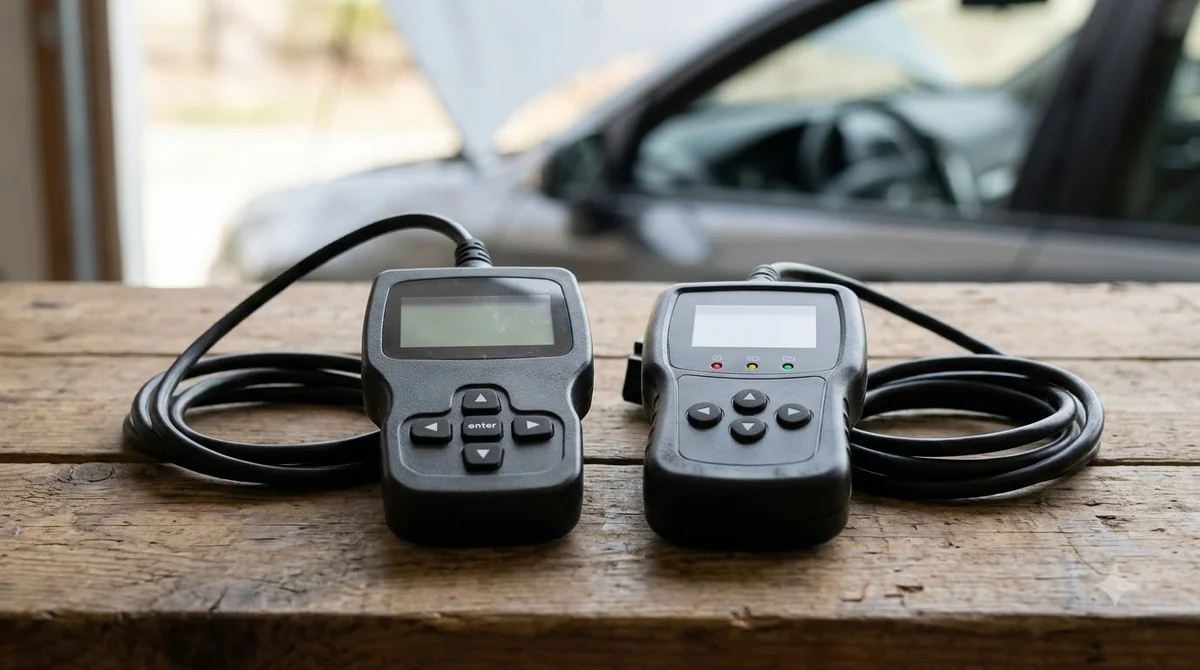
A basic MAP check for a P0106 code compares sensor voltage with the key on and at idle, where typical values are about 4 to 4.9 V key-on and 1 to 2 V at idle. Work through these steps in order.
- Check the +5 V reference at the sensor with the ignition on, then check the ground circuit.
- With the key on and the engine off, read the MAP voltage. It should be about 4 to 4.9 V.
- Start the engine and read the idle voltage. Expect about 1 to 2 V, or about 15 to 20 inHg on a scan tool.
- Compare the scan tool MAP reading with the BARO reading at key-on. The two should be close.
- Apply vacuum to the sensor. If the reading does not change, the sensor is bad or clogged.
| Condition | Typical MAP voltage |
|---|---|
| Key on, engine off | About 4 to 4.9 V |
| Engine at idle | About 1 to 2 V |
| Sharp acceleration | About 4 to 4.5 V |
| Full signal range | About 1 V to 4.9 V, depending on pressure |
Samarins publishes these values for a P0106 code in its P0106 diagnosis guide. Values vary by vehicle, so confirm them in your model’s service data before you condemn a sensor.
Is It Safe to Keep Driving With P0106?
Kelley Blue Book advises you to avoid driving when a P0106 code shows, even though the vehicle is usually still physically drivable. Kelley Blue Book’s P0106 guide says continued driving raises the risk of engine damage.
If a P0106 code comes with these symptoms, treat them as a reason to stop driving and call a shop:
- Rough running or a rough idle
- A clear lack of power or poor acceleration
- Excessive exhaust smoke
If the car drives normally and the light stays on, ask a shop whether it can be driven to the appointment or should be towed. Repair costs vary, and no repair cost range was confirmed for this code, so ask for a written quote.
Fixing the P0106 Code: What a Shop Checks First
A sensible order for a P0106 code is to inspect the vacuum line and sensor wiring, test the sensor signal, and check for software updates before replacing parts. You can follow the same order at home if you are comfortable with basic tools.
- Inspect the vacuum hoses for cracks, splits and loose fittings.
- Check the sensor connector and wiring for damage, corrosion and a solid ground.
- Test the MAP signal against the voltage values in the section above.
- Look for a software update or service bulletin that matches your vehicle.
Read every stored code before you start, since a related fault such as a MAF or EGR problem can set its own code. A scanner with live data helps here, and the P0101 code guide covers the MAF side. Clear the code only after the repair. The steps to reset a check engine light are simple, but clearing it without a fix only hides it and the code may return.
Frequently Asked Questions
Is P0106 the same as P0107 or P0108?
No. P0106 is a different code, but Kelley Blue Book says P0105 through P0109 all indicate an issue with the MAP sensor. Each code describes a different fault pattern, so read the exact code with a scan tool before you replace any part.
Can a software update fix P0106?
Sometimes. A 2012 Volkswagen Golf bulletin, VW TSB V011423, described a P0106 code that set with no real fault, and its fix was improved engine computer software. Look for a bulletin matching your own vehicle before you assume the sensor has failed.
What is the MAP sensor voltage at idle?
At idle, a typical MAP signal is about 1 to 2 volts, according to Samarins. The key-on, engine-off reading is higher, around 4 to 4.9 volts. Values vary by vehicle, so confirm both numbers in the service data for your model.
Does P0106 mean the MAP sensor is bad?
Not always. The code only means the signal sits outside the expected range, so a vacuum leak or wiring fault can cause it too. Test the sensor and its supply voltage before you replace the sensor, and check the vacuum hoses and connector at the same time.
Should I clear the code myself?
You can, but clearing the P0106 code without a repair only hides it, and it often returns. Fix the cause first, then clear the code and watch whether it comes back. If it returns, the fault is still present and needs a proper diagnosis.
Start with the vacuum hoses and sensor wiring, since those checks are inexpensive. Move to sensor testing only if those pass. If the P0106 code returns after a repair, the fault is not fixed. Keep long drives short while the light is on, and get a written diagnosis before you spend money on parts.
