
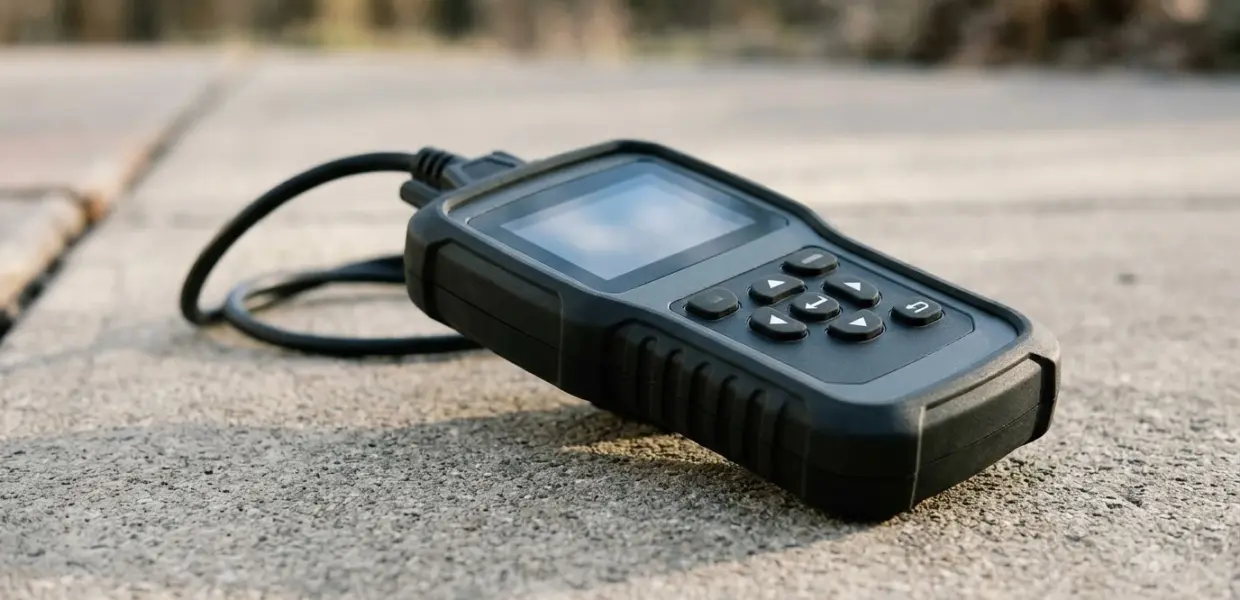

The P1000 Ford code means OBD-II monitor testing is incomplete, so the car’s computer has not finished its emissions self-checks yet. In most cases it is a status message, not a failed part.
Clearing trouble codes or disconnecting the battery usually brings a P1000 Ford reading on. A drive cycle is the usual way to finish the tests, and a lit Check Engine Light means you should read the stored codes first.
What the P1000 Ford Code Means
The P1000 code on a Ford is listed as OBD-II Monitor Testing Incomplete in the TaT code database. The database marks it as manufacturer-specific and says it does not necessarily indicate a hard fault. Think of it as an unfinished checklist rather than a broken part. The car simply needs to be driven through specific conditions so its self-tests can finish. A P1000 Ford reading on its own does not identify a faulty part. It shows which self-test is unfinished, so the first job with a P1000 Ford code is to let the car complete those tests.
Readiness Monitors: Continuous and Non-Continuous
A car can run up to 11 readiness monitors, and each one reports whether its self-test is complete. According to OBD Auto Doctor’s readiness monitor guide, these routines test the emission control systems. The misfire, fuel system and comprehensive component monitors form the continuous group, while the rest need specific driving conditions to finish. The DMV guide adds that each monitor is named after the system it tests, such as the catalytic converter or the oxygen sensor, so the name shows where the self-test is focused.
| Monitor type | Gasoline examples | What it needs |
|---|---|---|
| Continuous | Misfire, fuel system, comprehensive component | Runs all the time |
| Non-continuous | Catalyst, heated catalyst, EVAP, secondary air, O2 sensor, O2 sensor heater, EGR and/or VVT | A drive cycle with specific conditions |
The guide adds that for some monitors it is up to the manufacturer to decide whether they run continuously. The non-continuous tests need the right driving to run, so they are the ones a drive cycle helps most with a P1000 Ford reading.
What Causes P1000 and Whether It Is Serious
Clearing the trouble codes, clearing the Check Engine Light, or cutting power to the car resets the monitor status, so a reset is the usual way a P1000 Ford reading appears. A separate guide covers how to reset the check engine light. The OBD Auto Doctor guide says both clearing the codes and a power failure, such as disconnecting the battery, reset the monitors. It also advises against disconnecting the battery, because the monitors then have to test again.
- Clearing trouble codes with a scan tool
- Clearing the Check Engine Light
- Disconnecting the battery or any other power loss
Is the P1000 Ford code serious? Usually not. The TaT entry says the code does not necessarily indicate a hard fault. A lit Check Engine Light is different, since it points to a stored fault, so read the codes before you assume the P1000 Ford reading is the only issue. The service engine soon light meaning is a good place to start, and the Ford F150 check engine light guide shows how model-specific codes differ.
A pending problem can also exist before the light comes on. The New York DMV guide notes that a pending problem has not yet illuminated the check engine light. It advises getting a Check Engine Light problem repaired promptly rather than waiting for the annual inspection. A P1000 reading does not rule that out, so a scan of the stored codes is worth the few minutes it takes. If the scan also shows a specific fault, such as a P0036 oxygen sensor heater code, diagnose that code first.
How to Finish the Monitors With a Drive Cycle
The usual fix is a drive cycle, not a new part, and the generic cycle begins with a cold start. Ford’s exact cycle depends on the model year, model and engine, so check the owner’s manual first. If you cannot find it, the New York DMV readiness monitor guide says a generic cycle may help when the manufacturer’s cycle is unknown. The DMV guide points to the OBD section of the owner’s manual for the manufacturer’s cycle.
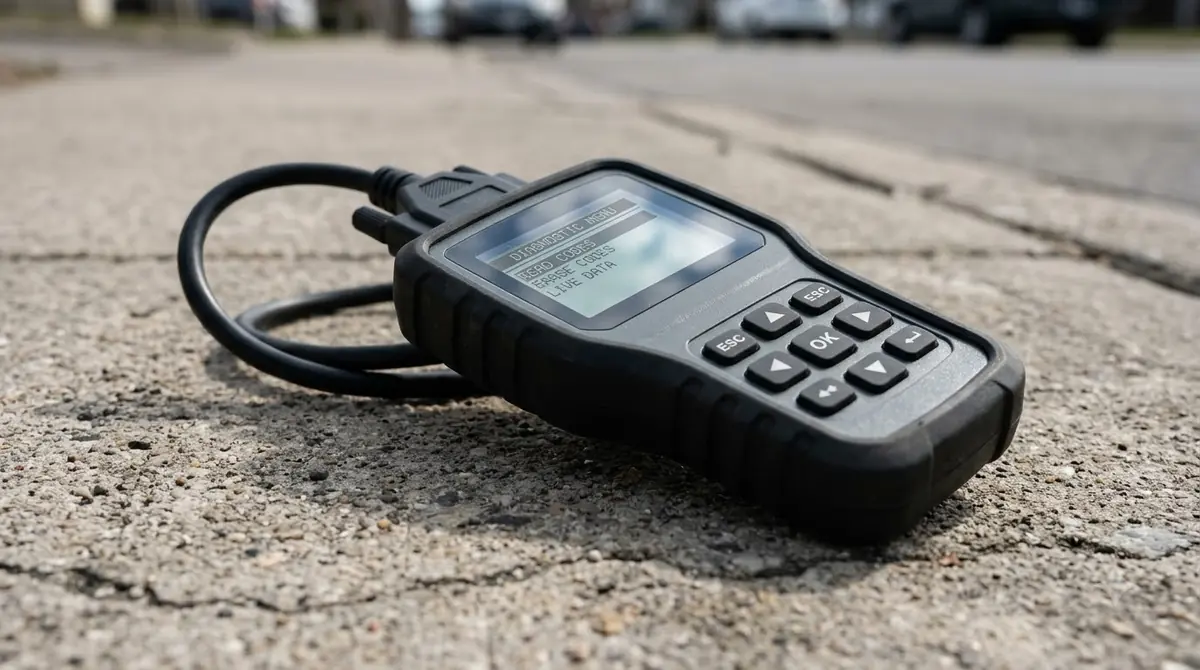
Leave the car parked overnight so the engine is cold, and do not turn the ignition on before you start it. OBD Auto Doctor says the coolant should be below 50 °C (122 °F) and within 11 degrees of the air temperature. The DMV guide describes a cold start as one made hours after the car was last driven. Then follow these steps for the generic P1000 Ford drive cycle:
- Idle in drive for about two and a half minutes, with the A/C and rear defroster on if your car has them.
- Turn off the A/C and defroster, accelerate to 55 mph (90 km/h), and hold that speed for three minutes.
- Slow to 20 mph (30 km/h) without braking.
- Accelerate to 55 to 60 mph (90 to 100 km/h) and hold for five minutes.
- Stop without braking.
OBD Auto Doctor warns that the generic cycle may not work for all cars and monitors, so treat it as a fallback. The DMV guide also says two drive cycles are needed in most cases, separated by a cool-down period when the car is not driven. Plan for two sessions, and check the monitor status with a scan tool after the second one. New users can read a guide on how to use an OBD2 scanner first.
The DMV guide also covers which cars the OBD II inspection applies to. It states that OBD II covers 1996 or newer gasoline-powered vehicles and most 1997 or newer diesel-powered vehicles. If your Ford is older than that, the readiness rules in this article may not match what your state checks, so confirm the requirements with your inspection program. A technician can also run the manufacturer-specific cycle for your vehicle if you prefer not to do it yourself.
Does a P1000 Ford Code Fail an Emissions Test?
A P1000 Ford reading can lead to a failed test, because EPA guidelines allow only one monitor to be not ready on a 2001 or newer vehicle. The New York State DMV guide cites this rule. If several monitors are still incomplete, the car may not pass even when no part has failed.
The inspector cannot change the results the computer reports, so the monitors have to finish on their own. The DMV guide also explains that fees follow the station’s rules. A technician may charge a fee you agree to. If you drive the car yourself after leaving the station, the station may charge an emission re-inspection fee up to the original inspection maximum. Rules differ by state, so check your state’s inspection program before the due date. New York also has a short extension for one case. If a not ready result is the only failure and the inspection has expired, the station issues a 10-day extension, and the car must be re-inspected within 10 days.
The New York DMV guide advises scheduling the inspection early instead of waiting until the end of the month, which leaves time to run the drive cycle before the due date.
Frequently Asked Questions
Is the P1000 Ford code serious?
Usually not. The TaT code database says P1000 does not necessarily indicate a hard fault. It means OBD-II monitor testing is incomplete, so the car has not finished its self-checks. Still, read any stored codes before you assume that is the only issue.
Will disconnecting the battery clear the P1000 Ford code?
Disconnecting the battery resets the monitor status, so the code can come back until the monitors finish. OBD Auto Doctor’s guide lists a power failure among the resets. A drive cycle is what completes the monitors, so plan one after any reset.
Do I need a mechanic for a P1000 Ford code?
Often not. The usual fix is a drive cycle, not a part. If the code stays after you complete a drive cycle, or other codes are stored, a shop can read the full code history and check the monitors.
How long does the P1000 Ford drive cycle take?
No single time fits every car. The New York DMV guide describes two drive cycles separated by a cool-down period. The owner’s manual often lists the cycle for your Ford model year and engine, so follow it when you have it.
Can I ignore a P1000 Ford code before an emissions test?
Not safely. EPA guidelines allow only one monitor to be not ready on a 2001 or newer vehicle to pass inspection. Several incomplete monitors can cause a failed test, so finish the drive cycle before the test date.
Can the inspector see a P1000 Ford reading?
Yes. An OBD II inspection checks the monitor status the computer reports, and the inspector cannot alter those results. That is why a car with several monitors still not ready can fail, even when the engine runs normally.
If an inspection is due soon, start the drive cycle early so the monitors have time to finish. The generic cycle may not work on every car, so confirm the Ford-specific steps in the owner’s manual before you rely on it.
