
The Honda Accord ABS light means the anti-lock braking system has detected a fault. Normal braking still works, but the anti-lock function is off. Check the cause before you clear the light.
Many causes are inexpensive, such as low brake fluid or a blown fuse. A steady Honda Accord ABS light still deserves a scan, because wheel speed sensors and the ABS module can also fail.
What the Honda Accord ABS Light Means
The ABS light is a warning for the anti-lock braking system, not a general engine fault. A brief glow when you turn the ignition on is a normal self-check.
Honda’s 2020 Accord Sedan dashboard guide says that if the Honda Accord ABS light comes on at any other time than the startup check, there is a problem with the ABS. A light that stays on constantly should be checked by a dealer. The guide covers the 2020 Accord Sedan, so check your own model year’s manual.
Honda says that with the indicator on, the vehicle still has normal braking ability but no anti-lock function. Wheels can lock more easily during a hard stop, so the driver has to brake with more care until the fault is fixed.
Common Causes of the Honda Accord ABS Light
The most common cause of the Honda Accord ABS light is a faulty wheel speed sensor, followed by low brake fluid, a blown fuse and low tire pressure. Each cause has a different first check, so start with the simple items before you buy parts.
| Cause | What to check first |
|---|---|
| Wheel speed sensor | The sensor and its wiring at each wheel, which a scan code can name |
| Low brake fluid | Fluid level in the reservoir, and any leak that caused the drop |
| Blown fuse | The ABS fuse, and the short that blew it before you fit a new one |
| Low tire pressure | Pressure in all four tires, set to the level on the door placard |
| Steering angle sensor | Check it when the ABS and traction control lights are both on |
| ABS control module | A scan that names the failed part, since module faults are usually the last check |
Low tire pressure is an easy one to overlook. One repair guide notes the ABS light is often accompanied by the tire pressure warning light, so inflate the tires first, as in the Honda Accord TPMS reset guide, and see whether the ABS light goes out after a short drive.
Is It Safe to Drive With the ABS Light On?
You can usually keep driving with the Honda Accord ABS light on, because normal braking still works. The trade-off is that you lose anti-lock protection, so the car needs more following distance and gentler braking on wet or slick roads.
The situation changes when the brake warning light is also on. Honda’s guide says the red brake indicator comes on when the brake fluid is low, when the parking brake is applied, or when the brake system has a problem, and to have the vehicle checked by a dealer when it comes on along with the ABS indicator. One repair guide says to pull over, check the brake fluid level, and avoid driving with the brake light on. Low fluid can point to a leak, and a leak can reduce braking power. The red brake warning guide explains that light in more detail.
Arrange a check soon in these cases, and see the ABS and traction control light guide if both lamps are on:
- The ABS light and the brake light come on together.
- The brake pedal feels soft or sinks further than usual.
- The ABS light and the traction control light are both on.
- The light stays on after the basic checks in this article.
How to Read the ABS Code With an OBD2 Scanner
Reading the Honda Accord ABS light code needs a scanner that can reach the ABS or VSA module, which shows the wheel-specific fault code. Read the code before you replace any part, because the code points to the circuit that needs testing. The OBD2 scanner guide shows the basic steps.
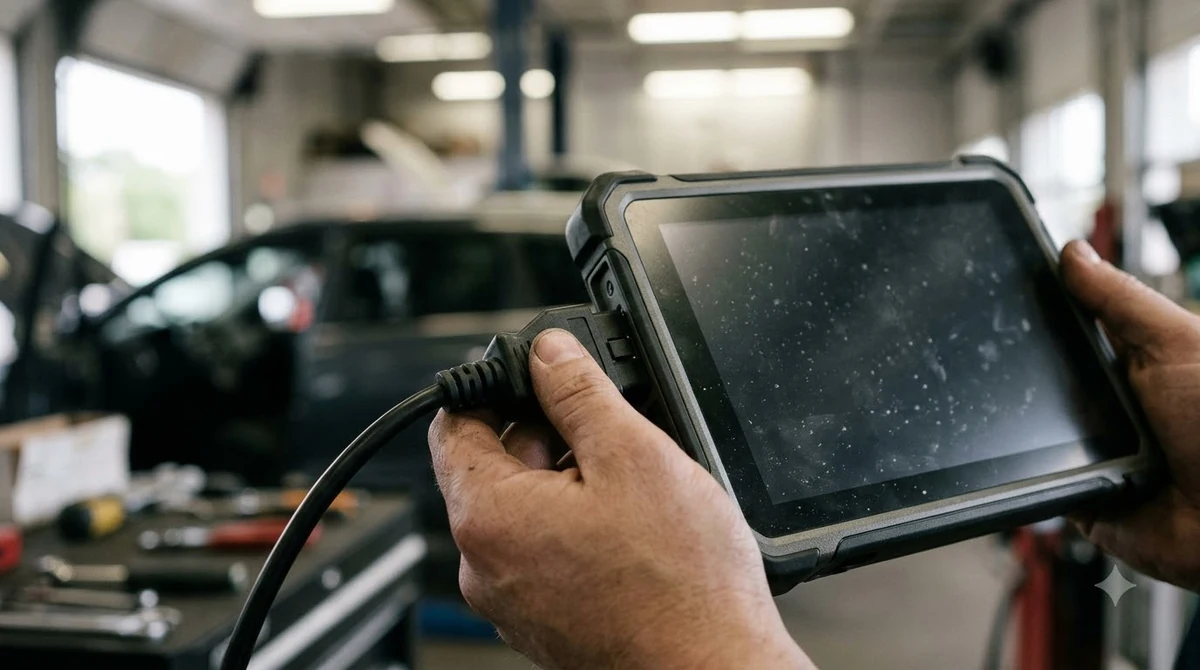
Follow these steps to read the code on most Honda Accord models:
- Check the brake fluid level and the tire pressure, then restart the car.
- Plug the scanner into the OBD2 port under the dashboard.
- Select the ABS or VSA module. Do not pick the airbag or SRS module by mistake.
- Write down the exact code, the wheel it names, and any other warning lights on the dashboard.
- Look up the code and test the named part before replacing it.
- Clear the code only after the repair, then restart the car and check whether the light returns.
Keep the written code with you after any Honda Accord ABS light scan. If you visit a shop, the code and the steps you already took save time and avoid repeat testing.
Wheel Speed Sensor and Other Repairs
For the Honda Accord ABS light, a wheel speed sensor is often the affordable fix. One Honda ABS repair guide puts the part at about $30 and the job at about 30 minutes, as of 2026-11-06. Prices vary by region and by parts brand.
Inspect the sensor and its wiring before you buy a new one, because the code names the wheel but not always the failed part.
The ABS control module costs more and is harder to replace. The same guide says a new unit may need programming or bleeding with a scan tool. Ask the shop whether they can do that work.
The steering angle sensor is a separate check. The guide advises looking at it when the ABS and traction control lights are both on.
Why the ABS Light Comes Back After a Reset
Clearing the Honda Accord ABS light code without repairing the fault usually fails, because the light returns once the system sees the same problem again. Resetting is useful after a repair, to confirm that the fault has gone.
Some owners report that the light comes back with no clear cause. These are user reports, not a confirmed pattern, so treat them as a reason to check wiring and connectors more carefully.
A blown fuse is another reason the Honda Accord ABS light can return. One guide notes that a blown fuse can disconnect the whole ABS from the battery, and that a new fuse will blow again if the short is still there.
When to Take Your Accord to a Shop
Take the car to a shop when the Honda Accord ABS light stays on after the basic checks, or when the code points to the ABS module or to wiring you cannot test safely. A shop with a scan tool that reaches the ABS module can read the code faster than a general code reader.
Bring these details with the car:
- The exact code and the wheel or system it names.
- When the light came on, and whether it came on with the brake or traction light.
- Any recent repairs, battery work or tire changes.
- Whether the light went out after a restart or a short drive.
Frequently Asked Questions
Does the Honda Accord ABS light reset on its own?
Sometimes it does, but only after the underlying fault clears. The light can go out after a restart, but if it returns, the fault is still present and needs a scan, not just a wait.
Can low tire pressure turn on the ABS light?
Yes, low pressure in one or more tires can trigger the warning, and the tire pressure light often comes on at the same time. Inflate all four tires to the placard pressure, then drive a short distance. If the Honda Accord ABS light stays on, continue with the scan steps in this article.
Is a blown fuse a common reason for the ABS light?
A blown fuse can cut power to the anti-lock system, so it is a valid check. Replace the fuse only after you find the short that blew it. Otherwise the new fuse will likely blow again, and the light will return with it.
Do I need a special scanner for the ABS code?
A basic reader may only show engine codes. To read the ABS code, you need a scanner that can select the ABS or VSA module. Many handheld units offer this, and some shops will read it for you, so compare the price of a scan with the price of replacing parts.
Can I drive a long distance with the ABS light on?
Normal braking still works, so short trips are possible. Long distances, mountain roads and wet weather demand more caution, because there is no anti-lock help in a hard stop. Schedule the repair soon, and stop immediately if the brake warning light also comes on.
Start with the cheap checks for the Honda Accord ABS light, then scan the ABS module before you buy parts. Writing down the code and the symptoms first makes the shop visit shorter and helps prevent paying twice for the same fault.