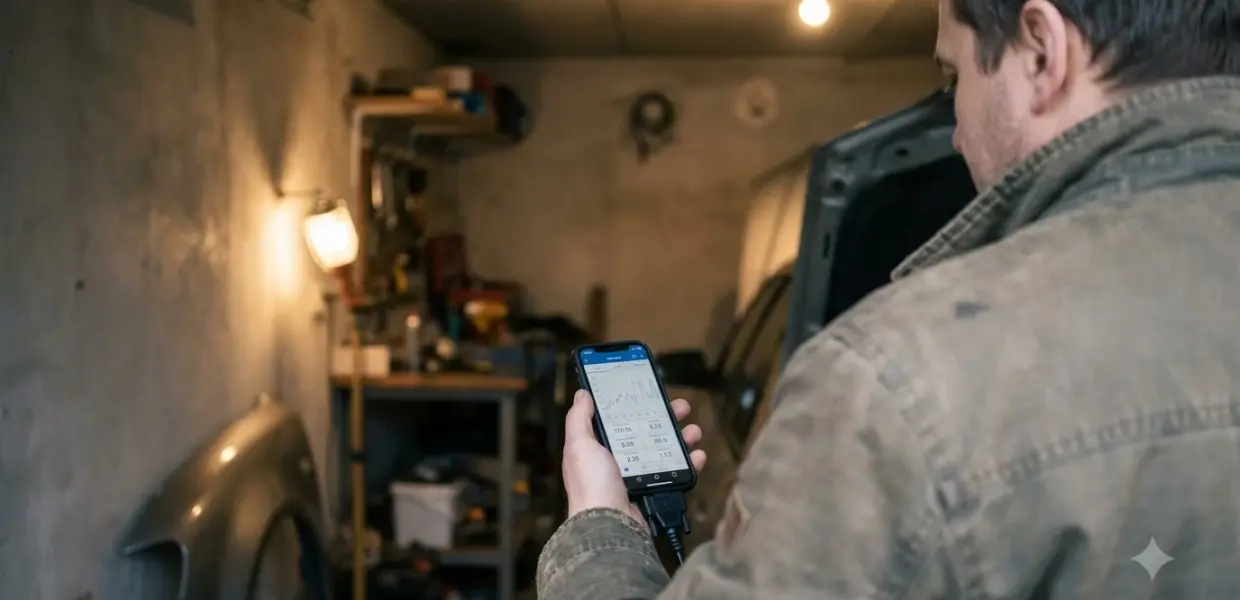

A Hyundai Tucson check engine light means a detected fault in the engine, emissions system or transmission. The lamp is the malfunction indicator lamp (MIL), and it is a signal to get the car checked before deciding how urgent the problem is.
Whether the Hyundai Tucson check engine light is steady or flashing matters most. As of November 6, 2026, this guide covers each state, the common causes, and the Hyundai bulletins that list transmission codes for 2022 and later Tucson models.
This article is general information about vehicle warning lights. For your specific car, confirm the fault code and any repair with a qualified technician or an authorized Hyundai dealer.
What the Hyundai Tucson Check Engine Light Means
The check engine light is the malfunction indicator lamp, and it turns on when the car detects a fault in the emissions system, engine or transmission. The Hyundai Tucson check engine light is the same warning that appears on most OBD-II vehicles, so the lamp itself does not name the repair.
The U.S. Environmental Protection Agency describes the lamp as a way to inform the driver that service is needed. Its On-Board Diagnostics fact sheet says the light is intended to inform the driver of the need for service, not of the need to stop the vehicle. The lamp may be labeled Check Engine, Service Engine Soon, or show an engine symbol. That fact sheet dates from May 1997, so treat it as general OBD guidance rather than Tucson-specific advice.
A Hyundai Tucson check engine light can come from a small cause, such as a loose fuel cap, or from a fault that needs a stored code and a proper scan. Because the same lamp covers both cases, the code saved in the computer is the detail that tells you which repair applies.
Steady vs Flashing: What to Do First
A steady light means the Tucson needs service soon, but it does not require stopping right away. A flashing light signals a rather severe engine misfire, so reduce speed and get service promptly.
| Light state | What it means | What to do |
|---|---|---|
| Steady | A fault has been detected and stored. The EPA says it does not mean the vehicle must be stopped. | Check the gas cap, then book a scan within a few days. |
| Flashing | A rather severe engine misfire, according to the EPA. | Reduce speed and get service as soon as possible. |
A misfire happens when a cylinder does not fire properly (see P0303 cylinder 3 misfire code explained for one cylinder-specific example), and the EPA warns that a severe misfire over even a short period can seriously damage emission control components, especially the catalytic converter, according to the EPA’s On-Board Diagnostics fact sheet. The converter is usually the costliest emission part to replace, so a flashing Hyundai Tucson check engine light should not be treated as a routine check.

Common Causes of a Hyundai Tucson Check Engine Light
A loose or faulty fuel cap is one of the simplest causes of a Hyundai Tucson check engine light, while misfires and transmission faults need a code read to confirm. Start with the cheapest check and move to a scan only if the light stays on.
- A loose or faulty gas cap, which can set the light after refueling
- An engine misfire, the condition behind a flashing light
- Transmission solenoid faults listed in Hyundai bulletin 23-AT-003H-1
- Input or output speed sensor faults listed in Hyundai bulletin 22-AT-006H
- Other emission or sensor faults that show a specific code on a scanner
Check the Gas Cap First
Tighten the cap until it clicks and inspect the rubber seal for cracks. The EPA says a light caused by a loose cap should go out within a few days after the cap is tightened. That result does not mean the OBD system is faulty, because the system correctly detected a vapor leak.
If the light stays on or returns after the cap is fixed, the cap is not the only cause. A Hyundai Tucson check engine light that persists needs the stored code read before any part is replaced, because the same warning can point to very different repairs.
Transmission Codes in Hyundai Service Bulletins
Two Hyundai bulletins cover transmission codes on 2022 and later Tucson (NX4/NX4a) models with a 2.5-liter engine, and each applies only when the Check Engine light is on with a listed code. The newer bulletin supersedes an earlier one to add the Tucson to its list. Owners do not need to memorize the bulletins, but the codes help a shop confirm the repair. If the transmission slips or shifts harshly, this guide to transmission slipping symptoms and causes explains what to watch for.
The August 2023 bulletin, NHTSA copy of bulletin 23-AT-003H-1, applies to 8-speed vehicles when the Check Engine light is on with one of the listed codes. It asks the technician to check the wiring between the control module and the transmission before replacing the related solenoid and valve body internal harness.
Speed Sensor Codes Under Bulletin 22-AT-006H
The May 2022 bulletin lists P071700 for the input or turbine speed sensor A circuit, and P072100 and P072200 for the output speed sensor A circuit. The procedure asks the technician to record and delete the code with Hyundai’s GDS scan tool, then check whether the sensor output changes while driving.
When the wiring is sound, the bulletin replaces the speed sensor and the valve body harness. This is a dealer procedure rather than a roadside fix, because the bulletin has the technician remove the battery and battery tray. It also tells the technician to record the radio presets before the work starts.
Solenoid Codes Under Bulletin 23-AT-003H-1
The bulletin lists nine transmission codes for torque converter clutch, pressure control and shift solenoids. They include P074100, P074300, P074800, P075300, P075800, P076300, P076800, P077300 and P270900.
For each listed code, the bulletin says to replace the related solenoid and the valve body internal harness, and its parts list also includes an oil pan gasket. The practical step for an owner is to ask the shop whether the scan shows any of these codes (one of them is explained in P0741 torque converter clutch code meaning), and to request the bulletin number in writing before approving the work.
Is It Safe to Drive With the Check Engine Light On?
A steady Hyundai Tucson check engine light with normal driving usually allows a careful trip to a shop, but a flashing light calls for reducing speed and getting service promptly. The EPA guidance on a steady light is about urgency, not an instruction to stop on the road.
The bulletins show that these transmission codes are tied to specific parts. A dealer scan is the fastest way to confirm which repair applies to a Hyundai Tucson check engine light, and it avoids replacing a part that the stored code does not point to.
If the engine runs rough, loses power, or the transmission hesitates, stop in a safe place and arrange a tow instead of a long drive. Those symptoms go beyond a warning lamp, and continued driving can add to the damage that the EPA associates with a severe misfire.
How to Read the Code on a Hyundai Tucson Check Engine Light
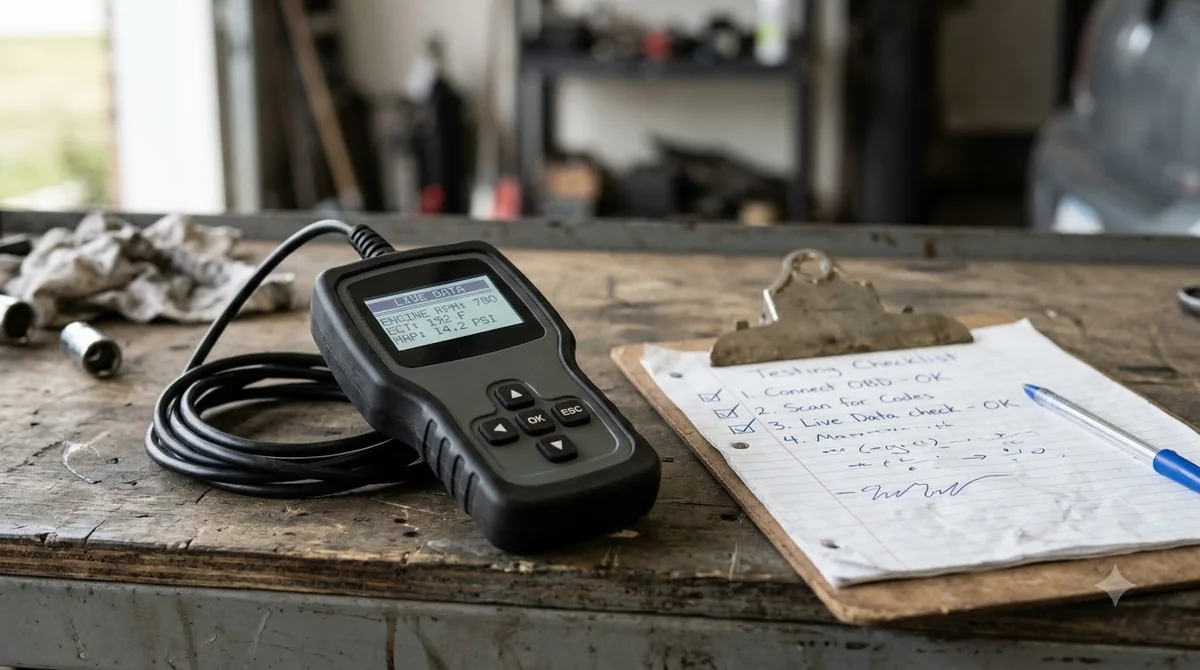
Read the diagnostic trouble code with an OBD-II scanner first, then match it to the cause before replacing any part. A basic scanner shows the code behind a Hyundai Tucson check engine light, stored by the engine computer, while the dealer’s GDS scan goes further for transmission codes in the Hyundai bulletins.
- Check that the gas cap is tight and the seal is intact, then drive for a few days to see whether the light goes out.
- Read the code with an OBD-II scanner, write it down, and ask the shop for the same code.
- Match the code to a likely cause, such as a misfire code or one of the transmission codes in the bulletins.
- For a transmission code, have a dealer with GDS record and delete it, and check the wiring before any part is replaced.
- Clear the code only after the repair. If the light comes back, the fault is still present, and covering the lamp with tape does not fix it.
Related Guides
Frequently Asked Questions
Will a Hyundai Tucson check engine light go off by itself?
It can, if the cause is temporary. EPA guidance says a light caused by a loose gas cap should go out within a few days after the cap is tightened. A fault that remains in the system keeps the light on until the cause is repaired.
Can I reset a Hyundai Tucson check engine light myself?
A basic scanner can clear the code, but clearing it without a repair only hides the warning. If the light returns, the cause is still present and needs a diagnosis from a technician or an authorized Hyundai dealer.
Is a Hyundai Tucson check engine light a recall?
Not in the bulletins covered here. The transmission items are technical service bulletins, which give dealers repair procedures, not safety recalls. You can check your VIN on NHTSA’s recall lookup to see whether an open recall applies to your vehicle.
Does a flashing Hyundai Tucson check engine light mean the same thing on every Tucson?
The EPA meaning of a flashing light, a rather severe misfire, comes from its general OBD-II guidance. The specific codes and bulletins depend on the model year, so the stored code and your model’s bulletins decide which repair applies.
Can a dealer read the code on a 2022 or later Tucson?
Yes. A dealer uses Hyundai’s GDS tool to record and delete the transmission codes listed in the bulletins. Ask for the code and the bulletin number on the invoice so you can compare the work with the bulletin.
Is a Hyundai Tucson check engine light the same as a Sonata or Elantra light?
The lamp has the same general meaning across models, but codes and bulletins differ. Each model and model year can have its own bulletins, so a code that matches a Sonata guide may not apply to a Tucson. For another Hyundai model, see the Hyundai Elantra check engine light causes.
Who should choose what: a steady light with normal driving can usually wait for a scan within days, while a flashing light or loss of power needs a stop and a service call. Bring the stored code to the shop so the repair matches the fault, so the repair targets the actual fault instead of a guess.