
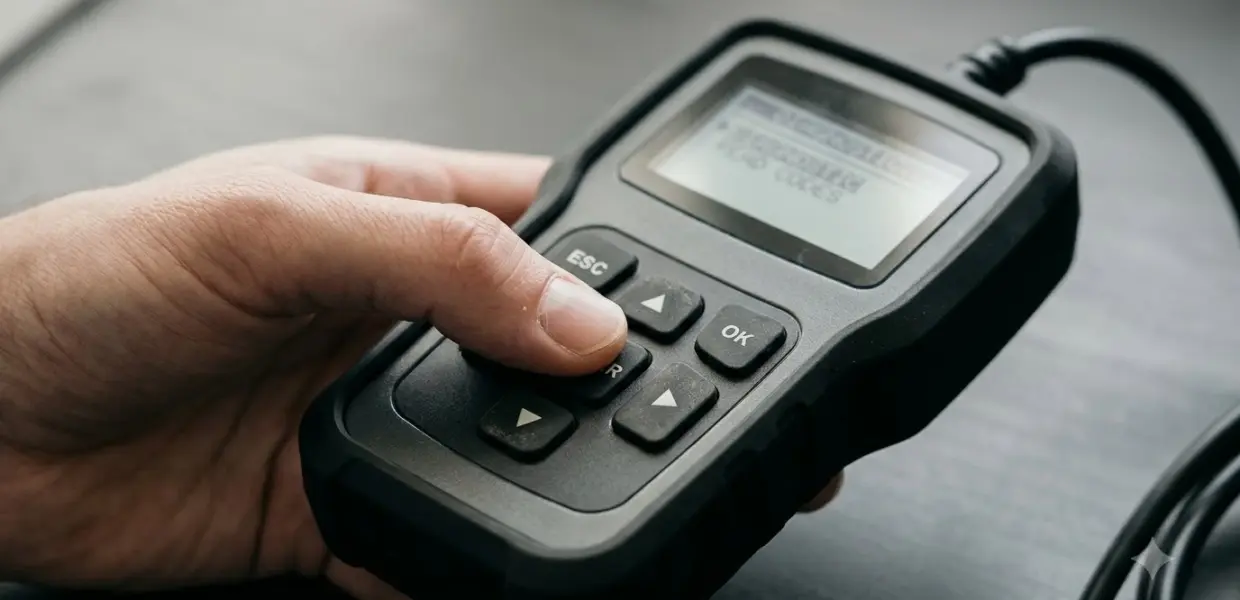

P0304 means the engine has detected a misfire in cylinder 4. A misfire means fuel in that cylinder is not igniting the way it should, and the check engine light usually comes on. Because the code names one cylinder, diagnosis can start in a specific place.
Causes range from a worn spark plug to a leaking fuel injector or a vacuum leak, so the fix depends on testing. Start with simple checks on cylinder 4 before you buy expensive parts.
What P0304 Means on Your Car
P0304 is the code for a misfire detected in cylinder 4, which means that cylinder is not firing normally. The engine control system sets the code and turns on the check engine light.
The engine control system watches each cylinder for misfires. On one Saab V6 diesel workshop page, the fault is set when there is no combustion in cylinder 4 for 3 seconds. That threshold comes from a single model, so the limits on your car may differ.

Federal rules require on-board diagnostics to monitor for misfires, and the check engine light, also called the malfunction indicator lamp, is the warning tied to that system. The EPA on-board diagnostic fact sheet explains how misfire monitoring fits into those rules.
Common Causes of a P0304 Code
A P0304 code can come from an ignition part, a fuel delivery part, an air leak or internal engine wear. Testing cylinder 4 usually narrows the cause before you replace anything.
- Spark plug or spark plug wire
- Ignition coil
- Fuel injector
- Vacuum leak
- Camshaft or crankshaft position sensor
- Fuel pressure regulator or fuel pump
- Head gasket or internal engine damage
The ignition coil is one part to check on a P0304 code. The NGK ignition coil guide says heat can break down the coil’s internal insulation, moisture that freezes can crack the coil, and cold can loosen connections. Each of these problems raises resistance and weakens the spark. Replacement prices depend heavily on access, which ignition coil cost factors breaks down.
The fuel side is worth testing too. The Saab workshop page for one model lists leaking high-pressure fuel lines, faulty injectors and clogged or leaking pipes between the injectors and the fuel rail as causes.
Internal damage is another possibility. The same Saab page lists damaged pistons, cylinders or valves, and fixdapp’s cause list includes a leaking head gasket. Those repairs are larger, so rule out the cheaper ignition and fuel causes first.
Symptoms You May Notice
A P0304 code usually comes with a lit check engine light and a rough or hesitant engine. Other symptoms depend on the cause, so note what you see and hear when the code appears.
- Check engine light on
- Rough idling
- Lower fuel economy
- Hesitation or stalling
- Hard starting
- Black, white or gray exhaust smoke, backfiring or overheating, depending on the cause
The ignition coil guide links coil problems to misfires, power loss, rough idling and rough starts. Those symptoms appear because the coil delivers a weaker spark to the plug, which is why a weak coil shows up as a rough engine.
Is It Safe to Drive With P0304?
No. One repair guide says driving with a P0304 code is unsafe because the engine can hesitate or stall.
A stall at the wrong moment, such as when merging into traffic, is the real hazard. The same guide warns that driving with the code risks significant engine damage and damage to the catalytic converter.
A misfire left unresolved can turn a simple spark plug job into a larger repair. If the engine runs very rough or stalls, avoid long trips until the cause is checked.
How to Diagnose P0304 Step by Step
To diagnose P0304, check the cylinder 4 spark plug, wire and coil first, then test fuel pressure, vacuum and the injector. Work on a cool engine, parked on a level surface, with the parking brake set and the engine off.
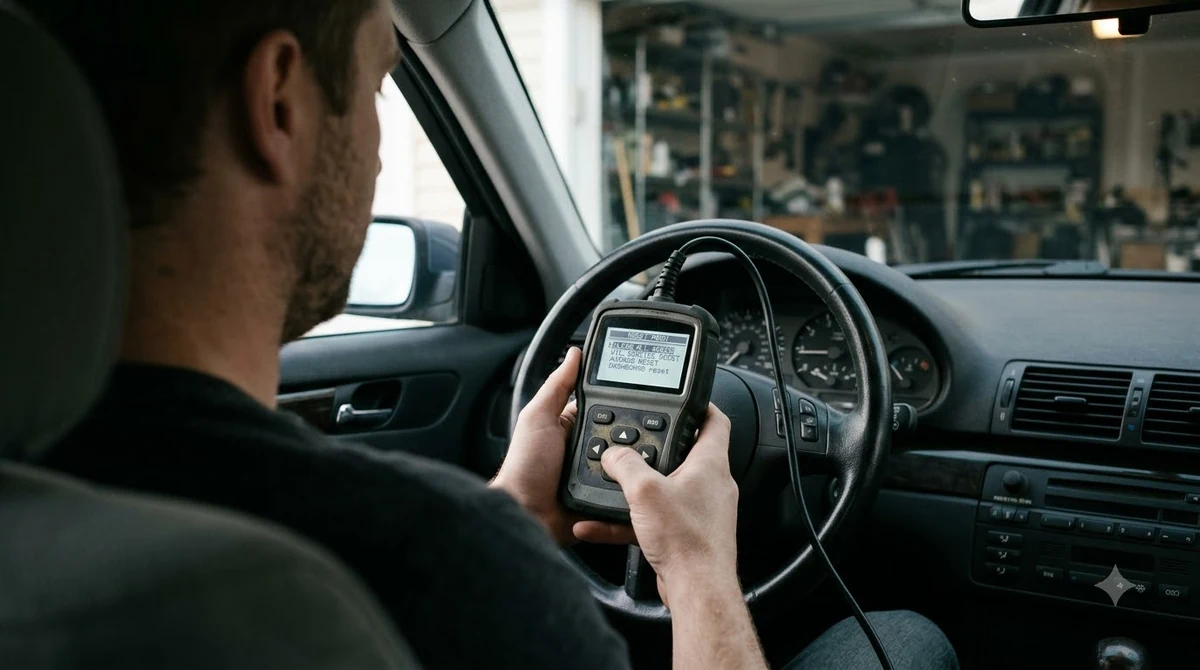
- Read the code with an OBD-II scanner and confirm it is P0304 before you buy parts.
- Find cylinder 4 in your repair manual, since the location is not the same on every engine.
- Remove the cylinder 4 spark plug and check for carbon build-up, oily residue or electrode damage.
- Inspect the cylinder 4 spark plug wire and ignition coil for damaged insulation, loose connectors or oil leaks.
- Test fuel pressure with a fuel pressure tester, then check vacuum lines for cracks or hissing.
- Test the cylinder 4 injector by disconnecting it while the engine runs and watching whether the RPM changes.
- If these checks pass, consider a compression test or block leak test to look for a head gasket leak.
Replace parts only after a test points to them. Testing in order saves money and avoids replacing a good part that was never the cause. If the plugs turn out to be the cause, what a spark plug replacement costs explains how labor and plug type change the bill.
Common Fixes and What They Involve
Most P0304 fixes replace the failed part in cylinder 4, and spark plugs and wires are usually replaced as complete sets. The table shows the first check and the usual repair for each cause.
| Cause | First check | Repair approach |
|---|---|---|
| Spark plug | Remove and inspect for fouling or electrode damage | Replace the full set |
| Spark plug wire | Check insulation and connectors | Replace the full set |
| Ignition coil | Look for cracks, damage or oil leaks | Replace the coil |
| Fuel injector | Disconnect while running and watch the RPM | Replace the injector |
| Vacuum line | Look for cracks and listen for hissing | Replace the cracked line |
| Fuel pressure regulator | Test fuel pressure | Replace the regulator |
| Head gasket | Compression or block leak test | Professional repair |
Before paying for parts, check whether the car is still under warranty and look for technical service bulletins (TSBs). One repair guide recommends both steps before a repair.
Vacuum line replacement is a job many owners can do themselves, while gasket leaks and intake manifold leaks usually need a professional. Match the repair to the test result rather than the first guess. A vacuum leak can also set a lean-mixture code, as covered in lean code from vacuum leaks. Cylinder 2 has its own code details in the guide to the P0302 cylinder 2 misfire.
When to See a Mechanic
See a mechanic when the test points to internal engine parts, when you cannot find cylinder 4, or when fuel pressure readings look wrong. Those steps need specialized tools and experience.
The fixdapp guide lists a compression test as a technician task, so a head gasket check usually goes to a shop. Catalytic converter inspection and fuel pump work also belong with a technician. The how a compression tester works explains what that test involves.
When you visit a shop, ask for the cylinder number, the test results and a written estimate. That makes it easier to compare the repair with what the tests actually found.
Frequently Asked Questions
Can I fix P0304 myself?
Yes, for some causes, such as a worn spark plug, a damaged wire or a cracked vacuum line. Test first, so you replace only the part the results point to. Injector, fuel pump and head gasket repairs need more tools and experience, so a shop is often the safer choice.
Do I need to replace all spark plugs?
One repair guide advises replacing the full set, since one worn plug suggests the others are close behind. Spark plug wires follow the same logic. Use the plug type and gap specified for your engine, and check each plug’s condition when you remove it.
What does P0304 mean on a Saab?
On one Saab V6 diesel workshop page, P0304 is set when there is no combustion in cylinder 4 for 3 seconds. The same page lists faulty injectors and leaking fuel lines as causes. Other Saab models may use different limits, so check the service data for your exact model.
Can a bad fuel pump cause P0304?
One repair guide lists a defective fuel pump among the possible causes. Check fuel pressure before replacing the pump, since a faulty fuel pressure regulator or injector can also cause the code. A fuel pressure test is the way to narrow that down.
How do I know which cylinder is 4?
Use the repair manual for your engine, since cylinder numbering is not the same on every engine. One repair guide advises confirming the location before removing a spark plug. A mechanic can also confirm the cylinder during the scan and inspection.
Start with the cylinder 4 spark plug, wire and coil, since those checks are quick to perform, then move to the fuel and vacuum tests. Do not keep driving with a confirmed misfire, because the engine and catalytic converter can be damaged.
