


P1101 code means the mass air flow (MAF) sensor reading is outside the range the engine computer expects during its self-test. The wording and likely causes differ by make, so check the code against service information for your vehicle.
The P1101 code is not labeled critical, but the engine can run rough and lose power while it stays set. Check the air filter, intake and wiring before you spend money on a sensor.
A trouble code points to a circuit or system, not always one failed part. A technician with a scan tool and the make’s service information gives the final answer.
What P1101 Code Means on a Scan Tool
P1101 code sets when the engine computer finds MAF voltage outside the manufacturer range during its self-test. KBB gives a typical window of 0.46 to 2.44 volts for many vehicles.
The self-test behind the P1101 code is called Key On Engine Running (KOER). It runs with the key on and the engine running. The powertrain control module (PCM), the engine computer, compares the MAF signal with the range the manufacturer expects.
According to KBB’s P1101 explanation, a reading below 0.46 volts triggers the code and aborts the test. That window is described as typical, not an official figure for any one make, so do not treat it as a specification for your car.

Why the Meaning Changes by Make
GM’s April 2018 bulletin labels P1101 as Intake Air Flow System Performance, while some generic listings use a self-test label. Check the label in service information for your exact vehicle.
The sources read for this page disagree on the P1101 code label. The table compares each one.
| Source | P1101 wording | Make or scope |
|---|---|---|
| KBB P1101 page | MAF voltage out of range during the KOER test | Not tied to one make |
| TaT scan data listing | MAF Sensor Out Of Self Test Range / KOER Not Able To Complete | Listed as Generic |
| MechanicBase, Cruze | Mass Air Flow (MAF) Sensor Out of Self-Test Range | Chevrolet Cruze |
| MechanicBase, other models | Intake Air Flow System Performance | Models other than the Cruze |
| GM service bulletin 18-NA-118 | Intake Air Flow System Performance | Chevrolet Cruze GenII (VIN B), 2016 to 2018, 1.4L LE2; Holden Astra BL, 2017 to 2018 |
The most specific source is the GM service bulletin 18-NA-118, which names model years and an engine. Ford wording could not be confirmed from a Ford document, so treat any Ford label you see online as unverified.
Symptoms You Are Likely to Notice
The check engine light is the most common sign of a P1101 code, according to KBB. Sources list these symptoms for the P1101 code:
- Check engine light, the most common sign
- Rough idle, especially at startup
- Reduced power and acceleration
- Stalling when the car is stopped
- Lower fuel economy, because the engine can run rich
- Engine vibration, listed by MechanicBase
If several of these appear together, get the car checked soon rather than waiting for the light to go away. Symptoms alone do not confirm a P1101 code, so match them with the stored code before you act.
Common Causes, From Simple to Serious
Sources name air leaks, a dirty MAF sensor and damaged wiring among the causes of a P1101 code. The sensor is only one of several possible faults.
- Oil or other contaminants on the MAF sensor element, per KBB
- A faulty or dirty MAF sensor
- Loose, corroded or damaged MAF harness connectors and wiring
- Air restriction or blockage upstream of the sensor
- A broken air cleaner element bracket
- A vacuum leak or a defective intercooler boot
- A failing throttle body
KBB also lists a defective PCM as a rare cause. Check the simpler faults first, because the PCM is replaced only when it is faulty.
A GM Bulletin Shows a Simple Cause
GM bulletin 18-NA-118, dated April 2018, ties the P1101 code on some 2016 to 2018 Cruze models to an air cleaner bracket that is not seated correctly on its mount. The bulletin covers the Cruze GenII (VIN B) with the 1.4L LE2 engine and the Holden Astra BL from 2017 to 2018.
The bulletin says an improperly installed bracket can warp over time. A warped bracket lets the air cleaner element warp, shift or leak at the inlet duct, which creates gaps in the air path.
The correction starts with an inspection of the bracket. If the bracket is damaged, the bulletin says to replace the air cleaner element and confirm a secure connection. If there is no damage and no sealing problem, it refers the technician to further diagnostics.
Two details matter for owners. The bulletin says it is written for professional technicians, not do-it-yourselfers, and it lists no parts for the repair. A damaged bracket still calls for a new air cleaner element.
The same bulletin lists P0101, P0171, P0172, P0300 and P1101 as codes a technician may find set under this condition, so check for other stored codes too.
How to Check P1101 Before Buying a Sensor
KBB’s repair sequence begins with the harness and the air filter, so start there. Work through the checks for the P1101 code in order, and turn the engine off before you touch the sensor or the intake hose.
- Inspect the air filter for debris, and check that the air cleaner seals fully on the intake duct.
- Look over the MAF wiring and connectors for looseness, corrosion or damage, and check the harness near the sensor for rubbing or breaks.
- Look for vacuum leaks and cracked hoses, including any intercooler boot.
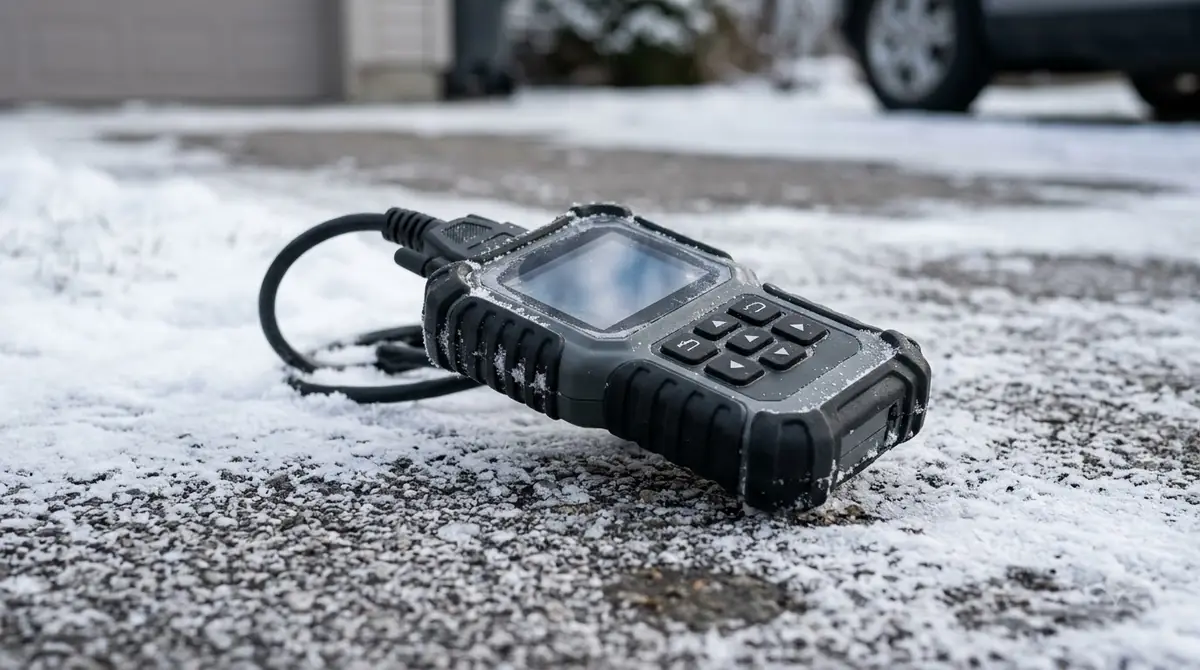
- Clear the code with a scan tool, then rescan. If it returns, pull the freeze frame data and check for other stored codes.
- Remove the MAF sensor and inspect it for contamination. Clean it only with a cleaner made for MAF sensors, then rescan.
Keep a short record of each check, including the freeze frame values and the results after rescanning. A shop can then pick up where you stopped instead of repeating the same tests.
A technician can go further by testing the reference voltage and ground at the sensor with a multimeter, then checking circuit continuity to ground and to the PCM. Do not buy a sensor just because the P1101 code is set. KBB advises replacing the MAF only if it still malfunctions after cleaning.
How Serious Is P1101 and When to Stop Driving
KBB says P1101 cannot be labeled a critical or dangerous code. The engine control module has backups that estimate air mass from other sensors, but the code can still cause rough running and power loss.
KBB does not recommend extended driving, and it warns that prolonged driving can lead to internal engine issues. MechanicBase rates the code Medium, says the car is generally drivable, and advises avoiding heavy throttle use because performance may be unpredictable.
If the car stalls, loses power on the road or runs very rough, stop driving it and have it checked before going further. Both sources treat a P1101 code as one to fix soon, not one to ignore.
How P1101 Differs From P0101
GM’s bulletin labels P0101 as Mass Air Flow (MAF) Sensor Performance and P1101 as Intake Air Flow System Performance. Both codes point at the MAF system, but they carry different wording and can appear together.
A P1101 code is tied to the self-test wording and to make-specific labels, so its exact meaning depends on the vehicle. Testing the sensor itself is a separate job, covered in how to test a MAF sensor, and the checks above should come first.
Frequently Asked Questions
Can I clear a P1101 code myself?
Yes, a scan tool can clear a stored code. KBB’s repair sequence says to clear the code and rescan, because a returning code shows the fault is still present. Clearing it does not fix the cause, so check the air filter, intake and wiring first.
Does a P1101 code mean the MAF sensor is bad?
Not always. KBB lists a faulty MAF sensor as one cause, alongside connectors, wiring, air restrictions and contamination. KBB advises replacing the sensor only if it still malfunctions after cleaning and inspection, so clean it with a MAF-specific cleaner and rescan first.
Can a dirty air filter cause a P1101 code?
KBB lists air restrictions or blockages upstream of the sensor as a cause. Its repair advice includes checking the air filter for debris and cleaning or replacing it. Rescan after the filter is serviced to see whether the code returns.
Is the 0.46 to 2.44 volt range official?
No. KBB describes that window as typical for many vehicles, not an official figure for any single make. Use the voltage specification in your vehicle’s service information, and have a technician test the reference voltage and ground before condemning the sensor.
Does the GM bulletin repair need parts?
The bulletin says no parts are required for its service procedure. If the bracket is damaged, however, it calls for replacing the air cleaner element. The bulletin is written for technicians with the right tools and training, and it applies only to the Cruze and Astra models it names.
If the P1101 code returns after the air filter, intake, bracket and connector checks, take the car to a shop with a scan tool and the make’s service information. Ask them to test the sensor circuit before you buy a new MAF sensor.
