

p0606 is an OBD-II trouble code that means the powertrain control module (PCM) failed its own internal self-check. The code points to the car’s main computer or the wiring that feeds it, so a careful diagnosis should come before any part is replaced.
Many cases trace back to wiring, grounds or the CAN bus rather than a dead computer. Because the code is serious, have the car checked soon instead of driving it for long periods.
What P0606 Means
P0606 is listed as “Control Module Processor,” and it means the PCM found a fault inside itself during its own self-check. The code is set by the module, not by a single sensor reading.
The PCM is the vehicle’s main computer. It assesses and controls the car’s major systems, so a fault inside it can affect how several other systems behave. According to Kelley Blue Book’s P0606 page, the code is set when the module detects a problem internally.
That detail matters for diagnosis. The code tells you the PCM itself reported a fault, but it does not name a single failed part. The next steps therefore check the wiring, grounds and network around the module before anyone assumes the module is bad.
What the Check Engine Light Tells You
A check engine light that comes on with p0606 means service is needed, not that you must stop the car at once. The light is usually yellow, and it warns that the system has found a fault. According to the EPA’s 1997 on-board diagnostics fact sheet, the light is meant to inform the driver of the need for service, not the need to stop the vehicle.
The same EPA document says the light turns off on its own once the system stops detecting the fault on three consecutive checks. A light that goes out does not prove the problem is gone, so a scan is still the right way to confirm whether the code remains stored. Do not reset the check engine light as a shortcut, because that clears the code without fixing the fault.
A flashing check engine light is different. The EPA states that a flashing light indicates a rather severe engine misfire. In that case, slow down and get service as soon as possible, because a short period of severe misfiring can damage emission components.
Common Causes of the p0606 Code
The p0606 code usually traces back to damaged PCM wiring, a defective ground circuit, CAN bus problems or a software glitch. Each of these affects how the PCM talks to the rest of the car, so a technician checks them before blaming the module.
Kelley Blue Book lists the main causes below. Repair sites add a few more, and each one points back to the wiring and communication path around the computer.
- Corroded, burned or damaged wiring to and from the PCM, which can cause short circuits or poor connections
- A defective ground circuit, or wiring tied to the sensors the PCM monitors
- Problems on the CAN bus, the network that lets the car’s modules share data
- A software glitch that makes the PCM fail
- Broken, frayed or corroded PCM connectors, reported by one repair site
Because wiring and grounds are common causes, the code does not always mean a dead computer. A shop that replaces the PCM without checking these items may fix nothing and leave the real fault in place.
The CAN bus is the shared network that lets the PCM exchange messages with other modules. A fault on that network can make one module’s problem look like a fault somewhere else, which is why the network is checked on purpose rather than assumed to be fine. Communication codes such as U0100 cover lost contact with the engine computer.
Symptoms You May Notice
Drivers with p0606 often notice the check engine light, stalling or erratic shifting, and engine misfires. The most common signs listed by Kelley Blue Book are below.
- Check engine light, sometimes with the ABS light
- Stalling at a complete stop
- Erratic shifting
- Engine misfire and lower fuel economy
- Difficulty cranking, or the engine not turning over
One repair site also reports rough idle, intermittent stalling and an erratic cooling fan. Those extra signs come from a single source, so treat them as possible clues rather than confirmed symptoms. Write down when each p0606 symptom happens, because the timing helps a technician.
Is It Safe to Drive With the Code?
Driving with p0606 is firmly not recommended, because prolonged driving risks damage to the engine, the transmission or other critical systems. Kelley Blue Book’s P0606 page says you may be able to drive with this code, but it is firmly not recommended, and prolonged driving risks damage to the engine, transmission or other key systems.
Another repair site describes p0606 as a severe code and warns that the car could shut down suddenly. A sudden shutdown on a highway or in traffic is a real safety risk, so limit driving until the car has been diagnosed.
This advice covers p0606 itself. How far you can drive depends on how the car behaves that day, so a shop should look at it before any long trip.
How to Diagnose the Code
Repair guidance from Kelley Blue Book and one repair site follows the same order. Start by reading the stored data, then check power, grounds and wiring before any PCM replacement is considered.
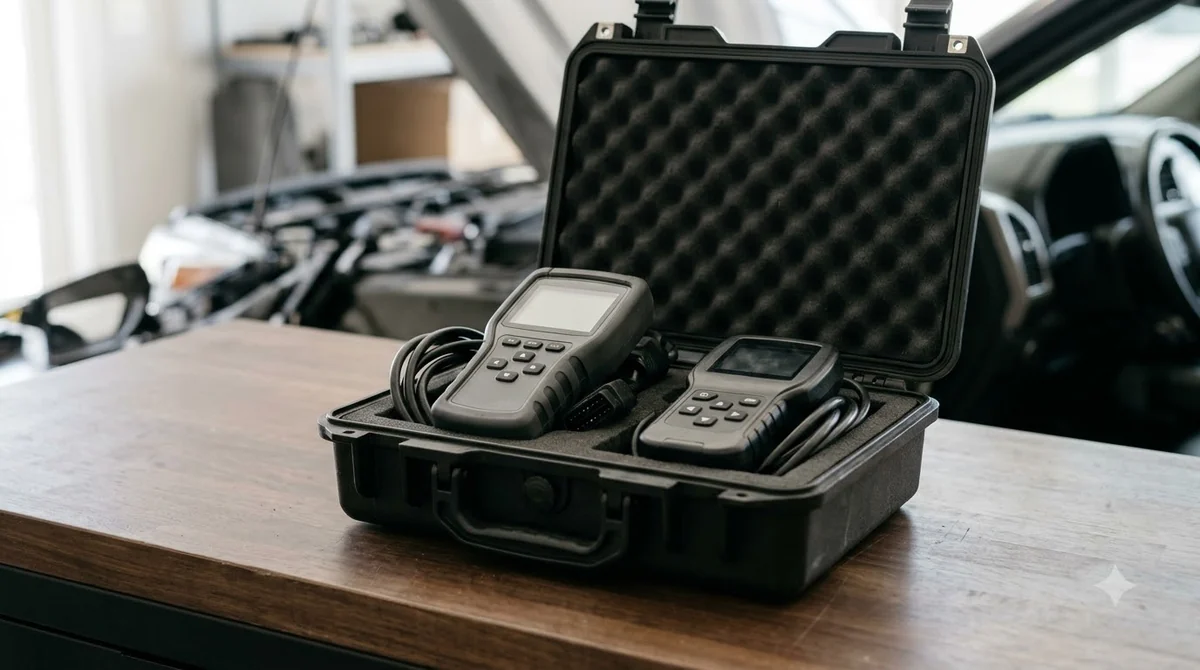
- Read the stored data with an OBD-II scanner to see the conditions when the code was set.
- Inspect the PCM wiring and connectors for damage, burns and corrosion.
- Test the ignition and battery connections with a multimeter, and check the fuses.
- Check the PCM ground circuits with resistance tests, and repair any open circuit you find.
- Check the CAN bus, and ask the dealer whether any PCM-related recalls apply to the vehicle.
- Reprogram the PCM before deciding it is faulty, and replace it only if power and ground are good.
If you are unsure how to read the battery in step three, see how to test a battery with a multimeter. If the wiring, power and ground checks come back clean, the next question is whether the PCM needs reprogramming or replacement. That decision belongs with a technician who has the full scan data in front of them.
Kelley Blue Book advises against DIY PCM work, because a misdiagnosis can cause further damage. A shop with scan and wiring tools is the safer route for this code.
How Much Does This Code Cost to Fix?
One repair site estimates p0606 diagnosis at $75 to $150 per hour and PCM replacement at $800 to $1,300, as of 2026-11-06. These figures come from a single third-party site, not from a manufacturer or a regulator.
| Repair | Estimated cost | What it covers |
|---|---|---|
| Diagnosis (labor) | $75 to $150 per hour | Scan, inspection and power and ground checks |
| PCM wiring or connector repair | $100 to $1,000 | Damaged wiring, grounds or connectors |
| PCM replacement | $800 to $1,300 | Only after power and ground checks pass |
Labor rates, parts and your vehicle will change the final bill, so treat these ranges as rough estimates. Ask whether the quote includes the scan and the wiring checks, or only the parts. A wiring fix usually costs far less than a PCM swap, which is why a full diagnosis first can save money. Ask the shop which p0606 checks it ran before it quotes a PCM replacement. A written estimate that lists each check shows whether the wiring steps were done before a PCM swap was recommended.
Frequently Asked Questions
Does this code always mean the PCM is bad?
No. Kelley Blue Book lists damaged wiring, defective grounds, CAN bus problems and software glitches as common causes. A diagnosis should check those first, because the code does not always mean the module itself has failed.
Should I replace the PCM myself?
Kelley Blue Book advises against DIY PCM work. A misdiagnosis can lead to further damage, and reprogramming may be needed before replacement is considered. A technician with the right scan tools can work through the checks in order.
Does the check engine light turn off by itself?
According to the EPA’s 1997 fact sheet, the light turns off automatically when the system no longer detects the fault on three consecutive checks. A scan can still confirm whether the code remains stored.
Do I need a special tool to read the code?
You need an OBD-II scanner that can read stored codes and data. Use it to confirm the code, note any other codes, and record the conditions when the code was set. Those details help a technician choose the right checks.
Is a dealer check useful for p0606?
Yes. Kelley Blue Book advises checking with the dealer for PCM-related recalls before concluding the module must be replaced. A recall check is quick, and it can rule out a known fix before parts are bought.
Can a flashing check engine light happen with this code?
The EPA fact sheet says a flashing light points to a rather severe engine misfire, so the driver should slow down and get service as soon as possible. The sources used here do not confirm whether this code causes a flashing light.
A p0606 code is a warning about the car’s main computer or its wiring, not a reason to guess at parts. Book a p0606 scan first, and ask the shop to show the wiring and ground results before you approve a PCM replacement.
