
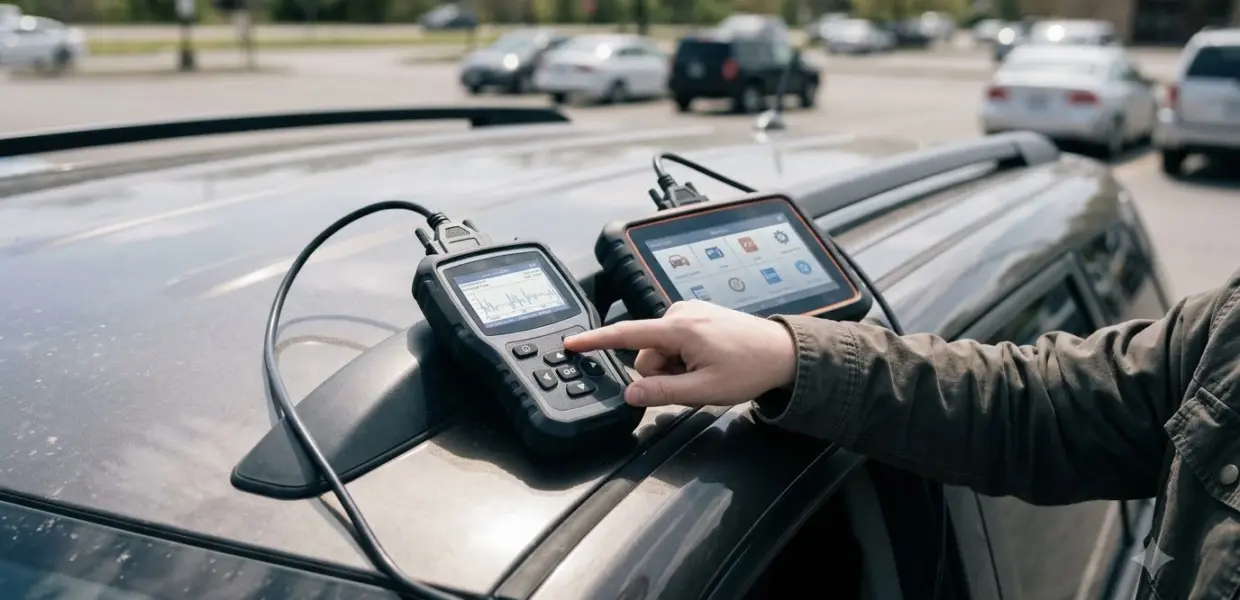

U0100 means lost communication with the ECM or PCM on the vehicle network. It is a communication fault, not a single failed part, so wiring, connectors, battery voltage and the module itself can all be the cause.
U0100 often appears with other network codes, so the full list of stored codes matters more than U0100 alone. Check the simple causes before you assume the engine computer has failed.
What the U0100 Code Means
U0100 indicates that a module has lost contact with the engine control module, so the CAN-C network is not receiving its signals.
According to the Axlewise guide, the high-speed CAN-C bus stops receiving signals from the ECM or PCM when the fault is present. The code belongs to the U-series of trouble codes, which cover network communication rather than a single sensor or circuit.
Jeep’s official bulletin lists the same fault as U0100-00, “Lost Communication with Engine Control Module (ECM)”, next to U1701-87, an ECM missing-message code. The wording differs between sources, but both describe a break in the conversation between modules.
Because the code describes a loss of contact, it does not name a part. A scan tool reports that a message did not arrive. It does not say which wire, connector or module caused the gap. That is why the diagnosis works outward from power and wiring before it reaches the PCM.
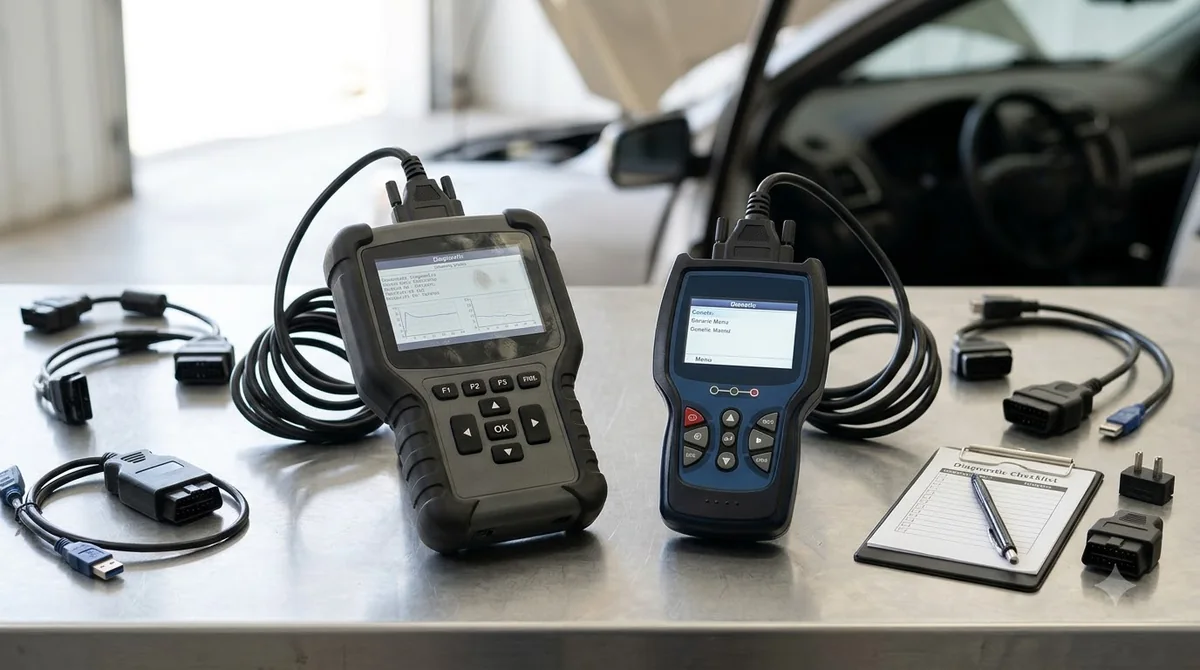
Common Causes of the U0100 Code
Most U0100 cases come from CAN-C wiring faults, damaged connectors, weak battery voltage or a failed PCM. The Axlewise guide lists these causes:
- Open or shorted CAN-C bus wiring, which breaks or disturbs the message path.
- Loose, corroded or damaged CAN-C bus connectors.
- Wiring problems in body control modules or the Totally Integrated Power Module (TIPM).
- A faulty PCM or wiring problems at its connector.
- A weak, corroded or depleted battery, since low voltage can disturb module communication.
Battery trouble is the cause most owners overlook. It is also one of the cheapest items to test, so a battery check belongs early in the diagnosis, before any module is replaced. Kelley Blue Book’s U0100 guide goes further and calls a faulty battery the most common cause, with damaged terminals, unplugged connectors and a loose module ground also on its list.
A failed PCM is one possible cause, not the first assumption. The guide lists it alongside wiring faults, and the sections below show how to tell them apart.
U0100 Symptoms You Can Notice
Drivers usually see a check engine light first. The symptoms can grow into stalling, reduced power or a no-start condition, so the light should not be ignored.
- Check engine light, often the first sign.
- Lower fuel economy.
- Stalling, which may happen without warning.
- Reduced engine power and poor acceleration.
- Erratic gear shifting.
- Higher emissions.
- Trouble starting, or no start at all.
- ABS or ESP systems that stop working.
The safety systems item deserves attention. Axlewise lists ABS and ESP among the systems that can stop working. If a warning for either system appears with U0100, treat the car as a higher-priority repair.
Is It Safe to Drive With a U0100 Code?
The Axlewise guide says no, because stalling and power loss can happen unpredictably and leave you stranded.
The guide’s reasoning is direct: the engine can stall or lose power without warning. That risk matters most at speed, in traffic or on a road with no shoulder, where a sudden loss of power is hardest to manage.
Treat this code as a stop-and-check item, not a reminder to schedule service next month. If the engine runs normally, limit trips to what you must make and avoid routes where a stall would be dangerous. If the engine stalls, fails to restart or loses power, arrange a tow instead of driving.
Sources differ on this point. Kelley Blue Book says most of the time a car with U0100 can still be driven. It warns that the engine may stall without warning, even while idling normally, and advises a certified technician to inspect any car with the code stored. Because both sources warn about unpredictable stalling, the cautious reading above is the safer one.
How to Diagnose U0100 Step by Step
Work through the checks in order: other codes, battery, wiring, CAN-C connectors, then the PCM and its power supply. Each step narrows the cause before any part is replaced.
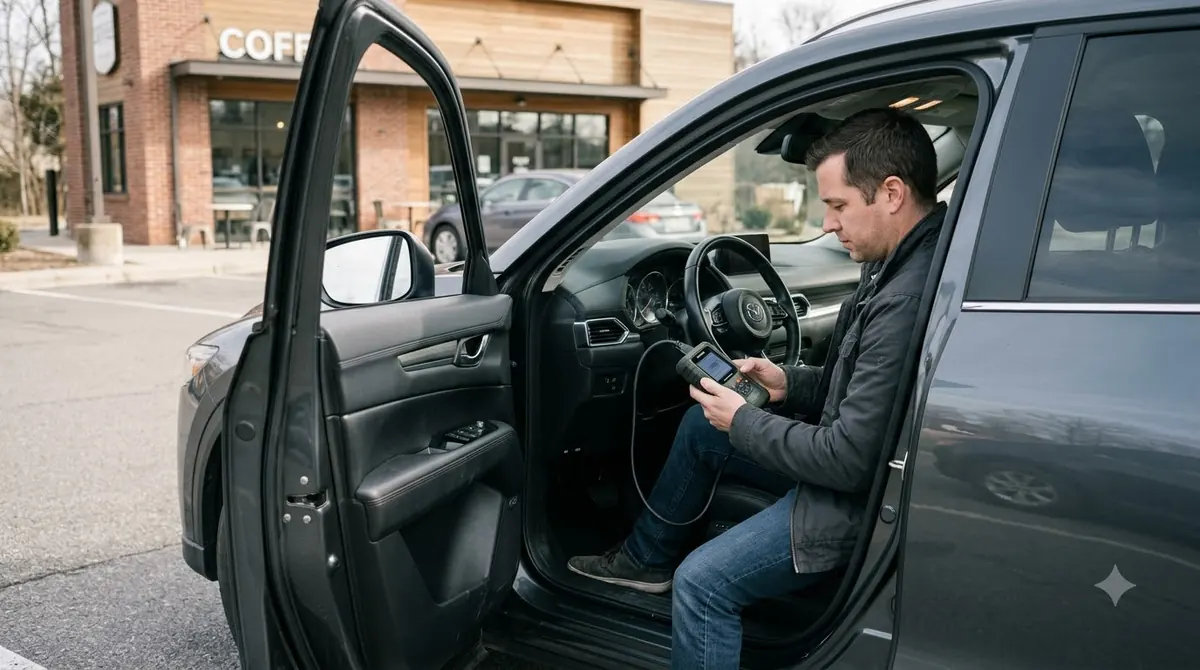
Start by reading every stored code and the freeze frame data, which records the conditions present when a code was set. Axlewise lists P0606, U0101, U0073, U0001 and U1000 as common companion codes and warns that they may be the real cause.
- Read every stored and pending code, and save the freeze frame data before clearing anything.
- Check the battery voltage and clean corroded terminals. Low voltage can cause module faults, and a weak battery may need a charge, as the guide on using a car battery charger safely explains.
- Look for burned, frayed, exposed or loose wires in the harness near the PCM.
- Inspect the CAN-C bus connectors and test the bus with a multimeter, using your vehicle’s wiring diagram. A circuit tester such as the one in the Power Probe III hookup and testing guide can also check power and ground.
- Check the PCM power and ground wires against the wiring diagram.
- Inspect the PCM connector for corrosion, water or loose terminals.
- Clear the codes, test drive, and watch whether the code returns.
The test drive matters. If the code returns, the fault is still active and the earlier steps need another look. If it stays away, the repair has likely addressed the cause, but only the test drive confirms it.
PCM Voltage Reference Points
A healthy PCM supply reads about 12 V, and readings below 10 V point to loose connectors or power problems. Axlewise gives these reference points for the power checks.
| Check | Reference reading | What it suggests |
|---|---|---|
| PCM supply, healthy system | About 12 V | Normal supply |
| PCM supply | Below 10 V | Loose connectors or power problems |
| Voltage drop, ignition on, engine off | 11 to 14 V | Within the guide’s normal range |
| Voltage drop, engine running | 13 to 14 V | Expected reading with the engine running |
A reading outside these ranges is a lead, not a verdict. Trace the circuit to the connector or fuse that feeds the PCM before replacing anything, and confirm the values against your vehicle’s service data.
When the PCM Itself Is at Fault
A Jeep bulletin for 2021 and 2022 Renegade models shows a PCM replacement for U0100-00 with a no-start condition. Bulletin TSB 18-097-23, dated August 29, 2023, covers vehicles with a 1.8L engine built within the date ranges it lists. The customer may see a malfunction indicator lamp, and the stated cause is PCM failure. The bulletin is filed with NHTSA as the Jeep Renegade PCM replacement bulletin.
The repair described is to remove the old PCM and install a new one. The technician then reprograms it with the latest software using a wiTECH or equivalent tool and clears any codes set during the work. The bulletin’s claims data lists 0.5 hours of labor for this task.
This procedure applies only to the listed vehicles and build dates. Another make, year or engine does not inherit this repair, and the bulletin itself states that it is technical information, not an authorization for repair.
Common Mistakes With U0100 Repairs
The most common mistake is replacing the PCM before testing power, ground and wiring. The mistakes below lead to repeat visits and parts that did not fix the fault.
- Replacing the PCM without checking battery voltage and connectors.
- Clearing the code and skipping the test drive, so the fault goes unnoticed.
- Ignoring companion codes that may point to the real cause.
- Treating the code as a single broken part rather than a network fault.
When to Take the Car to a Shop
Visit a shop when you cannot find a wiring diagram, when tests give unclear results or when a bulletin names your vehicle. A shop with factory-level scan tools can pull live module data and the service information for your model. Kelley Blue Book also notes that this code is hard to diagnose without equipment such as an oscilloscope and a digital multimeter, and it advises against do-it-yourself work on it. If you want your own tool for reading module codes, the professional OBD2 scanner picks show what advanced scanners offer.
Ask for a written estimate that names the part and the test that justified it. A clear estimate makes it easier to compare options and confirm that the repair matches the fault.
Related Guides
Frequently Asked Questions
Is U0100 the same as a P-code?
No. U0100 is a network communication code, while P-codes cover powertrain faults such as misfires or sensor problems. The two families point to different kinds of problems, so read both before repairing anything.
Can a weak battery cause U0100?
Yes. Axlewise lists a weak, corroded or depleted battery among the causes, and low voltage can disturb module communication. Test the battery and clean the terminals before you replace a module or harness.
Can I clear U0100 myself?
You can clear it with a scan tool, but the code returns if the cause remains. Clear it after the repair, then drive the car to confirm that the code stays off.
Does the code always mean the PCM is bad?
No. Wiring, connectors, the battery and other modules can cause the code. A failed PCM is one possible cause, so test the other causes before you replace it.
Is the fix the same for every vehicle?
No. Wiring diagrams, module locations and reprogramming procedures differ by make, model and year. Use the service information for your own vehicle, and treat a bulletin as applicable only when your VIN and build date match.
A U0100 code is a clue about the network, not proof that the engine computer is dead. Test power, battery and wiring first, and replace the PCM only when those checks point to it. Keep the scan results and test readings with the repair order so the next technician can see what was already ruled out.
