
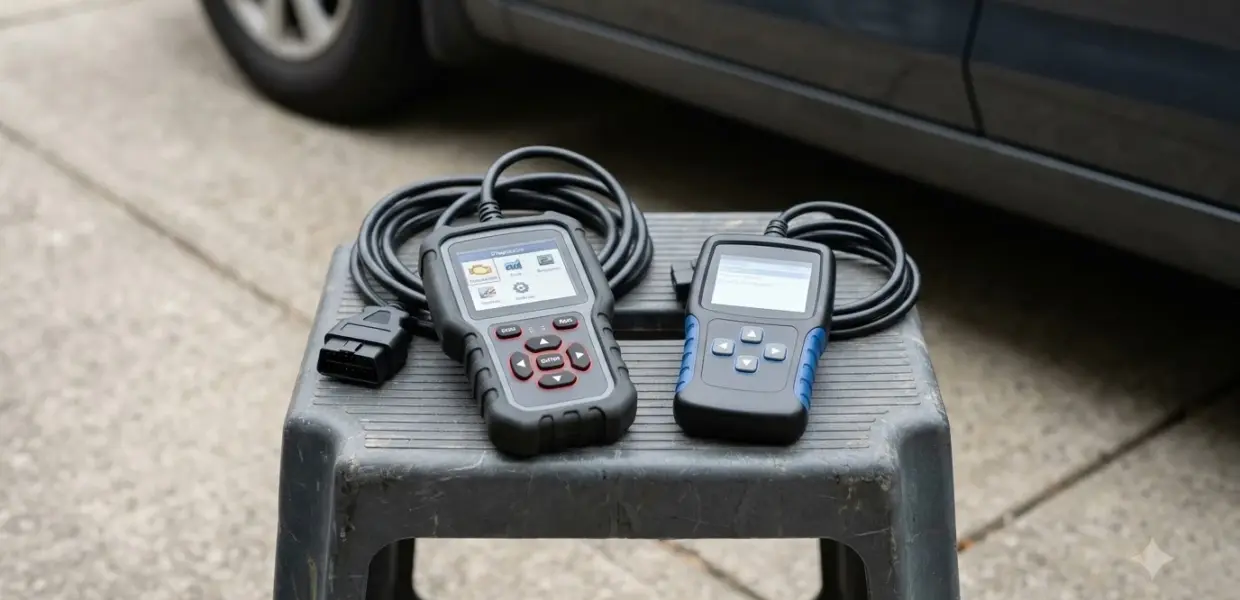

P0480 means the cooling fan 1 control circuit has a fault, so the engine computer cannot confirm that the radiator fan is running when it asks for it. The check engine light usually comes on.
The code points to a circuit problem, not always a bad fan. Test the relay, fuse, and wiring first, and stop driving if the temperature gauge keeps climbing.
What P0480 Means on Your Car
P0480 is a cooling fan 1 fault, also called Cooling Fan Relay 1 Control Circuit. It means the engine computer does not get proof that the fan is running after it switches the fan on.
According to KBB’s OBD-II code guide, the module commands the fan on but receives no electrical feedback confirming it is running. That gap between the command and the feedback is what sets the code.
Generic code sources describe the same fault as a problem with the fan relay, its wiring, or the fan motor. Because the code is generic, one P0480 can come from different parts on different cars, so check your model’s service information when you can.
Common Causes of the P0480 Code
P0480 can be set by a faulty fan relay, corroded relay terminals, or a fault in the fan wiring. The fan itself and the coolant temperature sensor can also trigger it. The list below shows the causes that KBB names for this code.
- Faulty fan control relay or relay terminals
- Faulty cooling fan or fan control module
- Defective coolant temperature sensor
- Damaged wiring, connectors, or poor grounds
- Blown fuse, weak battery, or bad battery cables
- Faulty water pump or a defective computer
The computer is on the list, but it is the last part to suspect. On one Saab service procedure, the computer is replaced only after the relay and circuit tests come back normal.
Symptoms That Often Come With P0480
A P0480 code can show up as engine overheating, with fans that never run or always run. The check engine light or another warning lamp usually turns on.
- Fans that always run or never run
- Incorrect temperature readings on the gauge
- Engine overheating, especially in stop-and-go traffic
- Reduced fuel economy
- Misfire-like behavior
Some of these signs, such as lower fuel economy or misfire-like behavior, can also come from other engine problems. Confirm the fan circuit with a scan tool before you tie them to this code.
Is It Safe to Keep Driving With P0480?
No, KBB advises against driving with P0480, because overheating can cause severe engine damage.
Engine overheating from a fan problem can build under high engine load or in stop-and-go traffic. Over time, that heat can damage the engine, so a fan fault should be treated as urgent rather than a light-duty warning.
If the temperature gauge rises, pull over and turn off the engine. Let it cool before you check the coolant level, and never open a hot radiator cap. The fan is not the only cooling part at stake, because a coolant temperature sensor or water pump fault can also leave the engine without proper cooling.
How to Diagnose P0480 Step by Step
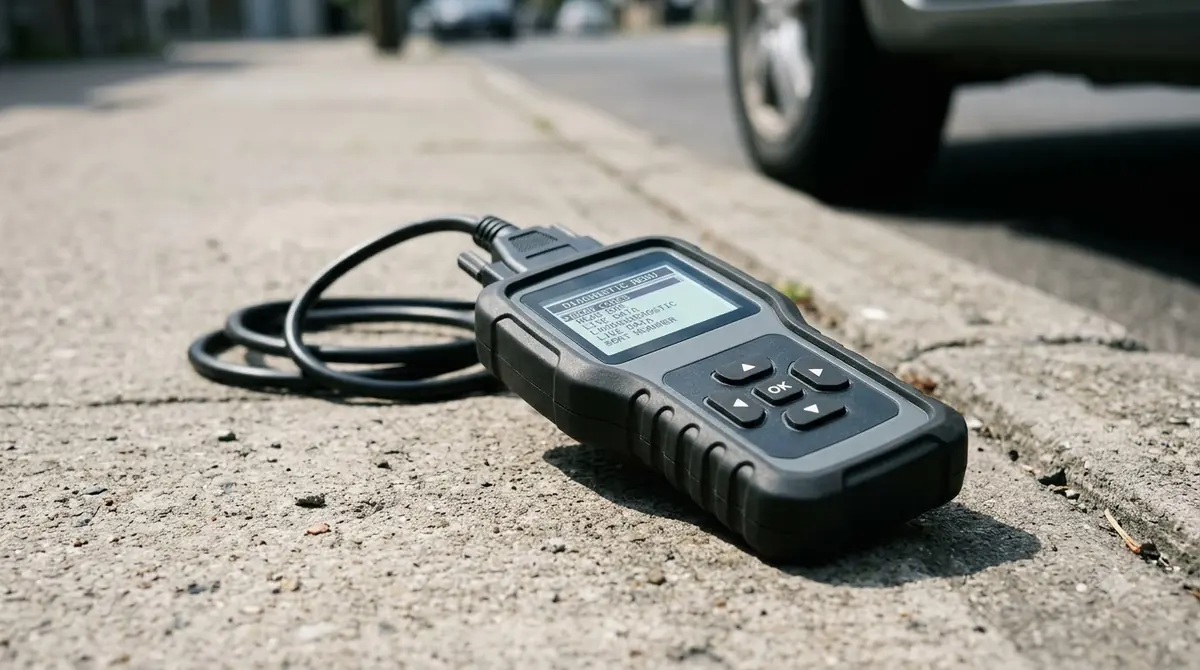
To diagnose it, start with a scan tool that reads other codes and live fan data, then test the relay and wiring before you replace the fan or the computer. KBB notes that the code is vague, so a digital volt or ohmmeter and your vehicle’s wiring diagram are needed for a real check.
- Read the full code list with a scan tool and note any codes that appear with P0480.
- Check the radiator front for blockages that restrict airflow.
- Inspect the fan connector for corrosion or bent pins, and repair as needed.
- Check the cooling fan relay fuse.
- Confirm switched battery power at the relay block with a test light.
- Test the coolant temperature sensor with an ohmmeter, comparing cool and warm readings.
- Check continuity between the relay and the fan connector with an ohmmeter. Replace the relay if it does not click or close.
Relay Values From One OEM Procedure
On a 2011 Saab 9-5 with a KR20J fan relay, Saab’s service information sets a continuity limit of less than 5.0 ohms between the relay and the computer.
The same procedure lists a relay coil resistance of 70 to 110 ohms between terminals 85 and 86. A relay outside that range is replaced, and the run conditions are ignition voltage between 8 and 18 volts with the engine at or above 400 RPM.
These values belong to that one vehicle, so use your own model’s service data for any other car. Replacing the fan motor before these checks is a guess, because the fault may sit in the relay or wiring.
A Real Case: Corroded Fan Wiring
In one Ford Focus 1.6 case, P0480 came from a fan control wire that corrosion and water had nearly severed, even though continuity readings were misleading. The car overheated when it sat stationary for long periods, and the problem had gone on for about three weeks. A second-hand fan assembly and fan control module had already been fitted without fixing the fault.
In PicoAuto’s Ford Focus case study, the fan ran when wired directly to the battery, although current monitoring showed erratic flow that pointed to a worn motor brush assembly. The fan control wire measured a steady 12 volts with no control signal from the computer.
Before the wiring was checked, the technician read the computer’s memory and live data. Coolant was above 100 degrees Celsius (212 F) with no fan operation, and a scan tool component test produced no fan response.
The root cause was corrosion and water ingress in the harness, which ran across the slam panel and under the headlight. Only a few copper strands remained intact, enough to carry a small bias voltage but not a real load, so continuity testing gave a fluctuating, misleading reading. The harness was repaired, and the fan then responded to the component test and ran under computer control.
The lesson is that a continuity reading alone does not prove a sound wire. Compare the scan data, the wiring diagram, and the physical wire before you choose a part.

Related Codes to Check Alongside P0480
P0480 sits in a family of fan codes, from P0481 to P0485, that cover fan 2, fan 3, fan rationality, over current, and power or ground faults. Read them together to see whether the fault is on the control side or the power side.
If several fan codes appear together, look for a shared power, ground, or connector problem, since one fault can affect more than one circuit.
| Code | Meaning |
|---|---|
| P0481 | Cooling fan 2 control circuit |
| P0482 | Cooling fan 3 control circuit |
| P0483 | Cooling fan rationality check |
| P0484 | Cooling fan circuit over current |
| P0485 | Cooling fan power or ground circuit |
On the Saab procedure, short to ground sets P0691 and short to voltage on the coil control circuit sets P0692, so those codes help separate a wiring short from an open circuit. The same procedure expects infinite resistance between the coil control circuit and ground, so a lower reading points to a short to ground.
Frequently Asked Questions
Is a P0480 repair expensive?
The cost depends on the cause. KBB does not list repair prices, so the cheapest first step is a check of the relay, fuse, and connector before buying any part. A wiring repair costs more than a relay swap, so get a shop estimate once the cause is clear.
Can a bad coolant temperature sensor cause P0480?
Yes, KBB lists a defective coolant temperature sensor among the possible causes of P0480. Test the sensor with an ohmmeter, comparing readings when the engine is cool and when it is warm. A sensor whose resistance barely changes is a likely suspect. Compare your readings with the service data for your model, since specifications differ between manufacturers.
Should I replace the fan first?
No. Test the relay, fuse, and wiring first, because a fan replacement is an expensive guess if the fault sits in the control circuit. A swap made without a full diagnosis can leave the fault in place.
Does this code mean the computer is bad?
Not necessarily. The computer is one possible cause, and on the Saab procedure it is replaced only after the relay and circuit tests come back normal. Check the fuses, relay, wiring, and connectors before you suspect the computer.
Will clearing the code fix it?
No. Clearing the code only removes the stored message. If the fault is still present, the code can return once the engine runs and the fan circuit is tested again. Fix the cause first, then clear the code.
A P0480 code is a reason to check the cooling system now, not after the next hot day. Start with the relay and wiring, and have a shop read live fan data if the basic checks do not find the fault. Write down each reading you take, so the next person who works on the car can see what was already ruled out.
