
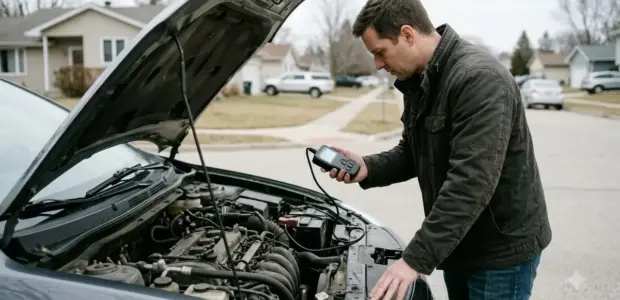

A check engine light flashing on your dashboard means a severe engine misfire, and the engine can damage parts that control emissions. Treat it as urgent: reduce speed and get the car checked as soon as you can.
A steady light is less urgent but still needs service. Knowing whether your light is steady or flashing tells you how quickly to act.
This page summarizes EPA and manufacturer guidance and does not replace your owner’s manual. If the engine runs rough, loses power, or the car feels unsafe, pull over when it is safe and call for help.
What a Check Engine Light Flashing Means
A check engine light flashing is a warning of a rather severe engine misfire, according to the U.S. Environmental Protection Agency (EPA).
The check engine light is the malfunction indicator lamp, or MIL. The on-board diagnostic (OBD) system turns it on when it detects a fault that affects emissions. When the light blinks, EPA’s on-board diagnostics fact sheet says it indicates a rather severe level of engine misfire.
A misfire means one or more cylinders are not completing combustion properly, so that cylinder delivers no smooth power. Federal OBD rules require the system to monitor for misfire, which is why the computer watches for it.
A check engine light flashing is therefore a severity signal. It tells you the system has seen a misfire bad enough to act on now, not just a fault to schedule for later. The EPA’s OBD guidance also notes that the system monitors emission-related parts and lights the MIL when it finds a malfunction that affects emissions. The EPA describes the light as blinking only under certain conditions, so the flashing behavior itself is part of the warning.
Misfire codes such as P0300 have their own guide, so this article focuses on what the light itself tells you and what to do next.
Flashing vs. Steady: Which One You Have
A steady check engine light means service is needed, while a blinking check engine light signals a severe misfire that calls for faster action.
| Light | What it signals | What to do |
|---|---|---|
| Steady | Service is needed soon. EPA says it is not a signal to stop the vehicle. | Book a service visit and watch for changes. |
| Flashing or blinking | A rather severe misfire that can damage the catalytic converter. | Reduce speed and seek service as soon as possible. |
| Steady after refueling | A vapor leak from a loose gas cap, which OBD can detect. | Check that the cap is fully tightened, then see whether the light stays on. |
A loose gas cap can trigger the light, but it normally shows as a steady light. When the cap is not fully tightened after refueling, the OBD system can detect the vapor leak. A flashing light points to a misfire rather than the cap, so do not assume the cap is the cause.
If you are asking whether a flashing light is worse than a steady one, the answer is yes. A steady light is a service reminder, while the blinking state is the EPA’s description of a severe misfire. When you see the check engine light flashing, treat it as the more urgent signal and plan to get the car checked the same day if you can.
Why a Misfire Can Damage the Catalytic Converter
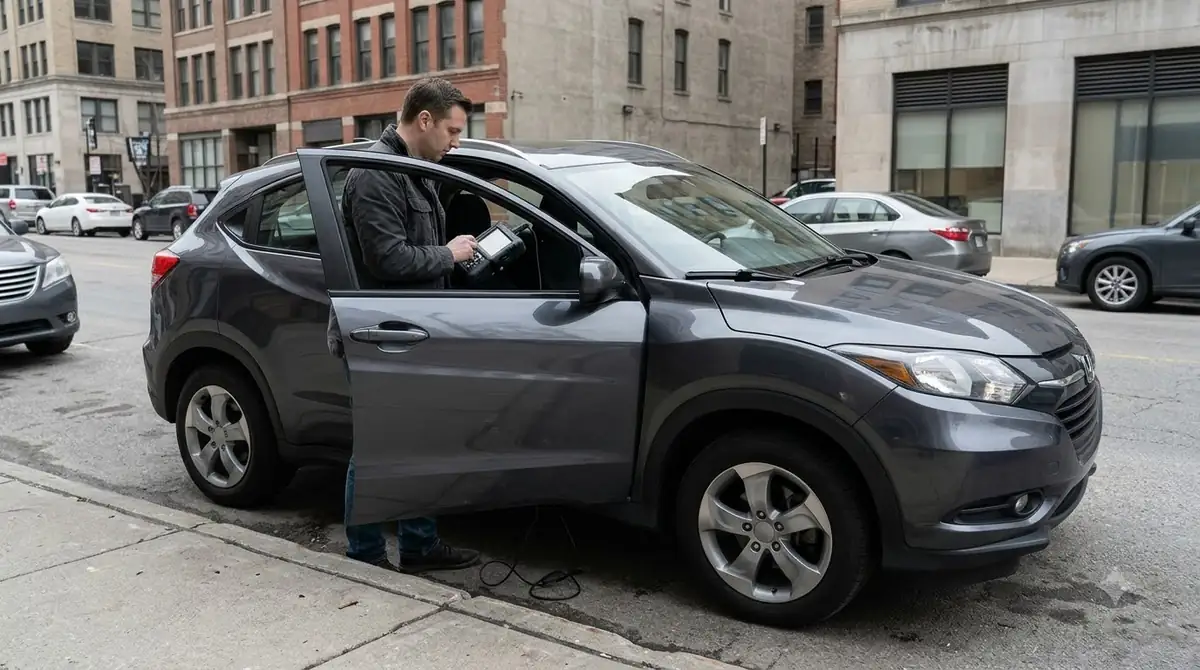
A severe misfire can seriously damage emission control parts, especially the catalytic converter, which is typically the most expensive part to replace. The most common trigger is described in multiple cylinder misfire causes.
The EPA warns that a severe misfire over even a short period can cause this damage. A check engine light flashing appears only under those conditions, so it should be treated as more urgent than a steady one.
Because the risk comes from severe misfire, a check engine light flashing should prompt you to reduce speed and get service rather than wait for a convenient time. The catalytic converter is part of the exhaust system that cleans emissions, and this page does not list repair prices.
What to Do When the Light Starts Flashing
When your check engine light is flashing, drive gently, avoid hard acceleration, and get the car inspected soon. The Nissan Juke owner manual (Irish edition) says not to drive above 70 km/h (43 mph) while a misfire is active. If the light is steady rather than flashing, what the engine warning lamp says covers the next steps.
Driving with a check engine light flashing is a judgment call, and the safest approach is to keep the car calm and close to a shop. Nissan’s manual ties its limits to avoiding damage to the engine control system, which is the same concern behind the EPA’s advice to reduce speed.
- Reduce your speed and avoid hard acceleration or braking.
- Avoid steep uphill grades, and reduce any load you carry or tow.
- If the engine runs rough or loses power, pull over when it is safe to do so.
- Book an inspection soon, and tell the technician when the light flashes.
Volkswagen’s guidance for its warning lamps says to stop the vehicle as soon as possible and when it is safe to do so. Your owner’s manual gives the exact action for your model, so check it first if you have one at hand.
Common Reasons the Light Flashes
A check engine light flashing tells you a misfire is occurring, but it does not name the failed part. The same symptom can come from more than one system, so a proper inspection matters more than a guess. Repeated misfires can overheat the converter and lead to the problem in catalyst efficiency code fixes. A thermostat problem can also light the dash lamp, as stuck thermostat coolant temperature code explains.
Because the light alone cannot show the source, do not replace parts based only on the light. Let a technician confirm the cause first, then decide on repairs. Nissan’s manual also warns that a misfire may damage the engine control system, so the cause should be found rather than ignored. A check engine light flashing on a car with a known recent repair is still a reason to have the new work checked.
Misfire codes are a separate topic with their own diagnostic steps, so this section stays focused on the meaning of the light. The main point for drivers is that a check engine light flashing signals a problem that needs prompt attention, whatever the exact part turns out to be.
Will the Light Go Off, and Does Clearing the Code Fix It?
A flashing light may stop blinking and come on steady, and under OBD II rules the lamp goes out after three consecutive trips without the fault.
Nissan’s manual notes that the light may stop blinking and come on steady. EPA’s OBD guidance says the malfunction indicator lamp goes out after three consecutive trips in which the problem does not come back.
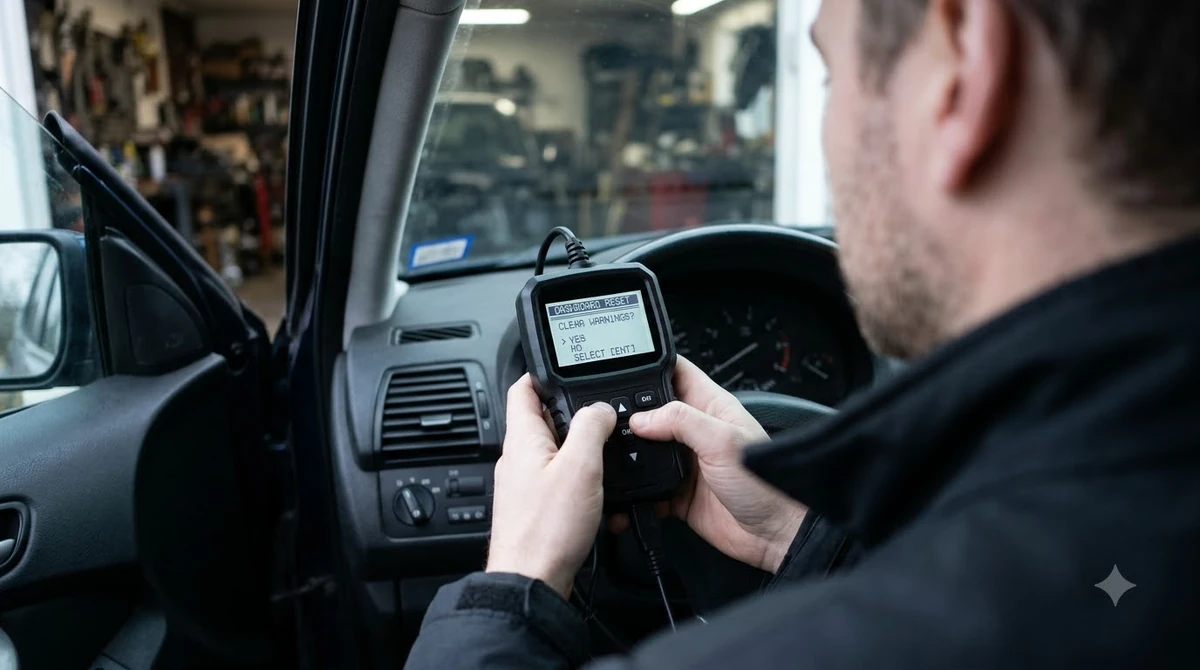
A light that goes off does not prove the fault is gone. Clearing the code does not repair the cause, and if the misfire returns, the light will come back. When the check engine light flashing stops, keep an eye on the dashboard and get the car checked rather than waiting for the light to return.
Frequently Asked Questions
Can I keep driving with a check engine light flashing?
Drive gently and have the car checked soon. The EPA says the driver should reduce speed and seek service as soon as possible. Nissan’s manual also advises avoiding hard acceleration, steep hills and heavy loads while a misfire is active.
Will a check engine light flashing turn off on its own?
It may. Nissan’s manual notes the light can stop blinking and come on steady. Under OBD II rules the lamp goes out after three consecutive trips without the problem, but a flashing light still means a misfire needs checking.
Can a loose gas cap make the check engine light flash?
A loose gas cap can trigger the check engine light, but EPA ties it to a vapor leak that normally shows a steady light. A flashing light points to a misfire, so do not assume the cap is the cause.
What does a blinking check engine light mean?
A blinking check engine light means a rather severe engine misfire, according to the EPA. Reduce speed, avoid hard driving, and get service as soon as possible. The light alone does not show which part has failed.
Does clearing the code fix a flashing check engine light?
No. Clearing the code does not repair the cause. If the misfire happens again, the light will return, so the underlying fault still needs to be found and fixed.
Is a check engine light flashing an emergency?
It is treated as urgent rather than routine. EPA guidance says to reduce speed and seek service as soon as possible. Volkswagen’s warning-lamp guidance says to stop the vehicle as soon as it is safe to do so, so do not wait for a convenient time.
Should I have a mechanic or dealer check the car?
Yes, and soon. A check engine light flashing does not name the failed part, so the car needs a proper inspection. Write down when the light flashes and what the car was doing, and share those notes with the technician.
A check engine light flashing is not a warning to ignore, even when the car still seems to drive normally. Note when it flashes and what the car was doing, then share those notes with the technician.
