
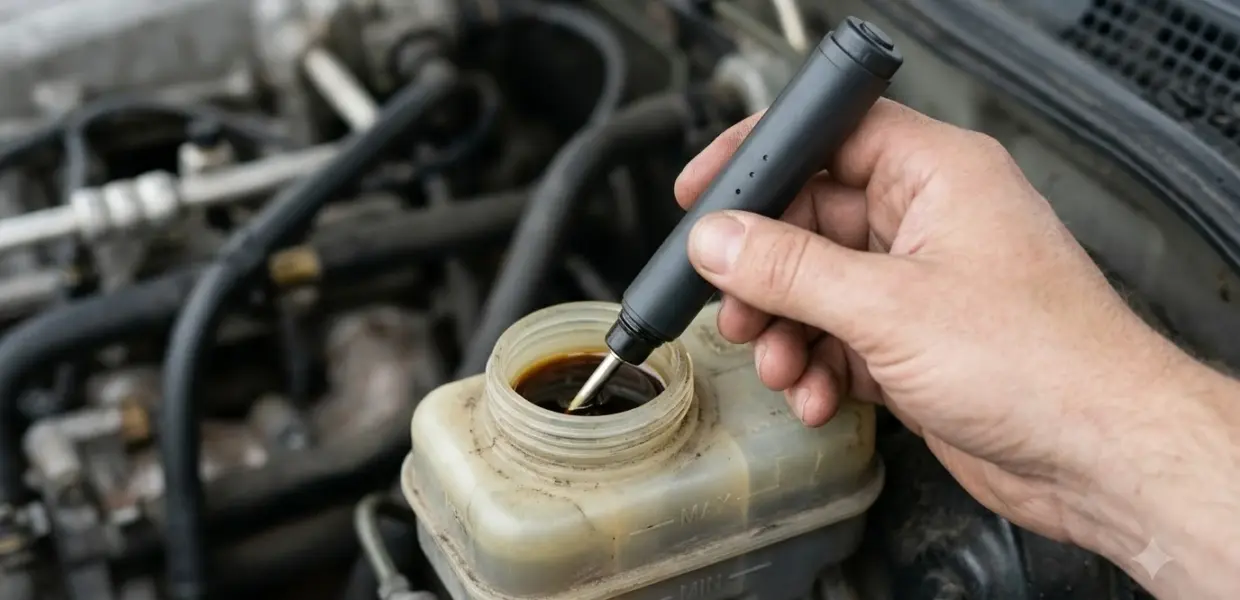

Blue smoke from exhaust means engine oil is burning inside the engine. The bluish haze is oil vapor leaving the combustion chamber with the exhaust gases, and it signals a seal, ring or ventilation part that needs attention.
Timing is the fastest clue. Note when the smoke appears, whether it grows under acceleration and how often you add oil, then check those patterns before paying for a repair.
What Blue Exhaust Smoke Means
Blue smoke from exhaust means oil is reaching the combustion chamber and burning with the fuel. Two manufacturer bulletins, one from GM and one from Ford, both list the PCV system as a possible trigger, so ventilation is part of the picture too.
Engine oil lubricates the cylinder walls, the pistons and the valve stems. When a seal or ring lets oil past those parts, it reaches the hot combustion chamber and burns. The vapor leaves through the tailpipe as blue or blue-gray smoke.
The color helps rule out other problems. Black smoke usually points to running rich on fuel, while lingering white smoke can come from coolant or water. Blue smoke from exhaust is the one that points to oil being burned.
A car that burns oil is also losing oil, so the level can drop between checks. Treat blue smoke as a warning to diagnose now, not a cosmetic issue.
Valve Stem Seals and Blue Smoke From Exhaust
Worn valve stem seals are one possible cause of blue smoke from exhaust, because a seal that hardens or cracks can let oil run down the valve stem into the cylinder.
Each intake and exhaust valve slides through a guide, and a small seal at the top of that guide keeps oil from running down the valve stem while the engine runs. A 2026 FixMyCar guide notes that these seals can crack from high temperatures and general wear, and it lists damaged valve stem seals among the causes of blue smoke.
The sources used for this page do not tie startup smoke to one specific part, so a brief puff at startup does not prove the seals are the cause. The pattern over several drives matters more than one event.
A common mistake is adding oil and hoping the smoke stops. Oil does not repair a worn seal, so keep the level within the dipstick marks while you locate the source of blue smoke from exhaust.
Worn Piston Rings and Smoke Under Load
Worn piston rings let oil slip into the combustion chamber, so blue smoke from exhaust that grows during acceleration or a hill climb often points to the rings.
Piston rings seal the gap between each piston and its cylinder wall, and they scrape excess oil off the wall as the piston moves. A repair guide reviewed for this article describes damaged piston rings as the most likely explanation when blue smoke from exhaust appears specifically on acceleration.
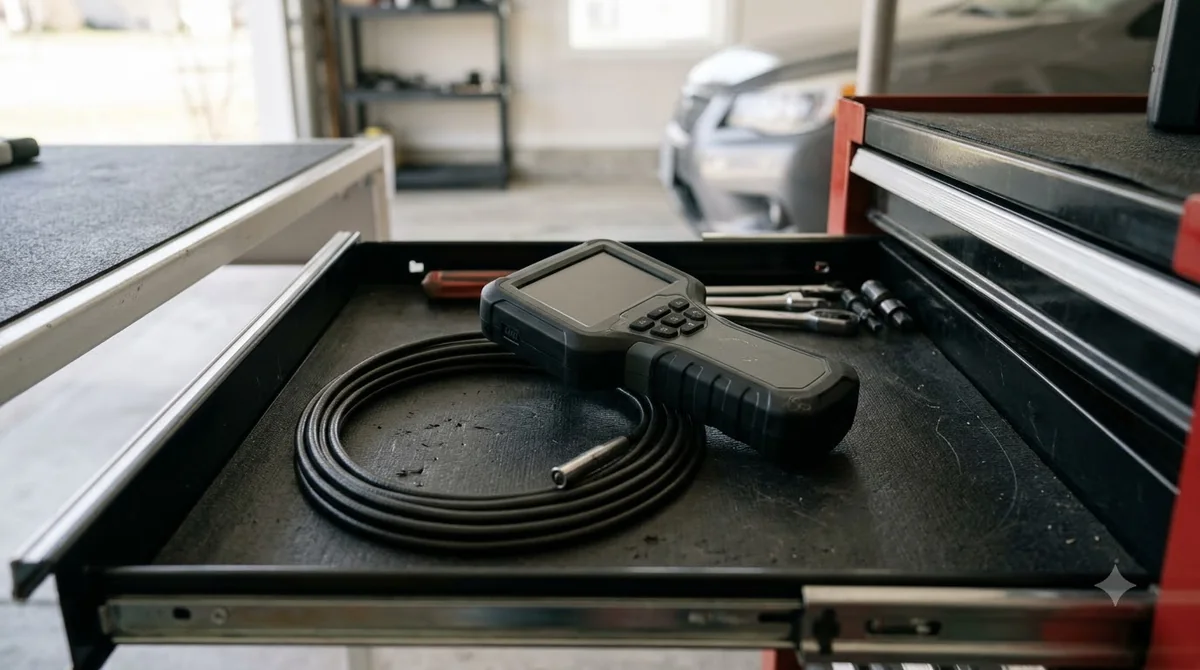
A workshop can test the rings with a crankcase pressure reading, and a compression tester is another tool for judging engine wear, as the guide to reading engine compression with a gauge shows. GM bulletin PIP5197G lists a normal hot-idle range of -11 to -18 inches of water in park. A reading between -10 and 0 inches of water points to a cylinder leakage concern, which the bulletin says is likely a weak or broken piston ring land.
The bulletin calls for replacing all four piston assemblies in that case, but it covers only Buick Encore, Chevrolet Cruze, Sonic and Trax models with the LUJ and LUV engines.
PCV System Faults That Push Oil Into the Engine
A faulty positive crankcase ventilation (PCV) system raises crankcase pressure, which pushes oil past seals and rings until the engine burns it. Both GM and Ford list PCV parts among their findings on blue smoke from exhaust.
The PCV system routes blow-by gases from the crankcase back into the intake so they are burned instead of released. If the valve sticks or the passage clogs, pressure builds in the crankcase. A repair guide reviewed for this article also lists a faulty PCV valve among the usual causes of blue smoke.
The GM bulletin suggests this check order:
- Confirm the engine oil dipstick and the oil fill cap seal properly.
- Check the PCV orifice on the camshaft cover for oil leaking or vacuum drawing at idle. A leaking orifice calls for replacing the camshaft cover assembly.
- Clean oil from the intake system, then retest oil use and fault codes.
Ford found a different PCV-related cause in its technical service bulletin 25-2361, dated 1 August 2025. It describes a PCV baffle sealing problem in the valve cover assembly, which can cause oil consumption and blue smoke from exhaust at the tailpipe.
Turbocharger Oil Leaks on Turbo Engines
On turbocharged engines, a failing turbo can leak oil into the intake or exhaust, and a repair guide describes the result as a large cloud of blue smoke from exhaust.
A turbo spins on a shaft fed by engine oil, and seals at each end keep that oil apart from boost air and exhaust gas. When a seal fails, oil flows into the intake side or the exhaust side, where it burns and shows up as blue smoke from exhaust.
A heavy cloud of blue smoke on a turbocharged engine calls for a prompt inspection, because the repair scope can grow the longer oil keeps burning.
How to Tell the Causes of Blue Smoke Apart
Timing and oil use narrow down the cause of blue smoke from exhaust faster than swapping parts. Start with a short log of when the smoke shows, how often you add oil, and whether the check engine light is on.
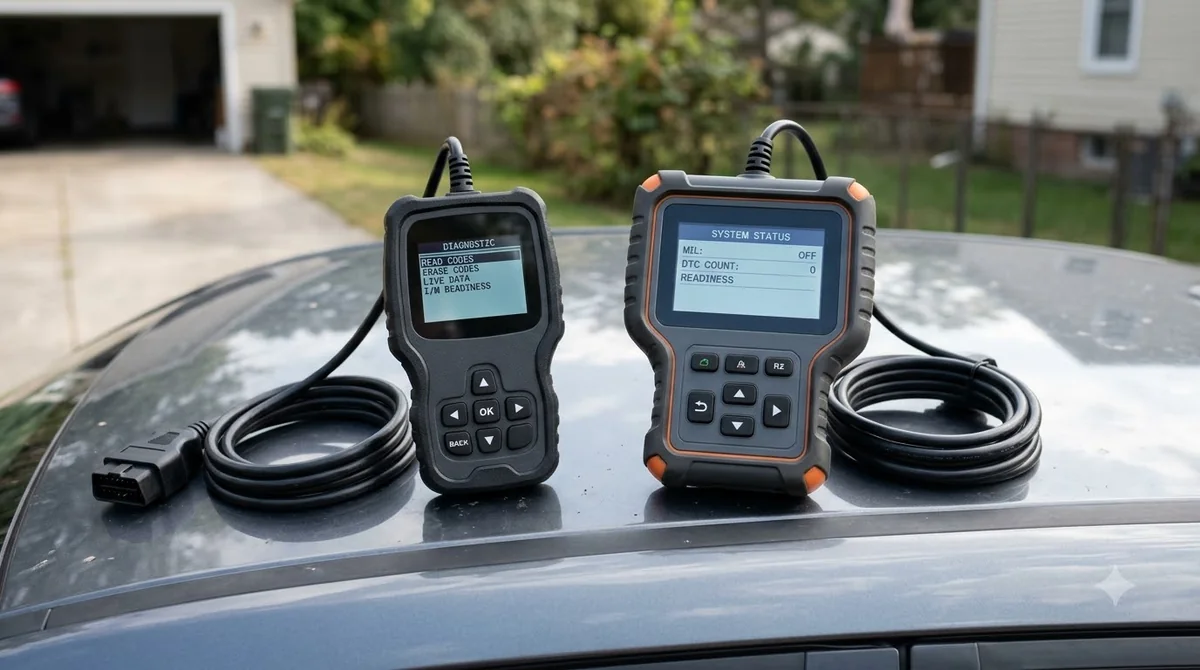
Plug an OBD2 scanner into the diagnostic port under the dashboard to read stored codes. GM’s bulletin lists P0299 among the codes that may set with the concern, and the guide to the turbo boost code P0299 explains that one. Then match the pattern with the table below.
| Symptom | Likely source | First check |
|---|---|---|
| Smoke mainly at startup | Valve stem seals are one suspect | Oil level and recent top-up history |
| Smoke that grows under acceleration | Piston rings or turbo | Crankcase pressure reading and turbo leak check |
| Oil use of 1 quart or more within 2,000 miles | Rings, PCV system or seals | Oil fill cap seal and PCV orifice |
| Codes such as P0171, P0299 or P0300 alongside smoke | Ring land or PCV issues, per the GM bulletin | Record the codes before clearing them |
A shop can run a crankcase pressure reading, as the GM bulletin does, before it replaces parts. Use that result together with the timing and oil use, because a single reading rarely settles the question on its own.
Oil Consumption Limits and Which Bulletin Applies
GM’s bulletin treats a loss of 1 quart (0.9 liter) or more within 2,000 miles (3,200 kilometers) as excessive oil consumption, but only for the models it lists. Check the oil level on level ground as your owner’s manual describes, record the miles since your last top-up, and compare the two.
Oil drips can look like blue smoke from exhaust, so inspect the engine and the driveway for leaks before you blame the rings. The bulletins cover these cases only:
- GM PIP5197G: Buick Encore 2013-2018, Chevrolet Cruze 2011-2016, Sonic 2012-2018 and Trax 2013-2018 with LUJ and LUV engines.
- Ford TSB 25-2361: 2024-2025 Transit with the 3.5L Duratec and Explorer with the 3.3L Duratec or 3.3L Hybrid, North American markets only.
- Ford’s fix applies only to right-hand valve covers built on 9 or 10 December 2024. Other builds need workshop diagnosis.
If your car is not on either list, these bulletins do not apply to your blue smoke from exhaust. Use them as a diagnostic pattern and check the manufacturer’s current bulletins for your model and year in the NHTSA database.
Related Guides
Frequently Asked Questions
Why is my car blowing blue smoke?
Blue smoke from exhaust means oil is burning in the engine. The usual sources are worn valve stem seals, worn piston rings, a faulty PCV system and, on turbo engines, a leaking turbocharger. The timing of the smoke and a check of oil use usually show which one fits best.
Is blue smoke from exhaust dangerous to drive with?
Blue smoke is a warning that oil is being used up, so the cause needs attention soon. Have the cause checked before long trips, and keep the oil level topped up in the meantime.
Will an oil change stop blue smoke?
No. An oil change does not repair worn valve seals, worn rings or a leaking turbo. FixMyCar says blue smoke is not usually a sign that you need a different oil, and that the fix is to locate and repair the source. Keep the level within the dipstick marks and follow the owner’s manual for the oil grade.
Does blue smoke on startup always mean bad valve seals?
Not always. Valve stem seals are one possible source, and the sources used for this page do not tie startup smoke to a single part. A shop should test before any parts are bought.
How much oil loss is too much?
GM’s bulletin uses 1 quart (0.9 liter) or more within 2,000 miles (3,200 kilometers) as excessive oil consumption, for the models it lists. Other manufacturers set their own limits, so check the owner’s manual or a dealer for your car.
Can a blown turbo cause blue smoke?
Yes. When turbo seals fail, oil can enter the intake or exhaust and burn, which produces blue smoke. A heavy cloud of smoke points toward the turbo. Have the turbo and the intake piping checked for oil.
Do not pay for a major repair for blue smoke from exhaust until the timing, the oil use and a test result all point to the same part. A written log of smoke timing and oil top-ups gives a shop far more to work with than a general description. Ask the shop which test supports its diagnosis before agreeing to replace parts.
