
Engine overheating means the cooling system is no longer removing heat fast enough, and the most common triggers are low coolant, a failed water pump, a stuck thermostat or a faulty cooling fan. Pull over as soon as the temperature gauge climbs, because continued driving can cause serious engine damage.
Knowing the signs of engine overheating early gives you time to act. Most passenger cars and light trucks share the same basic cooling design, but gauge positions, coolant type and fill marks depend on your model, so check your owner’s manual first.
This article is general information, not a repair manual. Overheating can cause serious engine damage, so have a qualified mechanic inspect the cooling system on your vehicle.
Engine Overheating Warning Signs
Engine overheating shows up first on the gauge. A normal engine runs at about 195 to 220 degrees Fahrenheit, with the needle in the middle or slightly lower.
According to AAA’s overheating guide, the needle should never spike to the three-quarter mark or higher, so treat any climb toward the red as urgent.
Some cars only have a red warning light, and it may come on too late if you cannot stop right away. The gauge itself can also be broken, so do not rely on it alone.
Check the gauge while you drive, especially in traffic or while towing. A needle that climbs past its normal position is an early warning of engine overheating, so act on it first.
A needle that regularly sits near the top of the scale or in the red zone is a warning sign on its own.
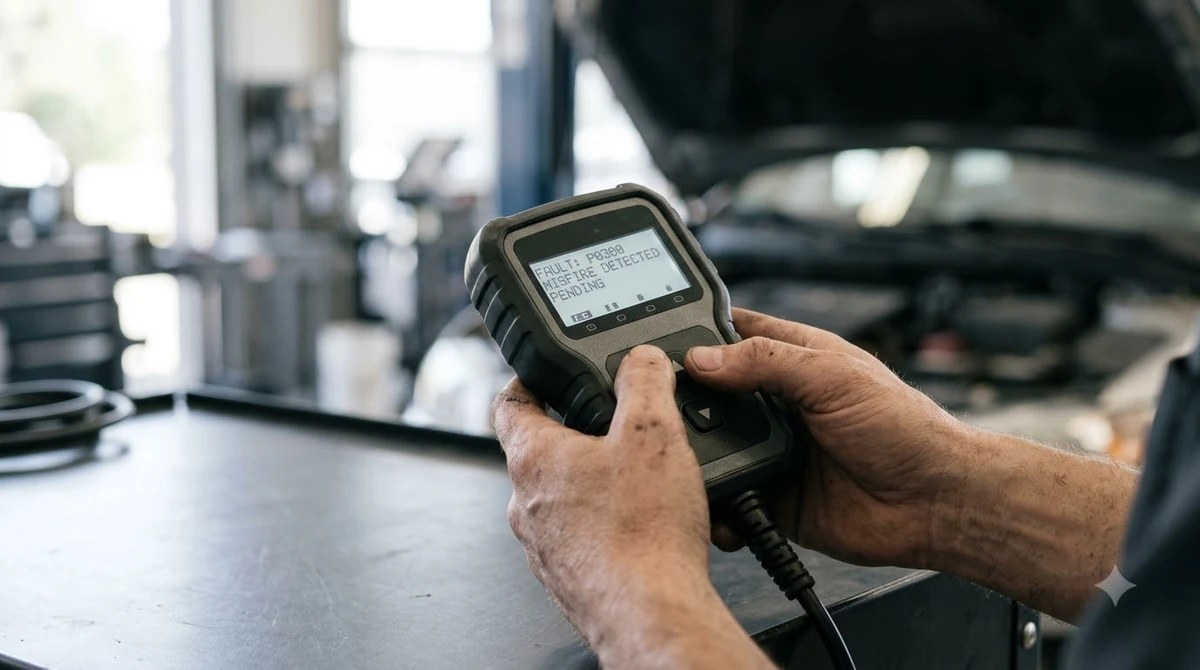
Watch for these warning signs of an overheating engine:
- The needle climbing past its normal position or sitting near the red zone
- Steam or a hot smell coming from under the hood
- Coolant dripping from under the front of the car, or a puddle on the ground
- Unusual engine sounds, or a loss of power that makes the car feel sluggish
- Oil that reads unusually high on the dipstick or looks frothy tan, which can mean coolant is getting into the oil
- White exhaust smoke, which can mean coolant is burning in the engine (see white exhaust smoke from burning coolant)
What Causes a Car to Overheat
Engine overheating usually traces back to low coolant, a clogged radiator, a failed water pump or a stuck thermostat.
cars.com’s overheating guide adds a broken or slipping serpentine belt and a failed cylinder-head gasket to that list. A slipping belt can stop the water pump from circulating coolant.
- Low coolant, often from a leak in a hose, the radiator or the heater core
- A clogged radiator that cannot release heat well
- A failed water pump, which stops coolant from circulating
- A stuck thermostat that keeps coolant from reaching the radiator
- A failed cooling fan, or hoses and belts that have worn out
- A failed cylinder-head gasket
Each cause of engine overheating has a different fix, so a shop should test each part rather than guess. For the cost side of a failed pump, see water pump failure and what it costs. A low coolant level usually means coolant has gone somewhere, which makes the level check in a later section important.
Extreme heat adds stress, but AAA says a heat wave alone is usually not enough on modern cars. A damaged cooling part is the more likely culprit behind engine overheating.
What to Do When Your Engine Overheats
If your engine overheats, pull over safely and shut it off as soon as you can, because cars.com says continued driving can cause damage that runs to thousands of dollars.
Follow these steps in order to limit damage from engine overheating:
- Pull over safely and turn the engine off.
- Turn off the air conditioning and turn the heat on to ease the load on the engine.
- Turn the key to the accessory position so the cooling fans can run without starting the engine.
- Wait about 20 minutes before touching the hood or any part of the front of the vehicle.
- Call roadside assistance or a tow if the problem persists, since towing to a service station is the safest choice.
AAA warns against driving long with the heat on, because that is only a short-term way to reduce the load. Never open a hot radiator cap. If you remove the radiator cap while the coolant is still hot, it can spray out and severely burn you.
If you cannot pull over safely, slow down, turn off the A/C, open the windows and run the heater at full blast, as cars.com suggests, to draw some heat away from the engine. AAA advises waiting inside with the windows down if the road is unsafe, and says it can pick you up if the car gets too hot. Its tow drivers keep cold water on hand.
How to Check Coolant Once the Engine Cools
Check coolant only after the engine is completely cool, and wait about an hour after shutting it off before you start the checks.
The overflow tank should show coolant between the hot and cold marks. Look under the front of the car for drips, because coolant dripping from underneath, often green, orange or blue, is a sign of a leak.
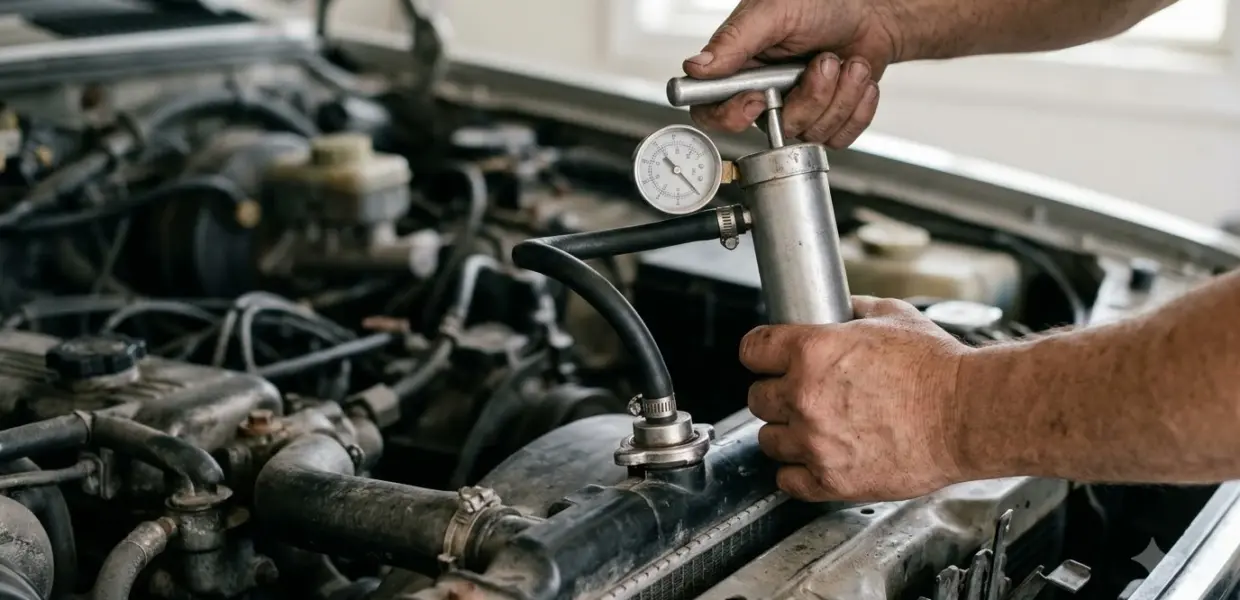
Checking the coolant level helps you judge whether engine overheating started with a leak, or whether something else in the cooling system has failed. A shop can go further with pressure testing the cooling system to find leaks you cannot see.
Prevention is the best defense against engine overheating. AAA advises keeping fluids, including coolant, topped off and having cooling system repairs done promptly. It also suggests carrying coolant, bottled water and a charged phone in case you are stranded.
When Engine Overheating Happens Without a Coolant Leak
Some engines run hot with no visible leak, and a 2014 GM service bulletin for low-mileage vehicles lists thermostat, water pump impeller and coolant manifold checks next.
The bulletin, GM bulletin PIP5176 on NHTSA’s site, covers 2014 Chevrolet Corvette and Silverado 1500 and GMC Sierra 1500 models with 4.3L, 5.3L or 6.2L engines. Its steps are written for professional technicians, so treat them as an example of what a shop checks, not a diagnosis for your vehicle.
The bulletin’s checks for engine overheating with no leak are:
- Check the cooling system for hydrocarbons.
- Check the operation of the thermostat.
- Inspect the water pump impeller for any sign of wear or damage.
- Check the coolant manifold assembly, which the bulletin describes as the water pump housing.
- If the cause still cannot be isolated, replace the coolant manifold assembly.
If the first checks do not find the cause, the bulletin moves on to the coolant manifold, so ask the shop to document each test. Overheating that returns after that work should go back to the shop, not to another quick top-off.
A car that overheats again after a refill is a reason to book an inspection rather than keep adding fluid.
Related Guides
Frequently Asked Questions
Can I keep driving with an overheating engine?
No, stop as soon as it is safe. cars.com says continued driving can cause engine damage that costs thousands of dollars, so pulling over early is the cheaper choice. Let the car cool before you check anything. If the car stops or steams again, cars.com says the best choice is to have it towed to a service station.
How long should I wait before opening the hood?
AAA advises waiting about 20 minutes before touching the hood or any part of the front of the vehicle. Let the car cool fully before you open the radiator cap, because hot coolant can burn you. This advice applies to most cars, but your owner’s manual may list a longer cooldown.
Why does the needle rise in traffic?
Stop-and-go traffic, very hot weather with the A/C running, and towing can all make the needle read higher than usual, according to cars.com. A needle that stays near the red zone still means the cooling system needs a check.
Does a heat wave cause engine overheating on its own?
Usually not on modern cars, according to AAA. A heat wave adds stress, but a cooling system part is likely damaged when a car overheats, so have the water pump, fans, belts and hoses inspected. Overheating is more common in high heat, which is why summer checks matter.
Does adding coolant fix engine overheating?
It can help for a short time, but AAA says a professional should still find and fix the underlying cause. Coolant that keeps dropping usually points to a leak, so have the system inspected instead of topping up again and again.
What does a sweet smell mean when the car overheats?
A sweet smell, foggy windows or a wet front passenger footwell can point to a heater-core leak, according to cars.com. Turn the heat off, let the engine cool, then add coolant and have the leak found.
If the needle climbs again after a refill, or the warning light returns, stop driving and have a mechanic test the cooling system. Repeat engine overheating means a part is still failing, and every extra mile adds risk to the engine. Write down when the needle climbed and what you did, so the mechanic can start from facts.