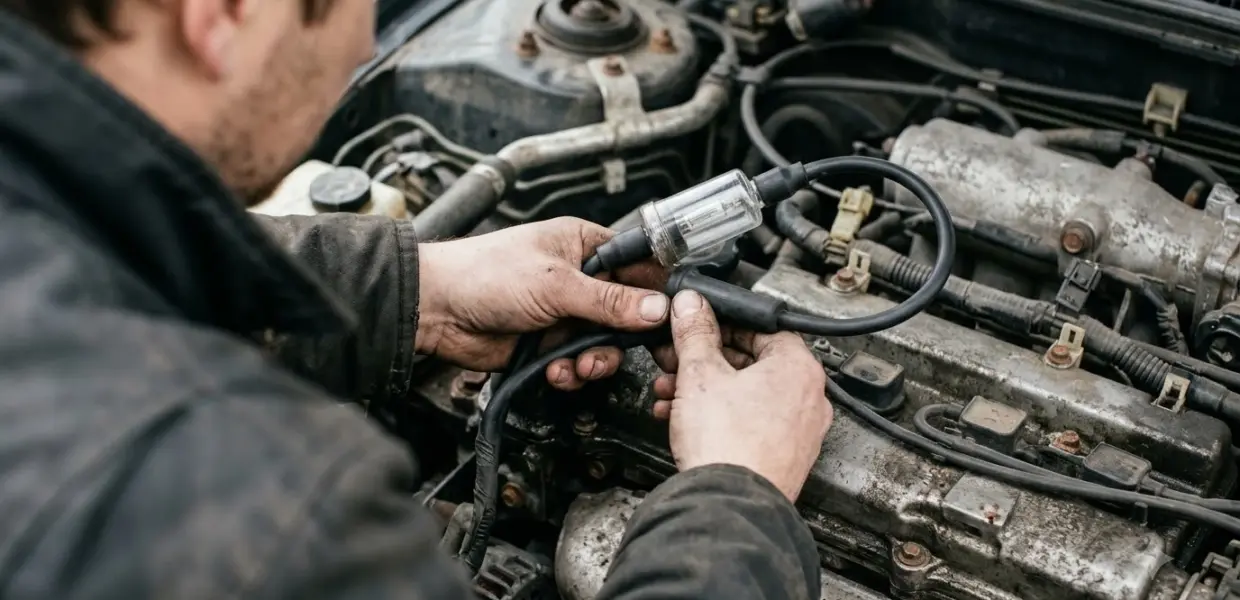

Learning how to test an ignition coil starts with one question: does the misfire follow the coil? A swap test answers it, and a spark test or a resistance check can confirm the result.
A single misfire code does not prove the coil is bad, because spark plugs, injectors and wiring can cause misfires too. The steps below show how to test an ignition coil with a swap test, a spark tester and a multimeter, in order from the simplest check to the most detailed one.
Signs of a Bad Ignition Coil
A failing ignition coil usually causes a misfire, a check engine light or rough running, often with a misfire code that names the cylinder.
- Check engine light, often with a related code
- Engine misfiring
- Rough or fluttery idle
- Hard starting or failure to start
Misfire codes are the most useful clue in how to test an ignition coil. P0300 is the misfire total for the engine, while P0301 to P0306 name the single cylinder that misfires. Porsche’s technical bulletin on misfires lists spark plugs, ignition coils and injectors as the components usually affected by this type of fault, so the code alone does not tell you which part failed.
Read the codes with an OBD-II scanner before you remove any part. Write down the cylinder number, because every test below starts from that cylinder. For a code-by-code explanation, see the guide to the P0301 cylinder 1 misfire code.
Porsche’s bulletin also says misfires can appear at low engine speeds or across the whole rpm range, and in those cases the spark plugs, ignition coils and injectors must be checked first. A misfire that shows up only at high speed needs the same first checks, so note the rpm range where it happens and reproduce it during the test-drive.
Safety Checks Before You Test an Ignition Coil
Before you touch an ignition coil, turn the engine off, park on a flat and stable surface, and wear safety glasses and mechanic gloves.
The coil feeds the spark plug, so keep your hands and tools clear of the spark plug boot and the coil while the engine is cranking or running.
- Park on a level surface and let the engine cool before you work
- Wear safety glasses and mechanic gloves
- Check your local rules before you test a vehicle on a public street
Safety comes before every step of how to test an ignition coil. These precautions protect you while you work, but they do not replace the procedure in your vehicle’s service manual.
Method 1: How to Test an Ignition Coil With a Swap Test
The swap test confirms an ignition coil by moving it to a working cylinder and checking whether the misfire moves with it. It needs no meter and no new parts, which makes it the first step in how to test an ignition coil.
Porsche’s technical bulletin 59/15 on misfires describes this method and names the coil and the spark plug as the first parts to swap. Follow the same order on your vehicle.
- Read the fault memory and note the misfire code for the suspect cylinder, such as P0301.
- Swap the ignition coil and the spark plug from the suspect cylinder with the coil and plug from a cylinder that runs well.
- Test-drive the vehicle and try to reproduce the fault under the same conditions.
- Read the fault memory again. If the same code now names the cylinder that received the coil, the coil is the faulty part.
- If the original cylinder still misfires, the coil is not the cause. Check the spark plug, the injector and the valve train on that cylinder next.
Label each part with its cylinder number before you remove it. A mix-up at this stage can send you chasing a fault that was never there.
Repeat the test-drive under the same conditions as the original complaint. A fault that appears only under load or at a set speed will not show up at idle, so a short idle run proves nothing.
Method 2: Spark Test With a Spark Tester
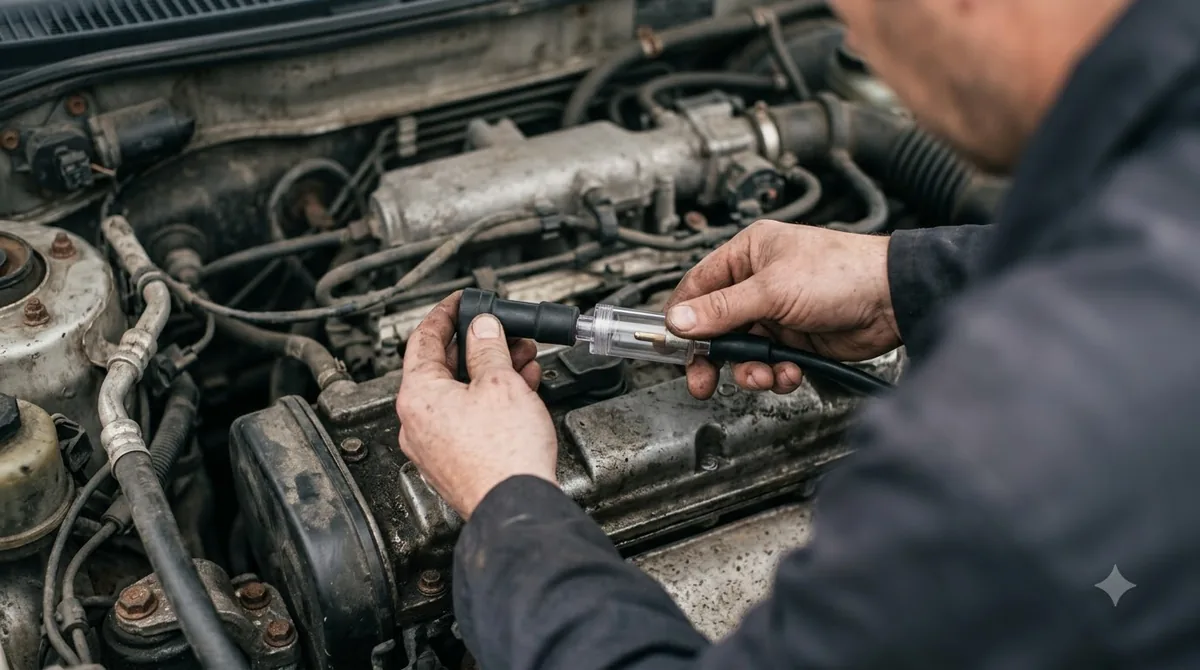
When you need a direct answer on how to test an ignition coil, a spark tester shows whether the coil fires, so no spark on the tester points to a bad coil. The Drive’s guide on testing an ignition coil uses this method and starts with a visual check of the coil.
- Turn the engine off and let it cool.
- Use an OBD-II scanner to find the cylinder with the fault.
- Remove the ignition coil from that cylinder.
- Inspect the spark plug and replace it if it is due for service.
- Check the coil housing for cracks, holes or other damage.
- Connect the spark tester to the coil, attach its ground wire, reconnect the coil connector and start the engine.
- Watch the tester. No spark indicates a bad coil.
Follow the tester maker’s instructions for the ground wire and the gap setting before you start the engine, because a poor ground connection can show no spark on a healthy coil.
If the tester shows a spark but the misfire remains, the coil is probably not the cause. Move on to the spark plug and the fuel injector for that cylinder.
Method 3: Resistance Test With a Multimeter
For how to test an ignition coil with a meter, a resistance check compares the coil’s primary and secondary winding readings with the specification in the service manual. The result is only as good as that reference value, so find the exact figure for your engine before you judge the coil.
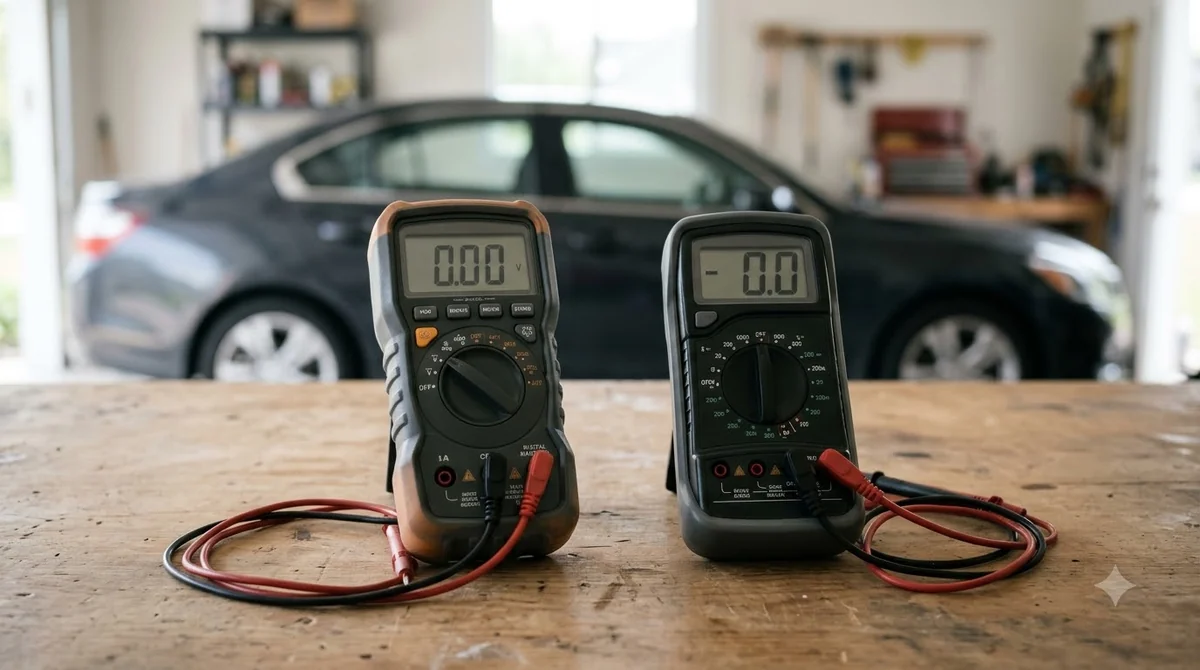
Resistance values differ by coil design, so this guide does not list fixed ohm numbers. Use the figures printed in your service information for the vehicle you are working on. If you need help setting up the meter, the Klein MM300 multimeter step-by-step guide shows a typical reading of resistance in ohms.
- Turn the engine off and disconnect the coil’s electrical connector.
- Set the multimeter to the ohms range.
- Touch the probes to the primary terminals and record the reading.
- Touch the probes to the secondary circuit as the service manual describes and record that reading.
- Compare both readings with the specification. A reading far from the spec, in either direction, is a reason to replace the coil or repeat the swap test.
This is the most detailed part of how to test an ignition coil, and it measures the coil alone, so a good reading does not rule out a fault in the spark plug, the plug wire or the wiring. Use it together with the swap test when the results disagree.
Common Mistakes When Testing a Coil
The most common mistake in how to test an ignition coil is skipping the test and replacing the part after one misfire code. Several parts set the same code, as the P0304 cylinder 4 misfire code guide explains.
- Replacing the coil from the code alone, when spark plugs and injectors also cause misfires
- Taking a resistance reading with the coil connector still attached
- Skipping the spark tester’s ground wire, so the tester shows nothing useful
- Guessing the specification instead of reading the service manual
Check the connector on each coil as well. A loose or damaged connector can produce a misfire that looks exactly like a failing coil.
Intermittent faults are a trap. Porsche’s bulletin notes that a fault can be intermittent and caused by an outside influence such as poor fuel. A clean test today does not close the case in how to test an ignition coil, so repeat the test-drive and read the fault memory again before you decide.
Related Guides
Frequently Asked Questions
Can a bad ignition coil cause a misfire?
Yes, which is why how to test an ignition coil matters before you buy a part. A failing coil can cause a misfire on the cylinder it fires, which sets a code such as P0301 for cylinder 1. Spark plugs and injectors can set the same code, so test before you replace the part.
Do I need a multimeter to test an ignition coil?
No. Learning how to test an ignition coil with the swap test and the spark test needs only a scanner and basic hand tools. A multimeter adds a resistance check, but its value depends on the exact specification from the service manual.
What if the spark test shows no spark but the plug looks fine?
That result points to the coil, and it is the clearest answer you can get in how to test an ignition coil with a spark tester. Check the coil housing for cracks and the connector for damage, then confirm the result with the swap test before you buy a replacement part.
Should I replace all the ignition coils?
Not without testing. The swap test is the fastest way to learn how to test an ignition coil on each cylinder and shows which coil is faulty, and replacing only that coil is the usual approach. The other coils can stay in service if they run normally on the working cylinders.
Can I do the spark test with the engine running?
This part of how to test an ignition coil does start the engine, but the connections are made with the engine off first. Keep hands and tools clear of the spark plug boots while the engine runs, and follow the service manual for the exact steps.
Run the swap test first, because knowing how to test an ignition coil this way needs no meter and shows whether the coil is the cause. Replace only the coil that moves the misfire, and keep the spark test for a direct check when the swap result is unclear.