
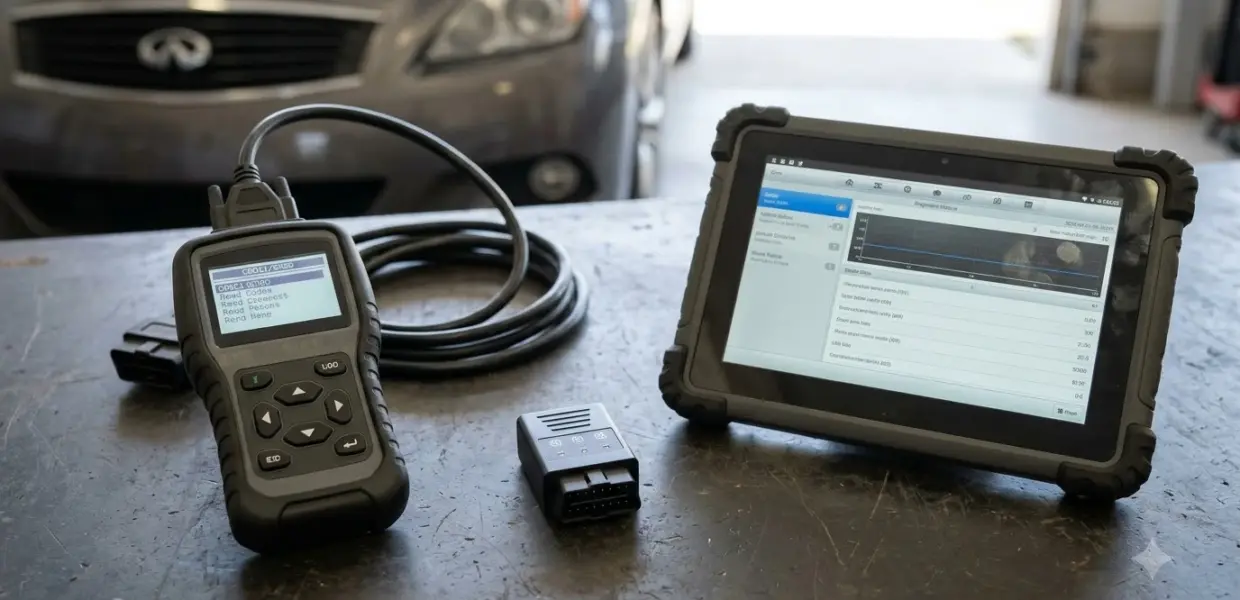

P0325 is a generic OBD-II code for a fault in the knock sensor 1 circuit on bank 1. The knock sensor is a sensor bolted to the engine that picks up the vibration of detonation, and the fault turns on the Check Engine light.
The code points to the whole sensor circuit, including the sensor, its wiring and its connector, so a bad sensor is only one possibility. Check the wiring before you buy parts.
Repair costs and steps here are general guidance from published repair guides. Follow your vehicle’s factory service information, and have a qualified technician check any engine or fuel system problem.
What P0325 Means on Your Dashboard
P0325 is a generic powertrain code that means the knock sensor circuit for sensor 1 on bank 1 has a malfunction.
Because it is a circuit code, it reports a fault in that circuit. It does not by itself prove that the sensor has failed, and it does not measure engine knock directly. Repair guides treat the sensor, its wiring and its connector as the first places to look.
How the Knock Sensor Works
A knock sensor is mounted to the engine and detects the high-frequency vibrations caused by detonation, so the engine controls can keep the engine near its detonation limit.
Detonation is ignition of the air and fuel mixture in the combustion chamber without the spark plug firing, also called engine knocking or pre-ignition. According to Ford’s glossary definition, the sensor is what lets the engine controls work near that limit.
Ford’s glossary also says detonation is an engine malfunction that can often be eliminated by a regular tune-up or by using the proper grade of fuel. A P0325 code is a sensor circuit fault, so the fix starts with the circuit, not with fuel choice alone. Samarins describes the knock sensor as a microphone bolted to the engine that picks up abnormal knocking, so a P0325 code means that signal path has a fault that needs checking.
Common Symptoms of the Code
P0325 turns on the Check Engine light, and some cars also show reduced power, pinging and lower fuel economy.
- Check Engine light stays on
- Reduced engine power
- Audible pinging or knocking
- Lower fuel economy
- Delayed acceleration
Some cars show no symptoms except the light. Pinging or knocking is the symptom to take most seriously, since it is the audible sign of the detonation the sensor is meant to detect.
| Symptom you notice | Where to look first |
|---|---|
| Check Engine light stays on | Check for other trouble codes and fix those first |
| Pinging or knocking | Listen for mechanical noise and confirm the oil level |
| Reduced power or delayed acceleration | Read live knock sensor data, then check the wiring and connector |
| Lower fuel economy | Check other trouble codes and the engine’s mechanical condition |
Common Causes Behind the Code
The causes listed for this code include a failed knock sensor, damaged wiring, and a loose connector, along with moisture and some engine and computer faults.
- Failed knock sensor
- Damaged or corroded sensor wiring
- Moisture in the sensor or wiring
- Loose or damaged sensor connector
- Engine mechanical faults
- Overly lean air and fuel mixture
- Outdated PCM software, or a faulty PCM or PCM connector
The list comes from Samarins’ P0325 guide. Because engine mechanical faults can produce this code, the engine itself is part of the check. Mechanicbase calls a failing PCM less likely than a sensor or wiring fault, so check those first. Samarins also reports that rodents often damage the wiring harness to the knock sensor, especially on V6 and V8 engines where the sensor sits in the valley between the cylinder banks.

How to Diagnose P0325 Step by Step
To diagnose P0325, check for other codes first, then inspect the sensor wiring and connector before you test the sensor against factory specifications.
- Check all engine codes and fix any other trouble codes first, such as the lean code covered in the P0171 lean code guide.
- Listen for mechanical noise and confirm the oil level is adequate.
- Check manufacturer service bulletins for this code, since some recommend a PCM software update.
- Clear the code and drive the car to see whether it returns.
- If it returns, inspect the sensor wiring and connector for damage or corrosion.
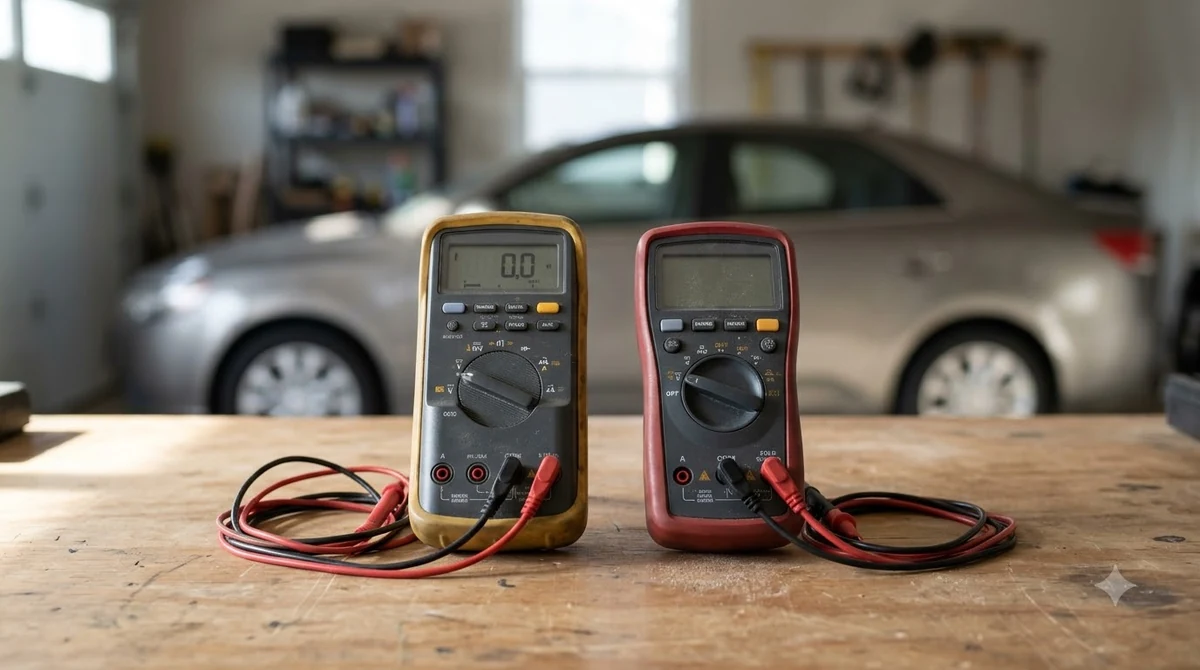
- If nothing obvious shows, test the sensor and wiring against the factory service manual, using voltage, continuity or resistance readings or scan tool live data.
Mechanicbase suggests the same order and adds one check: compare the knock sensor voltage in live data with the factory service manual before you replace anything. Samarins also notes that some manufacturers recommend a PCM software update for this code, so check the service bulletins for your vehicle before you replace the computer. For the voltage and continuity readings, see the guide on using a digital multimeter on your car covers the basic settings, and a scanner that shows live data lets you watch the sensor signal.
How Much It Costs to Fix the Code
One repair cost guide puts a knock sensor replacement at $250 to $450, with wiring repair at $50 to $550, as of 2026-11-06.
| Repair | Estimated cost (as of 2026-11-06) |
|---|---|
| Replace knock sensor | $250 to $450 |
| Repair or replace wiring or connection | $50 to $550 |
| Update or replace PCM | $250 to $2,500 |
These figures come from a single source, so get a local quote before you approve any work. Samarins notes that the knock sensor part itself is inexpensive but can be hard to reach.
Is It Safe to Drive With the Code?
Mechanicbase says you can continue driving in most situations with this code, but the repair should still be made, because a lit light can hide a second fault.
With the Check Engine light on, you cannot tell whether another fault is present. Stop driving and have the car checked promptly if the engine pings badly, loses power or runs rough. Samarins notes that some cars show no symptoms except the light, so a steady light alone is reason enough to book a check.
Keep a written record of each step during a P0325 diagnosis, including the other codes, the live data readings and the oil level. A shop can then pick up where you left off instead of repeating the same checks.
Common Mistakes When Fixing the Code
Replacing the knock sensor before checking its wiring is a costly mistake, because damaged wiring or a loose connector can set the same code.
- Replacing the sensor before inspecting its wiring and connector
- Clearing the code without finding the cause
- Skipping service bulletins that may call for a PCM update
- Ignoring other trouble codes that may point to the cause
Skipping the mechanical check is a mistake too. Samarins lists engine mechanical faults as a cause, so confirm the oil level and listen for noises before you blame the knock sensor.
Wiring diagrams and test values depend on the vehicle, so use the factory service information for your exact year, make and engine rather than a general guide.
Frequently Asked Questions
Is P0325 the same as a bad knock sensor?
Not always. P0325 is a circuit code, so the fault can be in the knock sensor, its wiring, its connector or, less often, the PCM. Check the wiring and connector first, then test the sensor against the factory specifications before you replace it.
Can moisture cause P0325?
Yes. One specialist guide lists moisture getting into the knock sensor or its wiring as a possible cause. Look for water, corrosion or a damaged seal at the sensor connector during the wiring check, and repair any damage you find before replacing the sensor.
Will clearing the code fix P0325?
Clearing the code only removes the stored fault. If the cause is still there, the code can return and the Check Engine light can come back on. Repair the cause first, then clear the code and drive the car to confirm the light stays off.
Does fuel grade affect P0325?
The causes listed for P0325 do not include fuel grade, but an overly lean air and fuel mixture is on the list. Ford’s glossary says detonation can often be reduced by a regular tune-up or proper grade fuel, so fuel quality matters for knock in general.
Do I need a scan tool to diagnose P0325?
Live data, which shows knock sensor voltage, needs a scan tool that can display sensor values. Mechanicbase recommends reading that voltage and comparing it with the factory service manual. Without a scan tool, a shop can read the code and test the circuit against the same manual.
Start with the wiring and connector, not the sensor. A repair done in the right order can save you the cost of a part you did not need. If the light stays on after the repair, ask a technician to check the PCM software and service bulletins for your vehicle.
