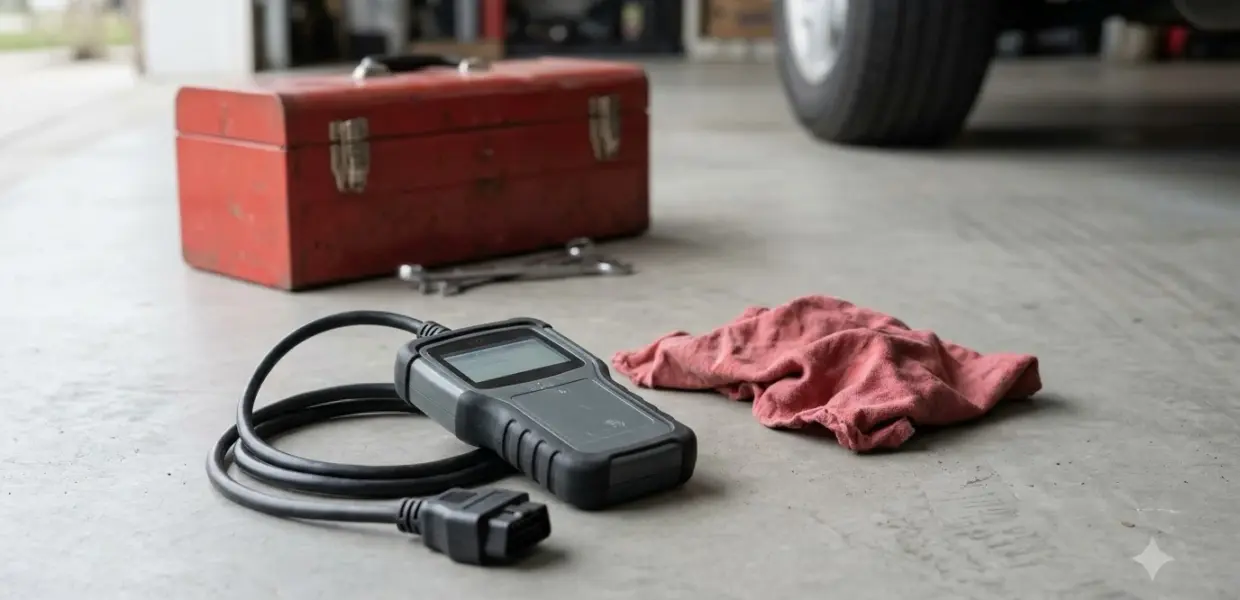

The Chevy Cruze check engine light means the car’s onboard computer has detected a fault in the engine, emissions or a related system. A steady light calls for a scan and a service visit soon. A flashing light points to an engine misfire and needs prompt attention.
Most Cruze lights come from a few common faults, such as a loose gas cap, an oxygen sensor or ignition parts. Reading the trouble code with an OBD2 scanner shows which system to check first.
Steady vs flashing: what your Chevy Cruze check engine light means
A steady light means the system needs service soon, while a flashing light means the engine is misfiring. Owner’s manuals for Cruze model years describe the lamp as a warning that the OBD II system has found a problem. The light’s behavior tells you how urgent the problem is.
A steady Chevy Cruze check engine light with the engine running means the car needs diagnosis and service. If the car drives normally, you usually have time to book a scan and visit a shop. Watch for any change in how the engine runs while you wait.
A flashing light is different. The manual treats a flashing lamp as a misfire, meaning one or more cylinders are not firing correctly. A misfire that continues can overheat and damage the catalytic converter, so reduce speed and engine load and get the car checked promptly.
Before you call a shop, note whether the light is steady or flashing and whether the engine feels different. Write down the mileage and what the car was doing when the Chevy Cruze check engine light came on, such as climbing a hill or idling. That detail helps the technician narrow the search, and it costs nothing to record.
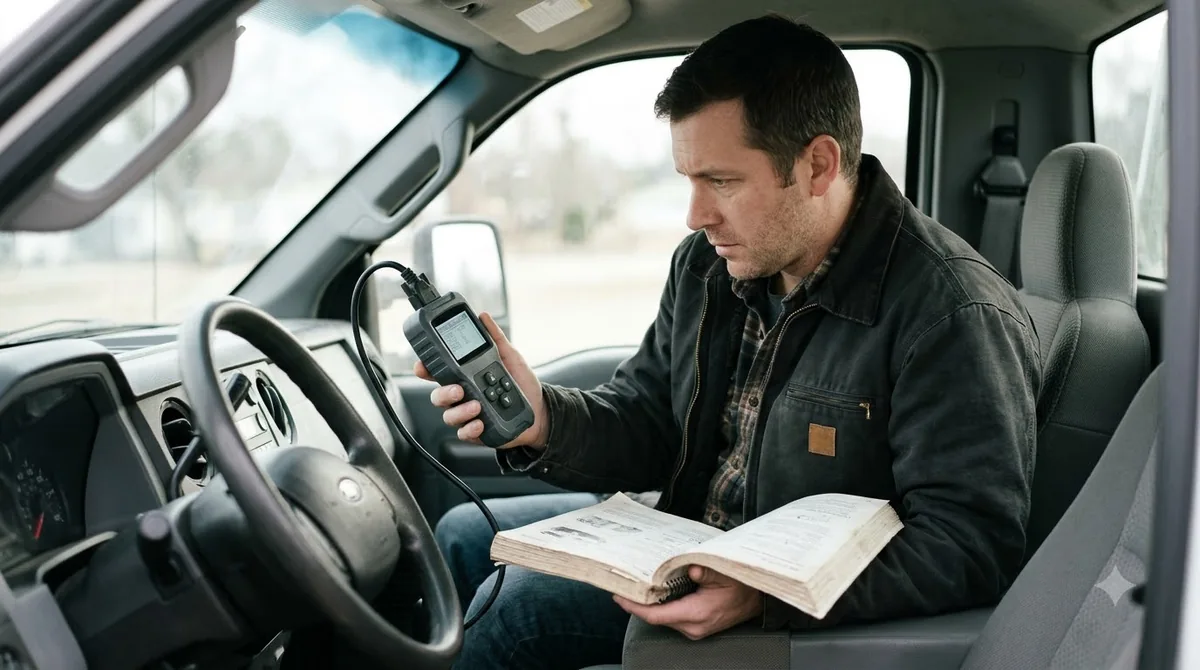
- Steady light and normal driving: book a scan soon.
- Steady light with rough idle or lost power: get it looked at before a long trip.
- Flashing light: ease off, avoid heavy load and have the car checked right away.
Common causes of a Chevy Cruze check engine light
The most frequent triggers on a Chevy Cruze are a loose gas cap, a failing upstream oxygen sensor, a dirty mass airflow sensor, and worn spark plugs or ignition coils. Repair guides list these faults again and again, so they are the first places to look.
| Cause | What it affects | Simple first check |
|---|---|---|
| Gas cap | Fuel vapor (evaporative) system | Confirm the cap is tight and the seal is intact |
| Oxygen (O2) sensor | Fuel mixture and exhaust readings | Read the code with a scanner |
| Mass airflow sensor | Air entering the engine | Check for a dirty sensor and read the code |
| Spark plugs and ignition coils | Cylinder firing (misfire) | Look for misfire codes by cylinder |
The gas cap is the cheapest item to check when a Chevy Cruze check engine light appears, and a loose cap can set a code on its own. Sensors and ignition parts need a scan to confirm which one is at fault. Replacing a part before the code is confirmed can leave the light on.
The code tells you which system reported a fault, while the symptoms show how serious it may be. Read the two together before you choose a repair for the Chevy Cruze check engine light, because one code can point to several causes.
How to read the trouble code with an OBD2 scanner
You read the code by plugging an OBD2 scanner into the diagnostic port and writing down the code, such as P0133, before clearing anything. The code points to a system, not a single part, so it is a starting point for diagnosis.
- Turn the ignition on without starting the engine.
- Plug the scanner into the diagnostic port and power it on.
- Read and write down every stored code, including any pending codes.
- Look up each code for your model year and engine.
- Repair the cause, clear the code and check that the light stays off.
Clearing a code without fixing the cause brings the Chevy Cruze check engine light back. A shop that reads the same code later has less information to work with if the record was erased first.
Freeze frame data, when your scanner shows it, records engine speed, temperature and other conditions at the moment a code was set. Save that snapshot with the code, because it helps a shop reproduce the fault. It is especially useful when a Chevy Cruze check engine light comes and goes.
Diesel Chevy Cruze models and the P0133 engineering note
GM engineering information PIE0313 covers 2014 Cruze models with the 2.0L diesel engine where the check engine light is on and code P0133 is set. GM states that this is not a recall.
The bulletin asks dealers to proceed only when the customer has commented about the light. Technicians are asked to record any prior P0133 or P22FA codes and any past air cleaner or air induction work, then contact a GM engineer before repairing the car. The full wording is in the GM service bulletin PIE0313 published by NHTSA.
If you are unsure whether your Cruze has the diesel engine, check the engine badge or the build sheet tied to your VIN before reading the bulletin closely. Gasoline owners should focus on the code and the symptoms instead.
This note applies only to the 2014 diesel. A gasoline Cruze with the same light needs the normal scan and diagnosis, not this bulletin.
When to see a shop instead of driving on it
Book a shop visit soon when the light is steady and the car drives normally, and avoid driving when the light flashes or the engine runs rough. These rules cover most situations, but the code and the symptoms should decide the final call. If the Cruze also shows a power-limiting message, read about the Chevy Cruze reduced engine power warning.
- Steady light, normal driving: schedule a scan and diagnosis.
- Steady light that returns after clearing: the fault is still active and needs repair.
- Flashing light: reduce speed and load, then get the car checked promptly.
- Rough running, smoke or a strong fuel smell: stop driving and arrange a tow.
Ask the shop for the stored codes, the freeze frame data and the results of any tests before a part is replaced. A written record of the Chevy Cruze check engine light diagnosis helps if the light returns or if you later sell the car.
Will the Chevy Cruze check engine light turn off by itself?
It can, if the fault was intermittent and the system stops detecting it. The trouble code stays stored even when the light goes off, so a shop can still read it.
Clearing the code with a scanner turns the light off at once, but it does not fix the cause. If the fault returns, the light comes back. A fault that keeps returning needs a repair, not a reset.
Some drivers disconnect the battery to turn off the Chevy Cruze check engine light. That can clear codes, but it can also reset radio presets and other settings, so a scanner is the cleaner option. A reset is only a short pause, not a fix, so keep the code for your records.
Related Guides
Frequently Asked Questions
Is it safe to drive a Chevy Cruze with the check engine light on?
A steady light with normal driving usually means you can keep driving to a shop, but the car should be scanned soon. A flashing light, rough running or smoke means you should stop driving and arrange a tow or a shop visit.
What does a flashing check engine light mean on a Cruze?
A flashing light means the engine is misfiring. Reduce speed and avoid heavy load, then have the trouble code read and the cause repaired promptly.
Does a loose gas cap really cause the check engine light?
Yes, a loose or damaged gas cap can set a code for the fuel vapor system. Tighten the cap and check whether the light goes off after several drive cycles. If it stays on, scan the car for the code.
Can I clear the Chevy Cruze check engine light myself?
Yes, most OBD2 scanners can clear stored codes. Record the code first, because the light returns if the fault is still present and the record is gone.
Is the Cruze Diesel check engine light a recall?
Not according to GM’s PIE0313 bulletin for the 2014 2.0L diesel, which states it is not a recall. Enter your VIN on NHTSA’s recall lookup to check for any open recalls on your car.
Do I need a special scanner for a Chevy Cruze check engine light?
A basic OBD2 scanner reads the generic codes behind a Chevy Cruze check engine light, since every car uses the same codes. GM-specific data, such as some module codes and live sensor readings, may need a scanner that supports GM vehicles.
A code from a Chevy Cruze check engine light is a starting point, not a diagnosis. Ask the shop to confirm the cause from the code and a few live sensor readings before any parts are replaced. Asking for those test results keeps you from paying for a part that was never the cause.