
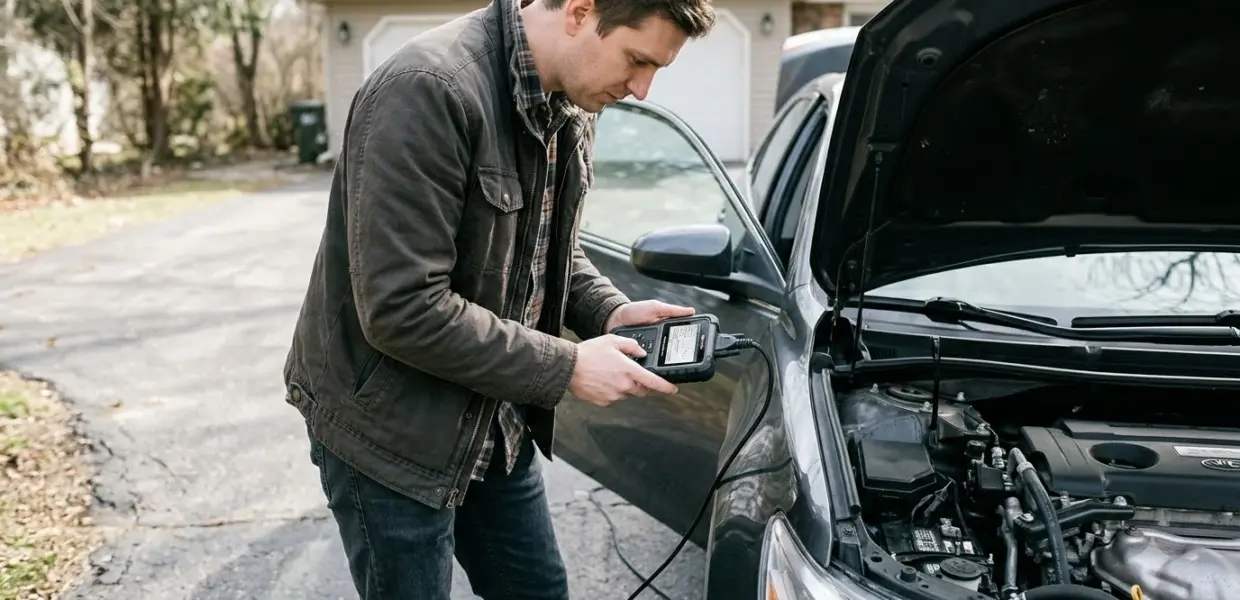

P0016 is a generic OBD-II code for a timing mismatch between the crankshaft and the Bank 1 intake camshaft. The engine computer sets it when the signals from the two position sensors disagree. Treat it as a timing fault, not a code to clear and forget.
Some causes are simple, such as a failing sensor or loose wiring. Others involve timing parts. Check the basics first so you do not buy parts you do not need.
What the P0016 Code Means
P0016 means the engine computer sees the crankshaft and Bank 1 intake camshaft signals out of time with each other, according to Kia’s service bulletin PS731, archived by NHTSA.
The official name is Crankshaft Position, Camshaft Position Correlation (Bank 1 Sensor A [Intake]). Sensor A is the intake camshaft sensor for Bank 1. The code is generic, so its meaning is the same across many makes, but each vehicle uses its own sensor layout and timing design.
The engine computer, also called the PCM or ECM, sets the code when the camshaft position does not match the crankshaft position it expects. The timing is off, and the computer cannot confirm that the engine is running as designed. When the camshaft is only too far advanced rather than out of step with the crankshaft, the guide to camshaft timing over-advanced on bank 1 explains the related code.
Common Causes Behind P0016
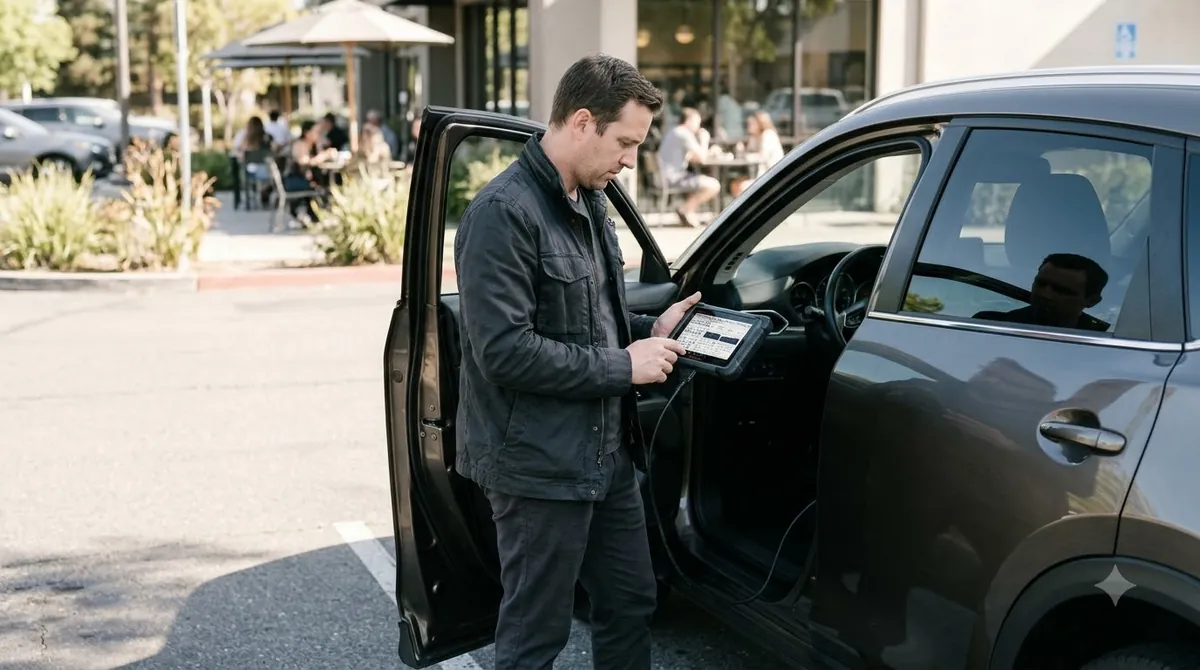
The usual P0016 causes are worn timing parts, faulty crankshaft or camshaft sensors, damaged tone rings and wiring faults. Repair publisher Clue divides them into mechanical and electrical groups, which helps you decide where to start.
- Worn or misaligned timing chain or belt, tensioner or guides
- Damaged tone ring or harmonic balancer
- Faulty crankshaft or camshaft position sensor
- Corroded or loose wiring at either sensor connector
- An engine computer that misreads the sensor signals
Symptoms You Might Notice
A P0016 usually turns on the check engine light, and repair guides list rough idle, misfires and weaker acceleration as common companions. Symptoms depend on how far the timing is off and which part is at fault.
- Check engine light on
- Hard starting or no start after cranking
- Rattling or knocking near the harmonic balancer
- Rough idle or misfires
- Weak acceleration
- Worse fuel economy
A rattle from the front of the engine deserves attention sooner than the light alone, because it can point to timing wear rather than a simple sensor fault. Because many faults share these symptoms, pair them with the stored codes before you order parts. A signal fault such as the camshaft sensor A circuit code points to wiring or the sensor rather than to timing.
Is It Safe to Keep Driving with P0016?
Repair guides advise against driving with P0016 for long, and a flashing check engine light with rattling means you should stop the car. Clue states that driving is not safe, because even short trips can worsen timing damage.
Clue recommends having the vehicle inspected before driving further. Plan a timing check instead of waiting to see whether the light goes away, since a light that goes out does not prove the timing was repaired.
How to Diagnose P0016 Step by Step
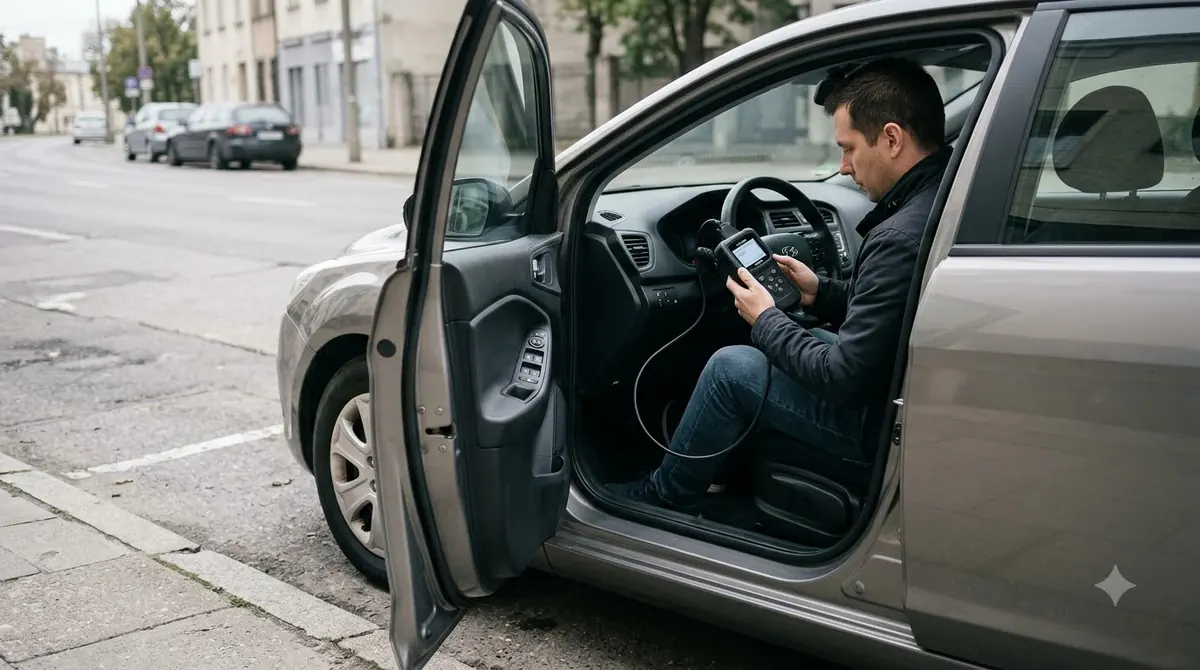
Diagnosis starts with the sensors and wiring, then moves to timing parts only after the simple checks pass. Work through the steps in this order, because the sequence starts with the cheapest checks.
- Inspect the wiring and connectors at both the crankshaft sensor and the Bank 1 intake camshaft sensor.
- Test each sensor’s output with a multimeter or a scan tool.
- Check the timing chain or belt, the tensioner and the guides for slack or wear.
- Inspect the tone rings and the harmonic balancer for damage or misalignment.
- Use an oscilloscope to confirm crankshaft and camshaft synchronization if the earlier steps do not explain the code.
A scan tool that shows live data lets you compare the two sensor signals while the engine runs. Replacing a sensor before testing it can waste money if the fault actually lies in the timing.
Before you clear anything, write down every stored code and its freeze frame data, which records the conditions when the fault was set. Other codes, such as P0011 or P0017, help you tell a single-sensor problem from a wider timing problem.
Reluctor Wheel Check After Engine Replacement
On some 2010 to 2020 Kia Soul models, P0016 can appear after an engine replacement when the camshaft reluctor wheel is not clocked correctly at top dead center. The bulletin applies only when these codes were not present before the engine was replaced.
| Model year | Model | Engine |
|---|---|---|
| 2010 to 2011 | Soul (AM) | Beta 2.0L, Gamma 1.6L |
| 2012 to 2013 | Soul (AM) | Gamma 1.6L GDI, Nu 2.0L GDI |
| 2014 to 2019 | Soul (PS) | Gamma 1.6L GDI, Nu 2.0L GDI |
| 2020 onward | Soul (SK3) | Nu 2.0L MPI |
The bulletin shows two reluctor wheel designs, the two-flank (half moon) type and the four-flank (castle) type, with the correct position for each. The check is done with the engine set to top dead center, and the bulletin does not apply to other makes. On the four-flank type, the flank edge must line up with the top of the camshaft. On the two-flank type, the edge must line up with the camshaft cap bolt indentation. Both are visual alignment checks against a fixed reference on the camshaft, so they should be done before any sensor is replaced.
Repairs and Clearing the Code
Repair means replacing the faulty sensor, wiring or timing part, then clearing the code and confirming the fix with a road test. Repair guides point to the cause first, because clearing the code does not change the fault.
- Replace a faulty crankshaft or camshaft sensor, or repair the wiring
- Replace worn timing components such as the chain, belt, tensioner or guides
- Clear the code with an OBD-II scanner
- Confirm the fix with a road test and check that the code does not return
Clearing the code alone changes nothing. If the timing or sensor problem remains, the code returns, which tells you the cause was never addressed. If the chain, tensioner or guides are worn, typical timing chain job pricing helps you judge a quote, and cam sensor price ranges do the same for a sensor swap.
Software can also be part of the fix. Subaru’s bulletin 09-95-22R for the 2022 WRX announces new engine control module files that address P0016 and related codes, including P1604 for startability. Its subject is extended engine cranking during starting, and it was revised on January 30, 2023. The files were included in Subaru’s July 2022 software update, and the bulletin says technicians should check whether the listed codes are stored before following its procedure. Owners of other models should ask a dealer whether a reflash exists for their vehicle.
Frequently Asked Questions
Can a bad sensor alone cause P0016?
Yes. A faulty crankshaft or camshaft position sensor is a listed cause. Test the sensor output before you replace timing parts, because the fault can sit in either place. A sensor signal that drops out or stays flat points to the sensor or its wiring, while a clean signal with the wrong timing relationship points toward the timing parts.
Does clearing the P0016 code fix the problem?
No. Clearing the code only removes the stored fault. Confirm the repair with a road test, and watch whether the code comes back, because a returning code means the timing or sensor fault is still there.
What is the difference between P0011 and P0016?
P0011 is an intake camshaft timing over-advanced code. P0016 is a crankshaft to camshaft correlation code for Bank 1 Sensor A. Kia’s bulletin lists both in the same family, along with P0014 and P0017, so the codes are related but not identical.
Is P0016 always a timing belt failure?
No. The cause can be a sensor, wiring, a tone ring or an engine computer fault. Only an inspection of the timing and a signal test can show whether the chain or belt is involved.
Should I keep driving with a P0016 code?
Repair guides advise caution. Clue says short trips can worsen timing damage, and a flashing check engine light with rattling means you should stop driving at once.
Before you buy parts, have a technician check the timing and both sensor signals. A diagnosis that proves which part has failed saves money, and a flashing light or rattling noise is a reason to stop driving now.
