
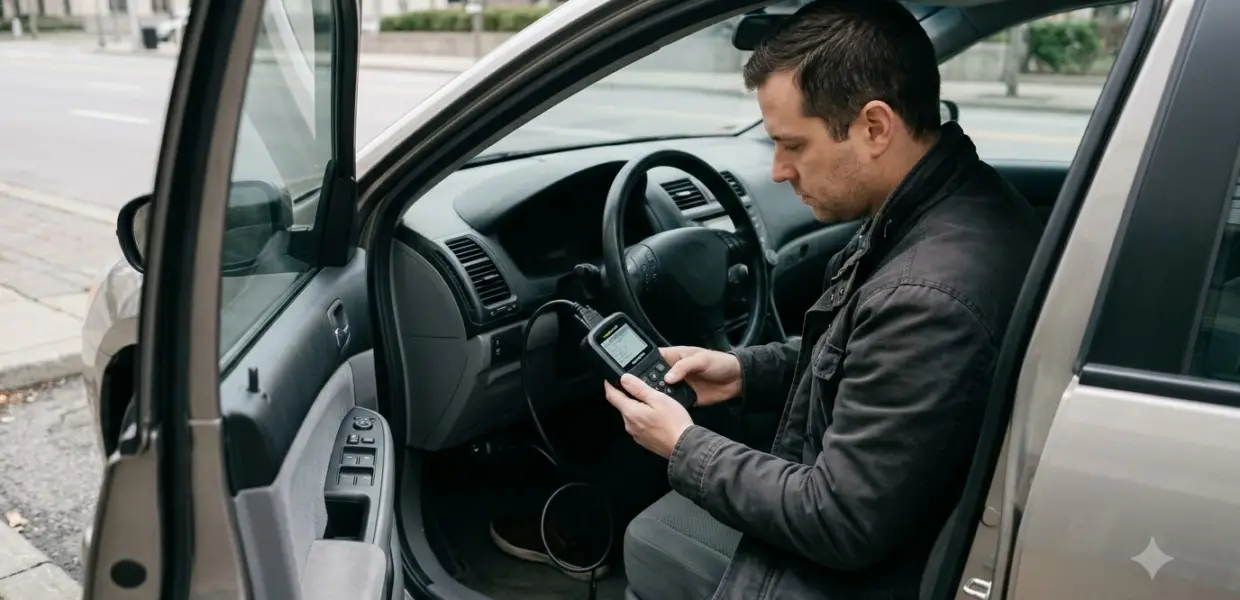

P0340 is the OBD-II code for a camshaft position sensor A circuit malfunction on bank 1. It means the engine computer is not receiving the signal it expects from the sensor that tracks camshaft position.
The code does not name the broken part, because the fault can sit in the sensor, its wiring, the reluctor ring or the engine computer. Test the circuit before you buy a sensor.
Diagnosis involves live electrical tests and engine work. Follow your vehicle’s service manual, and have a qualified technician check the car if you are unsure or the engine stalls.
What the P0340 Code Means
P0340 means the engine computer is not getting a usable signal from the camshaft position sensor A circuit on bank 1, so it cannot confirm camshaft position. A related fault, the camshaft sensor range and performance code, means the signal is present but does not match what the engine computer expects.
The sensor reports camshaft position to the engine computer, which uses that data to time when the intake and exhaust valves open and close. According to Apex Technation, the full description is Camshaft Position “A” Circuit Malfunction, Bank 1 or Single Sensor, so the code also covers engines with a single cam sensor.
The computer sets the code when it cannot detect the camshaft position signal. TroubleCodes.net notes that the computer may set either P0340 or P0345 in the same situation, so check which code is stored before you start testing.
Common Causes of P0340
A failed sensor is the most frequently listed cause of this code, but damaged wiring and connectors are close behind. The fault can also sit in a part that drives or reads the sensor.
- Failed sensor: internal wear, contamination or an open or shorted coil that gives no signal.
- Damaged wiring or connector: corrosion, broken pins or damaged insulation.
- Oil in the connector, often from a leaking valve cover gasket.
- Stretched timing chain, which often comes with P0016 or P0017.
- Damaged reluctor ring, the toothed wheel the sensor reads.
- VVT solenoid fault, which often comes with P0010, P0011 or P0012.
A weak 5 V reference supply or an unstable ground can also set the code. On stored vehicles, rodents chewing the harness are another reported cause, so look at the wiring as well as the sensor. Poor installation can also set it. If the sensor is not at the correct clearance from the reluctor ring or cam tooth, the signal can be lost or wrong. On some Ford trucks and Mustang GTs, alternator phase problems can cause electrical interference that sets the code too.

Some manufacturers publish sensor clearance limits. The Subaru service bulletin 11-130-13 says an out-of-specification camshaft position sensor clearance can set P0340 along with other cam and misfire codes. It covers only listed 2011 to 2014 Subaru models and is written for trained technicians.
Why the Sensor Is Not Always the Culprit
Replacing the sensor does not fix a bad wire, a damaged reluctor ring or a stretched timing chain, so the code can return after a part swap. Check the circuit first, using the diagnosis steps below. If the chain is the problem, how much a timing chain job costs is worth knowing before you approve work.
Symptoms and Driving Safety
This code can cause rough idle, hesitation and stalling, so it should be checked soon rather than ignored. The check engine light is the most common sign, and it may be steady or flashing.
- Rough or irregular idle.
- Hesitation or a stumble when you press the throttle.
- Intermittent loss of power, sometimes with a stall.
- Lower performance and worse fuel economy.
- Hard starting, or a start-stall, on some vehicles.
Stalling is the main safety concern. The engine may stall briefly, especially at low RPM, so take extra care in traffic and at intersections. If the engine stalls while you are driving, stop in a safe place and have the car checked before driving it again.
How urgent the code is depends on the car. One shop guide describes P0340 as not an emergency like a brake fault, but warns that it should not be ignored for months. On older cars, the engine may not restart after it is shut off. Even without a no-start, the engine may still run on crankshaft-based estimates, with hard starting, rough running, misfiring or poor acceleration, so a car that feels usable can still have the fault.
How to Diagnose P0340
Start with a visual check and key-on voltage tests on the sensor wiring. Wiring faults are common, and the computer is the last suspect in this sequence.
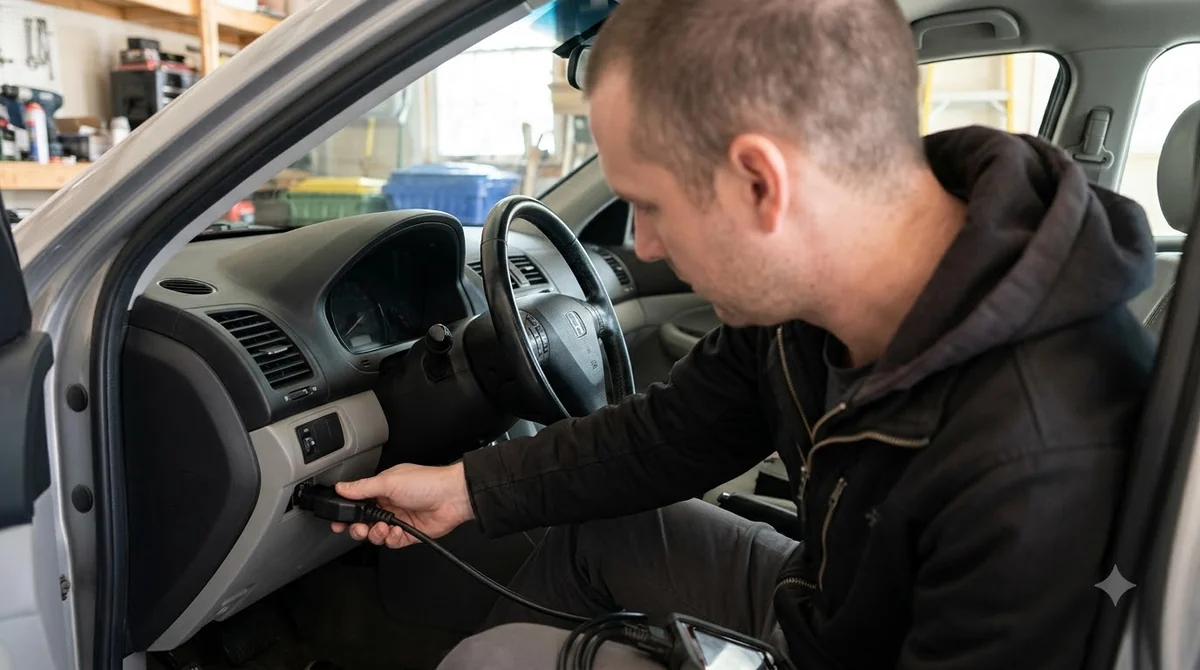
- Inspect the connector and harness for corrosion, oil, bent pins and chafing, especially near heat or sharp edges.
- With the key on and the sensor unplugged, check the reference wire, which should read about 5 V on a typical sensor. The ground should drop less than 0.1 V to battery negative.
- Measure circuit resistance from the sensor to the computer. An open reading above 10,000 ohms or a short to ground below 500 ohms points to wiring damage.
- Test the sensor itself with it unplugged. An open (infinite) or shorted (zero ohms) reading points to a sensor fault.
- Watch live data or a scope while cranking. A healthy Hall effect sensor shows a clean square wave that swings between near zero and near reference voltage.
- Wiggle the harness and connector while watching the signal, which can expose an intermittent fault. Consider the computer only after the wiring and sensor checks pass.
Read all stored codes, not just this one. Related codes such as P0016 or P0010 point toward timing or VVT faults that the sensor test alone will not show.
How to Fix P0340 Step by Step
Fix the fault you found, starting with the connector and wiring and ending with the engine computer. Computer replacement is the most expensive option, so it comes last. If the sensor is the fault, what a new cam sensor costs depends on the engine and the shop.
- Clean or repair the connector and wiring. Remove oil and corrosion, replace damaged pins and repair chafed wire. A shop guide lists this as the cheapest fix for P0340.
- Find and correct the source of any oil in the connector, such as a leaking valve cover gasket, so the repaired connection stays clean.
- Replace a failed sensor with one of the same type. Check the manufacturer’s clearance specification where one is listed, and fit a new O-ring if the procedure calls for one.
- If the sensor and wiring pass, inspect the reluctor ring and timing chain. Check the VVT solenoid when P0010 to P0012 are also stored.
- Clear the codes, drive the car through a normal cycle and confirm that P0340 does not return. Replace or reprogram the engine computer only after the other checks.
Sensor Types Behind the P0340 Code
Hall effect and magnetic reluctance sensors behave differently, so the right test depends on which type your engine uses. Check the service information for your engine to confirm the type before you test. A magnetic reluctance sensor makes its own signal, so a weak 5 V supply does not affect it, while a Hall effect sensor depends on that reference.
| Criteria | Hall effect (3-wire) | Magnetic reluctance (2-wire) |
|---|---|---|
| Power feed | Needs a 5 V or 12 V reference, depending on the application | Needs no power supply |
| Signal | Square wave that swings between near zero and near reference voltage | Its own AC signal, at least 20 mV while cranking |
| Key test | Reference voltage, ground drop and a clean waveform on a scope | AC signal while cranking, plus resistance readings for open or short faults |
Frequently Asked Questions
Can I clear the P0340 code and keep driving?
Clearing the code does not repair anything, so it will likely come back if the fault is still there. Test the circuit first, then clear the code once the cause is fixed and confirm it stays off.
Does P0340 always mean the camshaft sensor is bad?
No. The sensor is a common cause, but damaged wiring, oil in the connector, a damaged reluctor ring, a stretched timing chain or a VVT solenoid fault can set the same code. The engine computer can also be at fault, but only after the other checks pass.
Can P0340 cause a no-start?
Yes, on some vehicles. Without a valid camshaft signal, the engine may hard start, run roughly or fail to restart after shutdown. TroubleCodes.net notes that the engine may still run on crankshaft-based estimates, but with poor performance.
What is the difference between P0340 and P0341?
P0340 means the computer detects no usable camshaft signal on the sensor A circuit. According to Apex Technation, P0341 through P0343 are the bad-signal or out-of-range codes, which means the signal is present but wrong.
Do I need a scan tool to diagnose P0340?
A basic code reader is enough to read this code, but the voltage and resistance checks need a digital multimeter. Live data and waveform checks need a scan tool or oscilloscope, and reading all stored codes helps you find the related faults.
This code is a diagnosis task, not a parts order. Test the wiring and connector before you buy a sensor, and give your mechanic the full list of stored codes. If the engine stalls while driving, stop and have the car checked before you drive it again.
